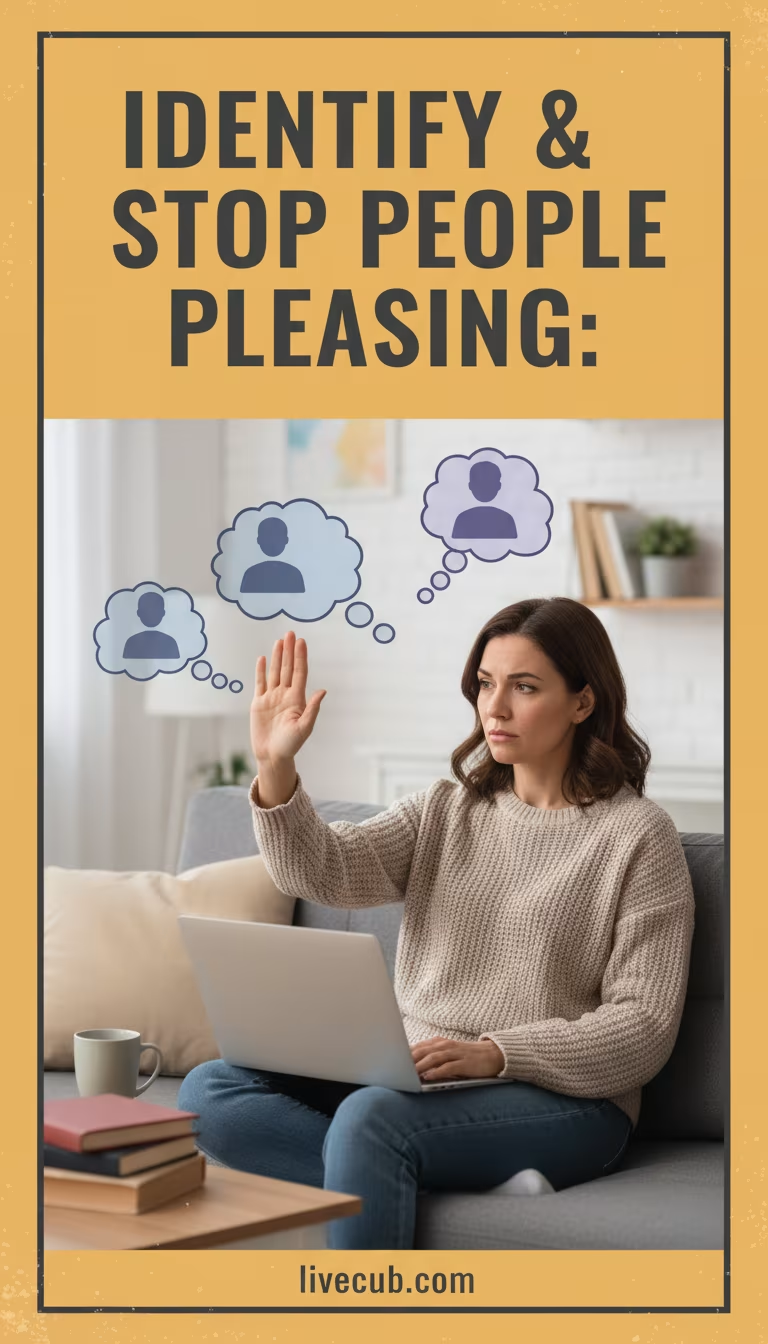
How to Identify and Stop People Pleasing Behaviors
Ever found yourself nodding along, agreeing to something you absolutely dreaded doing? Or perhaps you’ve committed to a plan, only to spend the next few days filled with a creeping sense of resentment, wishing you’d just said "no"? You're not alone, my friend. I've been there countless times. That knot in your stomach, that feeling of exhaustion even before the task begins – it's a tell-tale sign of people-pleasing. It’s that invisible weight we carry, constantly prioritizing others’ comfort and happiness above our own. But here's the thing: while it might feel like you're being "nice," it often comes at a steep price for your well-being. It’s time to talk about how to spot these patterns and, more importantly, how to finally break free.
Why This Matters
You might think, "What's the big deal? I'm just being helpful." And while thoughtfulness and generosity are absolutely wonderful traits, people-pleasing is their shadow side. It's when your acts of 'helpfulness' are driven by a fear of disapproval, a desperate need for external validation, or a deep-seated anxiety about conflict. And trust me, the long-term effects aren't pretty. In my experience, and what I've seen with so many friends and readers, a consistent pattern of people-pleasing can lead to serious burnout, chronic stress, and a profound loss of self. You wake up one day and realize you're not even sure who you are anymore because you've spent so much time mirroring others or bending yourself into a pretzel to fit their expectations.
It chips away at your self-esteem, making you believe your worth is tied to how much you do for others. It breeds resentment – both towards the people you're 'pleasing' and, more painfully, towards yourself. Your relationships can suffer too, because they're not built on authentic connection but on a foundation of unspoken obligations and suppressed feelings. Plus, it can make you a magnet for folks who are happy to take advantage of your accommodating nature. We're talking about more than just feeling a little tired; we’re talking about impacting your mental health, your physical energy, and your ability to live a truly authentic, fulfilling life. That’s why understanding and stopping these behaviors isn't just a suggestion; it’s a vital step towards self-care and reclaiming your personal power.
Identifying the Subtle Whispers of People-pleasing
Before we can stop people-pleasing, we first have to recognize it. And sometimes, it's really sneaky. It doesn't always show up as a blatant "yes" to something you hate. Often, it's those subtle internal nudges, the slight discomfort, or the way you phrase things. One of the biggest flags is that feeling of internal conflict. Do you feel a tightness in your chest when someone makes a request? Do you rehearse explanations in your head for why you can't do something, even when no explanation is truly needed? These are your body and mind trying to tell you something. I used to brush these feelings aside, thinking I was just being "silly" or "selfish," but now I know they’re crucial signals.
Another common sign? Over-apologizing. Seriously, think about how often you say "I'm sorry." Are you apologizing for existing, for having an opinion, for needing space, or for things that aren't even your fault? That's a huge one. It stems from a deep-seated fear of upsetting anyone, even slightly. Or maybe you find yourself mirroring opinions. Someone expresses a strong view, and suddenly, you find yourself agreeing, even if internally you feel differently. It's a subconscious way of trying to fit in and avoid potential disagreement. It's like you're constantly performing a role, trying to anticipate what others want and delivering it perfectly. This constant performance is exhausting and, over time, completely erodes your sense of self. Learning to catch these subtle behaviors is the very first, and arguably the most important, step on this journey.
What People-pleasing Looks Like Day-to-day
- Constant Apologies (Even for Nothing): Have you ever said "I'm sorry" because someone bumped into you? Or for needing to leave a conversation? This isn't politeness; it's a fear of being perceived negatively, a preemptive strike against potential disapproval. You're apologizing for merely existing or having legitimate needs. When I started observing how often I said "sorry," it was truly eye-opening. I'd even apologize for asking for what I needed in a restaurant! It disempowers you and reinforces the idea that your presence or needs are an inconvenience.
- Saying "Yes" When You Desperately Mean "No": This is the classic. Someone asks for a favor, and before your brain can even process it, the "yes" tumbles out. Then, immediately, regret hits. You might spend days dreading the commitment, feeling resentful, or even trying to come up with an excuse to back out. The inability to articulate a simple "no" comes from a place of fearing confrontation, disappointing others, or losing their affection. I once agreed to house-sit for a casual acquaintance for two weeks when I already had a packed schedule and travel plans, all because I couldn't say no. The stress was immense, and I ended up sacrificing my own well-being for someone I barely knew.
- Mirroring Others' Opinions and Preferences: This one is a bit more subtle, but equally damaging. Do you find yourself agreeing with whatever someone else says, even if it goes against your own beliefs or preferences? Perhaps you adopt their taste in music, movies, or even political views just to fit in or avoid disagreement. This isn't about healthy empathy; it's about erasing your own identity to become more palatable to others. If you're constantly changing your mind, or struggling to articulate your own preferences when asked, it might be a sign you're defaulting to what you perceive others want to hear. What are YOUR favorite foods? What books do YOU genuinely love? If you hesitate, that's a clue.
Understanding the Roots: Why We Become People-pleasers
It's easy to beat ourselves up for people-pleasing, but it's rarely a conscious choice. Often, these behaviors are deeply ingrained, learned coping mechanisms from childhood or past experiences. Understanding *why* you do it is incredibly empowering because it helps you approach the issue with compassion, not just self-criticism. For many of us, it starts early. Maybe you grew up in a household where love and approval felt conditional, tied to good behavior, academic achievement, or always being "easy" to deal with. If expressing your own needs or emotions led to conflict, withdrawal, or punishment, you quickly learned that conforming and keeping others happy was the safest path.
Another common root is a deep-seated fear of rejection or abandonment. The thought of someone being upset with you, even briefly, can trigger intense anxiety. We might have experienced significant rejection in the past, leading us to believe that maintaining harmony at all costs is the only way to keep people in our lives. Societal conditioning also plays a huge role, especially for women. We're often taught from a young age to be nurturing, accommodating, and selfless – traits that can easily morph into people-pleasing if not balanced with self-respect and boundaries. We're praised for being "nice" and "easygoing," even if it means sacrificing our own wants and needs. It's a complex web of learned behaviors, fears, and societal expectations that, over time, shapes us into prioritizing everyone else's comfort over our own. Recognizing these roots helps you see that it's not a flaw in your character; it's a pattern that can be unlearned.
Sometimes, it’s even about a desire for control – a misguided attempt to control how others perceive you. If you can make everyone happy, you think, then surely you’ll be liked, loved, and safe. But life doesn't work that way. We can’t control others' reactions, and chasing universal approval is a futile, exhausting marathon. When I finally realized that my people-pleasing stemmed from a fear of losing people I loved, it was a massive revelation. It allowed me to start working on that underlying fear instead of just trying to fix the surface behavior of saying "yes."
The First Steps to Reclaiming Your "no"
Okay, so you’ve identified the signs and understood the roots. Now what? The good news is that you absolutely can change these patterns. But here's my advice: don't try to go from zero to boundary-setting superhero overnight. This is a marathon, not a sprint, and it requires patience and self-compassion. Think of it as retraining a muscle that's been dormant for a long time. It'll feel awkward at first, maybe even scary, but with consistent practice, it gets easier.
The very first step is **self-awareness in the moment**. When a request comes your way, pause. Don't let that automatic "yes" slip out. Take a breath. Check in with your body. Do you feel that familiar tightening? That knot in your stomach? That's your signal. Instead of responding immediately, try saying, "Let me check my calendar and get back to you," or "I need to think about that." This gives you precious time to evaluate the request without the pressure of an on-the-spot decision. It’s not a "no" yet, but it’s a delay that puts you back in control.
Next, start practicing **small "no"s** in low-stakes situations. Can you say "no" to an extra coffee run at work if it's not your turn? Can you decline an invitation to an event you're not excited about from a casual acquaintance? These aren't life-altering decisions, but they're excellent practice grounds. The more you flex that "no" muscle, the stronger it gets. You'll notice that the world doesn't end, and people usually respect your decision. This builds confidence for bigger "no"s down the line.
Another powerful strategy is to **prepare a few simple scripts**. When you're used to rambling explanations or excuses, having a concise way to decline can be incredibly helpful. Think of phrases like: "Thanks for thinking of me, but I can't commit to that right now," or "My plate is really full at the moment, so I'll have to pass." Notice they don't offer long explanations or apologies. They're polite, firm, and respectful of your own time and energy. You don't owe anyone a lengthy justification for your boundaries. I started by writing down a few of these in my journal and practicing saying them out loud in front of the mirror. It felt silly, but it truly helped when the real moment came.
Finally, brace yourself for the **guilt**. It's coming. When you first start saying no, especially to people you've always said yes to, you'll likely feel a wave of guilt, discomfort, or even fear that they'll be angry or disappointed. This is normal. It's your old programming kicking in. Acknowledge the feeling, but don't let it derail you. Remind yourself that setting boundaries is an act of self-care, not selfishness. The guilt will lessen with practice, I promise. It's like a withdrawal symptom from an old habit; it's uncomfortable, but it passes. Staying firm, even when it's uncomfortable, is how you rewire your brain and behavior. This isn't about becoming a harsh person; it's about becoming an authentic one.
Common Mistakes to Avoid on Your Boundary-setting Journey
As you embark on this path of reclaiming your "no," it's easy to stumble into a few common pitfalls. Knowing what to watch out for can help you navigate these challenges with more grace and persistence. First off, a big mistake is **trying to change everything at once**. It’s like deciding you’re going to run a marathon tomorrow when you haven’t jogged in years. You’ll just burn out and likely give up. Instead of trying to suddenly say "no" to every single request, pick one area or one person where you want to start practicing. Small, consistent victories are far more effective and sustainable than trying for a grand, immediate overhaul. Focus on building momentum, not perfection.
Another trap is **expecting everyone to react positively**. This is a tough pill to swallow, but not everyone will cheer on your newfound boundaries. Some people, particularly those who have benefited from your people-pleasing, might push back, express disappointment, or even try to make you feel guilty. It’s crucial to understand that their reaction is *their* reaction, not a reflection of your worth or the validity of your boundaries. When I first started saying "no" to certain family members, there was definitely some pushback and "guilt-tripping." It hurt, but it also showed me who genuinely respected me versus who just wanted me to be convenient. Don’t internalize their discomfort; stand firm in your decision.
Then there's the mistake of **over-explaining your "no."** Remember those scripts we talked about? Stick to them. When you offer lengthy justifications, excuses, or apologies, you inadvertently open the door for negotiation. You’re essentially inviting the other person to poke holes in your reasons, which puts you back on the defensive. A simple, polite "No, I won't be able to do that" or "Thanks for the invitation, but I won't be able to make it" is perfectly sufficient. You don’t owe anyone a detailed breakdown of your schedule, your feelings, or your life story. Keeping it concise communicates confidence and firmness.
Finally, don't confuse people-pleasing with genuine kindness or generosity. There's a huge difference. True kindness comes from a place of genuine desire to help, without expectation or resentment. People-pleasing, on the other hand, is driven by fear, obligation, or a need for approval. It’s not about becoming a heartless person; it’s about making conscious choices about where you invest your energy and ensuring those choices align with your values and well-being. Reflect on your motivations. Is this coming from a place of love and abundance, or fear and depletion? That distinction is key.
Expert Tips for Deepening Your Boundary Work
Once you’ve got the hang of the initial steps, and you’re feeling more confident in saying "no," you might be ready to dive deeper. These expert tips can help you solidify your boundaries and cultivate a more authentic sense of self. One powerful technique is to **clearly define your personal values**. What truly matters to you? What do you stand for? When you’re clear on your values, it becomes much easier to align your decisions with them. If one of your values is "rest" or "creative pursuits," then saying "no" to an energy-draining request becomes an act of living in alignment, not an act of selfishness. This clarity acts as an internal compass, guiding your choices.
Another crucial element is **building self-worth from within**. A lot of people-pleasing stems from seeking external validation. We want others to like us, approve of us, or think we're "good" people. The challenge here is to start sourcing that validation internally. This involves practices like affirmations, celebrating your own achievements (no matter how small), and recognizing your inherent worth separate from what you do for others. For me, dedicating time each week to a hobby I loved, purely for my own enjoyment and not for any external outcome, really helped build that internal sense of satisfaction. It proves to yourself that your happiness isn't dependent on others' opinions.
For deeply ingrained patterns, **seeking professional help** can be incredibly transformative. A therapist or a coach can provide a safe space to explore the roots of your people-pleasing, help you develop healthier coping mechanisms, and guide you through difficult conversations. They can offer objective perspectives and strategies that are tailored to your specific situation. There’s absolutely no shame in needing support; in fact, it’s a sign of strength and a commitment to your own well-being. Don’t underestimate the power of having a trained professional in your corner.
Finally, cultivate a practice of **mindfulness and emotional regulation**. When a request comes in, and you feel that familiar urge to say "yes," pause. Notice the physical sensations, the racing thoughts, the emotional discomfort. Instead of reacting immediately, practice observing these feelings without judgment. This allows you to create a small space between the stimulus and your response, giving you the power to choose consciously. Learning to sit with discomfort, rather than immediately trying to fix it by pleasing someone, is a game-changer. It teaches you that emotions, even unpleasant ones, are temporary and survivable. This allows you to make choices that serve you, not just to alleviate immediate emotional discomfort.
Final Thoughts
Stepping away from people-pleasing isn't about becoming selfish or uncaring. Far from it. It's about recognizing that you can't pour from an empty cup, and that true generosity comes from a place of abundance, not obligation. It's about honoring your own needs, respecting your time and energy, and building relationships based on authentic connection rather than manufactured harmony. This journey will have its ups and downs. You'll probably slip up sometimes, say "yes" when you meant "no," and feel that familiar pang of guilt. And that's okay. The key is to approach yourself with kindness and compassion, learning from each experience and gently redirecting yourself back to your path.
Remember, setting boundaries is an act of self-love, and it ultimately creates space for healthier, more fulfilling connections in your life. When you value yourself, others learn to value you too. What’s one small boundary you can practice setting this week? Maybe it’s saying "no" to an extra chore, declining an invitation, or simply taking five minutes for yourself without apology. Start there. Be patient with yourself. You're not just stopping a habit; you're building a stronger, more authentic you. And that, my friend, is a beautiful thing worth fighting for.
📌 Pin This For Later!

Linda Fehrman
Linda began writing professionally in 2014. The majority of her work has been published on fitness, health-eating and relationships. Linda is well-versed and passionate about relationships, fitness and health issues.




Leave a reply
Replying to