
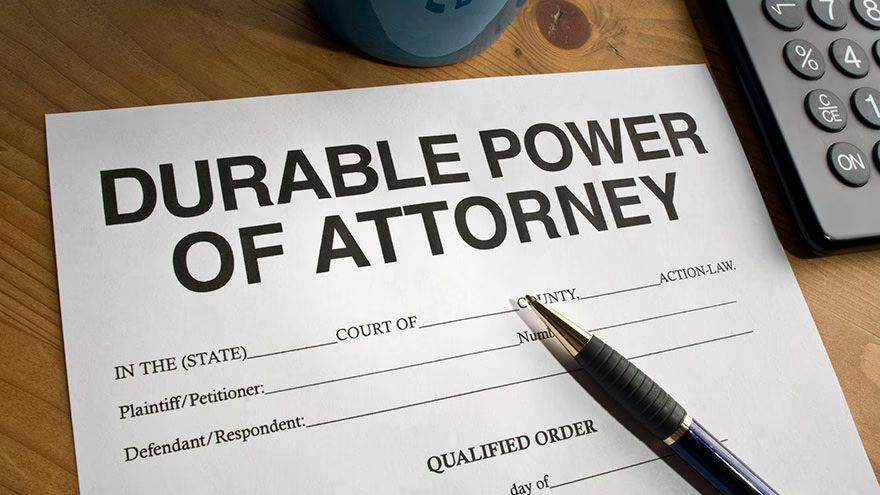
How to Overturn a Durable Power of Attorney depends on who is acting, why the document is being challenged, and whether the person who signed it still has legal capacity.
This is general legal education, not legal advice. Power of attorney law is state specific, and a court fight can affect banking, health care, housing, family relationships, and estate plans.
Start With The Right Word
People often say overturn when they mean revoke, replace, limit, challenge, or ask a court to review an agent's conduct. Those are different paths.
If the principal is competent, revocation may be direct. If the principal lacks capacity, relatives usually need evidence and a legal process rather than simply announcing that the agent is out.
If The Principal Has Capacity
The person who created the durable power of attorney usually has the cleanest route: sign a written revocation or a new document under state rules, then deliver notice to the agent and any bank, broker, facility, or person relying on the old one.
Livecub's POA revocation guide is the closer topic if the principal can still decide. The key is notice; an old agent may keep acting if third parties never learn the authority ended.
Read The Document

Before accusing anyone, read the signed document. Check the date, witnesses, notary, agent name, alternate agent, effective date, powers granted, limits, and any clause about compensation or accounting.
The American Bar Association explains that a power of attorney gives one or more people authority to act for another person, and that state rules differ. Its power of attorney overview is a useful starting point.
Look For Capacity Problems
A challenge may argue that the principal lacked capacity when the document was signed. Evidence may include medical records, medication changes, cognitive testing, witness accounts, or unusual timing.
Capacity is not the same as making a choice relatives dislike. A person can make an unpopular choice and still have legal capacity. The facts need to show inability, pressure, fraud, or another legal defect.
Look For Undue Influence
Undue influence means the document may have been shaped by pressure, isolation, fear, dependency, or manipulation. Warning signs include a new agent suddenly controlling visits, mail, phone calls, money, or medical access.
These cases are fact-heavy. A lawyer may ask who arranged the signing, who paid for it, who was present, and whether the result differed sharply from earlier plans.
Agent Misuse After Signing
Even a valid document can be misused. The agent may exceed authority, mix funds, pay personal bills, hide records, change beneficiaries without permission, or sell property below fair value.
The Consumer Financial Protection Bureau's Managing Someone Else's Money guides explain that agents handling money for another person act as fiduciaries and must avoid misuse.
Ask For Records

If you have legal standing, an attorney may request an accounting, bank records, transaction history, receipts, property documents, or care invoices. Some states allow interested people to ask a court for review.
Do not secretly take records, break into accounts, or move money on your own. Bad evidence gathering can damage a good case.
Use The Court When Needed
If the agent refuses to stop, the principal lacks capacity, or assets are at risk, the next step may be court. Possible requests include suspending authority, ordering an accounting, appointing a guardian or conservator, or reversing improper transfers.
Court involvement can overlap with later estate issues. Livecub's probate court overview explains a different process, but it helps families understand why legal authority must be documented.
Emergency Situations
If there is immediate financial exploitation, neglect, or danger, call the proper emergency, adult protective services, bank fraud, or law enforcement channel in your area. A lawyer can also ask about temporary court orders.
An American Bar Association/NAPSA training on power of attorney abuse lists creation problems such as incapacity, forgery, fraud, misrepresentation, and undue influence, as well as later self-dealing. The POA abuse training material is aimed at professionals but shows the issue clearly.
Banks And Third Parties
Banks, title companies, care facilities, and insurers may need written proof before they stop honoring a power of attorney. A phone call from a relative may not be enough.
Send revocations, court orders, or replacement documents to each place that used the old authority. Keep proof of delivery.
Create A Replacement Plan
Overturning authority does not answer who will pay bills, speak with doctors, manage housing, file taxes, or protect property tomorrow. A replacement plan may be needed before the old agent is removed.
If a new form is being prepared, Livecub's power of attorney form guide can help readers understand why names, powers, dates, and signing details matter.
Estate And Trust Confusion
A durable power of attorney usually ends at death. It does not let the agent manage the estate after death unless another role, such as executor or trustee, applies.
If property is held in a trust or moves after death, Livecub's trustee death property transfer guide may be a better next topic than a POA challenge.
Talk To Counsel Early

A short meeting with an estate or elder-law attorney can prevent expensive mistakes. Bring the document, timeline, bank concerns, medical facts, contact list, and copies of any suspicious transactions.
Livecub's estate lawyer questions can help organize that first meeting so the conversation stays practical.
Keep The Principal Centered
If the principal can still speak for themselves, their wishes should be documented directly. Courts and banks will usually care more about the principal's decision than about which relative is most upset.
Arrange a private meeting with counsel if pressure is suspected. A lawyer may want to speak with the principal away from the proposed agent, relatives, or caregivers.
Do Not Create A Second Problem
Families sometimes move money, hide cards, block visits, or remove property before getting advice. Those acts may look protective, but they can also create liability or make the facts harder to sort out.
Use lawful tools: written notice, bank fraud channels, adult protective services, temporary orders, or an attorney letter. The response should match the evidence and the urgency.
Medical Versus Financial Authority
A durable financial POA is different from a medical power of attorney. Some documents cover money only, some cover health care only, and some families have both.
If medical bills or health decisions are part of the dispute, do not assume one paper controls everything. Livecub's surviving spouse medical bills article shows why health care decisions and debt rules can be separate.
Notice After Court
If a judge suspends or removes an agent, the order still needs to reach banks, brokers, title companies, care facilities, and other people who relied on the old POA.
Ask for certified copies if needed. Keep a log of where each copy went, who received it, and when access was changed.
Settlement And Family Agreements
Not every case ends in a trial. Some families resolve the issue through a new agent, accounting, repayment, guardianship plan, or written agreement about future records.
Settlement should be documented carefully. A handshake can collapse if money, memory, or family distrust is already part of the case.
Timing Matters
The sooner suspicious conduct is addressed, the easier it may be to preserve records and prevent further loss. Delay can make bank trails, witness memories, and medical evidence harder to collect.
Acting quickly does not mean acting recklessly. Get advice, document facts, and use the proper notice or court route.
Frequently Asked Questions
Can a family member overturn a durable power of attorney?
A family member cannot usually cancel it by preference alone. They may need the principal's revocation, legal standing, evidence, and sometimes a court order.
Can the principal revoke a durable POA?
Usually yes if the principal has legal capacity. The revocation should follow state rules and be delivered to the agent and every third party relying on the old document.
What evidence helps challenge a POA?
The signed document, medical records, witness statements, bank records, unusual transfers, isolation patterns, and proof of pressure or fraud may matter.
Does a new POA automatically cancel an old one?
Sometimes, but not always cleanly. The new document should say what happens to earlier powers, and notice should be sent to affected people and institutions.
Should I call the bank first?
If money is at immediate risk, contact the bank's fraud or legal department, but also speak with a lawyer about the right court and notice steps.
Overturning a durable power of attorney is less about family disagreement and more about authority, capacity, evidence, and notice. Start with the document, protect assets if there is risk, and get state-specific legal help before taking irreversible steps.

Patrick Harwood
Edits sports, consumer-finance and general legal explainers. Regulated or time-sensitive topics link to primary sources and are not professional advice.




Leave a reply
Replying to