

How to Search for Self Identity is not a single personality quiz or a dramatic reinvention. It is a steady process of noticing values, roles, relationships, history, limits, and the choices that feel honest over time.
This is general mental-health education, not therapy. If identity questions come with self-harm thoughts, severe depression, trauma symptoms, or fear for your safety, reach out for professional or crisis support.
Start With Values
Values are the qualities you want your life to show: honesty, steadiness, creativity, faith, care, courage, learning, or rest. Write five values and circle the two you actually want to practice this month.
Identity becomes easier to see when values are tied to actions. A value that never affects a choice may be an idea you admire, not a current guide.
Separate Roles From Self
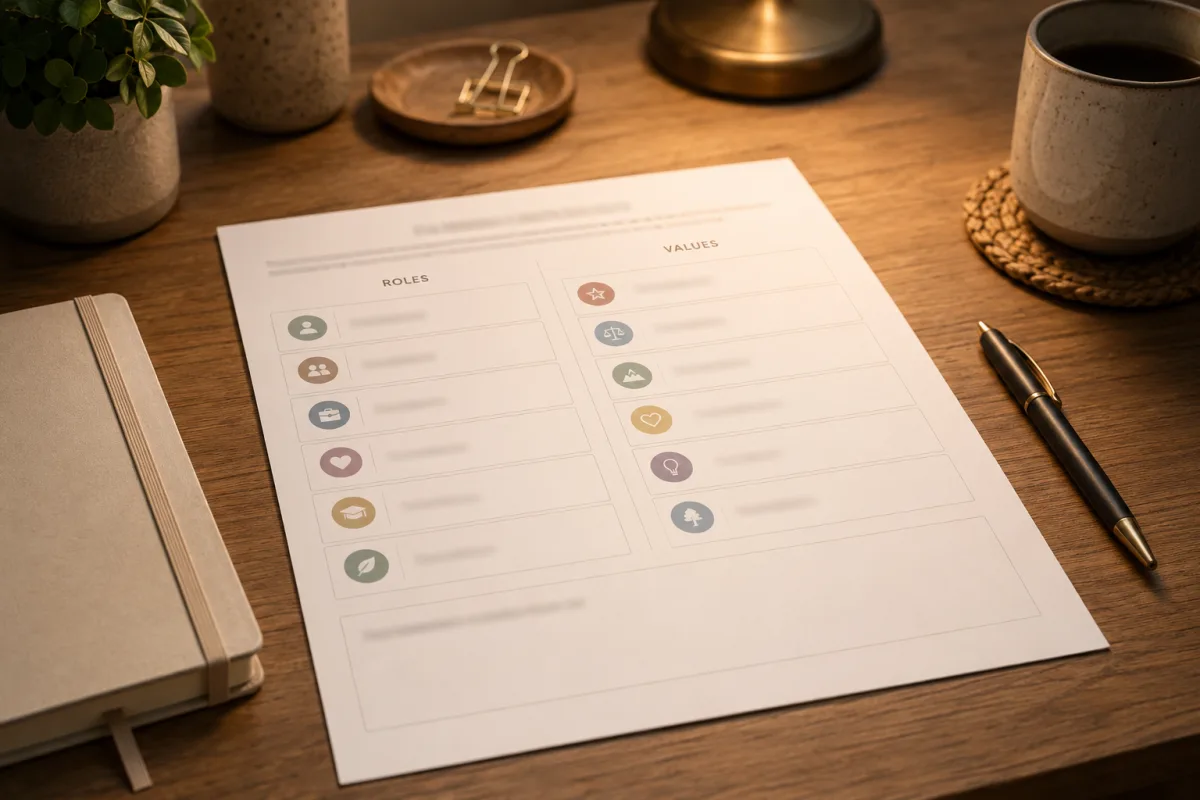
Roles matter, but they are not the whole self. Student, parent, partner, worker, patient, athlete, or caregiver can describe real parts of life without becoming a cage.
Ask which roles give energy, which roles drain you, and which roles were chosen by other people's expectations.
Track Energy
For one week, note what leaves you steadier and what leaves you smaller. Include people, work, media, food routines, sleep, movement, and places.
NIMH says self-care can support mental health and treatment recovery. Its mental health self-care page includes sleep, exercise, food, and connection as practical supports.
Use A Journal

A journal can hold identity questions without forcing quick answers. Try prompts such as: I feel most like myself when, I hide when, I want to be known for, and I no longer want to perform.
Livecub's food journal guide is about meals, but the same habit of honest tracking can help with identity patterns.
Look At Avoidance
Avoidance can hide identity. If you avoid speaking, applying, dating, creating, or resting, ask what belief is underneath the avoidance.
Livecub's stage fright guide and sports tryout nerves article are related when fear of being seen blocks action.
Ask Safe People
Ask two grounded people what they notice about you when you seem most alive, most tense, and most honest. Choose people who can answer without using the question to control you.
Do not outsource identity. Use outside feedback as data, then compare it with your lived experience.
Notice Body Signals
The body often reacts before a clear thought forms. Tight chest, easy breath, heavy stomach, relaxed shoulders, and restless legs can all give clues.
Body signals are not proof by themselves, but they can point to places where a choice needs more attention.
Identity And Mental Health
Identity questions can become painful during grief, migration, coming out, divorce, illness, job loss, or family conflict. Confusion does not mean failure.
SAMHSA's National Helpline can connect people in the United States with mental health and substance use treatment referral information.
Speech And Safety
If identity questions involve shutting down in certain settings, severe anxiety, or not being able to speak, that may need more than journaling.
Livecub's selective mutism article is a related mental-health topic where structured support matters.
Try Small Experiments

Try a small identity experiment: wear a color you like, say no once, attend a group, practice a skill, change a routine, or tell a safe person one true thing.
Small experiments reduce pressure. You are gathering evidence, not announcing a final version of yourself.
Identity Is Not Urgent
Identity work often feels urgent when life changes quickly. Slow the process down if urgency is making you choose from panic rather than honesty.
A good next step can be one page of notes or one conversation, not a full life decision.
Culture And Family
Family, culture, religion, language, class, and community can shape identity in deep ways. The goal is not to erase those influences; it is to notice which ones still fit and which ones need renegotiation.
Some parts may remain meaningful even when other expectations no longer work.
Boundaries
Identity often becomes clearer when boundaries become clearer. Notice where you say yes because you want to and where you say yes because you fear being disliked.
A small no can teach more about identity than a long quiz.
When To Seek Therapy
Therapy can help when identity questions are tied to trauma, shame, family pressure, dissociation, depression, or unsafe relationships.
You do not need a finished explanation before asking for help.
Life Timeline
Draw a simple timeline of five turning points: a move, friendship, loss, achievement, illness, job, belief change, or family shift. Under each one, write what it taught you about yourself.
A timeline helps because identity is often easier to see in patterns than in isolated memories.
Values In Conflict
Sometimes two real values conflict. You may value family and independence, stability and creativity, privacy and connection, or loyalty and honesty.
A conflict does not mean one value is fake. It means the next choice needs a clear priority for this season.
Digital Identity
Online habits can blur identity. Notice which accounts make you perform, compare, hide, argue, or feel more honest.
A short break from one platform can show whether the voice you use there is truly yours or mostly a response to pressure.
Work And Calling
Work can express identity, but it does not have to carry the whole self. A job may be practical, meaningful, temporary, or simply a way to support other parts of life.
Ask what kind of work rhythm, people, and problems fit you, not only what title sounds impressive.
Identity In Relationships
Notice who you become around different people. Some relationships make honesty easier; others make you shrink, perform, or stay quiet.
This does not mean every hard relationship must end. It means identity work should include boundaries and support.
Decision Audit
Look at recent decisions and ask which ones felt aligned, which felt forced, and which were made to avoid conflict. Patterns in decisions reveal current identity better than abstract labels.
Use the audit to choose one future decision more deliberately.
Old Labels
Old labels can follow a person long after they stop fitting: quiet one, smart one, difficult one, helper, failure, rebel, or responsible one.
Write down labels you inherited and decide which ones still help, which ones hurt, and which ones are incomplete.
Identity And Change
Changing identity can make other people uncomfortable because they knew the old pattern. Their discomfort does not automatically mean your change is wrong.
Give important people time, but do not let their surprise become the only measure of truth.
Creative Clues
Music, clothes, books, rooms, art, movement, and food preferences can all show pieces of identity. These clues are not shallow; they are ways people express belonging and taste.
Notice what you choose when no one is grading it.
Quiet Versus Numb
Quiet can mean peace, but it can also mean numbness. Ask whether stillness leaves you rested or cut off from yourself.
If numbness persists, especially after trauma or depression, therapy can help reconnect safely.
Identity Statement
Try a temporary statement: Right now, I am someone who values, needs, is learning, and is no longer willing to. Keep it editable.
A temporary statement reduces pressure because identity can be revised with new evidence.
Body Signals
Identity is not only an idea in the head. Notice what your body does around certain choices: tension, ease, fatigue, warmth, dread, or relief can show where a decision feels forced.
Body signals should not make every decision alone, but they give useful evidence when the mind is trying to please too many people.
Private Honesty
Some answers are too new to announce. Keep a private note where you can admit what you want, what you envy, what you miss, and what you fear losing.
Private honesty gives identity a place to form before it has to survive other people's reactions.
Frequently Asked Questions
How do I start searching for self identity?
Start with values, roles, energy patterns, journaling, safe feedback, and small experiments.
Can identity change over time?
Yes. Identity can shift with age, relationships, culture, health, grief, work, and new choices.
Should I take personality tests?
They can be prompts, but they should not define you or replace lived experience.
What if identity questions feel scary?
Talk with a therapist, trusted person, or crisis support if confusion feels unsafe or overwhelming.
How do I know what is really me?
Look for repeated values, honest choices, body cues, and patterns that remain after pressure fades.
Searching for self identity is a patient practice. Track what feels honest, test small choices, ask safe people, and get support when confusion becomes distress.

Linda Fehrman
Edits general wellness and relationship explainers. Health material is educational, avoids diagnosis and links to health-authority guidance.




Leave a reply
Replying to