

How to Wash an Infant is mostly about warmth, grip, and calm. Babies do not need long baths or complicated products. They need safe water depth, steady hands, mild cleaning, and an adult who stays within arm's reach the whole time.
This article is general infant care education, not medical advice. Call your baby's doctor for fever in a baby under 3 months, poor feeding, unusual sleepiness, spreading rash, blisters, signs of infection around the umbilical cord or circumcision site, or any concern that feels urgent.
How Often To Bathe
Most infants do not need a full bath every day. Two or three baths a week may be enough if the diaper area, face, neck folds, and hands are cleaned as needed. Too much bathing can dry sensitive skin.
HealthyChildren.org from the American Academy of Pediatrics says in its newborn bathing guidance that bathing two or three times a week is enough for many newborns, as long as the diaper area is cleaned well.
Gather Supplies First

Set out a towel, washcloth, clean diaper, clothes, mild fragrance-free cleanser if using one, and anything needed for cord or circumcision care. Put supplies within reach before the baby touches water.
Never leave to grab something. If you forgot an item, wrap the baby in a towel and take the baby with you.
Use Safe Water
Use warm, not hot, water. Test with your wrist or elbow. Keep the room warm and the bath short. A few inches of water is enough for a baby tub. Babies can slip quickly, even in shallow water.
The NHS washing and bathing your baby guidance says never leave a baby alone in the bath, even for a second.
Sponge Baths Before The Cord Falls

Until the umbilical cord stump falls off and the area is healing, many families use sponge baths. Lay the baby on a towel, keep most of the body covered, and clean one area at a time.
Pat the cord area dry and follow the discharge instructions from your hospital or pediatrician. Call for redness spreading from the cord, bad smell, pus, swelling, fever, or a baby who seems ill.
Support The Head And Neck
Infants are slippery when wet. Support the head and neck with one hand and wash with the other. Keep your grip gentle but secure. If you feel nervous, start with sponge baths until your confidence grows.
For premature or low birth weight babies, ask whether bathing instructions differ. Livecub's low birth weight and preterm infant article can help with context, but your baby's medical team comes first.
Clean From Cleanest To Dirtiest
Start with the face using plain water. Wipe eyes from inner corner outward with separate parts of the cloth. Clean behind ears, neck folds, hands, armpits, and diaper area. Wash hair last if needed, because wet hair can make babies cold.
Use very little cleanser. Strong scents, bubble bath, and adult products can irritate infant skin.
Diaper Area
Clean front to back. For girls, wipe gently from front to back and avoid scrubbing. For boys, clean around folds gently and do not force the foreskin back if uncircumcised. Follow clinician instructions for circumcision care.
Livecub's circumcised infant care guide and circumcision site care guide can help with related care questions.
After The Bath
Lift the baby with both hands, wrap immediately in a towel, and pat dry. Dry folds carefully: neck, armpits, groin, behind ears, and between fingers and toes. Put on a clean diaper and clothes before the baby chills.
If the baby often hiccups or spits up after care routines, Livecub's newborn hiccups guide may help with feeding-related comfort questions.
Skin Problems During Bathing
Rash, dry patches, cradle cap, diaper irritation, or peeling skin can change bath choices. Do not scrub flakes or blisters. Avoid medicated creams unless the pediatrician recommends them.
Livecub's baby rash blister guide can help with warning signs, but fever, spreading rash, blisters, pus, or a sick-looking baby needs medical advice.
Bath Safety Rules
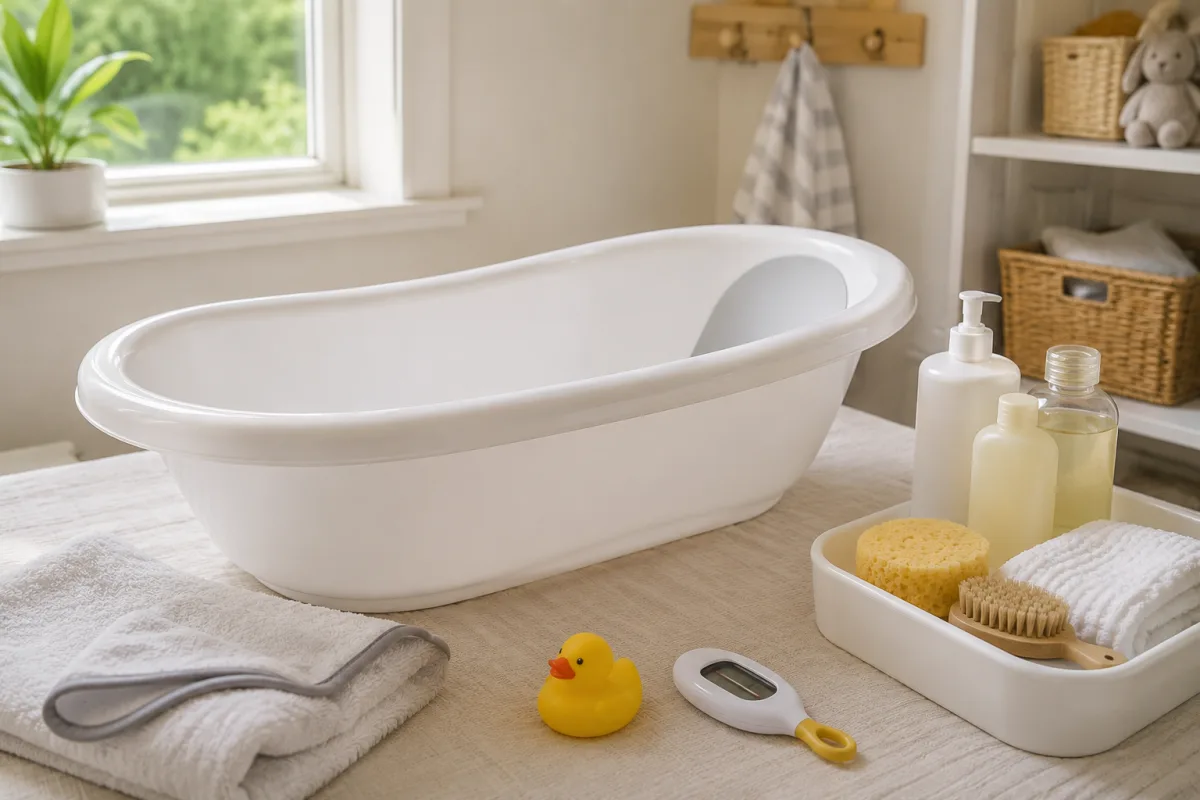
Stay within arm's reach. Ignore the phone. Do not rely on bath seats as safety devices. Empty the tub right away. Keep hot drinks, razors, medicines, and electrical items away from the bathing area.
Mayo Clinic's newborn care guidance also emphasizes supporting the baby's head and neck and using gentle care.
If Your Baby Hates Baths
Try shorter baths, warmer room temperature, a towel over the belly, soft singing, or sponge baths for a while. Some babies dislike being undressed more than they dislike water.
Keep the goal simple: clean enough and safe enough. A crying baby does not need a long spa routine.
Face Neck And Hands
Some of the dirtiest places on a baby are small: milk under the chin, lint between fingers, spit-up in neck folds, and diaper cream on thighs. These areas may need gentle wiping on days when you skip a full bath.
Open folds carefully, clean with a damp cloth, and dry by patting. Moist folds can get irritated fast, especially in warm rooms or under tight clothing.
Cord And Circumcision Care
If the umbilical cord stump is still attached, follow the hospital's discharge instructions. Keep the area dry unless your clinician told you otherwise. Do not pull the stump, pick crust, or cover it tightly with a diaper waistband.
For circumcision care, use only the ointment, gauze, and cleaning steps your clinician gave you. Bathing advice can change based on the method used and how the area is healing.
Premature Or Medically Fragile Babies
Babies who were premature, had NICU care, use oxygen, have feeding tubes, or have skin problems may need a different bathing plan. Their body temperature can drop quickly, and medical devices need special handling.
Ask the care team whether sponge baths are safer, how long baths should last, and what signs mean the baby is getting cold or tired. Written instructions help tired parents avoid guessing.
Product Choices
Plain water is enough for many areas. If you use cleanser, choose a mild baby product without heavy fragrance. More foam does not mean cleaner skin, and leftover soap can irritate folds.
Skip bath oils, strong perfumes, adult exfoliants, and powders. If a product causes redness or dryness, stop using it and ask the pediatrician what to try next.
Bathing With Two Adults
In the first weeks, two adults can make baths easier. One supports the baby while the other handles the cloth, towel, diaper, and clothes. This is especially helpful after a C-section or during recovery from birth.
Decide roles before the baby is undressed. Clear roles prevent the moment where both adults reach for supplies and nobody has a steady hand on the baby.
Temperature Drops Fast
A baby can get cold during the short walk from bath to towel. Warm the room first, keep towels open and ready, and cover the baby's head and body quickly after lifting from water. If the baby looks mottled, shivers, or becomes unusually sleepy, end the bath.
Do not use space heaters, hair dryers, heating pads, or very hot towels near the baby. Gentle room warmth and quick drying are safer than trying to add heat after the baby is already chilled.
Baths After Feeding
Some babies spit up if they are bathed right after a full feed. Others get too hungry and upset if a bath is delayed too long. Choose a time when the baby is awake, reasonably calm, and not frantic for milk.
If your baby has reflux, poor weight gain, breathing problems, or special feeding instructions, ask the clinician whether bath timing should change.
Frequently Asked Questions
Should I bathe my infant every day?
Usually no. Many infants only need a few baths a week plus daily cleaning of messy areas.
Can I use regular soap?
Use mild baby-appropriate cleanser sparingly, or plain water for many areas.
When can I use a baby tub?
Ask your pediatrician, especially before the umbilical cord area has healed.
What if my baby cries the whole bath?
Keep it short, warm, and calm. Sponge baths are fine while confidence builds.
When should I call the doctor?
Call for fever, infection signs, spreading rash, blisters, poor feeding, or unusual sleepiness.
The Safe Bath Plan
Wash an infant by preparing supplies first, using warm shallow water, supporting the head and neck, cleaning gently from cleanest to dirtiest, drying folds well, and never leaving the baby alone near water.

Alyssa Curlin
Edits general health, nutrition and education explainers. Medical topics are educational and link to public-health guidance.




Leave a reply
Replying to