
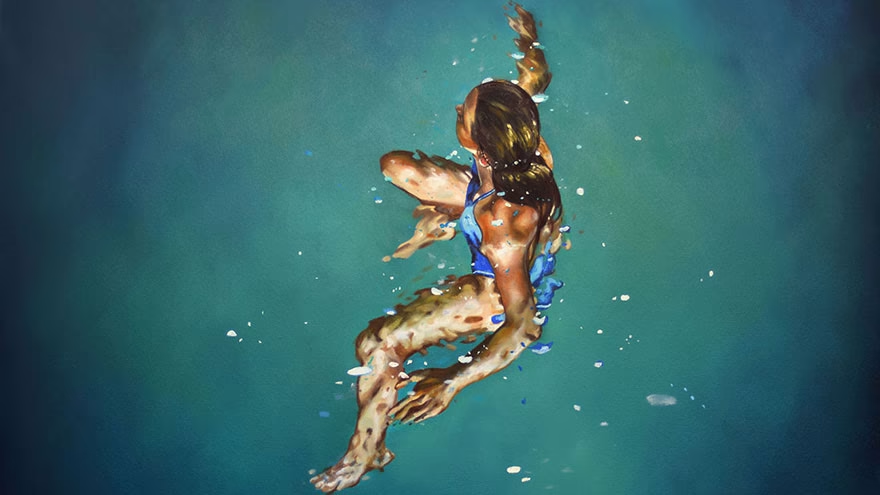
Treading Water Can Be a Real Workout
Is Treading Water Good Exercise? Yes, when it is done safely and with enough effort. It asks the legs, arms, core, lungs, and coordination to work together while the body stays upright in water.
It can feel easier on joints than land exercise because the water supports some body weight, but that does not mean it is effortless.
The water may be gentle on impact, but it still makes you work.
Why Water Changes the Workout
Water gives support and resistance at the same time. Buoyancy reduces some weight-bearing stress, while resistance makes every kick and arm sweep harder than it looks.
Mayo Clinic's guide to aquatic exercise says water exercise can improve heart health, reduce stress, and improve muscular endurance and strength.
Water exercise is low impact, not low effort.
What Muscles Treading Water Uses
The legs do much of the work, especially the hips, glutes, thighs, calves, and feet. The core helps keep the body upright. The arms help with balance and lift.
Different techniques shift the emphasis. A flutter kick feels different from an eggbeater kick. Wide arm sculls feel different from small hand movements.
For land-based coordination training, Livecub's basic aerobic steps guide gives readers another way to think about rhythm and repeated movement.
Start Where You Can Stand or Hold the Wall
If you are new to treading water, start in a supervised pool where you can stand, touch the wall, or use a flotation aid. Do not test endurance in deep open water.
Practice short intervals near support: ten to twenty seconds of treading, then rest. Build slowly as breathing and technique improve.
Safety comes before proving how long you can stay up.
Use Calm Arm Sculling
Arm sculling means sweeping the hands gently back and forth to press against the water. Keep shoulders relaxed and elbows soft.
Do not slap the water or push straight down with stiff arms. Smooth hands waste less energy and help the body stay balanced.
If shoulders tire quickly, make the sweep smaller and let the legs share more of the work.
Try a Basic Kick First
A simple flutter kick or bicycle-style kick can help beginners stay afloat while learning. Keep the motion steady instead of frantic.
As you improve, try the eggbeater kick often used in water polo. It takes practice, but it can be efficient because the legs alternate circular motions.
Do not force hip or knee positions that feel painful. Use the technique your body can control.
Learn the Eggbeater Slowly
The eggbeater kick can make treading water more efficient, but it is awkward at first. Practice one leg at a time while holding the wall or using a flotation aid.
Think of each lower leg drawing a small circle. The legs alternate instead of kicking together. Keep the body tall and avoid leaning back too far.
If the hips or knees feel strained, return to a simpler kick and ask a swim instructor for help.
Use Intervals for Fitness
Treading water becomes more useful as exercise when you structure it. Try 20 seconds of treading, 40 seconds of rest, repeated six to ten times.
Later, build to 30 seconds on, 30 seconds off, or one-minute rounds. Keep rests long enough that technique stays clean.
For another low-impact movement option, Livecub's chair dancing guide can help readers who want cardio without running or jumping.
Make It Easier or Harder
To make treading easier, stay near the wall, use a flotation belt, keep intervals short, or use gentler kicks. To make it harder, increase time, reduce rest, raise hands out of the water briefly, or add gentle turns.
Do not add difficulty by panicking, holding breath, or moving into unsafe water. Effort should come from planned changes, not poor control.
A good water workout still needs a progression.
It Can Support Cardio Fitness
The CDC's page on swimming and health says water-based exercise offers physical and mental health benefits and can help people exercise longer in water without added joint or muscle pain.
Treading water can fit into that picture because it keeps the body moving continuously. The harder you kick and scull, the more demanding it becomes.
Use breathing, effort, and recovery to judge the session rather than assuming water exercise is automatically easy.
Use the Talk Test in the Pool
You can still judge effort without a watch. If you can talk in short sentences while treading, the effort is likely moderate. If you can only gasp or cannot keep the mouth clear of water, stop and rest.
Pool heart-rate readings can be tricky because devices vary and water changes how effort feels. Breathing, technique, and safety are more useful than chasing a number.
Never let a fitness goal override the need to stay calm and supported in the water.
It Is Not the Same as Lap Swimming
Lap swimming moves the body forward and trains stroke rhythm. Treading water holds the body in place and trains vertical endurance.
Both can be useful. Treading water may be easier to fit into a crowded pool or family swim, while lap swimming gives clearer distance and pace targets.
Livecub's Pilates or Tai Chi guide can help readers compare other lower-impact exercise styles when they want variety.
Use It as a Pool Circuit
Combine treading water with pool walking, wall push-offs, flutter kicks holding the wall, gentle water jogging, and easy laps if you swim.
A simple circuit might be two minutes of pool walking, thirty seconds of treading, one minute of rest, and one easy lap. Repeat as tolerated.
Keep workouts shorter at first. Water fatigue can sneak up because sweat and effort feel different in a pool.
Add Variety Without Losing Form
Once basic treading feels steady, try gentle variations: hands out for five seconds, arms crossed briefly, slow turns, or alternating faster and slower kicks.
Use these only in safe water with support nearby. If the head dips, breathing gets rushed, or the body tilts backward, return to the easier version.
Variety should train control, not create panic.
Respect Open Water
Treading in a pool is not the same as treading in a lake, river, or ocean. Current, waves, cold water, depth, visibility, and fatigue all change the risk.
Practice fitness treading in a supervised pool. In open water, use appropriate flotation, swim with others, and follow local safety rules.
Strong pool skills help, but they do not remove the need for open-water caution.
Use Treading Water for Cross-Training
Treading water can be useful between running, cycling, court sports, or strength days because it raises effort without pounding the ground.
It also gives the upper and lower body a different coordination challenge. That variety can make a weekly routine feel less repetitive.
If you are using it after an injury, follow guidance from a clinician or coach. Water reduces impact, but it does not make every movement right for every body.
Watch for Fatigue in the Water
Fatigue can show up as frantic kicking, stiff shoulders, dropped hips, or a head that keeps dipping lower. Those are signs to rest, not signs to push harder.
Use the wall before you need it. A planned rest is safer than waiting until technique falls apart.
End the session while you still feel in control. That makes the next pool workout easier to start.
Know the Safety Limits
Treading water is still an aquatic skill. Use supervised pools, avoid swimming alone, and stay out of deep water if you are not confident.
Stop if you feel dizzy, panicked, chilled, cramped, or unable to keep your face safely above water. People with heart, lung, neurological, balance, or seizure conditions should get qualified advice before deep-water exercise.
Children should be supervised closely even if they can tread for a short time.
Frequently Asked Questions
Is treading water good cardio?
It can be. The cardio effect depends on effort, duration, technique, rest periods, and your current fitness.
Does treading water build muscle?
It can build muscular endurance in the legs, hips, core, shoulders, and arms, especially when done in structured intervals.
Is treading water low impact?
Yes, water reduces impact compared with running or jumping, but the movement can still be tiring because water resists every motion.
How should beginners start?
Start near a wall or in water where you can stand, use short intervals, rest often, and practice under supervision if deep water feels challenging.

Olivia Prete
Edits culture and personal-development articles, distinguishing opinion and experience from verifiable claims.
Leave a reply
Replying to