
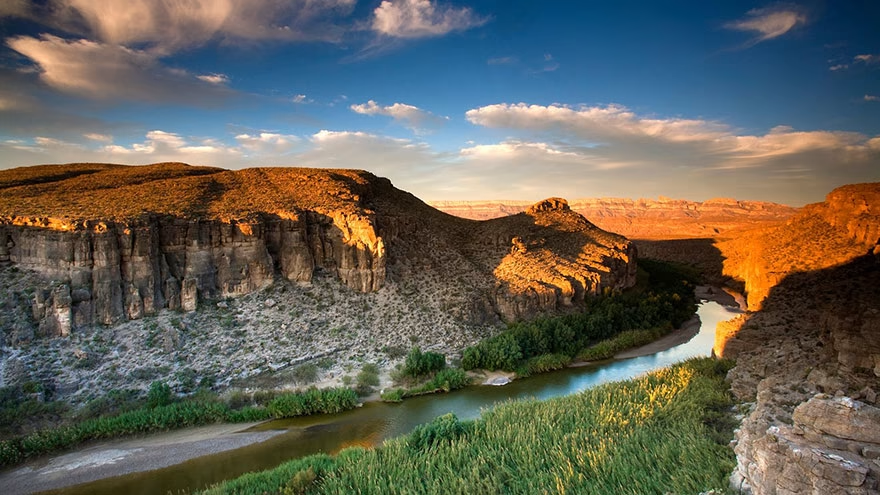
Start with the actual place
Texas Parks and Wildlife state parks page is the first outside check I would use here. Texas state parks cover coast, desert, hill country, forests, lakes, and historic sites, so a single list should not be treated as one kind of trip.
Keep the plan specific, the way you would with gear adjustment, because a general travel idea can miss the thing that changes the day.
Check conditions before the plan hardens
Choose by region, season, drive time, reservation type, camping style, and heat tolerance. Weather, access, hours, closures, public transit, and health rules can change the answer after the article still sounds correct.
Use route habits from weather-aware outdoor planning when the trip involves walking, heat, water, terrain, or remote stops.
Build the day around the weak point
Texas state parks map gives a second check for the part of the trip that can fail fastest. Official park pages should be checked for closures, burn bans, water conditions, and day-use limits.
The weak point may be rain, altitude, long lines, transit gaps, heat, jet lag, health paperwork, or the person in the group with the least energy.
Keep spending and time visible
A beautiful park can still be the wrong choice if the drive, heat, or campsite type does not fit the group. A free stop, cheap ride, or short trail can still become expensive if timing, food, transport, or gear is ignored.
Planning examples like short destination planning are useful only when they include the real cost of getting there and back.
Use official pages for moving details
NPS trip planning is the page to recheck when the detail may change. Use a map to group parks by route rather than reading the list alphabetically.
Do not rely on an old screenshot for hours, fees, advisories, permits, or entry rules. Recheck before booking or leaving.
Leave a lower-pressure option
A good list turns into a trip plan only after timing and reservations are checked. A backup makes the trip feel less brittle.
A shorter walk, indoor stop, earlier meal, cheaper route, rest block, or delayed start can save the day without pretending nothing changed.
Fit the advice to the real constraint
The list should fit region, drive time, reservations, camping, heat, trails, water, pets, and accessibility. A plan that ignores the constraint may sound neat, but it usually fails when someone has to use it.
Name the fixed limit first. The limit may be law, safety, money, weather, attention, age, policy, health, time, or access.
Use one visible measurement
The measurement to watch is reservation status, drive time, weather, campsite type, trail distance, and park alerts. A visible measurement keeps the plan from becoming a guess dressed up as confidence.
Write the measure in plain words. That might be a date, price, work rule, message boundary, mileage, route, symptom, form, or time window.
Plan for the ordinary interruption
Heat, full campgrounds, burn bans, flooding, and long drives can change the best choice. Do not wait for the interruption to design the fallback.
The fallback should be easy to choose. If it requires a long debate, it will not be used when people are tired.
Keep the cost honest
The cost can be reservation fees, fuel, unused passes, gear gaps, and heat-related mistakes. Cost can mean money, trust, sleep, conflict, lost time, safety risk, or cleanup work.
The cleanest plan is the one that names who pays that cost and reduces it before the day begins.
Remove one fragile step
Every topic has a step that breaks first: a missing policy, weak password, bad shoes, no weather check, vague message, crowded lunch, hidden deadline, or unclear ownership.
Fix that step before polishing the rest. Small repairs beat a polished plan with a known weak point.
Keep language plain enough to repeat
Plain language makes the advice usable. Say the actual rule, route, boundary, task, meeting, price, document, or next action.
Plain does not mean thin. It means another person can follow the decision without decoding your intention.
Let the first try teach the second
Note which park fit the season, drive, and group best. Do the review while the detail is still fresh.
The second version should be less dramatic and more accurate. That is usually where the real improvement begins.
Know where general advice stops
Pause when heat warnings, closures, full reservations, or unsafe water and trail conditions are posted. That is the line where a rule, professional, medical, legal, safety, or support resource should take over.
Stopping at that line is not overthinking. It is the part of the plan that keeps people from pretending risk is smaller than it is.
End with one ready action
Choose one action that can happen today: check a policy, save a source, pack gear, rewrite a profile line, ask HR a precise question, set a spending cap, or check the weather.
A ready action keeps momentum without forcing the whole problem to be solved at once.
Make the next attempt easier
Leave the materials where they will be used next time. Save the link, label the note, put the gear by the door, draft the message, or add the appointment to the calendar.
The goal is repeatability. If the next attempt starts with less confusion, the work was useful.
Check the advice against real behavior
Advice is only useful if it changes what someone actually does. Read the plan once and ask what behavior would look different tomorrow.
That behavior might be checking a park alert, setting an app boundary, documenting a pay issue, choosing a public meeting place, packing medicine, or moving a cord out of a walkway.
Protect the person with the least room
The person with the least time, money, privacy, confidence, legal knowledge, physical stamina, or emotional energy is usually the one who reveals whether the plan works.
Build around that person first. A plan that works only for the most prepared person is too fragile for normal life.
Do not make the first version too big
The first version should be small enough to finish. A short message, one policy check, one weather check, one safer meeting rule, or one corrected schedule can do more than a broad promise.
Small does not mean weak. It means the first move can be completed before doubt, fatigue, or pressure takes over.
Keep proof separate from confidence
Confidence can help someone begin, but proof should guide the decision. Proof might be an official page, a current schedule, a written policy, a repeated behavior, a receipt, or a checked route.
When confidence and proof disagree, use proof. That habit prevents old assumptions from making the choice for you.
Watch for a pattern, not one awkward moment
One awkward message, hard workday, rainy route, or messy meeting may not define the whole topic. A pattern deserves more weight.
Look for repeated pressure, repeated confusion, repeated missed deadlines, repeated unsafe conditions, or repeated costs. Patterns are where decisions become clearer.
Close with a clean handoff
If another person needs to act, hand off the exact next step. Say who checks the rule, who books the ticket, who updates the chart, who follows up with HR, or who ends the conversation.
Ownership prevents drift. Without a named owner, even a good plan can sit untouched.
Review the point of friction
After the first pass, name the one point that still feels rough. It might be a rule, route, boundary, bill, work habit, or safety question.
Fix that point before adding new detail. The simplest improvement is often the one that keeps the whole plan moving.
Keep the record easy to find
Save the record where you will look for it later, not where it feels tidy right now. Use a folder, note title, calendar entry, screenshot, or printed page that matches the topic.
This matters when the same question returns weeks later. A findable record can prevent the same search, worry, or argument from starting again.
It also helps another person understand the decision without asking you to rebuild the whole context from memory.
That saves time and reduces preventable confusion.
The record should support action, not become a filing chore.
Frequently Asked Questions
What should I check first?
Open the official park map and choose a region before picking a park.
That first check keeps the rest of the advice grounded.
What is the common mistake?
The common mistake is choosing a Texas state park by name alone without checking region, weather, reservations, and alerts.
It usually happens when the plan moves faster than the facts.
When should I stop and get help?
Stop when heat warnings, closures, full reservations, or unsafe water and trail conditions are posted.
Use a qualified source, local rule, or trusted person when risk is involved.
How do I improve the next try?
Note which park fit the season, drive, and group best.
Keep the note short enough that you will use it again.

Linda Fehrman
Edits general wellness and relationship explainers. Health material is educational, avoids diagnosis and links to health-authority guidance.



Leave a reply
Replying to