
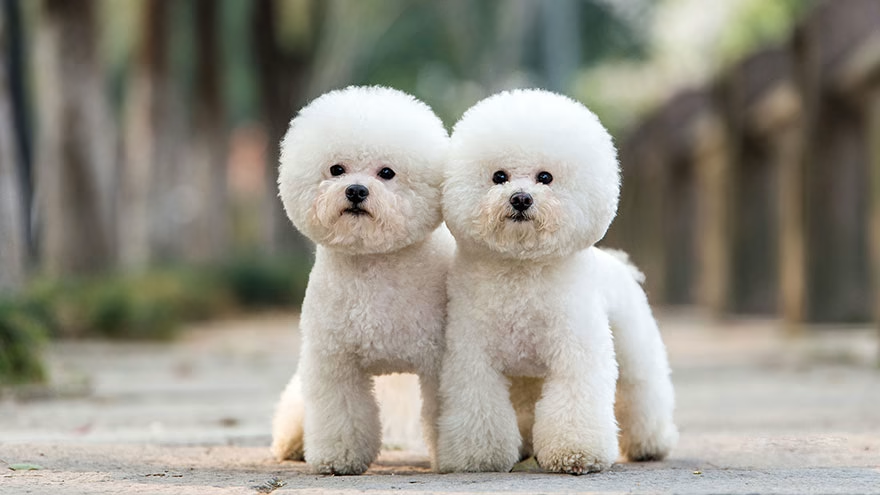
A Bichon Frise puppy can look like a plush white shortcut to an easy family dog. That is exactly why the breeder matters. A responsible Bichon Frise breeder talks about coat care, socialization, health testing, temperament, contracts, allergy limits, and what happens if the match fails. A weak breeder talks mostly about cuteness and deposits.
What should a Bichon Frise breeder tell you first?
A good breeder should explain the breed before selling the puppy. The American Kennel Club describes the Bichon Frise as a small Non-Sporting breed, usually 12 to 18 pounds, with a life expectancy of 14 to 15 years. AKC also describes Bichons as playful, curious, and peppy.
The AKC Bichon Frise profile gives the basic size and temperament frame. A breeder should make that frame real by describing adult dogs in the home, not just puppies in a basket.
If you are comparing small white companion breeds, Livecub's Maltese questions are a useful contrast because grooming and social needs can look similar from a distance.
What health testing should you ask about?

Ask for health testing documentation, not vague reassurance. The Bichon Frise Club of America maintains health and breeder resources, and responsible breeders should be able to discuss eye, patella, hip, and other breed-relevant concerns without becoming defensive.
The Bichon Frise Club of America site is a good starting point for breed education. Use it to understand what questions belong in a serious breeder conversation.
Health testing is not a guarantee. It is risk reduction. A breeder who says their line has never had a problem may be less useful than one who can explain what they test, what they have seen, and how they support buyers.
How should a breeder talk about grooming?
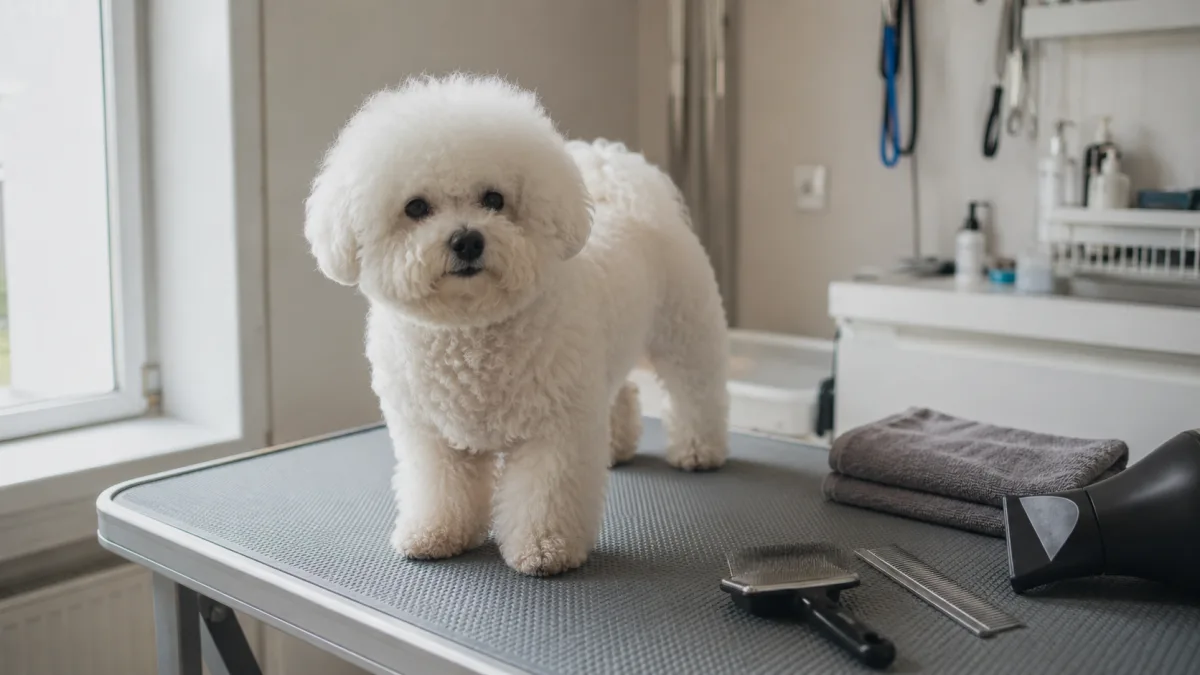
Bichons need serious coat care. The fluffy outline depends on regular brushing, bathing, drying, trimming, nail care, ear checks, and professional grooming for many homes. A breeder who sells the breed as easy-care is skipping a major part of ownership.
Ask how often their adult dogs are groomed, what tools they recommend, and when puppies are first introduced to brushing, face handling, and nail trims. Grooming training should begin before the puppy goes home.
Livecub's longhair Dachshund grooming guide is for a different coat, but the owner habit is the same: grooming works best when the dog learns calm handling early.
Are Bichons good for allergy-sensitive homes?
Bichons are often marketed as low-shedding, but no breeder should promise that a puppy will not trigger allergies. Allergies are individual. Hair, dander, saliva, dust, grooming products, and the home environment all affect reactions.
Visit adult Bichons before committing if allergies are part of the decision. Spend time in the breeder's home or around well-groomed adult dogs, then see how the allergic person reacts later. A breeder who guarantees an allergy outcome is overselling.
Low-shedding is not no-maintenance. The coat that sheds less visibly often needs more brushing and trimming to prevent mats.
What temperament should you look for?
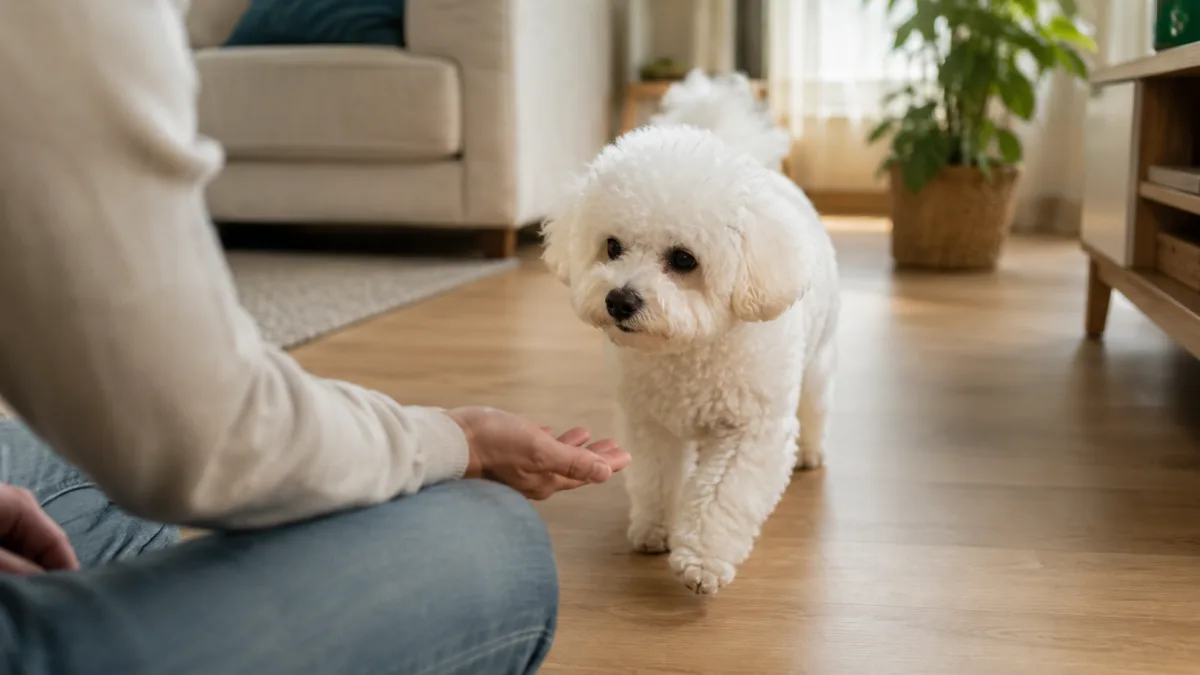
Look for confident, friendly puppies that recover from normal surprises and interact without shutting down or frantic grabbing. Meet adult relatives if possible. Puppy temperament is not a perfect prediction, but adult dogs in the breeder's program tell you what the breeder values.
Ask how the breeder socializes puppies: household sounds, gentle handling, surfaces, crates, grooming, visitors, car rides, and short separations. A Bichon that has never practiced being alone may struggle when real life starts.
If you want a small dog but are still comparing temperament types, Livecub's Miniature Schnauzer questions show how a compact breed can have a very different alertness and training feel.
What questions should you ask before leaving a deposit?
Ask who owns the dam, where puppies are raised, what health testing is completed, how puppies are matched to homes, what vaccinations and parasite prevention are provided, and whether the breeder takes dogs back if an owner cannot keep them.
Ask to see a contract before paying. The contract should explain registration, spay/neuter expectations if any, health terms, return policy, and buyer responsibilities. Do not rely on verbal promises for a 15-year commitment.
A deposit should not silence questions. If the breeder becomes impatient once money is mentioned, slow down. Good breeders expect careful buyers.
How should price and waitlists be handled?
A responsible breeder may have a waitlist, but the waitlist should not feel like a race where the first person to send money wins. Ask what the deposit covers, when it becomes nonrefundable, how puppy matching works, and what happens if the right puppy is not available.
Price alone does not prove quality. A high price can still come from poor breeding, and a modest price can still come from a careful hobby breeder. Look for documentation, living conditions, adult dog temperament, and support after placement.
Pressure is information. If you are told to pay immediately or lose the puppy, step back. A dog who may live 15 years should not be bought under panic.
What red flags should make you walk away?
Walk away from constant availability, pressure to pay fast, refusal to discuss health testing, no questions about your home, no return policy, shipping without conversation, dirty conditions, fearful adult dogs, or a breeder who will not let you see where puppies are raised.
Also be wary of anyone selling multiple unrelated breeds at volume while claiming every puppy is rare, tiny, perfect, or allergy-proof. Marketing language can hide poor breeding practice.
Livecub's Brittany Spaniel breeder recommendations cover a different breed, but the red-flag logic is the same across dogs: health, temperament, purpose, transparency, and support.
What should you notice during a breeder visit?
Look at the adult dogs first. Clean eyes, comfortable movement, reasonable weight, calm handling, and normal household confidence tell you more than staged puppy photos. Puppies should be curious and clean, not hidden away from every normal sound.
The home does not have to look like a showroom. It should smell clean, feel organized, and show that puppies are raised as living animals, not inventory.
How do you prepare for bringing a Bichon home?
Prepare grooming appointments, a crate or safe pen, food transition plan, vet appointment, training treats, brush, comb, puppy-safe shampoo, and a realistic potty routine. Bichons are small, but they still need structure.
Plan for separation training early. Many companion breeds bond tightly and can struggle if every first week is constant cuddling followed by sudden long absences. Short, calm departures and returns teach the puppy that alone time is normal.
Book the first veterinary visit before pickup if possible. Bring the breeder's records, ask about vaccine timing, discuss parasite prevention, and confirm the feeding transition. The first week is not the time to change food, shampoo, schedule, and training plan all at once.
Set grooming expectations from day one. Touch paws, lift ears, look at teeth, comb the coat briefly, and reward calm behavior. Tiny sessions build the adult dog you will need for years of coat care.
How do breeder recommendations differ for rescue or adult dogs?
If you adopt an adult Bichon or Bichon mix, you may not have breeder health records. Ask the rescue or shelter about temperament, grooming condition, dental status, veterinary work, behavior around dogs and children, and separation history.
Adult dogs can be wonderful matches because their coat, size, and temperament are already visible. The trade-off is that you need a careful transition plan and honest veterinary checkup.
For a different breed-health example, Livecub's Staffordshire Bull Terrier health guide shows why adult adoption questions should include known medical history, not just personality.
Frequently Asked Questions
How much should a Bichon Frise breeder know about grooming?
A lot. Coat care is central to ownership. The breeder should explain brushing, professional grooming, face care, mats, and puppy handling practice.
Are Bichon Frise puppies hypoallergenic?
No dog is guaranteed allergy-proof. Bichons may shed less visibly, but allergic reactions depend on the person and the home.
Should I meet the puppy's parents?
Meet the dam if possible and ask about the sire. Adult temperament, health, and grooming condition tell you more than puppy photos.
What if a breeder will not take a dog back?
That is a serious concern. Responsible breeders usually want dogs they produced returned to them or placed with their help if the home fails.
Buy the breeder, not the puppy photo. A good Bichon starts with health honesty, coat honesty, and support after the cute stage passes.

Linda Fehrman
Edits general wellness and relationship explainers. Health material is educational, avoids diagnosis and links to health-authority guidance.


Leave a reply
Replying to