

A Weimaraner can be a beautiful dog and a very poor match for a quiet, low-effort home. The breed was built for work, speed, people contact, and problem solving. Good Weimaraner breeder recommendations should help you look past silver-gray photos and ask whether the breeder is producing healthy, stable dogs for homes that understand the breed.
Is a Weimaraner the right breed for you?
The AKC describes the Weimaraner as a friendly, fearless, obedient sporting dog with high activity needs and a close bond with people. The AKC Weimaraner breed page is a useful baseline before you speak with breeders.
A Weimaraner is not a gray couch ornament. Many need daily exercise, training, social contact, and work for the nose and body. Bored dogs may bark, chew, counter-surf, dig, or invent games the owner does not enjoy.
If you are comparing active sporting breeds, Livecub's German Shorthaired Pointer questions guide is a helpful reference point.
How much exercise should buyers expect?
Ask for a plain answer, not "they need a yard." Many Weimaraners need structured exercise, training games, sniffing, recall work, and mental tasks. A fenced yard can help, but it does not train the dog or tire the brain by itself.
Buyers should be honest about work schedules, travel, weather, and how much time they can give the dog after a hard day. A breeder who places a high-drive puppy in a low-activity home is setting both sides up for frustration.
Exercise should have purpose. Random running may create a fitter dog with the same bad habits.
What should a responsible breeder ask you?
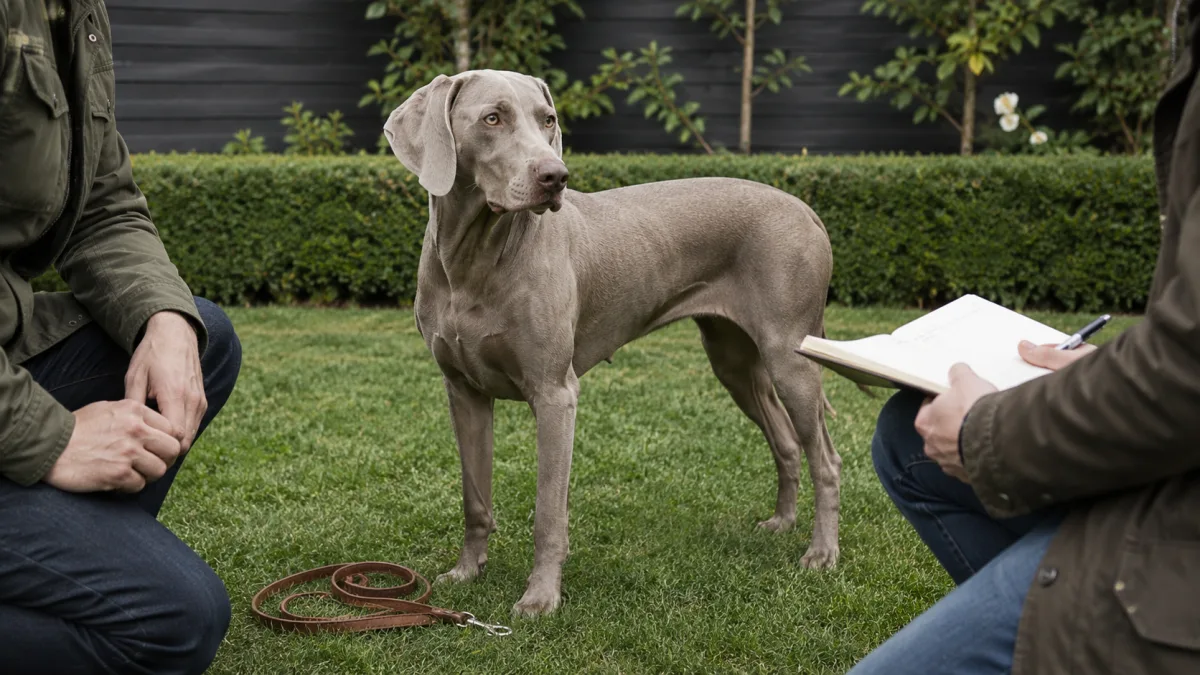
A responsible breeder should ask about your schedule, fencing, training plan, dog experience, exercise habits, children, other pets, and whether you want a hunting, performance, show, or companion prospect. If the breeder asks nothing and only talks about deposit size, slow down.
The Weimaraner Club of America provides breed information and breeder-related resources. The Weimaraner Club of America site is a better starting point than classified listings with vague claims.
A good breeder screens buyers too. That protects the puppy as much as the buyer.
Which health questions matter?

Ask what health testing was done on the sire and dam, what results can be verified, and what health problems occur in the family. Do not accept "vet checked" as a substitute for breed-appropriate screening.
OFA's CHIC program lets buyers look up breed health-screening recommendations and public results. The OFA CHIC breed directory is a useful place to check what responsible screening looks like before you call breeders.
Health conversations should include hips, eyes, thyroid or other breed-club concerns when relevant, bloat awareness, temperament, and longevity. Your veterinarian can help you read results if you are unsure.
For health-question framing in another breed, Livecub's Staffordshire Bull Terrier health guide shows why breed-specific risks deserve plain questions.
What temperament should the breeder describe?
Ask how the parents behave in real life. Are they stable around visitors, children, other dogs, grooming, crates, travel, noise, and recovery after excitement? A beautiful dog with poor nerves can be hard to live with.
Weimaraners often bond closely with their people, so ask about separation practice and crate introduction. A puppy raised with no independence practice may struggle when the new owner has to leave for work.
Ask what the breeder does when a puppy is too bold, too soft, or too busy for a buyer. The answer should involve matching and training advice, not pretending every puppy has the same temperament.
How do hunting and performance lines affect fit?
Some Weimaraners come from hunting, field, performance, show, or companion-focused programs. Those labels are not good or bad by themselves. They tell you what the breeder values and what the puppies may need.
If you want a hiking companion, family dog, hunting partner, or sport prospect, say so clearly. A breeder should explain which puppies might fit and which would be too much. The right puppy is not always the boldest puppy.
What should puppy raising include?

Good puppy raising includes clean housing, daily handling, age-appropriate surfaces and sounds, early crate exposure, litter observation, and honest matching. The breeder should explain why a certain puppy fits your home instead of letting you choose only by color or boldness.
Ask what the puppies have experienced by eight weeks: car rides, nail trims, visitors, household noise, outdoor time, beginning recall, or simple problem solving. Early exposure is not a guarantee, but it gives owners a better starting point.
Matching matters more than picking the flashiest puppy. The busiest puppy in the pen may not be the easiest companion.
What should be in the contract?
Expect a written contract covering identity, price, health terms, registration status, spay/neuter or breeding restrictions if any, return policy, and breeder support. You should know what happens if the dog cannot stay with you later.
Livecub's Brittany Spaniel breeder recommendations offers another sporting-dog comparison for contracts, activity needs, and buyer screening.
What should you look for during a breeder visit?
If visiting is possible, look for clean areas, relaxed adult dogs, safe puppy spaces, and a breeder who is willing to answer questions without rushing. Puppies should look curious and cared for, not hidden in poor conditions.
You may not be allowed to touch very young puppies for health reasons, and that can be normal. But the breeder should still explain where puppies are raised, how they are handled, and when buyers can meet them.
Ask to see the mother when appropriate. Sometimes the sire lives elsewhere, but the breeder should still have information, photos, registered name, and health results.
Should you consider an adult Weimaraner?
A puppy is not the only option. Some breeders place retired show dogs, returned dogs, or young adults that did not fit a program. An adult dog can be easier to evaluate because size, temperament, and energy are already visible.
Adult placement still needs questions. Ask why the dog is available, how it lives in a home, what training it has, how it handles separation, and what support comes with the placement.
What questions should be on your list?
Ask how often the breeder has litters, why this pairing was chosen, what health results are public, how puppies are matched, and what happens if the dog cannot stay with you. Ask what daily life looks like for the adult dogs.
Also ask what the breeder wants you to do in the first month. A helpful answer may include crate routines, recall work, safe exercise, feeding, vet visits, and how to avoid creating separation problems.
What should the first weeks at home look like?
Plan calm structure, not constant excitement. Introduce the puppy to the house in small pieces, start short crate sessions, reward check-ins, and keep exercise age-appropriate. A Weimaraner puppy does not need a social tour of every store in town during the first weekend.
The first weeks set habits. Make rest, recall, handling, and polite greetings part of the routine before the puppy becomes faster, stronger, louder, and more creative every week at home with you and your family.
What red flags should stop the purchase?
Red flags include no questions for buyers, no health-test proof, pressure to pay quickly, multiple litters with little explanation, poor living conditions, no return policy, vague parent information, and promises that every puppy will fit every home.
Another red flag is treating exercise as optional. If the breeder downplays the breed's activity needs because you like the color, you may be talking to a seller rather than a mentor.
For a smaller-breed contrast, Livecub's Miniature Schnauzer questions guide shows how breed fit changes when size, coat, and purpose change.
Frequently Asked Questions
Are Weimaraners good first dogs?
Some can be, but they are demanding. A first-time owner needs time, training help, exercise plans, and a breeder who matches carefully.
What should I ask a Weimaraner breeder first?
Ask about health testing, parent temperament, puppy raising, activity needs, contract terms, and what support is available after purchase.
Should I choose a puppy by color?
No. Color is less useful than temperament, health background, structure, and fit for your home.
Do Weimaraners need a fenced yard?
Many homes benefit from secure fencing, but fencing does not replace training, exercise, and supervision.
A Weimaraner breeder should prepare you, not just sell you. Look for health proof, honest temperament talk, careful matching, and support that lasts beyond pickup day.

Chiara Bradshaw
Covers education, culture and creative topics with an emphasis on readable explanations and verifiable references.




Leave a reply
Replying to