

The first hour after a long trip is a transition zone, not a movie scene. Your husband may walk in happy to see you and still be hungry, overstimulated, behind on messages, stiff from travel, or mentally stuck at the airport gate. Good welcome home romance works because it lowers friction before it asks for attention. A clean place to put bags, warm food, a quiet greeting, and a plan that can flex will feel more romantic than a complicated surprise that demands performance the second he steps through the door.
Relationship researchers and therapists often talk about small rituals, not giant gestures. The Gottman Institute writing on daily rituals of connection treats the moment of reunion as a place where couples either build warmth or accidentally create stress. That idea fits a travel homecoming perfectly: greet the person first, then let the evening unfold.
What should happen before he walks through the door?
Prepare the landing, not a stage. Clear a chair or corner for luggage. Put water where he will see it. Have one food option ready that does not require a decision: soup, sandwiches, pasta, a favorite takeout order, or a snack plate. If the trip involved flying, delays, driving, or work pressure, decision fatigue may be real. The kindest romantic plan is often the one that asks only, "Do you want to eat now or shower first?"
Set your own expectations before he arrives. If you have spent days imagining a dramatic reunion, the real person walking in tired can feel like a letdown. That is not failure. It is biology and logistics. Travel compresses noise, waiting, public behavior, and physical discomfort into one day. Let the first hour be a decompression period.
A small visual cue helps: a lamp on, clean sheets, his favorite drink, or a note near the door. Avoid cluttering the entry with balloons, props, or anything he has to react to immediately. If you like playful setups, save them for later in the evening after food and a shower. The same low-pressure principle applies to other relationship settings, including interactive marriage activities: the setup should invite, not corner.
How do you make the first hour feel calm, not staged?
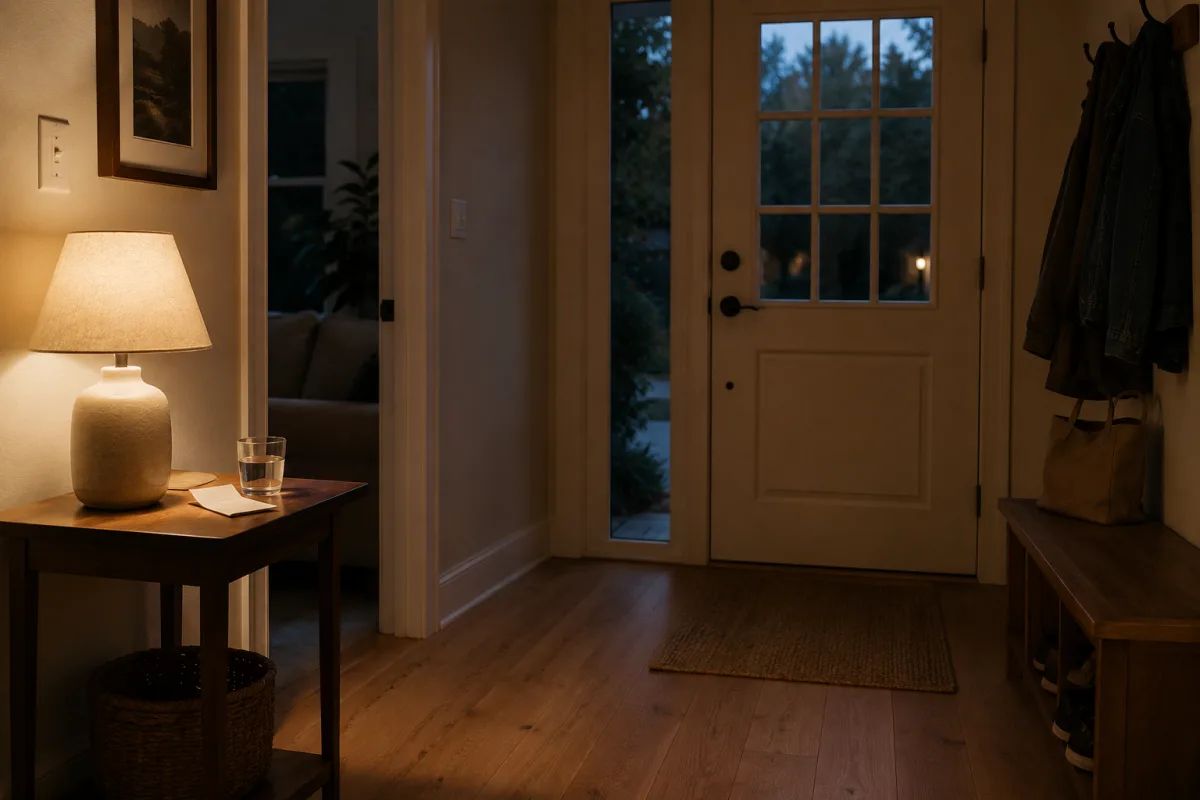
Use a three-part greeting: touch, practical care, and space. Touch can be a long hug, a kiss, or simply taking his hand if he is carrying bags. Practical care is the next sentence: "Food is ready," "The shower is free," or "You do not have to unpack tonight." Space means you do not immediately unload every story, problem, or plan that accumulated while he was gone.
The Gottman piece cites the value of brief undistracted communication, even just two minutes. That is a useful target for the homecoming: two full minutes of eye contact, a real hug, and no phone in your hand. After that, let the rhythm breathe. He may want to tell travel stories right away. He may want ten quiet minutes. Neither response means the romance failed.
One practical script: "I am really glad you are home. I made dinner, and nothing else has to happen tonight unless you want it to." That sentence does more than sound nice. It removes pressure, signals affection, and gives him room to choose connection instead of defending his tiredness.
If physical touch is already a strong part of your relationship, this is a good moment for something simple like sitting close on the couch or offering a shoulder rub. For a more intentional version later, use ideas from a relaxation massage rather than improvising with too much pressure.
What romantic dinner or at-home plan works after travel?
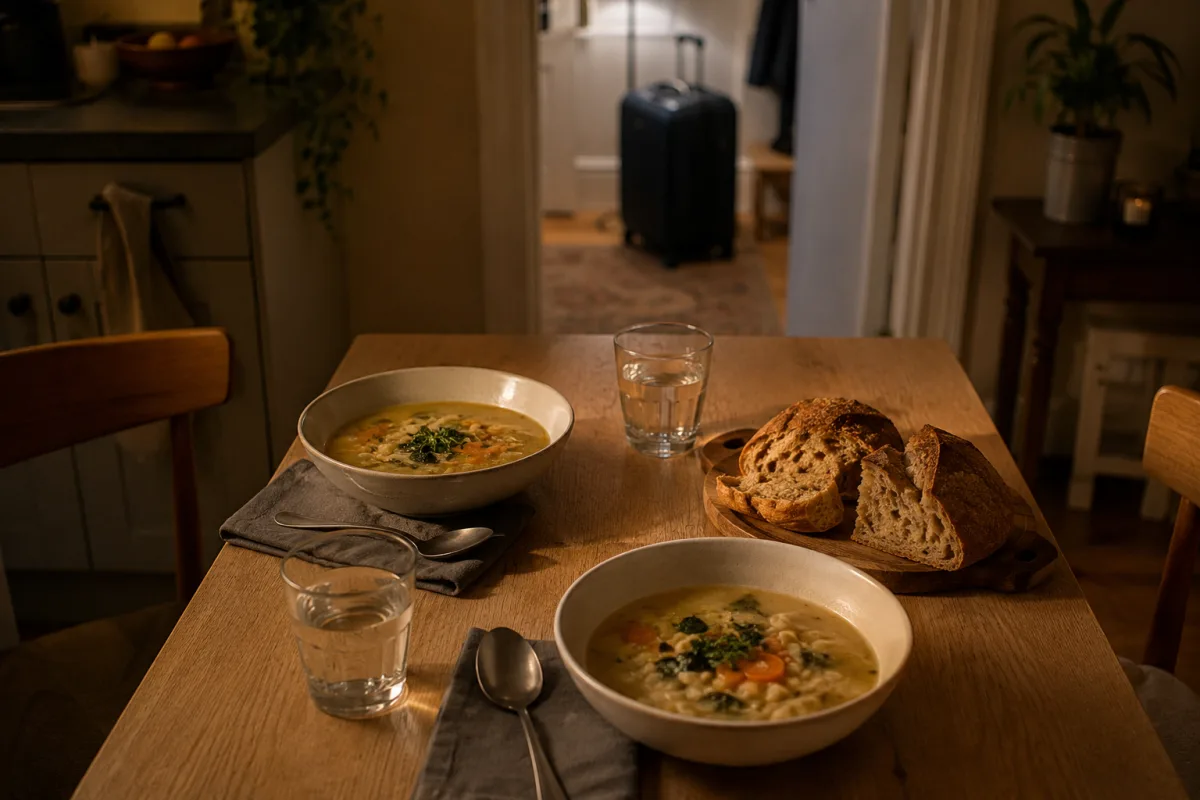
The best welcome-home dinner is familiar, easy to pause, and not time-sensitive. A roast that needed him home at 7:15 sharp is fragile. A pasta sauce, soup, rice bowl, cheese board, slow-cooker meal, or favorite takeout order is forgiving. Travel delays will not ruin it, and he can eat in clean clothes after a shower if that feels better.
Do not underestimate breakfast-for-dinner. Eggs, toast, fruit, pancakes, or a simple skillet meal can feel warm without feeling ceremonial. If he has been eating airport food, plain food may land better than a rich "special occasion" menu. Add one detail that says you paid attention: the hot sauce he likes, the mug he uses, the dessert he never buys for himself.
For the activity, choose something with low cognitive load. A short walk, a familiar movie, a card game, a bath, or ten minutes outside can work. If you want a playful angle, romantic card games fit better after dinner than at the doorway. Start with comfort, then play.
A home date also needs an exit ramp. Say early, "If you are wiped out, we can move this to tomorrow." That makes the plan safer. Oddly, lowering the stakes often makes the evening more intimate because neither person has to perform gratitude on command.
How do you rebuild physical closeness without pressure?
Physical closeness after time apart can feel intense, awkward, or wonderfully easy. All three are normal. Do not assume the reunion has to jump straight from suitcase to sex. Start with contact that has no hidden agenda: a longer hug, feet touching under a blanket, brushing hair from his forehead, or lying next to each other while he talks through the trip.
Pressure usually enters through timing and implication. "I planned all this, so now you owe me romance" is the mood killer. Instead, make desire clear but optional: "I missed being close to you. No rush tonight." That lets him respond as a person, not as the final piece in your plan.
If the trip was long enough that you both developed separate rhythms, expect a small re-entry period. Psyche's guide to long-distance relationships emphasizes communication routines and shared experiences while apart; after reunion, the same idea becomes shared presence. You are not just resuming. You are syncing again.
Touch can be practical, too. Offer to rub his neck, put lotion on dry hands, or sit with him while he stretches. If massage is part of your relationship, keep it slow and ask about pressure. The point is not a spa performance; it is nervous-system downshifting. For couples who already use affectionate touch often, home massage ideas can be adapted both ways.
What if he is tired, distracted, or still in work mode?
Do not compete with the trip. If he is still answering messages, give him a contained window: "Take twenty minutes to close the loop, then dinner is ready." Open-ended phone use can swallow the evening; a clear window respects the work without letting it run the reunion.
If he is quiet, ask smaller questions. "What was the most annoying part of getting home?" is easier than "Tell me everything." "Do you want advice or just a witness?" is better than jumping into solutions. Travel stories often come out in fragments: the delayed flight now, the funny coworker story tomorrow, the stress two days later.
If you feel disappointed, name it gently after the immediate fatigue has passed. Not at the doorway. Try: "I built up the reunion in my head, and I know you were exhausted. Can we plan a little time tomorrow that is just ours?" That protects the relationship from scorekeeping.
This also helps if distance raised insecurity. Do not turn the first night into an interrogation. If there are real trust issues, they deserve a calm conversation, not a trial conducted over reheated dinner. For boundaries around emotional drift, the warning signs in emotional affair patterns are better handled when both people are rested.
How do you turn one welcome-home night into a new ritual?

A one-time surprise is sweet. A repeatable ritual is stronger. OU Health Campus Student Affairs summarizes Gottman-style connection habits as regular rituals for saying goodbye and reuniting. For travel, that might mean the same first meal after every trip, a no-phone walk the next morning, a ten-minute couch debrief, or a shared playlist while unpacking.
Keep the ritual small enough to survive real life. If it requires candles, a three-course dinner, and perfect energy, it will disappear. If it requires tea, a clean bed, and ten honest minutes, it can last for years. The repetition becomes the romance because both people know what home feels like.
You can also build a next-day ritual. The first night handles fatigue. The next day gets the date: breakfast out, a short drive, a walk, a movie, or a slow dinner. WeddingWire's advice on adjusting after long-distance time points toward scheduled quality time and novelty; that matters because reunion is not finished when the suitcase opens.
For milestone trips or anniversaries, connect the welcome-home plan to something larger. A couple nearing a decade together might borrow from 10-year anniversary planning: one meaningful detail, one shared memory, and one plan for what comes next.
Frequently Asked Questions
Should I surprise my husband when he gets home from a long trip?
Yes, if the surprise lowers stress. Food, a clean room, a note, or quiet time usually works better than a large setup that requires an immediate reaction.
What if he just wants to sleep?
Let him sleep. Make the romantic plan movable. A welcome-home breakfast or next-day walk can feel better than forcing connection through exhaustion.
How can I make the reunion romantic without spending much?
Use attention instead of expense: clean sheets, a favorite meal, a phone-free hug, a short walk, or a handwritten note about what you missed.
What should I avoid saying right when he gets home?
Avoid complaints, interrogation, and a long list of chores. If something serious needs discussion, give him time to eat, shower, and re-enter home life first.
How do we reconnect after repeated work trips?
Create a repeatable ritual: the same first meal, a two-minute greeting, a short debrief, or a next-day date. Consistency keeps each trip from requiring a new plan.
The most romantic homecoming is not the one with the most decoration. It is the one where he feels wanted and unhurried at the same time. Build that first, and the rest of the evening has room to become warm on its own.

Linda Fehrman
Edits general wellness and relationship explainers. Health material is educational, avoids diagnosis and links to health-authority guidance.




Leave a reply
Replying to