
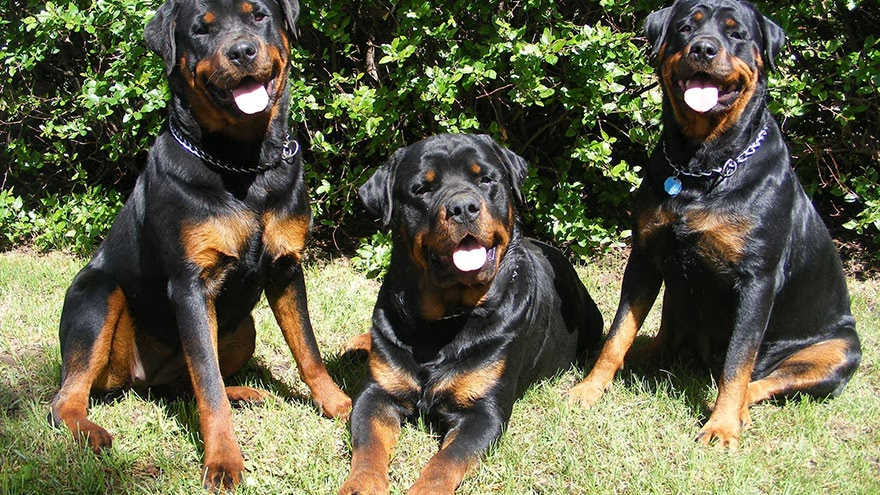
A Rottweiler training guide has to respect the dog's power before discussing commands. Rottweilers are intelligent, strong working dogs with natural confidence and a serious presence. Good training is not about making the dog harsh. It is about teaching a large, capable dog how to move through daily life calmly.
A well-trained Rottweiler can be steady, affectionate, obedient, and useful. An untrained one can become unsafe through pulling, jumping, guarding, overexcitement, or poor judgment around strangers. Start early, stay consistent, and build habits that still work when the dog is full-grown.
What Makes Rottweiler Training Different?
The American Kennel Club describes the Rottweiler as loyal, loving, and confident. That confidence needs guidance. A Rottweiler should not be left to decide every greeting, every doorway, every visitor, and every suspicious sound alone.
Size changes the standard. A toy breed pulling on leash may annoy someone. A Rottweiler pulling on leash can create a real safety problem. Training should focus on impulse control, body awareness, polite greetings, leash manners, recall, and calm rest.
When Should Training Start?
Start the day the puppy comes home. Teach name response, hand target, sit, down, wait, come, drop it, leave it, crate comfort, handling, and settling. Keep sessions short. A puppy can learn a lot in three focused minutes.
AKC's Rottweiler puppy training timeline emphasizes early socialization and good behavior from puppyhood. Do not wait until the dog is strong enough to drag you before teaching leash rules.
How Do You Socialize A Rottweiler?
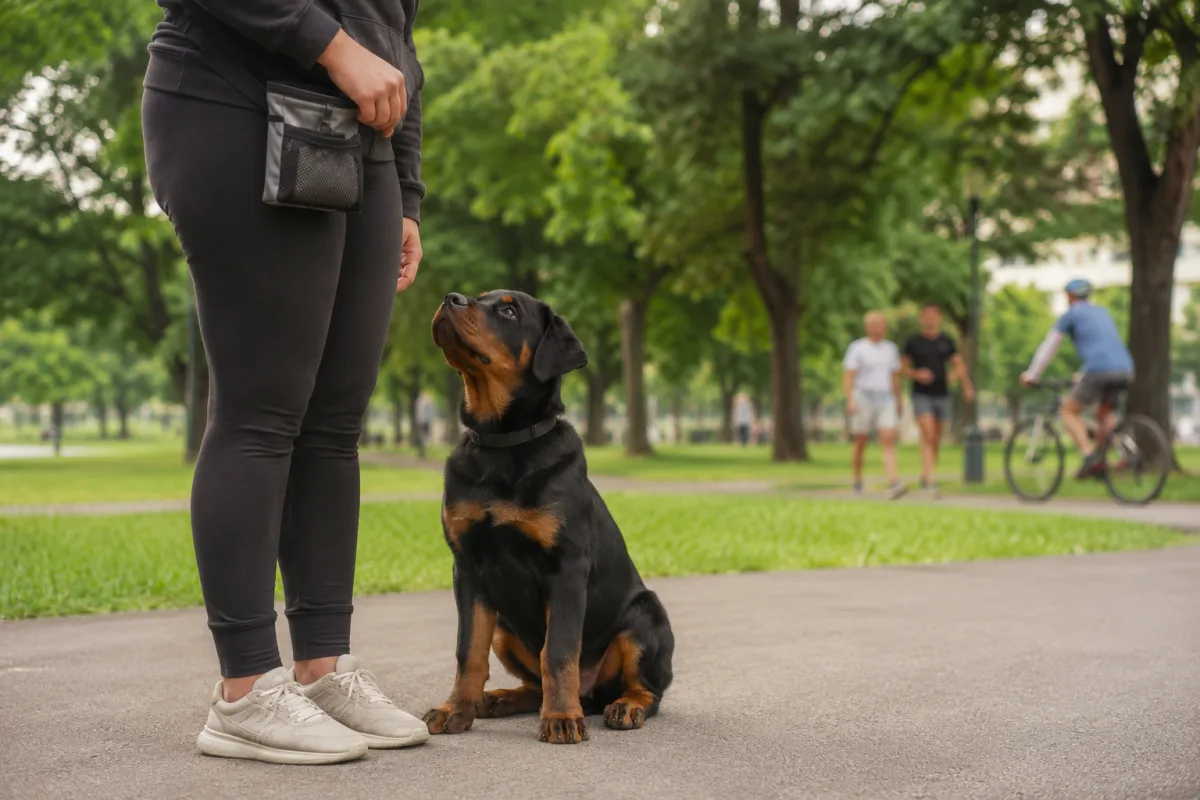
Socialization means calm exposure, not letting every stranger grab the puppy. Let the dog see people, children, bikes, hats, surfaces, traffic, vet handling, grooming tools, and other dogs at a safe distance. Pair those experiences with food and calm exits.
Reward neutrality. A Rottweiler does not need to love every person it sees. It needs to notice normal life and stay under control. Livecub's Rottweiler common questions can help owners think about temperament before training problems appear.
How Do You Teach Leash Manners?
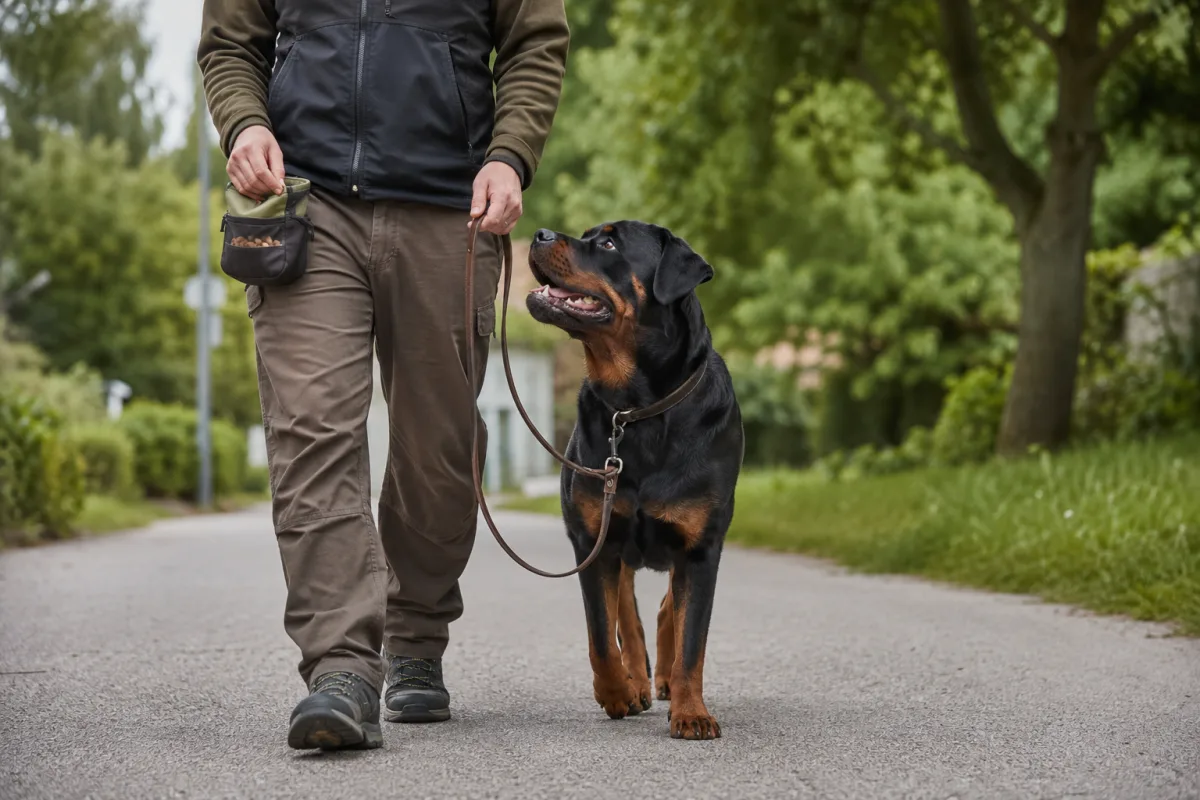
Teach leash manners before the dog is heavy. Reward the dog beside your leg, change direction before pulling builds, and stop forward movement when the leash tightens. Practice in quiet areas before busy sidewalks.
Use equipment that lets you manage the dog safely, but do not depend on gear alone. The dog still needs to learn that slack leash makes movement happen. If you are comparing large breeds, Livecub's biggest dog breeds article is a useful reminder that size changes daily management.
How Do You Manage Protective Instincts?
Do not encourage suspicion. Many Rottweilers already notice visitors, boundaries, and changes in the environment. Your job is to teach the dog that you handle decisions. Reward calm observation, use a place cue for guests, and prevent fence fighting or window rehearsals.
If a dog growls, stiffens, blocks people, or guards resources, take it seriously and get qualified help early. Do not punish warning signs out of the dog. You want information, not a dog that stops warning and skips to action.
How Much Exercise Does A Rottweiler Need?
Rottweilers need physical exercise and mental work, but they do not need reckless impact. Walks, training, scent games, tug with rules, obedience, carting foundations, and controlled play can all help. Growing puppies need protection from repeated hard jumping.
VCA notes that regular training sessions are needed from puppyhood through senior life and that a busy Rottweiler with mental and physical tasks is a happier pet. A bored strong dog will often make its own job.
What Commands Matter Most?
Teach come, leave it, drop it, wait, place, down, stay, heel or close, and release. Also teach cooperative care: ears, paws, mouth, brushing, nail work, and vet handling. These are not tricks. They are safety skills.
Practice around distractions gradually. A command that works in the kitchen may fail at the front door. Build distance, duration, and distraction one at a time so the dog can succeed.
How Do You Handle Guests?
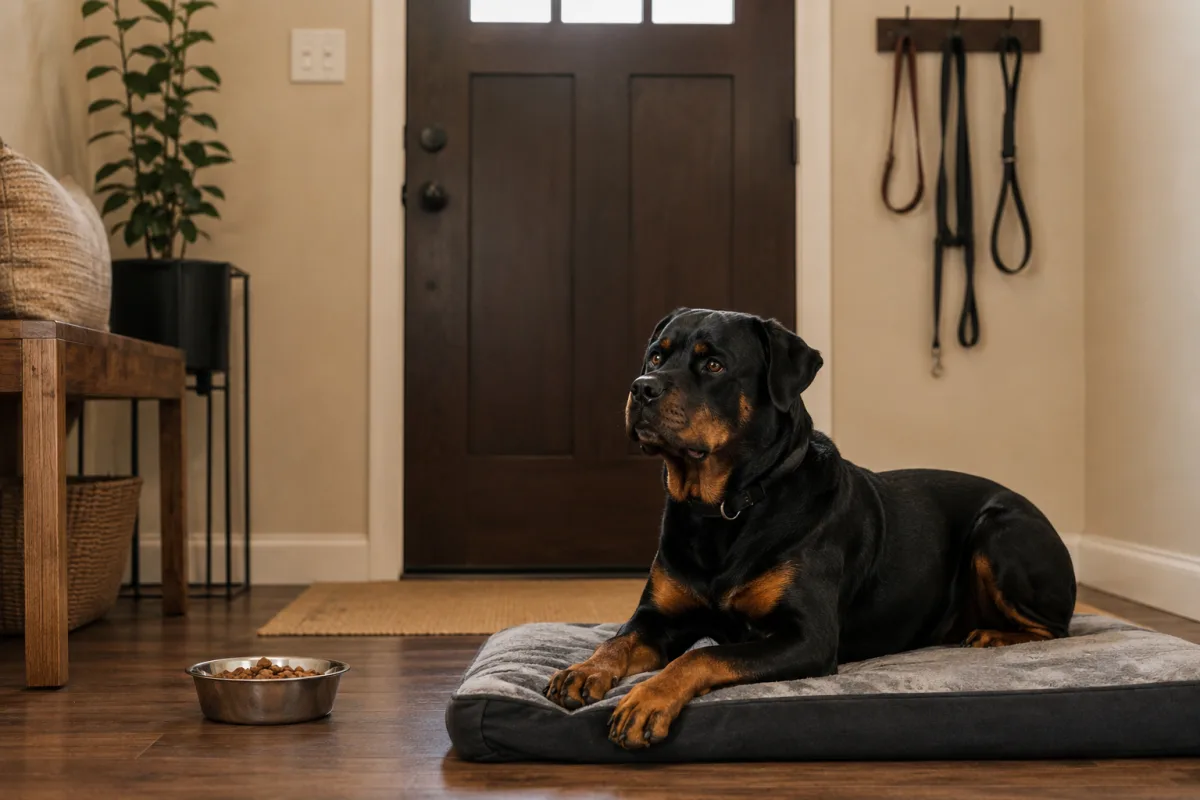
Use a routine. Before guests arrive, exercise the dog lightly, prepare treats, and decide whether the dog will be on leash, behind a gate, or on a place bed. Do not let a large excited dog rush the door to "say hello."
Reward calm behavior and end greetings before the dog gets too excited. If the dog is not ready for visitors, management is not failure. It is responsible ownership. Livecub's Staffordshire Bull Terrier health problems article is health-focused, but it shows why breed-specific planning matters in strong dogs.
What Mistakes Should Owners Avoid?
Do not roughhouse in ways that reward body slamming or mouthiness. Do not use fear as the main training tool. Do not skip socialization and then blame the breed. Do not let the puppy practice behaviors you would hate in a 100-pound adult.
Also do not train only when something goes wrong. Practice calm skills every day. If grooming and care are part of your routine, Livecub's longhair Dachshund grooming guide is a different coat, but the same handling principle applies: teach cooperation early.
How Should A Daily Routine Look?
A useful routine is simple: morning toilet break, a short walk, a few minutes of obedience, breakfast in a puzzle or slow feeder, rest, another calm outing, and a short evening practice session. Rottweilers often do well when they know what happens next. Predictability reduces pushy behavior because the dog is not inventing its own schedule.
Include rest on purpose. A tired dog and an overstimulated dog can look similar, but the solution is different. If the dog has already had exercise, training, and social exposure, teach it to settle on a bed instead of adding more excitement. Calm is a trained behavior in many young working dogs.
How Do You Train Around Children?
Supervision is non-negotiable with any large dog. Teach children not to climb on the dog, grab the collar, bother the dog while eating, or rush into its resting spot. Teach the Rottweiler to move away, settle, and accept gentle handling, but do not make the dog responsible for tolerating every childish mistake.
Use gates, crates, leashes, and place beds to manage busy parts of the day. If children run, scream, or carry food, give the dog a clear job away from the chaos. Reward the dog for watching calmly. This builds better family manners than waiting for a jump, bark, or stolen snack and then correcting it.
When Do You Need A Professional Trainer?
Get help early if the dog lunges, guards food or toys, growls at family members, bites the leash, drags the handler, panics around strangers, or cannot settle after normal exercise. Choose a trainer who watches body language, explains management, and teaches you how to practice between sessions.
Do not wait for one dramatic incident. Large breeds give small warning signs first: hard staring, freezing, blocking doorways, refusing to release objects, or escalating when told no. A good trainer can turn those early patterns into a plan before they become habits.
What Changes During Adolescence?
Many Rottweilers test rules when they become stronger and more aware of the world. A puppy that once followed easily may start pulling toward dogs, barking at visitors, ignoring recall, or using its body to get through doors. Treat that stage as a training checkpoint, not a personality verdict.
Go back to easier settings, pay better for calm choices, and tighten management around doors, food, guests, and walks. Adolescence is not the time to relax rules because the dog "knows it." It is the time to prove the rules still work when the dog is bigger and more confident.
Frequently Asked Questions
Are Rottweilers hard to train?
They are intelligent and trainable, but size, strength, and confidence make consistency necessary.
Can Rottweilers be good family dogs?
Yes, with responsible breeding, socialization, training, supervision, and clear household rules.
Should Rottweilers go to puppy class?
A well-run puppy class can help with socialization and owner coaching, especially for first-time owners.
How do I stop a Rottweiler from jumping?
Reward four feet on the floor, manage greetings, and avoid reinforcing jumping with attention.
Do Rottweilers need protection training?
Most family Rottweilers do not. Obedience, neutrality, and impulse control are usually more useful.
What Is The Best Training Mindset?
Train the adult dog while it is still a puppy. A Rottweiler needs kindness, structure, socialization, and daily proof that calm behavior works. The goal is not a scary dog. The goal is a powerful dog that trusts your guidance.

Chiara Bradshaw
Covers education, culture and creative topics with an emphasis on readable explanations and verifiable references.


1 Comment
Join the discussion. Comments are moderated before appearing.