
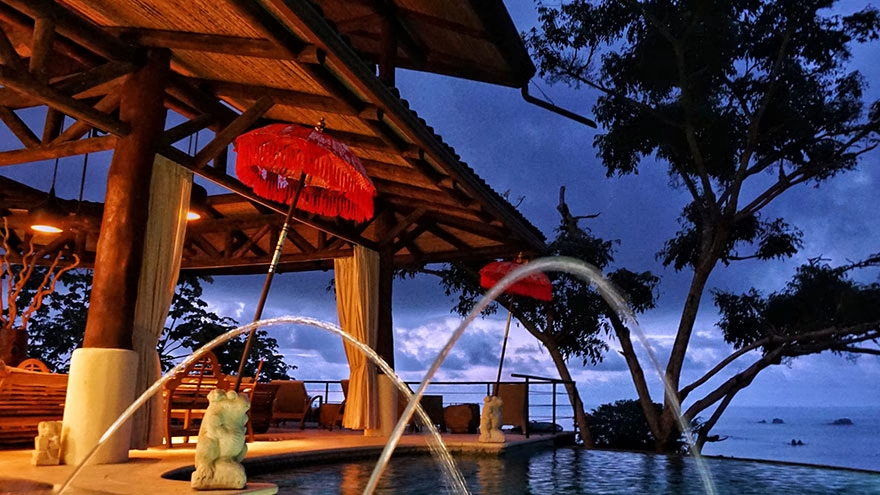
Ocean treehouse can mean several different things
Some listings are true raised cabins near the water. Others are cabins in trees with a distant ocean view, coastal cottages with loft decks, or raised rentals marketed with a treehouse feel. Read the description carefully before imagining waves under the floor.
Use the same visual skepticism you would use when learning how to identify cruise lines: photos can help, but details and context matter.
Verify the listing before you fall for the view
The FTC's travel scam advice at consumer.ftc.gov recommends using trusted sources and checking terms before paying. That matters even more for unusual rentals with dramatic photos.
Look for exact location, host history, reviews that mention the same structure, clear cancellation terms, total fees, and platform-protected payment. Be careful with off-platform payment requests.
Check structure, stairs, and access
A treehouse rental can involve steep stairs, narrow ladders, loft sleeping, uneven paths, composting toilets, outdoor showers, and limited parking. That may be charming for one traveler and a serious access problem for another.
Ask about railings, lighting, bathroom location, heating, cooling, luggage access, and storm procedures. If children, older adults, or mobility limits are involved, do not rely on photos alone.
Respect coastal weather
Ocean air means wind, salt, fog, damp bedding, sudden temperature changes, and storm exposure. A raised structure can feel different in wind than a standard hotel room.
Beach comfort also depends on route planning. Ideas from coastal sightseeing plans carry over: the best lodging still needs realistic weather and travel timing.
Treat the beach as a separate safety decision
NOAA's rip current safety guidance at noaa.gov explains that rip currents can be life-threatening near jetties, reefs, piers, and similar features. A pretty rental does not make the water safe.
Check local flags, lifeguard presence, tide timing, cliff edges, sneaker waves, and beach access rules. If the listing says private beach, ask what that actually means.
Choose the coast by season, not fantasy
Maine, the Pacific Northwest, California, the Gulf Coast, the Carolinas, and Florida can all offer coastal stays, but the season changes the experience. Fog, hurricanes, wildfire smoke, insects, cold rain, and crowds all matter.
If you enjoy natural stops, compare the route with scenic outdoor stops and build a plan that still works if one beach day is lost to weather.
Pack for a cabin, not a resort
Bring layers, headlamp, easy shoes for stairs, dry bags, insect repellent where needed, simple food, backup charger, and any medication. Ask what linens, towels, cookware, Wi-Fi, and heat are provided.
A treehouse can be memorable because it is less polished than a hotel. That also means small inconveniences are part of the deal.
Balance romance with logistics
The best stay is not the one with the strangest architecture. It is the one where the view, safety, access, price, weather, and cancellation terms all make sense together.
For a road-trip version of the idea, the planning style used for nearby travel stops helps: keep arrival time, supplies, and backup plans grounded.
Make the plan fit real life
The useful version of this topic is the one that fits the reader's actual situation. The rental should fit mobility, weather tolerance, budget, beach safety, cancellation comfort, and how rustic the travelers actually want the trip to be. A plan that only works on paper will not survive a normal week, a tired afternoon, or a small mistake.
Start with the constraint that is least flexible. That may be time, money, safety, access, health, policy, family expectations, or local rules. Once that limit is clear, the rest of the choices become easier to sort.
Watch for the mistake that changes the outcome
The common mistake is booking the most dramatic photos without verifying access, fees, structure details, and coastal hazards. It usually happens because people want the answer to be simpler than it is. Slow down long enough to separate facts from hopes.
Good judgment is often quiet. It looks like reading the policy, checking the weather, asking one more question, saving a record, or choosing the smaller step before the larger one.
Use a short checklist before you commit
Before acting, check the basics: exact location, reviews, payment method, stairs, railings, bathroom, beach access, weather, tide, fees, cancellation terms Keep the list short enough that you will actually use it. A long checklist that nobody opens is just decoration.
If another person is involved, confirm the same points in plain language. Most bad decisions in everyday life are not caused by missing expert knowledge; they are caused by assumptions nobody tested.
Know when to pause
Pause when the host pushes off-platform payment, the location is vague, reviews do not match the photos, or safety details are missing. A pause is not failure. It is a way to keep a small uncertainty from becoming a costly problem.
If the situation involves health, legal rights, safety, money, or another person's trust, get qualified help instead of forcing a quick answer. The right next step may be slower, and that is often the point.
Turn the advice into one next step
Do not try to solve the whole subject at once. Pick the first item that can change the decision today, then check it against the practical list: exact location, reviews, payment method, stairs, railings, bathroom, beach access, weather, tide, fees, cancellation terms That keeps the work grounded instead of letting the topic become a vague intention.
A small verified step is better than a confident guess. In practice, that may mean reading the rule, checking the map, saving the message, measuring the space, asking the clinic, reviewing the profile, or confirming the payment terms before anything else moves.
Keep notes while details are fresh
Good notes do not need to be formal. Write down the date, source, name, rule, price, condition, or answer while it is still fresh. That record gives you something calmer to use later if memory, stress, or another person's version of events starts to blur the issue.
For this topic, notes should focus on the decision point rather than every side thought. Record the fact that would change your choice, then leave room for updates if a source, policy, weather report, profile detail, or schedule changes.
Match the advice to the stakes
Low-stakes choices can move with common sense and a short check. Higher-stakes choices need more patience, especially when safety, health, pay, travel money, family trust, or another person's comfort is involved. The amount of checking should rise with the possible cost of being wrong.
This is where the earlier pause point matters: the host pushes off-platform payment, the location is vague, reviews do not match the photos, or safety details are missing. If that line is close, slow the plan down. Speed is useful only when the basic facts are solid.
Think about the second effect
Many everyday decisions have a second effect that shows up later. A message changes trust, a campsite affects access, a workplace rule changes morale, a food choice affects leftovers, and a travel booking can affect the whole budget. Look past the first convenient answer.
The second effect is usually where regret hides. Before you finish, ask who else is affected, what becomes harder tomorrow, and what proof you would want if the decision had to be explained later.
Close the loop cleanly
Once the choice is made, finish the small administrative work around it. Save the link, send the note, pack the item, label the container, confirm the route, update the file, or tell the other person what happens next.
A clean close keeps the subject from staying half-open in your head. It also makes the advice easier to repeat the next time, because you are not rebuilding the whole decision from memory. A short final note can also reveal a weak plan before it creates extra work for someone else later. That is often the difference between knowing what to do and actually doing it.
Frequently Asked Questions
Are there true ocean treehouses in the USA?
Some rentals are raised cabins or treehouse-style stays near the coast. Many are near the ocean rather than directly over it.
Read location and structure details carefully.
Are treehouse rentals safe for children?
Some are, but many have stairs, lofts, railings, and outdoor features that need careful review.
Ask the host specific questions before booking with children.
What should I check before paying?
Verify the platform, reviews, exact location, full price, cancellation policy, and payment protection.
Avoid off-platform payment requests.
Can I swim near an ocean treehouse?
Only if the local beach conditions allow it. Check lifeguards, flags, rip current risk, tides, and posted rules.
The rental view does not guarantee safe swimming.

Timothy Davidson
Edits step-by-step general-interest guides for clarity, realistic limits and source verification.



Leave a reply
Replying to