
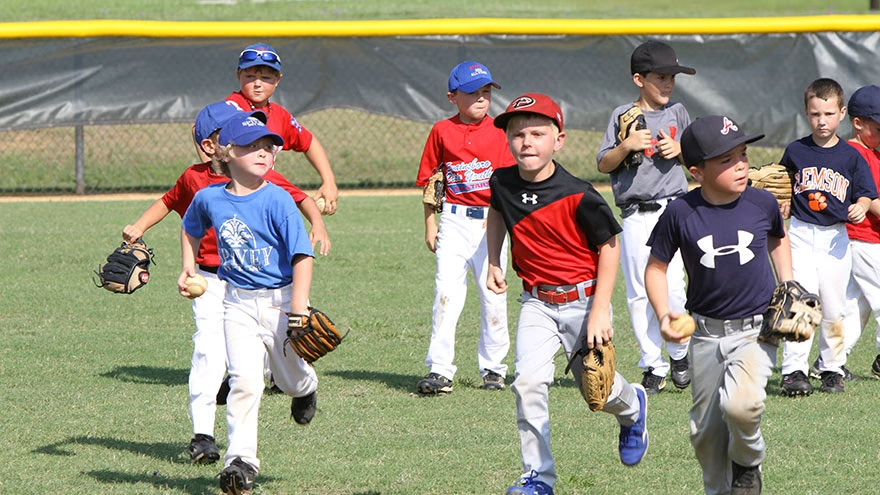
Fun Outside Activities for Self-Esteem in Adolescent Boys should give boys chances to move, try, fail safely, contribute, and feel known for more than grades, looks, popularity, or performance. The best activities are not lectures about confidence. They are experiences where a teen can practice competence and connection.
This article is educational and not mental health treatment. If an adolescent has persistent sadness, withdrawal, self-harm thoughts, aggression, panic, eating concerns, substance use, bullying, or trauma symptoms, involve a pediatrician, licensed mental health professional, school counselor, or crisis support right away.
Why Outdoor Activities Help
CDC's adolescent mental health page notes that strong bonds with adults, friends, school, home, and community can protect youth mental health. Outdoor activities can create those bonds when they are structured with support rather than pressure.
Confidence grows when a teen sees proof: I learned a skill, helped someone, finished something hard, handled discomfort, or belonged to a group. The activity matters less than the way adults frame it.
Start With Low-Pressure Movement
Walking, casual biking, shooting baskets, tossing a football, disc golf, geocaching, fishing, or a park workout can be better than a competitive league for a boy who already feels judged. The point is to get moving without turning every moment into a test.
The National Academies chapter on physical activity and youth health summarizes evidence that physical activity can improve mood and psychosocial outcomes such as self-concept and self-efficacy. That does not mean exercise fixes everything. It means repeated, well-supported activity can be one useful piece.
Organized Sports With The Right Coach
Team sports can help self-esteem when the coach teaches skill, effort, sportsmanship, and belonging. They can hurt when the culture is humiliating, win-at-all-costs, or built only for early bloomers. Choose the adult leader as carefully as the sport.
For boys nervous about evaluation, Livecub's sports tryout nerves guide can help with preparation and self-talk before a tryout. A teen does not need to feel fearless to participate.
Hiking With A Real Job
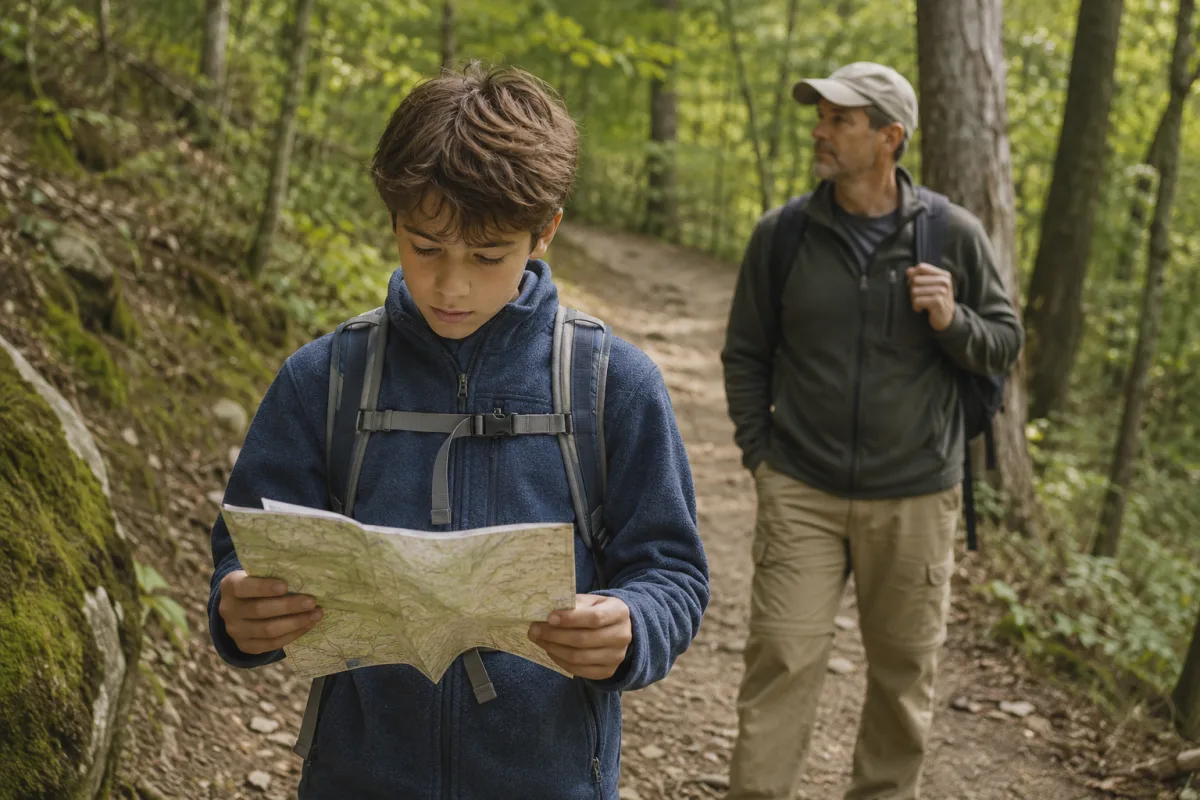
A hike builds more confidence when the teen has a role: map reader, snack planner, water checker, pace setter, photographer, or safety buddy. Give a job that matters, then let him do it. Do not correct every small choice unless safety is involved.
Start with short trails. A hard route that leaves everyone exhausted can backfire. A successful two-mile hike with a good view can do more for self-esteem than a miserable eight-mile push.
Bike Rides That Build Independence
Bike rides can give adolescent boys a sense of range and freedom. Plan routes with safe roads, bike paths, helmets, water, lights if needed, and a repair plan. Teach basic maintenance: tire pressure, chain care, brake checks, and how to carry a tube or patch kit.
Let the teen help choose the destination. A ride to a library, court, lake, food truck, or friend's neighborhood can feel more meaningful than loops around the block.
Outdoor Strength Challenges
Bodyweight circuits at a park can be useful for boys who want to feel stronger but dislike gyms. Try pushups on a bench, step-ups, wall sits, farmer carries with safe objects, short hill walks, and stretching. Track consistency, not body comparison.
Keep the language neutral. Avoid teasing, body shaming, or comments about masculinity. The message should be: your body can learn and adapt.
Service Projects
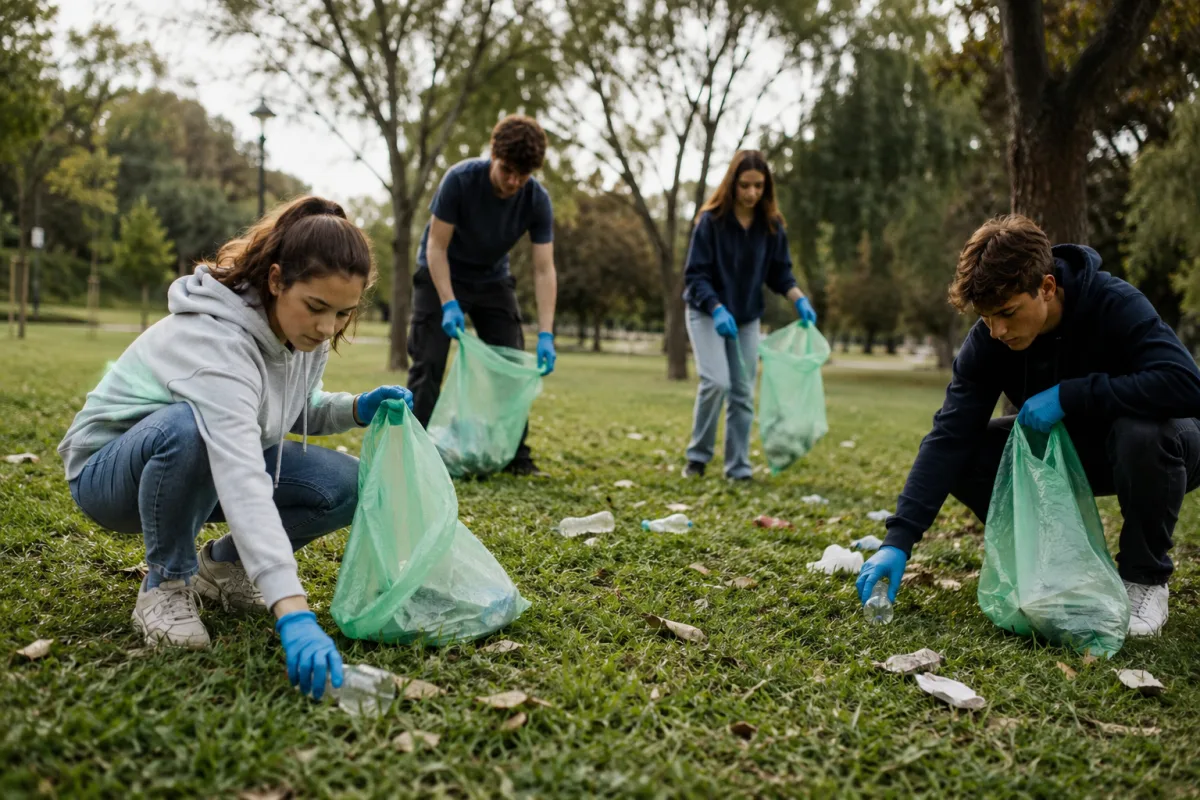
Community service can build self-esteem because the teen sees that his effort helps someone else. Try trail cleanup, community garden work, park restoration, food pantry loading, neighborhood snow shoveling, or helping coach younger kids.
Service works best when it is active and visible. A boy who feels useless may benefit from seeing bags filled, weeds cleared, boxes delivered, or younger kids learning because he showed up.
Adventure With Boundaries
Outdoor adventure can be powerful, but it should not mean reckless risk. Research summaries on backcountry and wilderness adventures describe possible gains in self-confidence, independence, communication, and mental health, while also noting concerns around wilderness therapy risk and coercion.
Choose voluntary programs with trained leaders, clear safety practices, and respect for the teen's limits. Rock climbing, paddling, ropes courses, camping, and backpacking can help when the challenge is real but supported.
Family Physical Activity
Statistics Canada's study on family physical activity reports that adolescents who do physical activity with parents more often have higher perceived mental health, lower anxiety and depressive symptoms, higher life satisfaction, and lower life stress.
That does not mean every teen wants a parent hovering. Offer options: a Sunday walk, bike repair together, weekend basketball, a dog walk, fishing, or a short hike with food afterward. Let the teen save face by making participation normal, not a therapy assignment.
Skill-Based Outdoor Hobbies
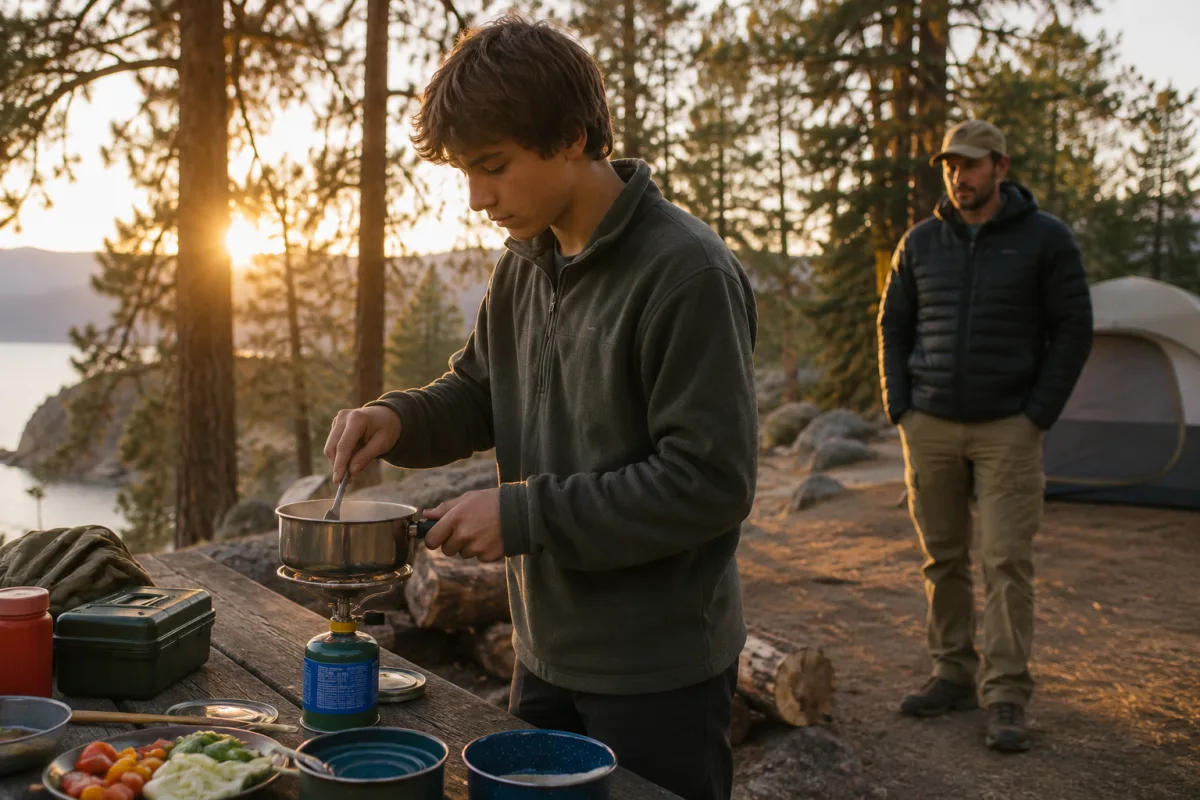
Some boys build confidence through mastery rather than competition. Try gardening, birding, fishing knots, map reading, nature photography, skateboarding basics, outdoor cooking, archery with trained supervision, or building a simple camp setup.
Skill hobbies are good for teens who freeze on stage or in crowds. Livecub's stage fright guide and selective mutism article are different topics, but both remind adults that pressure to perform can make anxiety worse.
Let Boys Help Plan
Self-esteem grows faster when a teen has some control. Offer two or three acceptable choices instead of one adult-made plan. Ask whether he wants a friend there, what time feels best, and what would make the activity less awkward.
Do not make the first outing a public announcement. "We are going for a confidence hike" sounds embarrassing. "Want to try this trail Saturday and get sandwiches after?" is easier to accept.
Avoid Turning Activities Into Tests
Adults often ruin a good activity by measuring too much: speed, weight, distance, wins, body shape, toughness, and attitude. Use private encouragement and specific praise: "You stayed with it after the chain slipped," or "You helped your cousin without being asked."
If nutrition, energy, or body image is part of the concern, Livecub's food journal guide may be useful, but keep food tracking away from shame. For many teens, body comments cut deeper than adults realize.
Invite Friends Carefully
Friends can make outdoor activities fun, but the wrong group can make a teen feel worse. Start with one supportive friend, cousin, sibling, mentor, or neighbor rather than a large group. Avoid pairing a low-confidence teen with someone who constantly wins, mocks, or dominates.
For older family members who need encouragement too, Livecub's guide to motivating the elderly shares a related idea: people respond better to dignity and choice than pressure.
Signs An Activity Is Working
Look for small changes: he asks to go again, talks more during the ride home, tries a harder version, invites someone, sleeps better after activity, handles mistakes with less anger, or accepts praise without deflecting it immediately.
If he hates one activity, switch. Self-esteem is not built by forcing a teen to repeat a public failure. It is built by finding hard things he can approach with support.
Keep wins private when privacy helps. Some boys feel proud only after they have had time to process the experience without being put on display.
Ask later, not immediately, what felt good and what felt awkward. The answer may guide the next activity better than adult guessing, especially when a teen is quiet after trying something new outside his usual comfort zone.
Frequently Asked Questions
What outdoor activity is best for self-esteem?
The best activity is one the teen can repeat safely, with enough challenge to feel real and enough support to avoid humiliation.
Are team sports always good for confidence?
No. Team sports help when coaching is supportive and skill-based. A harsh team culture can do harm.
What if my son refuses every activity?
Offer smaller choices, reduce pressure, invite a trusted friend, and consider professional support if withdrawal persists.
Can outdoor activities replace therapy?
No. Outdoor activity can support well-being, but it is not a replacement for needed mental health care.
How often should teens get outside?
Regular, realistic activity is better than rare big outings. Even short walks or rides can help build routine.
The Healthiest Goal
Outdoor activities for adolescent boys should build competence, connection, and choice. Keep the pressure low, the roles real, and the praise specific. A teen who feels useful, capable, and accepted is more likely to keep showing up.

Timothy Davidson
Edits step-by-step general-interest guides for clarity, realistic limits and source verification.




Leave a reply
Replying to