
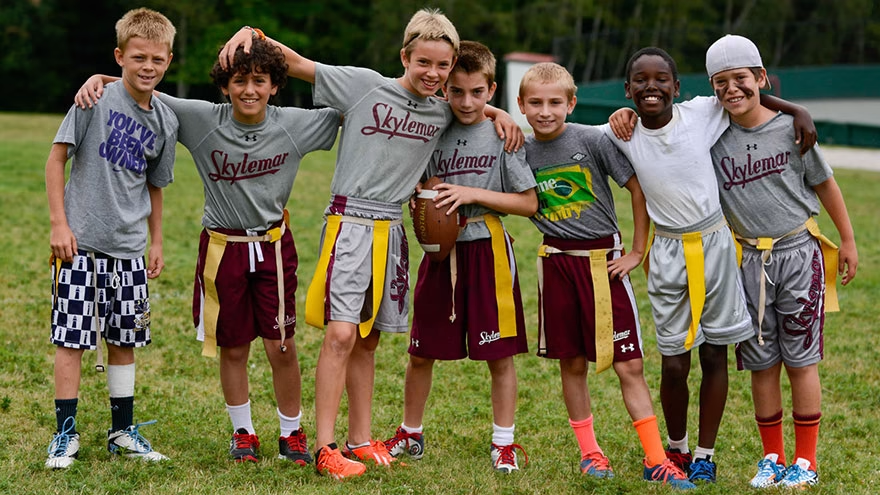
Self-Esteem Activities for Adolescent Boys work best when they build real skill, connection, responsibility, and emotional language. Boys do not need shallow praise; they need repeated experiences of being capable and respected.
Keep activities practical, not preachy. A teen is more likely to join when the task has movement, choice, privacy, and a reason that does not sound like a lecture.
Start With Safety
Self-esteem activities only work in a setting where teasing, humiliation, and forced sharing are off the table.
CDC adolescent mental health guidance encourages connection with adolescents, effective communication, and monitoring health behaviors: CDC adolescent mental health.
Strength Inventory
Ask each boy to list five things he can do, three things he is learning, and one thing he wants help with.
This keeps self-esteem tied to growth and effort, not to pretending he is good at everything.
Skill Swap
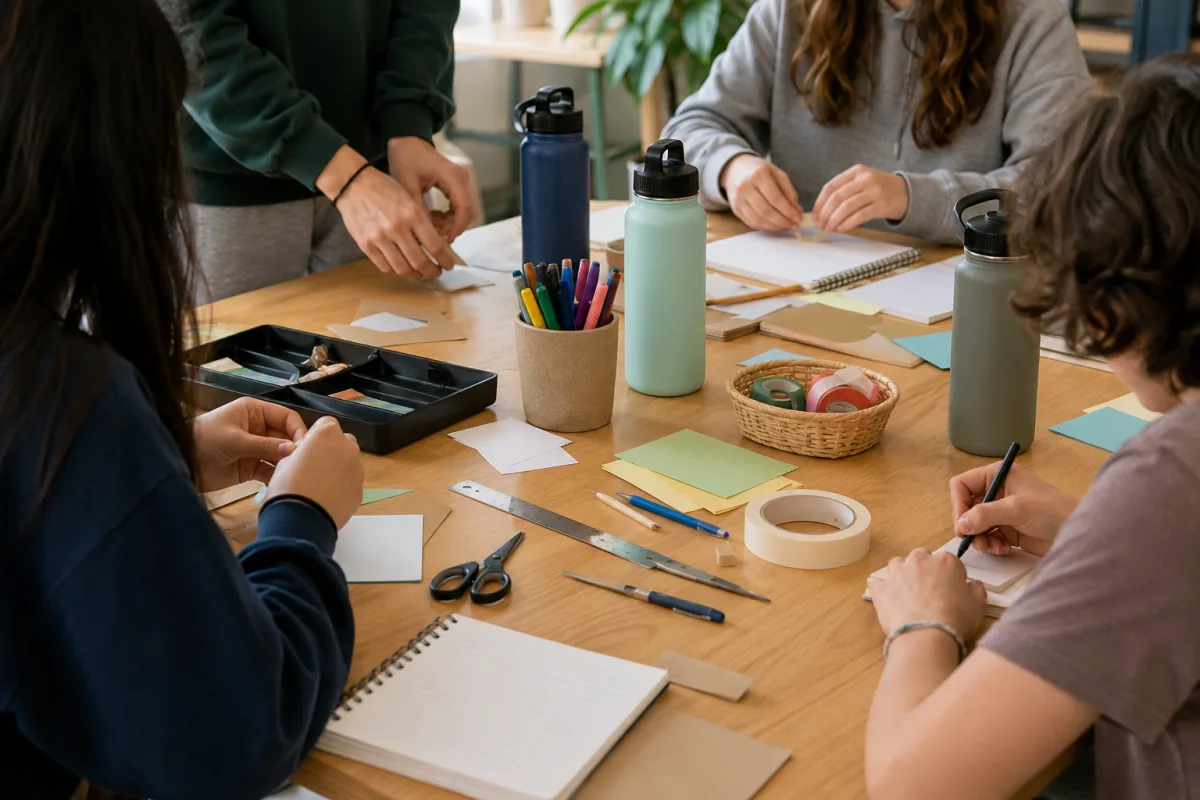
Have each teen teach a small skill: tying a knot, fixing a bike chain, making eggs, editing a video, stretching safely, or organizing a backpack.
Teaching lets a boy experience competence without standing in front of the group giving a speech.
Private Wins Log
Give each teen a private wins log. The rule is one real win per day, no matter how small.
NIMH self-care guidance includes setting goals and priorities, appreciating accomplishments, and challenging unhelpful thoughts: NIMH mental health self-care.
Sports Pressure Reset
For athletic boys, separate identity from performance. The activity: name one controllable skill before practice and one thing learned after.
Livecub's sports tryout nerves guide can help teens handle pressure without making the result their whole worth.
Stage Fright Practice
Use low-stakes speaking: read one line, introduce a partner, or explain a hobby for thirty seconds.
Livecub's stage fright guide can support boys who need public practice without shame.
Choice Based Chores
Give a choice between two useful jobs: cook rice or set the table, wash the car or vacuum, organize tools or sort laundry.
Responsibility builds self-respect when adults notice effort and trust the teen with real work.
Emotion Vocabulary Cards

Use cards with words like irritated, embarrassed, proud, lonely, relieved, jealous, and overwhelmed. Ask which word fits a scene from a show or game.
This is safer than asking a boy to expose his own feelings immediately.
Healthy Self-Care
HealthyChildren from the American Academy of Pediatrics says families can support teen coping by making mental health an open topic and listening without judgment: AAP teen self-care guidance.
Self-care for boys should include sleep, movement, food, hygiene, downtime, and help-seeking, not just toughness.
Silent Participation
Some boys need ways to participate without speaking at first: writing answers, pointing to cards, drawing, or choosing from a list.
Livecub's selective mutism guide is a useful reminder that pressure to talk can make anxiety worse.
Food And Energy Check
Low energy can look like attitude. Have teens notice whether sleep, breakfast, hydration, and movement affect mood and confidence.
Livecub's food journal guide can be adapted into a neutral energy log, not a weight-control project.
Role Model Interview
Ask the teen to interview a trusted man about a mistake, a fear, a skill, and a time he asked for help.
This gives boys a model of strength that includes repair and honesty.
Repair Practice
Practice apology scripts: I did this, I see the effect, I will do this differently. Keep it short and real.
A boy who can repair mistakes does not have to defend every mistake as his identity.
Body Neutrality
Boys hear body messages too. Use body-neutral language: my body helps me move, learn, rest, and recover.
Avoid turning muscles, height, weight, or puberty timing into a measure of worth.
Peer Compliment Rules
Use compliments based on action: you kept trying, you helped, you explained that clearly, you included him.
Do not force boys to praise appearance or reveal private feelings. Action-based respect is easier to trust.
Digital Comparison
Have teens list what social media shows and what it hides: filters, retakes, money, editing, lighting, and timing.
The goal is not to ban every app. It is to weaken the illusion that everyone else is living a perfect life.
Goal Ladder
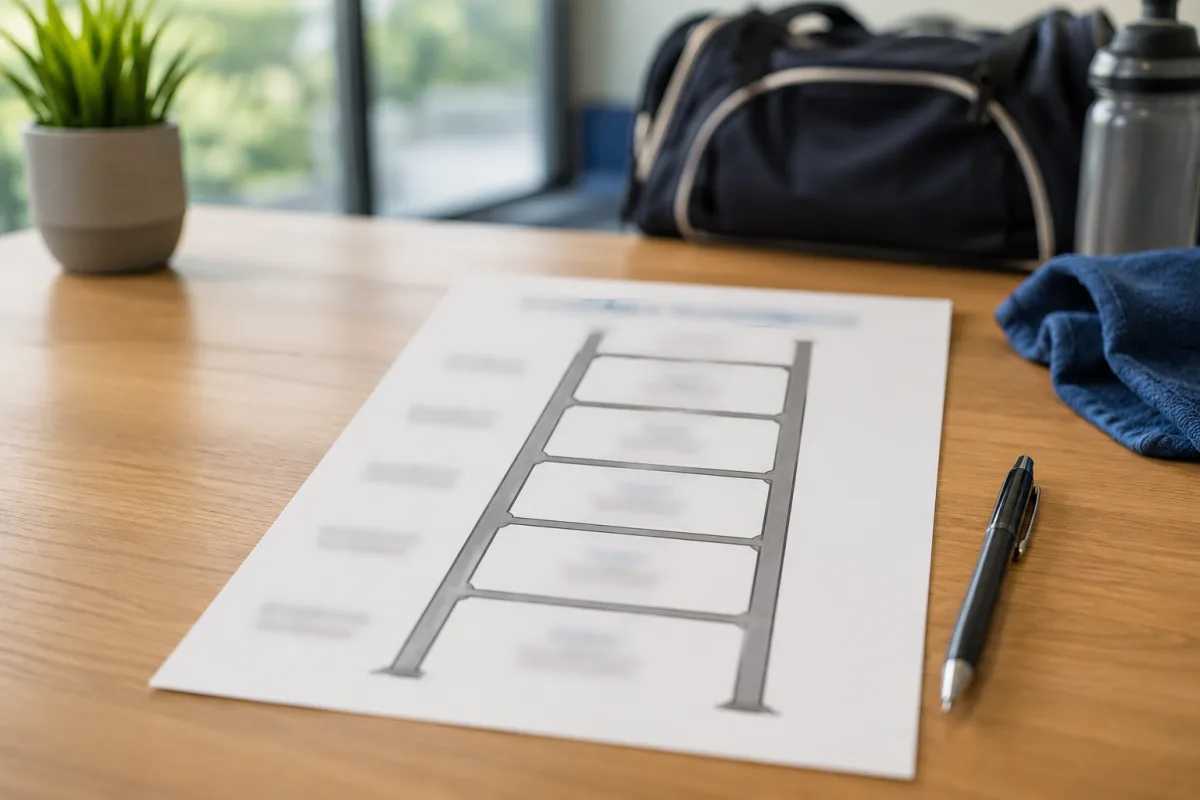
Choose one goal and make five rungs. Each rung should be small enough to do this week.
Self-esteem grows when effort has a path. A vague goal like be better is too heavy.
Service Activity
Service can build self-respect when it is concrete: carry boxes, clean a park, help a neighbor, tutor a younger child.
The lesson is not be grateful because others have it worse. The lesson is I can contribute.
Adult Feedback
Adults should praise effort and specifics, then give one clear improvement point. Too much praise can sound fake.
Try: you stayed with the task for twenty minutes; next time check the instructions before starting.
When To Get Help
Get professional help if low self-esteem comes with isolation, aggression, panic, self-harm talk, eating issues, substance use, or loss of interest in normal life.
Activities help, but they are not a replacement for therapy or medical care when symptoms are serious.
Mentor Check-In
Pair the teen with a trusted adult for a short weekly check-in. The adult asks about one win, one hard thing, and one practical need.
The point is steady presence. A boy may talk more while walking, driving, cooking, or fixing something than while sitting face to face.
Anger Translation
Many boys show embarrassment, sadness, or fear as anger. Use an activity that translates anger into possible hidden feelings.
Ask: what happened before the anger, what did the body feel, and what would have helped if nobody judged you?
Puberty Reality Check
Puberty timing can affect self-esteem. Height, voice changes, acne, body hair, strength, and weight do not arrive on the same schedule for everyone.
An adult can normalize variation without making jokes or comparing brothers, teammates, or classmates.
Friendship Map
Have the teen draw three circles: people who drain me, people who are fun but risky, and people who help me be myself.
This activity builds social judgment without ordering him to drop friends immediately.
Screen Reset
Ask the teen to identify one account, game chat, or group thread that leaves him feeling worse.
The activity is not a total phone lecture. It is a test: mute one source for a week and notice mood, sleep, and self-talk.
Creative Output
Music, drawing, coding, cooking, woodworking, photography, and video editing can all build self-esteem through finished work.
The adult role is to notice effort and process, not demand that every hobby become a public achievement.
Help Seeking Rehearsal
Practice asking for help in one sentence: I do not understand this part, can you show me the first step?
Boys who can ask early often avoid the shame spiral that starts after pretending they understand.
Healthy Competition
Competition can build confidence when the rules are fair and feedback is specific. It can damage confidence when humiliation is part of the game.
After a competition, ask what improved, what needs practice, and who showed good sportsmanship.
Parent Script
A parent can say: I am proud of your effort, and I am here even when the result is not what you wanted.
That sentence tells the teen that belonging is not rented through performance.
Money And Independence
Small money tasks can build confidence: compare prices, plan a snack budget, save for a tool, or track one purchase.
The goal is not financial pressure. The goal is practice making choices and seeing consequences in a safe range.
Repair After Teasing
If teasing happens, stop the activity and repair the group norm. Do not tell the targeted boy to toughen up.
A group that protects dignity teaches more self-esteem than any worksheet.
Frequently Asked Questions
What builds self-esteem in adolescent boys?
Real skill, responsibility, safe connection, emotional language, physical care, and trusted adult feedback build steadier self-esteem.
Should activities include talking about feelings?
Yes, but not only direct sharing. Use cards, stories, games, writing, and low-pressure choices.
What if a teen refuses self-esteem activities?
Start with practical tasks and choice. Avoid labels, lectures, and forced vulnerability.
How can sports support self-esteem?
Focus on controllable skills, effort, recovery, teamwork, and learning rather than making performance equal worth.
When is professional help needed?
Seek help for self-harm talk, severe withdrawal, panic, depression, eating issues, substance use, or major behavior changes.
Self-esteem activities for adolescent boys should feel useful, respectful, and real. Build skill, language, connection, and repair without turning confidence into a performance.

Linda Fehrman
Edits general wellness and relationship explainers. Health material is educational, avoids diagnosis and links to health-authority guidance.




Leave a reply
Replying to