
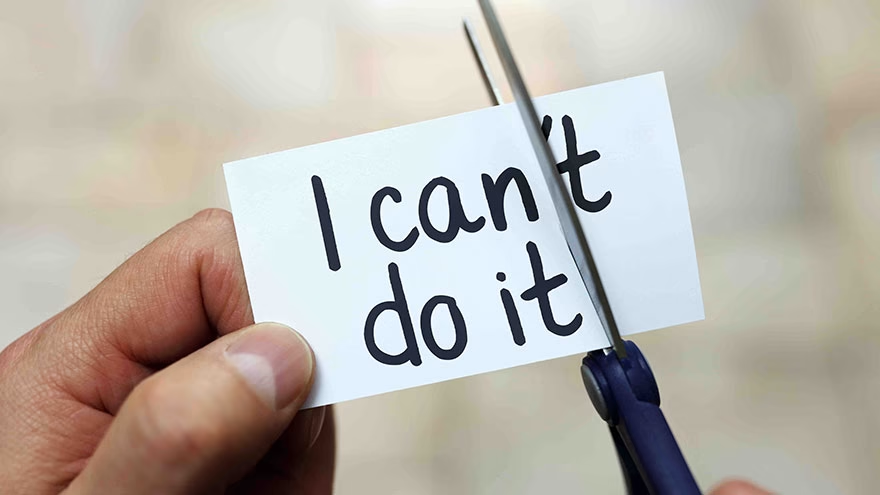
Self-Esteem Is Not Fixed
How to Improve Your Self Esteem and Gain Inner Confidence Even When You're Down should not start with pretending everything is fine. Low self-esteem can make ordinary days feel like evidence against you, especially when work, school, family, or money stress is already heavy.
Self-esteem is the way you value yourself. Inner confidence is the quieter trust that you can meet life in small, honest steps. Both can drop, and both can be rebuilt without acting like a different person.
The aim is not to become loud; it is to become less cruel to yourself.
That matters because many people confuse confidence with performance. You can speak softly, need rest, feel unsure, and still build real self-respect.
Notice the Harsh Thought Before You Believe It
Low self-esteem often speaks in absolutes: "I always ruin things," "No one likes me," or "I will never catch up." Those thoughts may feel convincing because they arrive with emotion.
The NHS guide on raising low self-esteem recommends identifying negative beliefs and challenging them. That is a practical starting point because thoughts become easier to question once they are written down.
Try this: write the harsh thought, then write a more accurate version. Not fake praise, just accuracy. "I failed at everything" might become "I struggled with this interview, and I can prepare differently next time."
Accuracy is more useful than forced positivity.
Keep One Small Promise to Yourself
When you are down, confidence often returns through kept promises. Choose one action small enough to complete today: shower, send one email, walk for ten minutes, wash the dishes, or open the document you have been avoiding.
Do not choose the action that would impress someone else. Choose the one that proves you can still cooperate with yourself.
If your work setting feels dull or emotionally draining, Livecub's guide on personalizing your office cubicle can be a small reminder that surroundings affect mood and ownership.
Self-trust grows when your promises are realistic enough to keep.
Keep the promise visible. Put it on paper, not only in your head. Checking off one honest action gives the mind a small piece of evidence to hold.
Stop Using One Bad Day as a Character Report
A bad day is data about a day. It is not a full report on your worth, intelligence, future, or ability to be loved.
Mayo Clinic Press's article on building self-esteem describes steps such as noticing troubling situations, becoming aware of thoughts, and challenging negative thinking. That process helps separate identity from a hard moment.
Instead of asking, "What is wrong with me?" ask, "What made today harder?" Lack of sleep, a tense message, a missed meal, social comparison, or an old fear can change the answer.
Context does not excuse every mistake, but it makes the picture fairer.
If you did make a mistake, separate repair from punishment. Apologize, correct, learn, and move on when the repair is done. Extra self-attack does not make the repair better.
Build Competence in a Narrow Area
Inner confidence grows when you get better at something specific. Pick a small skill that matters in your life: writing clearer emails, cooking one meal, managing a budget, stretching after work, or speaking up once in a meeting.
Practice it in a boring, repeatable way. Confidence built from skill lasts longer than confidence borrowed from compliments.
For stressful training environments, Livecub's basic training stress and anxiety guide fits the same principle. Pressure is easier to face when routines are broken into repeatable pieces.
Competence is one of the quietest forms of confidence.
Choose a skill that is close enough to matter but small enough to repeat. If public speaking terrifies you, begin by asking one clear question in a meeting rather than volunteering for a major presentation.
Choose People Who Help You Think Clearly
Support does not always mean someone who agrees with every complaint. The best support helps you feel less alone and think more clearly.
Reach out to one person who can listen without turning your pain into gossip or a lecture. Tell them what you need: listening, perspective, company, or help with one task.
If someone at work is grieving or dealing with a hard season, Livecub's office sympathy card etiquette article is a useful reminder that small, respectful contact can matter.
You do not have to earn support by being cheerful first.
Clean Up the Comparison Habit
Comparison is especially rough when you are already down. You compare your inside to another person's polished outside and then call it evidence.
Limit the feed, room, or conversation that keeps making you feel smaller. This does not mean avoiding every successful person. It means noticing which comparisons leave you numb, resentful, or ashamed.
Replace one comparison with one useful question: "What is the next honest step for me?" That question brings attention back to your own life.
It can also help to compare present you with past you. If you are a little more honest, rested, prepared, or supported than last month, that counts as movement.
Private progress is still progress.
Use Your Body as Part of the Repair
Self-esteem is not only a thinking problem. Sleep, food, movement, sunlight, medical issues, pain, alcohol, and stress can all affect how harsh your mind becomes.
Start with basic care before judging yourself. Drink water, eat something with protein, get outside for a short walk, or lie down without a phone for ten minutes.
A worn-down body can make self-criticism sound like truth.
Make Work Feel Less Like a Mirror
Work can hit self-esteem hard because performance becomes visible. A correction, rejection, or awkward meeting can feel like public proof that you are behind everyone else.
Try to separate role feedback from personal worth. A note about a report, schedule, call, or task is about a work product. It may sting, but it does not define the whole person doing the work.
If a coworker is part of the problem, Livecub's guide to rude and demeaning coworkers can help you think about boundaries instead of absorbing every comment.
Know When Low Mood Needs Care
If feeling down lasts, deepens, or comes with hopelessness, loss of interest, major sleep changes, appetite changes, trouble functioning, or thoughts of self-harm, get support from a qualified professional or crisis resource.
The National Institute of Mental Health page on depression explains signs, symptoms, and treatment information. Low self-esteem can overlap with mental health concerns, and help is a valid step.
You do not need to diagnose yourself before asking for care. A doctor, therapist, counselor, or emergency service can help sort out what is happening.
Asking for help is not a failure of inner confidence.
Protect the Inputs You Feed Your Self-Image
Self-esteem is shaped by repeated inputs: the accounts you follow, the people you confide in, the way you talk after mistakes, and the rooms where you spend time.
You may not be able to change every input, but you can reduce some of the ones that keep reopening the same wound. Mute the feed, leave the argument, or take a break from the person who only knows how to score points.
Inner confidence needs fewer daily hits to recover.
Make a Seven-Day Self-Esteem Plan
For seven days, choose one kept promise, one accurate thought, one supportive contact, and one small skill practice each day. Keep it short enough that you can do it even with low energy.
Do not grade yourself harshly if you miss a day. Start again at the next small action. The point is to build a relationship with yourself that survives interruption.
At the end of the week, look for evidence that you treated yourself with more steadiness. That is the beginning of inner confidence.
Frequently Asked Questions
Can self-esteem improve when I feel down?
Yes. Start with small kept promises, accurate self-talk, basic care, and support. You do not have to feel confident before taking the first step.
What is the difference between self-esteem and confidence?
Self-esteem is how you value yourself. Confidence is trust in your ability to handle a task, situation, or challenge.
How do I stop harsh self-talk?
Write the thought down, look for evidence, and replace it with a more accurate sentence. The goal is fairness, not fake praise.
When should I seek professional help?
Seek help if low self-esteem comes with lasting low mood, hopelessness, self-harm thoughts, major sleep or appetite changes, or trouble functioning.

Alyssa Curlin
Edits general health, nutrition and education explainers. Medical topics are educational and link to public-health guidance.




Leave a reply
Replying to