
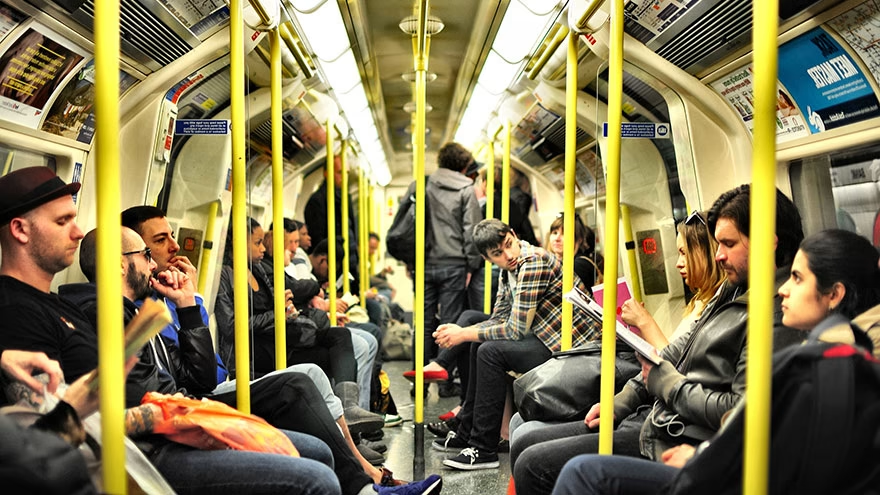
Why Do Public Transportation Safety Tips Start Before the Trip?
Public transportation safety tips work best when they happen before the bus, train, tram, or ferry arrives. A rider who already knows the stop, fare method, transfer point, backup route, and last departure time can move calmly. A rider trying to solve everything on a dark platform with a dying phone has fewer options.
The Federal Transit Administration's Transit Safety and Oversight office describes federal work around policy, data, risk analysis, oversight, and information sharing for transit safety. Riders do not manage those systems, but they benefit from thinking in the same way: identify risks before they become urgent.
Public transit is part of daily life for millions of people. Most trips are routine. The goal is not to ride in fear. It is to make small choices that lower exposure to theft, confusion, falls, harassment, missed connections, and late-night waiting.
The strongest habit is plan the exit too. Know how you will get home if a line closes, a train is delayed, or a stop feels wrong.
Tip 1: Plan the Route, Fare, and Backup
Check the route before leaving. Know the stop name, platform direction, service alerts, transfer point, walking distance at both ends, and whether the route changes at night or on weekends. Save the route offline if cell service is weak underground.
Prepare fare before boarding. Digging through a wallet near a gate or bus door can expose cash, cards, phone, and confusion at the same time. If using a phone ticket, open it before the vehicle arrives so you are not blocking the line.
Backup routes matter most at the edges of the day. Know a nearby stop, rideshare pickup zone, taxi stand, well-lit public place, or open business where you can wait if service stops. Last-trip awareness prevents long, isolated waits.
If a transit ride is part of a larger trip, Livecub's cruise-line identification guide shows the same planning habit: transportation details are easier before the crowd and clock pressure arrive.
Tip 2: Wait Where You Can Be Seen
Use designated stops, marked platforms, and well-lit waiting areas. Maryland Transit Administration's Ride Safely page tells riders to wait at designated areas and allow enough time so they do not have to run for a bus or train.
Stand back from platform edges and curbs. Do not chase a bus, cross tracks, step around gates, or run beside a moving vehicle. Missing one ride is annoying. Falling near traffic or a train is worse.
At night, choose the waiting spot with visibility, people, lighting, and a clear path away if needed. If a stop feels unsafe, move to a staffed station area, open business, or another stop when possible.
When traveling to scenic places, the same waiting logic applies. Livecub's Skyline Drive waterfalls article is about nature, but timing, visibility, and route awareness still shape safer travel days.
Tip 3: Protect Personal Information and Belongings
Keep bags closed, wallets and phones secure, and work badges turned inward or removed when not needed. A badge can reveal your name, employer, building, and schedule. That is more information than a stranger needs on a commute.
Do not flash cash or spread belongings across seats. Keep one hand on a bag in crowded areas, especially near doors where someone can grab and exit quickly. Backpacks may be safer in front of you on packed vehicles.
Use headphones carefully. Low volume or one ear free can help you hear announcements, approaching vehicles, and people nearby. Full isolation may feel comfortable, but it reduces reaction time.
The practical rule is control the easy targets. Most riders cannot control every person around them, but they can control loose phones, visible money, open bags, and personal details.
Tip 4: Stay Aware Without Staring at Everyone
Awareness is not paranoia. It means noticing exits, crowd changes, service announcements, someone moving too close, or a situation that is escalating. You can read or listen to music and still check the environment regularly.
Trust discomfort early. If a person, car, platform area, or conversation feels wrong, move. Change cars at the next stop, stand near other riders, step closer to the operator or station staff, or leave the station if that is the safer choice.
Have a small script ready: "I need space," "I am getting off here," or "Please stop." Simple words are easier under stress than inventing a response while someone is pressuring you.
For trip days that include unfamiliar towns, Livecub's Petoskey travel guide is a reminder that knowing the area before arrival makes route changes less stressful.
How Should You Handle Late-Night Trips?
Late-night transit is not automatically unsafe, but the margin is smaller. There are fewer riders, fewer open businesses, fewer departures, and sometimes longer waits between connections. Plan the full door-to-door route before leaving.
Share your route or arrival time with someone if you are worried, and keep your phone charged enough for maps, calls, and fare access. If a station has staffed areas or emergency call points, know where they are before you need them.
Choose a busier car or visible waiting area when possible. If the vehicle is nearly empty, sit where the operator, conductor, or other riders are easier to reach. Visibility is protection, especially when there are fewer people around.
Tip 5: Report Problems and Respect the Ride
Transit safety is shared. Maryland MTA's Rider Code of Conduct frames rider behavior around safety, comfort, dignity, cleanliness, and respect for staff and passengers. Those basics matter on any system.
Report emergencies to local emergency services or transit staff as appropriate. For non-emergency issues, use the agency's app, hotline, text line, station staff, or operator instructions. Take note of vehicle number, route, station, time, and direction if it is safe to do so.
Respectful behavior protects your own trip too. Do not block doors, harass staff, play loud audio, leave trash, smoke where prohibited, or crowd someone who is trying to exit. Disorder makes everyone less comfortable and can distract operators.
Report, then move to safety. Recording a problem is less important than getting away from immediate risk.
What Should You Do During Disruptions?
Service disruptions are when many safety habits are tested. Crowds build, people get impatient, platforms fill, and riders start improvising. Slow down before choosing the first alternative that appears.
Check official alerts, follow staff directions, and avoid entering unknown vehicles from people offering rides near stations. If you use rideshare or taxi service, verify the plate, driver, and app details before getting in.
Keep your phone charged when using transit late, during storms, or in an unfamiliar city. A small battery pack can be more useful than another travel gadget.
Families and groups should agree on a meeting point if separated. Children should know the stop name, a caregiver's phone number, and that they should ask uniformed staff or a safe public employee for help rather than leaving with a stranger.
Travelers with luggage should keep bags close but not block aisles or doors. A suitcase that trips someone can become a safety problem during a sudden stop, while a bag left out of reach is easy to forget during a rushed transfer.
Riders who use mobility aids, strollers, or heavy bags should check elevator status and accessible entrances before leaving. A closed elevator can turn a short transfer into a stressful detour, especially late at night. Build extra time into that route before delays narrow your choices without warning or good alternatives.
For travel situations where route changes are common, Livecub's Laughlin travel guide fits the broader habit: plan the day with enough flexibility that one delay does not ruin everything.
Frequently Asked Questions
Is public transportation safe at night?
It can be, but use well-lit stops, official routes, current schedules, and backup plans. Avoid isolated waiting when possible.
Should I wear my work badge on transit?
Only if required. Otherwise, remove it or turn it inward so your name, employer, and building are not visible.
What should I do if someone is bothering me on a train or bus?
Move near other riders or staff, change cars or exit if safe, and report the behavior through the transit agency or emergency services.
How can I avoid missing the last train or bus?
Check the schedule before leaving, set a phone reminder, and know a backup route or safe waiting location.

Timothy Davidson
Edits step-by-step general-interest guides for clarity, realistic limits and source verification.




Leave a reply
Replying to