
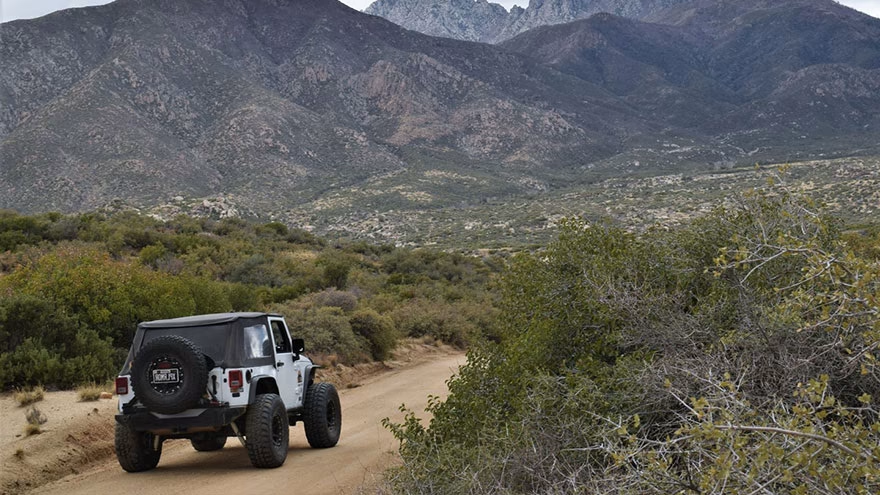
Arizona SUV Trails Depend on the SUV
Trek Trails in Arizona for SUVs is a tricky topic because one SUV may be a body-on-frame 4WD with real clearance while another is a low crossover with road tires. Arizona has room for both, but not on the same roads.
The right route depends on clearance, tires, traction, driver skill, weather, recovery gear, and how far you are from help. A scenic dirt road can become a bad idea after rain.
Match the trail to the vehicle you actually have.
Start With Official Road Status
Arizona road conditions change with floods, wildfire damage, maintenance, snow, monsoon storms, and temporary closures. ADOT's State Route 88 Apache Trail page notes that a five-mile unpaved section from Fish Creek Vista to near Reavis Trailhead Road has reopened, but the page still frames that route as a special road to check before driving.
That is the habit to copy across the state. Before leaving pavement, check the agency that manages the road, not only a social media post or a map app.
For another remote route where access conditions matter, Livecub's Spiral Jetty guide is a useful comparison.
Apache Trail Is Scenic but Demands Respect
State Route 88, often called the Apache Trail, is one of Arizona's classic desert drives. It also has narrow sections, unpaved stretches, steep drop-offs, storm history, and vehicle restrictions that can change.
Do not treat the reopened section as a casual shortcut for every SUV. Check ADOT, avoid trailers where restricted, and give yourself time to turn around if the road, traffic, or weather feels wrong.
On shelf roads, patience is a safety tool.
Schnebly Hill Road Is Not for Soft Crossovers
Coconino National Forest's Schnebly Hill Vista page states plainly that high-clearance four-wheel-drive vehicles are needed from the Sedona side because of road conditions.
That warning matters. The route can look tempting because it connects red rock views with forest access, but rough rock, ruts, and ledges can punish low-clearance SUVs.
If you drive it, know your tire sidewalls, approach angle, spare tire, and comfort with slow rock sections. If you do not know those things, choose a gentler route.
Sedona OHV Routes Need the Right Vehicle
The Forest Service's Sedona Area OHV Routes page lists routes such as Schnebly Hill, Soldier Pass, Broken Arrow, and others, with high-clearance and four-wheel-drive needs for many of them.
A rented SUV is not automatically an off-road vehicle. Rental contracts may forbid unpaved or off-highway use, and damage can become very expensive.
If the road needs 4WD, all-wheel drive is not the same promise.
Separate Scenic Dirt Roads From 4WD Trails
Some Arizona roads are graded dirt routes where a careful crossover can travel in dry weather. Others are rocky, washed out, steep, narrow, or sandy enough to need real 4WD and high clearance.
Look for route difficulty, recent storm reports, seasonal closures, and whether the route has recovery options. If a route description mentions lockers, rock stacking, deep sand, or body damage, it is not a casual SUV drive.
Livecub's Nevada meteorite locations guide is a different topic, but it also shows why desert access, land rules, and vehicle limits should be checked before heading out.
Choose Tires Before You Choose a Trail
Many SUVs leave the dealer with highway tires. Those tires may ride well in town but struggle with sharp rocks, sand, mud, and aired-down driving.
For rougher Arizona trails, all-terrain tires, a full-size spare, repair kit, compressor, and pressure gauge are more useful than extra horsepower. Know how low you can safely air down and how to refill before returning to pavement.
Tires are often the real trail rating.
Carry Recovery Gear You Know How to Use
A recovery strap, rated recovery points, shovel, traction boards, tire repair kit, compressor, gloves, and basic tools can turn a delay into a manageable problem. Gear you have never used can also create new risk.
Practice simple tire repairs and safe strap use before a trip. Do not attach recovery gear to weak tie-down points or bumpers not built for pulling.
Plan Around Heat, Monsoon Storms, and Snow
Arizona can deliver desert heat, mountain snow, flash flooding, and clay mud in the same state. A route that is simple in April may be miserable in July or blocked in winter.
Carry more water than the route seems to need, check radar during monsoon season, and avoid washes when storms are nearby. In northern Arizona, snow and freeze-thaw cycles can change forest roads quickly.
For another desert-region planning topic, Livecub's Laughlin area guide reflects how heat and distance can shape a road day.
Know When to Turn Around
Turning around is a skill, not a failure. If a ledge is beyond your clearance, a wash is soft, a storm is building, or the group is tired, stop early.
Look for safe turnouts before you need them. Backing a loaded SUV down a narrow shelf road is far harder than choosing a conservative line at the start.
Use a Spotter on Rough Sections
A spotter can help the driver place tires, avoid rocks, and see drop-offs hidden by the hood. The spotter should stand where the driver can see them and use simple hand signals.
Do not let several people shout directions at once. One spotter, one driver, slow speed, and clear stop signals keep the situation calmer.
Do Not Trust Difficulty Labels Blindly
Trail ratings vary by source, season, and driver expectations. An easy rating from a built Jeep owner may not mean easy for a stock family SUV.
Read several recent reports, then compare them with official guidance and your own vehicle specs. If the route description sounds close to your limit, choose a shorter test route first.
A conservative first trail teaches more than a damaged bumper.
Manage Fuel and Range
Arizona distances can be deceptive. A trail may be close on the map but slow enough to burn more fuel than expected.
Start with a full tank, know where the next reliable fuel stop is, and do not assume remote stores have the hours or fuel grade you need. Carry extra water before you carry extra gadgets.
Use Convoy Etiquette
Traveling with another vehicle is smart, but only if the group communicates. Set radio channels, regroup at turns, and avoid dusting the vehicle behind you.
The most capable driver should not disappear ahead. A good convoy keeps the slowest vehicle and least experienced driver in mind.
Download Maps Before the Trailhead
Many Arizona routes lose cell service quickly. Download maps, save agency pages, and carry a paper backup for areas where a wrong turn could cost hours.
Mark bailout roads, fuel stops, legal exits, and meeting points before leaving pavement. Navigation is easier when the driver is not tired, overheated, or under pressure.
Keep one map visible for the passenger, not buried in luggage.
Pack for a Long Wait
Even a short trail can become a long wait if a tire fails, a road washes out, or another vehicle blocks the route. Pack water, food, shade, warm layers for higher elevations, first-aid supplies, and offline maps.
Tell someone your route and return time. Cell service is not reliable in many canyons and desert basins.
Livecub's walking sticks article is hiking focused, but the same practical mindset applies: small preparation choices matter once terrain gets uneven.
Travel Lightly on Public Lands
Stay on legal routes, avoid widening muddy tracks, respect gates, and do not drive over fragile desert soils or vegetation. Tire marks can last far longer in dry country than visitors expect.
Pack out trash, give hikers and horses room, and lower dust near campsites or homes. Keeping routes open depends on drivers treating public land with restraint.
Frequently Asked Questions
Can any SUV drive Arizona trails?
No. Some routes suit crossovers in dry weather, while others need high clearance, 4WD, better tires, and recovery gear.
Is Apache Trail open for SUVs?
Parts have reopened, but drivers should check ADOT before going and follow vehicle restrictions, weather warnings, and posted signs.
Does Schnebly Hill Road require 4WD?
From the Sedona side, official Forest Service guidance calls for high-clearance 4WD. Do not take a soft crossover there casually.
What should I carry on Arizona SUV trails?
Carry water, offline maps, a spare tire, compressor, tire repair kit, shovel, traction boards, first aid, food, and a way to contact help.

Chiara Bradshaw
Covers education, culture and creative topics with an emphasis on readable explanations and verifiable references.



Leave a reply
Replying to