
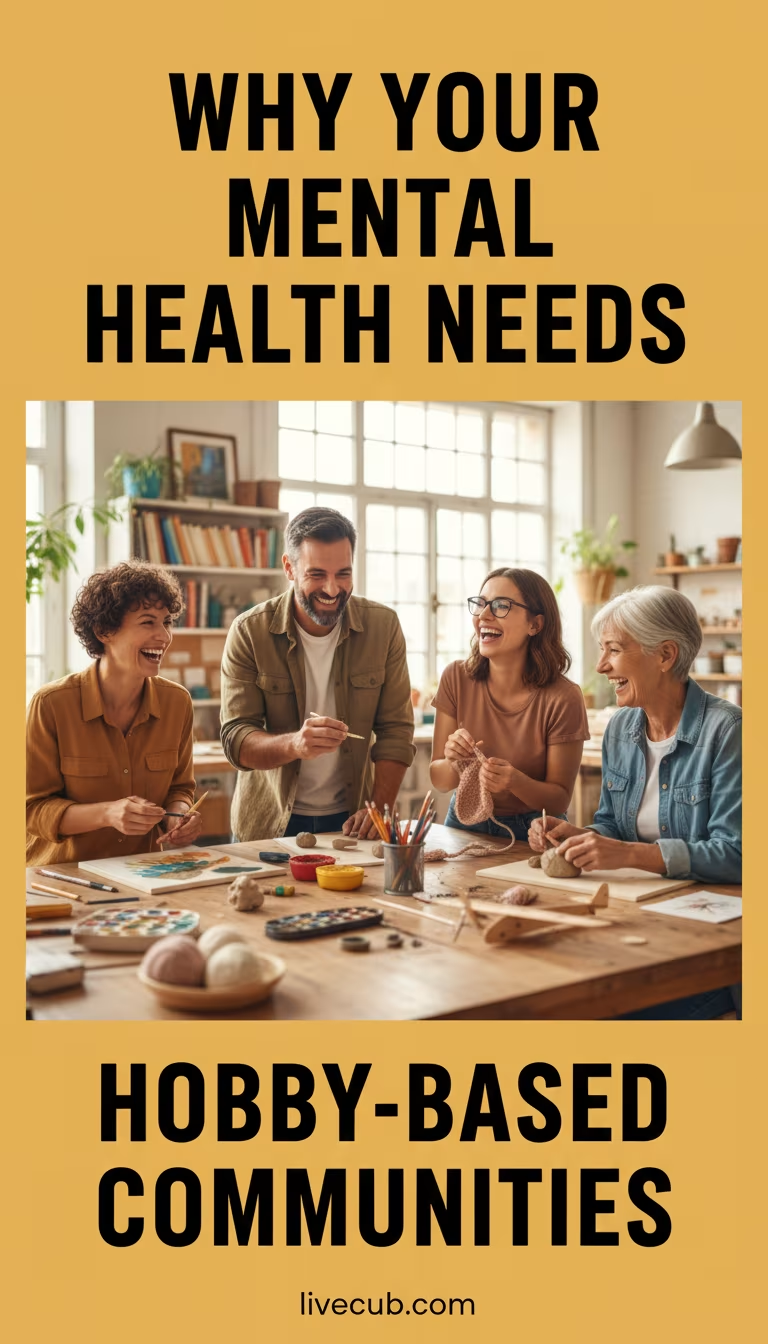
Making friends as an adult often fails for one simple reason: it asks two strangers to manufacture closeness out of thin air. A shared activity removes that pressure. When people gather around a task they already care about, connection becomes a by-product rather than the goal, and that changes everything about whether it lasts.
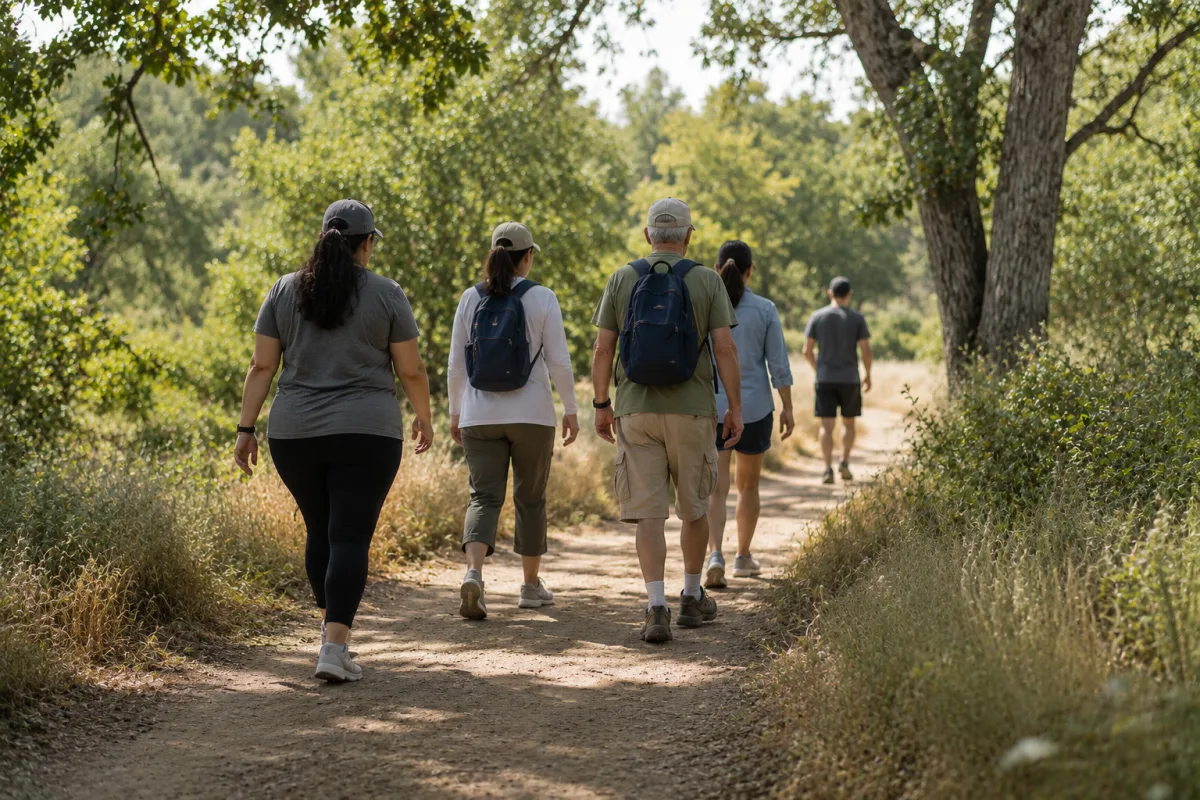
A walking group, book club, repair café, game night, choir, community garden, or evening class all work the same way. They create repeated contact without demanding instant intimacy. You show up for the thing itself, and the relationships form quietly in the background, at whatever pace suits you.
Why shared activity beats trying to be social
Loneliness is not a trivial mood problem. The CDC treats social isolation and loneliness as genuine risk factors for physical and mental health, on a par with other well-established threats: CDC social connectedness. A hobby group reduces that risk in the most durable way possible, through steady, repeated contact rather than a single heroic effort to reach out.
The activity also solves the awkwardness problem. When there is a chessboard, a trail, a garden bed, or a chapter to discuss, you always have something to talk about before anyone reaches personal territory. Conversation has a scaffold. That is a relief for anyone who freezes at the thought of open-ended small talk, and it is exactly why structured groups feel easier to enter than a party.
What belonging actually does for the nervous system
The U.S. Surgeon General's advisory on social connection describes belonging as tightly linked to health and well-being, not as a luxury layered on top of a stable life: HHS social connection advisory. Regular, low-stakes contact signals to the body that it is not facing the world alone, which eases the background vigilance that isolation tends to keep switched on.
Belonging is built in small doses, not grand gestures. A nod of recognition when you walk in, someone remembering the project you mentioned last week, a shared laugh over a dropped stitch or a missed putt, these are the units that add up. None of them require you to perform or impress. They only require you to return.
This is also why hobby groups suit people who find open friendship exhausting. There is no expectation to disclose anything personal, no pressure to be interesting on demand, and a built-in reason to leave when your energy runs out. You can attend for the activity alone for as long as you like, and the social side remains entirely optional until you are ready for it. That combination of structure and low obligation is precisely what keeps anxious or depleted people coming back when a more demanding social setting would drive them away.
Choose a low-pressure entry point

The best first group is one you can leave easily. Drop-in formats, rolling enrolment classes, and public sessions let you attend without committing to a season or a membership, which lowers the stakes of a first visit. If you can walk out after twenty minutes without letting anyone down, you are far more likely to walk in at all.
Choose something you can repeat, not something impressive. A weekly walk you will actually attend beats an ambitious course you dread by Thursday. The first win is showing up, not finding a best friend, and repeated contact does the real work over weeks and months. Anxiety fades fastest when the activity carries the conversation, so a structured group with a clear task is usually kinder than an unstructured social meetup.
Let friendship build at its own pace
There is no schedule you are failing to meet. Some people click after two sessions; others exchange nothing but pleasantries for months before something shifts. Both are normal. Treating early contact as a slow build rather than an audition takes the pressure off and, ironically, makes warmth more likely to appear.
If nerves run high before you go, the body skills that help with any performance apply here too. Livecub's guide to overcoming stage fright fast covers breathing and reframing that calm the pre-event jitters, and the same reset works on the walk to a first class. Reducing the pressure of the moment, rather than eliminating it, is the realistic goal.
Track what changes when you connect
It is easy to underestimate a habit's effect because the shift is gradual. A plain log makes it visible. For a few weeks, note the days you attended something social alongside your sleep, mood, energy, and how much you avoided or engaged with the rest of life. Patterns tend to surface: better evenings on group days, calmer mornings after a walk with others. Livecub's guide to writing a food journal can be adapted into a simple mood or habit log for this purpose.
Keep the record kind and factual. Write what happened and what helped, not a verdict on your character. A log is a tool for spotting what works, not a place to grade yourself, and a kind record is one you will actually keep going back to.
Support without pressure, for yourself and others
If you are helping someone else re-enter social life, make the offer concrete rather than open-ended. A specific invitation, come to the Tuesday walk with me, I will pick you up, is far easier to accept than a vague you should get out more. Livecub's guide to motivating the elderly offers a gentle frame for this, and it applies to a withdrawn friend of any age.
Online hobby groups count too, particularly for people limited by geography, health, or care duties. They can be a genuine source of belonging. Where possible, balance them with some offline contact, since in-person presence adds signals that a screen cannot fully carry. For someone whose difficulty is speaking rather than showing up, more care is needed; Livecub's guide to treating selective mutism is a reminder that certain patterns call for trained help rather than a nudge into a busy room.
Handle the setbacks a real routine will hit
No social habit survives contact with a bad week untouched. The trick is to plan for the low-energy days in advance rather than abandoning the whole thing when motivation dips. Decide now what the smallest version looks like: attending for ten minutes, sending one message to the group chat, or simply reading the next chapter without feeling you must have insights ready. A plan that can survive a tired, busy, or anxious day is worth more than one that only works when you feel your best.
Watch for avoidance and treat it as information, not failure. If you keep skipping the same group, the first step may simply be too big, and shrinking it, arriving late, leaving early, bringing a friend, often gets you back through the door. Notice the small wins as they come: one class attended, one conversation that went a little longer, one earlier night because you had somewhere to be. Naming those keeps the routine alive without pretending everything is suddenly fixed.
Know when a hobby group is not enough
Connection is powerful, but it is not a treatment for clinical illness. Reach for professional help if symptoms are affecting your sleep, eating, safety, work, relationships, or ability to get through an ordinary day. SAMHSA offers resources on loneliness and connection, including practical starting points for people who feel cut off: SAMHSA loneliness resources.
Name the red flag in advance, the sign that changes your next step, whether that is severe sleep loss, panic, hopelessness, or thoughts of self-harm. Writing it down makes it far easier to act on under stress, when clear thinking is hardest. A hobby community can sit alongside clinical care beautifully; it just should not be asked to replace it.
Make the environment do the work
Willpower is an unreliable engine for a new social habit. The setting around you is far more dependable. Put the class on the calendar with a reminder, lay out your walking shoes the night before, keep the book by the door, and tell one person you are going so the plan is not invisible. Small environmental cues carry a routine through the days when enthusiasm is absent.
Protect the basics first, too. Sleep, regular meals, and a manageable schedule decide whether any of this is even possible, and a group is easier to attend when you are not running on empty. Reduce one reliably draining input, the late-night scroll, the comparison feed, the commitment you resent, and you often free up just enough energy for the contact that actually helps.
Frequently asked questions
Can hobbies really help with loneliness?
Yes, especially when they create repeated, low-pressure contact. The regularity matters more than the activity itself.
What hobby should I choose?
Pick something you can realistically repeat, not something that sounds impressive. Consistency is what builds the relationships.
What if I feel too anxious to go?
Start with a structured group where the activity carries the conversation, and give yourself permission to leave early. Showing up briefly still counts.
Do online hobby groups count?
They can genuinely help, particularly when distance or health limits in-person options. Balance them with some offline contact when you can.
When should I seek professional help instead?
If symptoms disrupt your sleep, eating, safety, work, relationships, or daily function, treat it as a health issue and speak with a clinician.
This article is for general information only and is not a substitute for medical advice. Talk to a clinician who knows your full history before making changes.

Tory Stearns
Edits practical household, travel and lifestyle explainers. Claims that can change are linked to current primary or subject-authority sources.


Leave a reply
Replying to