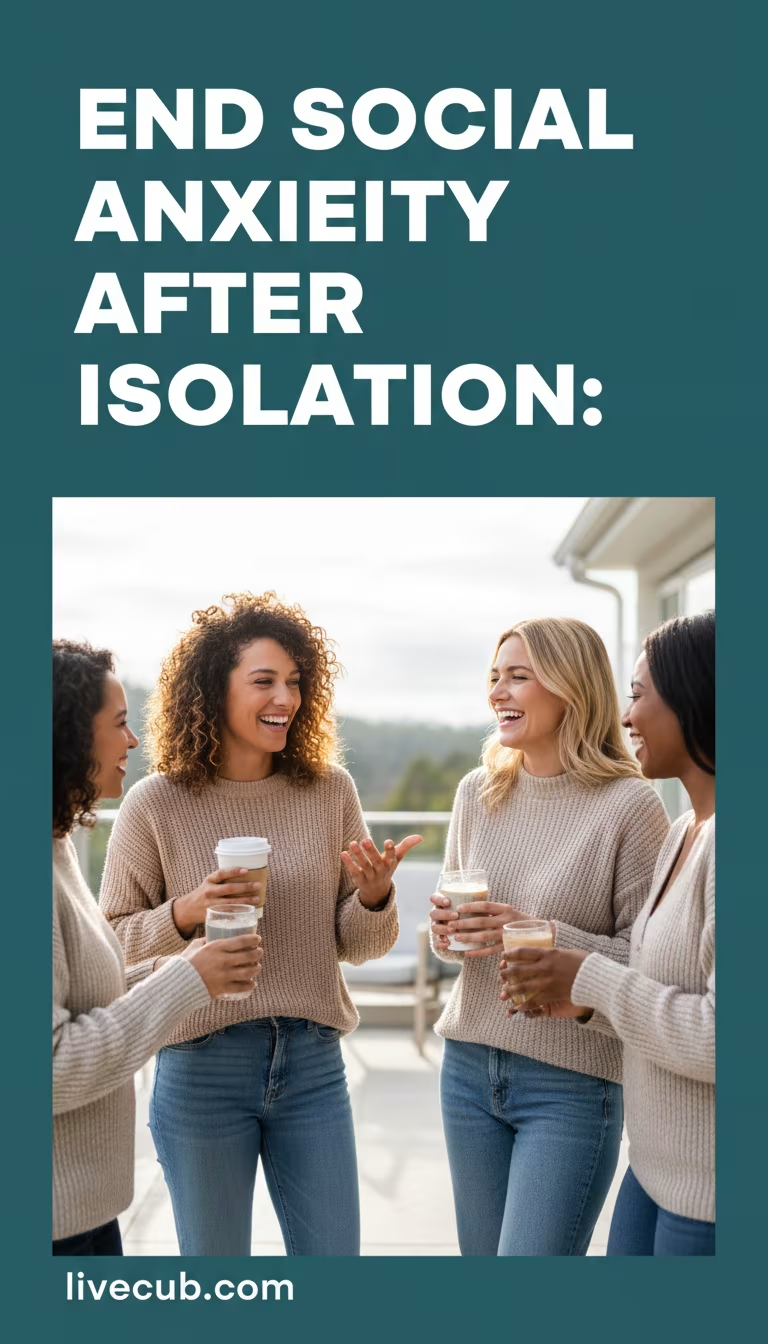
How to Handle Social Anxiety After a Long Period of Isolation
Remember those days when the highlight of your week was a quick trip to the grocery store, maybe a wave to the delivery person from behind a mask? For many of us, a long stretch of isolation became our norm. And now, as the world opens up and the invitations start flowing in – a brunch, a coworker’s farewell, a bustling concert – that old familiar flutter in your stomach might be less excitement and more...
sheer terror. You're not alone, believe me. Stepping back into a world that feels suddenly louder, faster, and full of people after months (or even years!) of being primarily in your own cozy bubble?
It's a lot. It’s like being asked to run a marathon when you haven’t laced up your sneakers in ages. But here’s the thing: you can absolutely navigate this.
It just takes a little intentionality, a lot of self-compassion, and some practical strategies to help you feel like yourself again, maybe even a more confident version.
Why This Matters
Isolation, even when it’s necessary or self-imposed, changes us. Our social muscles, much like our physical ones, can atrophy when they're not regularly exercised. Suddenly, small talk feels like a high-stakes negotiation.
The thought of a crowded room can trigger a full-blown stress response. Why does this happen? Our brains are incredibly adaptive, and during isolation, they adapted to a low-stimulus environment.
Fewer social cues to process, less need for quick conversational thinking, more time spent in predictable routines. So, when you're faced with a sudden influx of social demands, your brain might react with a surge of anxiety – a "threat response" even when there's no actual danger. It’s not a sign of weakness; it’s a perfectly normal, albeit uncomfortable, reaction to a significant shift in your environment.
What I've seen in my own life and with so many friends and readers is that ignoring this anxiety doesn't make it disappear. In fact, it often makes it worse, leading to a cycle of avoidance that further entrenches the fear. You skip that coffee date, then the next, and before you know it, you’re feeling more isolated than ever, even though the world is buzzing around you.
This isn’t just about feeling awkward at parties; it can impact your career, your relationships, and your overall sense of well-being. It's about feeling disconnected from a fundamental part of the human experience – community and connection. That's why tackling this head-on, with kindness and strategy, isn't just a good idea; it's essential for your mental and emotional health as you navigate this new chapter.
Preparing Your Mindset: Rebuilding Your Inner Game
Before you even think about stepping out the door, we need to talk about what’s going on inside your head. Social anxiety often thrives on negative self-talk and catastrophic thinking. You might be telling yourself, "I'm going to say something stupid," or "Everyone will notice how awkward I am," or "No one wants to talk to me anyway." Sound familiar?
It's time to challenge those thoughts. Think of your mind as a garden; if you only let weeds grow, that's what you'll get. We need to plant some beautiful, resilient flowers instead.
One of the biggest lessons I've learned is that most people are far more focused on themselves than they are on scrutinizing you. They're probably wrestling with their own anxieties! Shifting your perspective from "all eyes are on me" to "we're all just trying our best" can be incredibly liberating.
It's not about pretending you're not anxious; it's about acknowledging it and choosing how you respond. You wouldn't yell at a friend for being nervous, would you? Extend that same compassion to yourself.
You've been through a lot, and it's okay if things feel a little rusty. Embrace the idea that this is a process, not a performance, and every small step counts.
Cultivating a Kinder Self-Talk
- Practice Affirmations: This might sound a bit cheesy, but hear me out. Stand in front of a mirror and tell yourself, "I am capable of connecting with others," or "My voice matters," or "It's okay to feel nervous, and I can still be present." Do this daily. After trying this for 30 days, I noticed a subtle but powerful shift in how I approached social situations. It's about retraining your brain.
- Journal Your Thoughts: When those anxious thoughts pop up, write them down. Don't censor yourself. Then, look at them objectively. Are they facts or fears? Challenge them. "Is it *really* true that no one will want to talk to me, or am I just predicting the worst?" This practice creates distance from your thoughts, giving you power over them instead of them having power over you.
- Mindfulness and Meditation: Even 5-10 minutes a day can make a world of difference. Apps like Calm or Headspace can guide you through simple meditations that teach you to observe your thoughts and feelings without judgment. This isn't about clearing your mind completely, but about developing a calmer, more centered presence, which is invaluable when facing social situations.
Practical Steps for Re-entry: Easing Back In
Okay, your mindset is getting a little polish. Now, let’s talk about actually doing the thing – re-engaging socially. The key here is gradual exposure.
Don't jump from zero to a hundred. You wouldn't expect to lift a heavy barbell on your first day back at the gym, right? Treat social re-entry the same way.
Start small, build momentum, and celebrate every tiny victory. This isn't about avoiding your anxiety entirely; it's about leaning into it in manageable doses, proving to yourself that you can handle it, and showing your brain there's no real threat.
Think about what feels like a "stretch" but not an "overwhelm." For some, that might be a video call with a distant relative. For others, it could be a quick coffee with a trusted friend. The goal is to create positive experiences that slowly chip away at the apprehension.
Plan these engagements intentionally, rather than waiting for them to spring up unexpectedly. Knowing what's coming can often reduce the anticipatory anxiety. And remember, it's perfectly okay to set boundaries and say no if something truly feels like too much too soon.
Your well-being comes first.
Building Social Stamina, One Step at a Time
- Start with Familiar Faces & Small Groups: Don't sign up for a networking event with 200 strangers just yet. Begin with a one-on-one catch-up with a close friend or family member. Then, maybe a small group of 3-4 people you know well. These environments provide psychological safety, allowing you to practice your social skills without immense pressure. What I love about this approach is that it feels less like a performance and more like a warm reconnection.
- Prepare Conversation Starters (But Don't Script Everything): Having a few open-ended questions in your back pocket can be a lifesaver when your mind goes blank. Think things like, "What have you been watching/reading/listening to lately?" or "Any exciting plans coming up?" or "What's something good that's happened for you recently?" These aren't meant to be rigid scripts, just gentle nudges to get the conversation flowing. The more you practice, the more naturally these will come to you.
- Focus Outward, Not Inward: When you're feeling anxious, it's easy to get trapped in your own head, dissecting every word you say or action you make. Try shifting your focus to the other person. Ask genuine questions, listen actively to their answers, and notice their body language. When you're truly engaged in listening, you'll naturally feel less self-conscious. Plus, people generally love it when you show interest in them!
Leveraging Tech & Style for Confidence: Your Modern Toolkit
In our digital age, technology isn't just the source of our isolation; it can also be a bridge back to connection. And let's not forget the power of looking good to feel good – fashion isn't frivolous when it comes to boosting self-esteem. Combining smart tech use with intentional style choices can give you an extra layer of confidence when you're navigating those tricky social waters.
Think of it as assembling your personal "re-entry" kit. On the tech front, this isn't about endless scrolling, but about using tools intentionally to ease yourself in. Maybe it's setting up a quick video chat before an in-person meet-up, or using a smart wearable to monitor your anxiety levels.
On the style side, it's about dressing in a way that makes you feel powerful, comfortable, and authentically you. When you feel good about how you look, you automatically stand a little taller, make more eye contact, and project an air of confidence, even if you’re still a little shaky on the inside.
It’s a bit of a "fake it till you make it" strategy, but with genuine benefits.
Your Modern Edge: Tech & Fashion Strategies
- Pre-Meeting Virtual Warm-ups: If you're meeting someone you haven't seen in a while, suggest a quick 10-minute video call beforehand. It breaks the ice, familiarizes you with their current look and voice, and makes the in-person meeting feel less daunting. This pre-exposure can significantly reduce the "first encounter" jitters. It's like a mini-rehearsal that takes the pressure off.
- Curate Your Personal Style for Comfort and Power: What makes you feel amazing? Is it a sharp blazer that makes you feel professional and put-together? Is it a pair of incredibly comfortable, stylish sneakers that give you a sense of grounding? Or a vibrant color that brightens your mood? Invest in pieces that resonate with your personal brand and make you feel confident, inside and out. For me, a well-fitting pair of jeans and a statement top always does the trick. When I feel good in my clothes, I worry less about how I look and more about what I'm saying.
- Utilize Smart Tech for Grounding and Distraction (Responsibly): If you’re going into a potentially overwhelming environment (like a very loud bar or a crowded party), consider using noise-canceling earbuds. You don't have to listen to music constantly, but they can provide a moment of quiet if you need to step away and regroup. Just be mindful not to use them as a full-time shield; the goal is to engage, not hide. Or, if you wear a smartwatch, some have breathing exercises or heart rate monitoring that can help you become aware of and manage rising anxiety in the moment.
- Engage with Digital Communities First: Before diving into large in-person gatherings, use online groups or forums related to your hobbies or interests. This allows you to practice conversational skills, share ideas, and connect with like-minded people in a lower-pressure environment. It can be a great stepping stone to building confidence for real-world interactions because you're already talking about things you're passionate about.
Common Mistakes to Avoid
As you embark on this journey, it’s easy to fall into certain traps that can actually make your social anxiety worse or leave you feeling defeated. Understanding these common pitfalls can help you steer clear and maintain your momentum. We’ve all been there, trust me.
I remember one time trying to make up for months of quiet by saying "yes" to absolutely everything, and I quickly crashed and burned, feeling more drained and anxious than ever.
One big mistake is over-committing. You’ve been isolated, so there's a natural urge to go big or go home, to catch up on all the lost social time at once. But this often leads to burnout, overwhelm, and reinforces the idea that social interaction is exhausting.
Another one is expecting perfection. You might anticipate that every conversation will be brilliant, every interaction smooth. When it's not, you interpret it as failure, which feeds the anxiety cycle.
Real life isn’t a perfectly scripted movie, and it’s okay for conversations to have awkward pauses or for you to stumble over your words sometimes.
Also, don't fall into the trap of comparing yourself to others. Everyone has their own timeline and their own struggles. Just because someone else seems effortlessly social doesn't mean they are, or that your path should look exactly like theirs.
Your journey is uniquely yours. Finally, ignoring your body's signals is a huge no-no. If your heart is racing, your palms are sweaty, and you feel a knot in your stomach, those are important cues.
Don’t push through to the point of a full panic attack. Acknowledge these feelings, take a break, or even politely excuse yourself if you need to.
Expert Tips
Beyond the basics, there are some advanced strategies and deeper insights that can truly empower you in managing social anxiety. These tips might require a bit more effort or professional guidance, but the payoff can be immense in terms of long-term social confidence and well-being. Think of these as leveling up your social game, moving beyond just coping to genuinely thriving.
One of the most powerful things you can do is to consider professional support. A therapist specializing in cognitive behavioral therapy (CBT) or exposure therapy can provide tailored strategies, help you identify core beliefs contributing to your anxiety, and guide you through structured exposures that are proven to be highly effective.
Sometimes, having an objective, trained ear can make all the difference, providing tools and perspectives you might not discover on your own. It's not a sign of weakness; it's a sign of strength to seek help when you need it.
Another powerful strategy is to cultivate a strong sense of mindfulness in the moment. This goes beyond just general meditation. When you're in a social situation, practice bringing your awareness to your senses: what do you see, hear, smell, feel?
Grounding yourself in the present moment can pull you out of anxious thought loops about the past or future. Try focusing on the texture of your clothes, the temperature of your drink, or the sound of someone's laughter. This helps to re-center you.
Finally, try to actively practice empathic listening. Instead of just waiting for your turn to speak, truly try to understand the other person's perspective and feelings. This not only makes you a better conversationalist but also shifts your focus away from your own internal jitters and onto building genuine connection.
Final Thoughts
Stepping back into social situations after a long period of isolation is a challenge, no doubt about it. But it’s also an incredible opportunity for growth, for rediscovering parts of yourself you might have forgotten, and for forging new connections. Be patient with yourself, celebrate every small victory, and remember that progress isn't linear.
There will be good days and not-so-good days, and that's perfectly okay. What matters is that you keep showing up, for yourself and for the connections that enrich your life.
You’ve got this. Take a deep breath, extend yourself a little grace, and trust that with consistent effort and self-compassion, you’ll find your rhythm again. Start small, be kind to your mind, and let your confidence slowly but surely bloom.
The world has missed you, and it’s ready for you to re-engage, in your own beautiful, authentic way. So go on, send that text, RSVP to that invite, or just smile at a stranger. Your journey back to connection starts now.
Save for later
Found this helpful?
Pin this article to your Pinterest board and come back to it whenever you need a reminder.
Save to Pinterest