
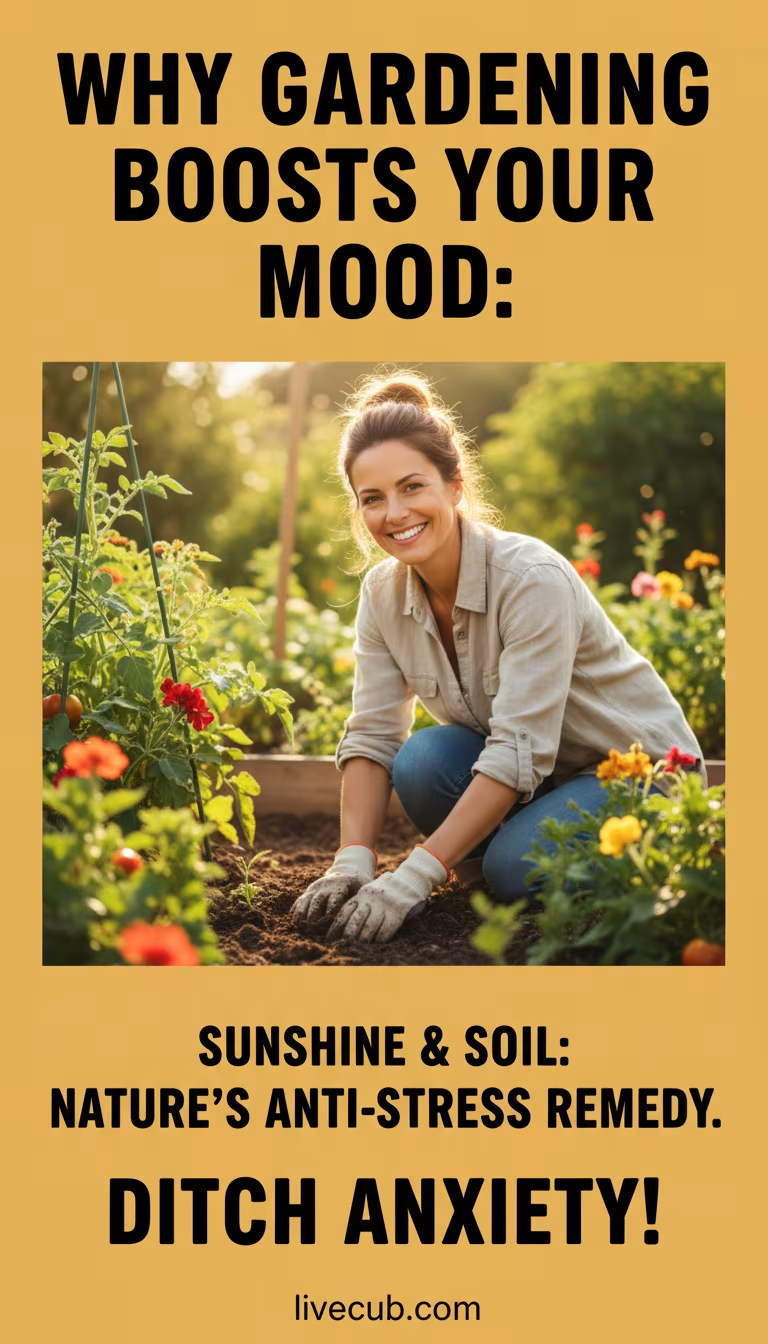
Pull a few weeds on a heavy afternoon and something loosens before you can explain why. That effect is less mysterious than it feels. Tending plants bundles together several things that steady the mind at once — daylight, gentle movement, focused-but-calm attention, sensory contact, a repeating routine, and progress you can actually see. It is one of the rare hobbies where all of those arrive in the same twenty minutes.
A note before the enthusiasm runs away: this is general well-being, not treatment. Gardening can support mood and take the edge off stress, but depression, anxiety disorders, trauma symptoms, and thoughts of self-harm still need professional care. Think of what follows as one layer of support, not a replacement for one.
Nature Plus Active Care
Time in green space is associated with better mental well-being across a wide body of research, and gardening adds something that a walk in the park does not: participation. You are not only near the plants, you are responsible for them. Watering, pruning, planting, and harvesting turn passive exposure into a small relationship with living things that respond to your effort.
The broad idea has a name in the research literature — horticultural therapy, the structured use of gardening for health and rehabilitation (overview of horticultural therapy). You do not need a formal program to borrow the mechanism. The active care is the ingredient that makes it stick.
Attention That Rests Without a Screen
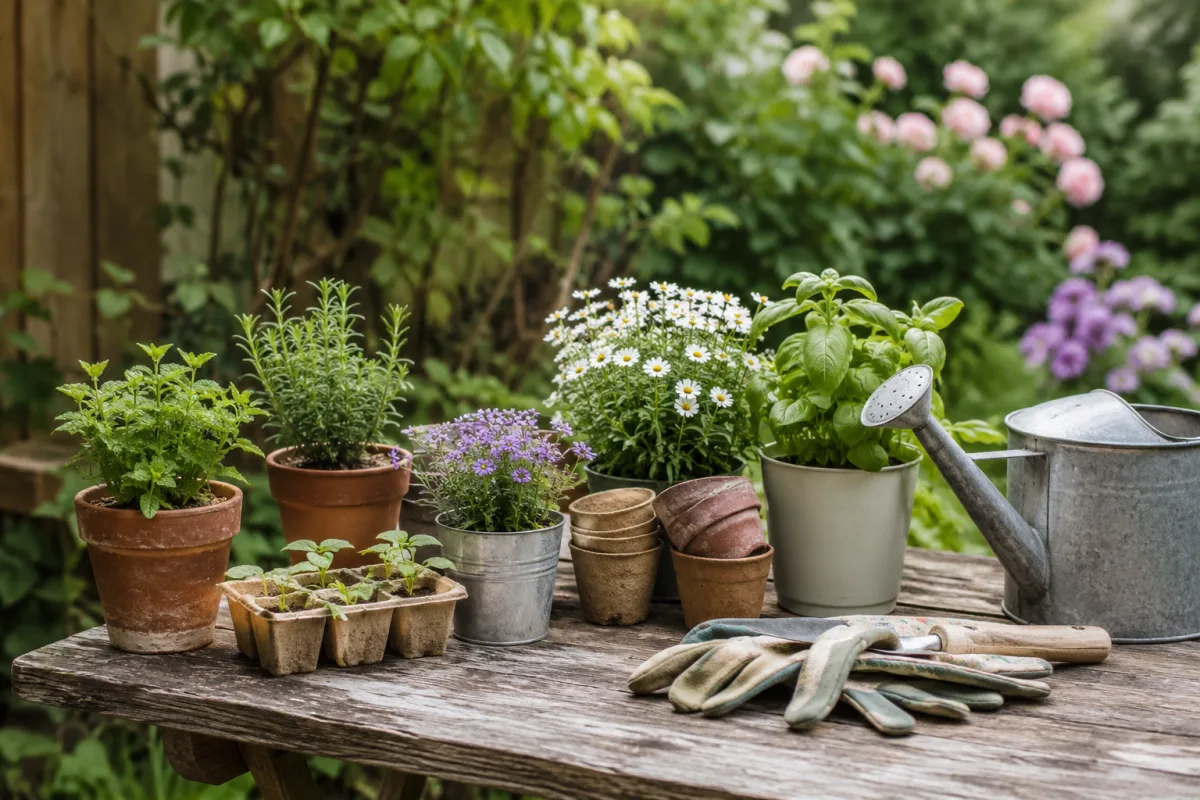
Gardening gives the mind something specific but rarely frantic to follow: soil moisture, leaf color, a new weed, a pest, the weather, a bud that was not there yesterday. This kind of soft, effortless focus is what psychologists call attention restoration — the gentle, involuntary attention that lets the directed, effortful kind recover (attention restoration theory). It interrupts rumination without demanding the hard concentration of work or the passive numbing of a feed.
The task is also concrete, which matters more than it sounds. You can see the pot watered, the bed cleared, the seedling propped up. When mood feels stuck and nothing seems to move, visible completion is quietly reassuring.
Movement That Doesn't Feel Like Exercise
Digging, hauling soil, squatting to plant, trimming, and walking a hose around a yard are all movement, but they rarely register as a workout. For people who dislike gyms or freeze at the word "exercise," gardening slips physical activity in under the banner of care instead of fitness.
Start smaller than you think you should. Knees, backs, wrists, and heat tolerance are all real limits, and an overambitious first weekend that ends in a strained back turns the hobby into another source of pain. A single filled container beats a dug-up lawn you cannot finish.
The intensity is also self-adjusting in a way a gym rarely is. On a good day you can spend an hour hauling and digging; on a flat day you can water for five minutes and still count it. That flexibility matters for mental health specifically, because it removes the all-or-nothing thinking that ends so many wellness routines after the first missed session. There is no "falling off" a garden — the plant is still there tomorrow, and so is the small task waiting for you.
Routine and the Comfort of Season
Plants impose a rhythm. They need water, light, pruning, and patience on a schedule that does not care about your mood, and that external structure can steady someone who feels unmoored — during remote work, retirement, grief, or a flat stretch of low motivation. The routine does not have to be elaborate. Five minutes checking containers at the same time each day is enough to become an anchor.
The seasonal arc adds something a to-do list cannot: anticipation. Seeds ordered in winter, sprouts in spring, tomatoes in late summer. Having something small to look forward to is itself protective, and it renews on its own each year.
Sensory Grounding in the Present
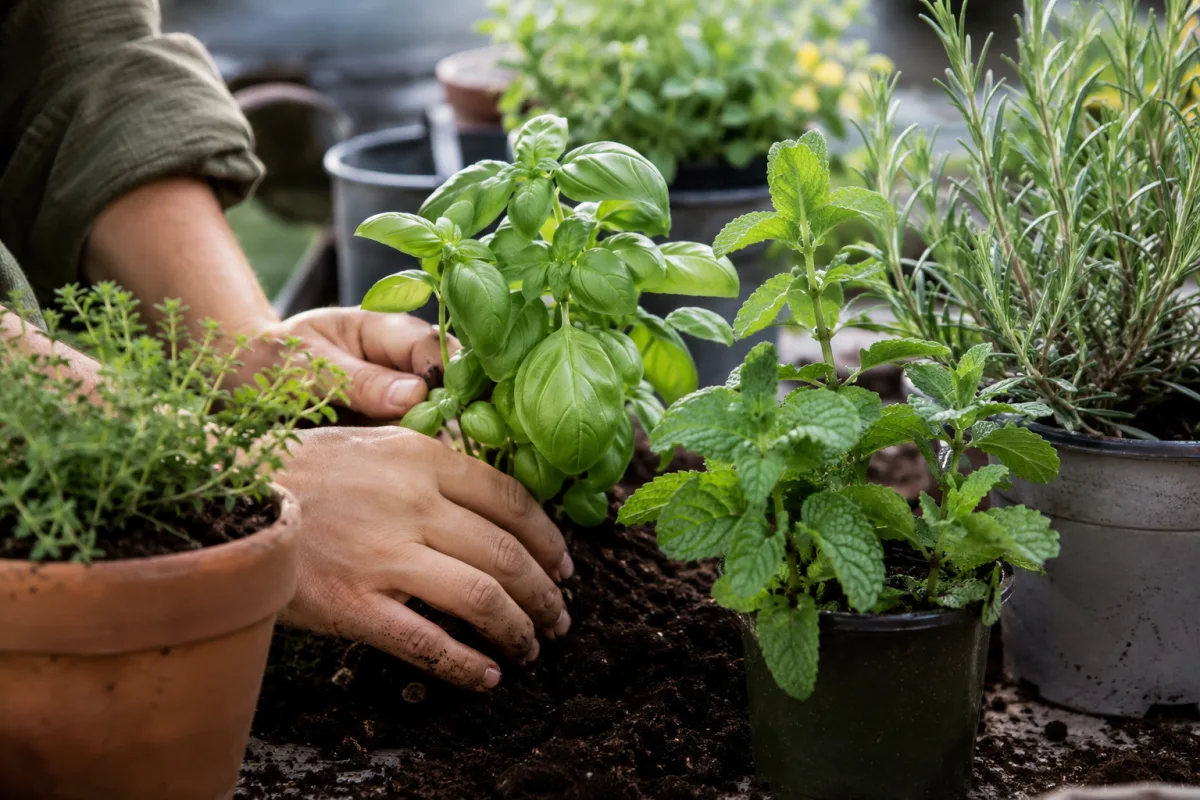
Gardening engages smell, texture, temperature, sound, and color all at once. That flood of sensory input is a natural grounding exercise: it pulls attention out of the worry loop in your head and into the pot in your hands. Warm soil, the snap of a trimmed stem, the smell of crushed basil — these are hard to think past, which is exactly the point on an anxious day.
Using the hands seems to matter especially. When attention moves into touch, pressure, and a small sequence of decisions, the mental chatter quiets. Pulling weeds, filling a pot, or pinching back an herb gives the mind a concrete job that runs slower than work stress ever does.
Connection That Starts With a Plant
Community gardens, plant swaps, a conversation over the fence, a planting project with a child — all of these reduce isolation, and they do it through a side door. The talk starts around the plant, not around your feelings, which is often far easier than direct emotional disclosure for people who find that hard.
If you are supporting an older relative whose world has narrowed, a shared plant can reopen a small routine and a reason to talk. Livecub's guide to motivating older adults pairs well here, since gardening tasks can be scaled down to whatever energy is available without anyone feeling managed.
Gardening Through Grief, and With Children
Two situations show the practice at its gentlest. Grief is one. When words are hard and the day feels shapeless, gardening gives the hands something to do that asks nothing of your composure. Planting something in memory of a person can become a private ritual with no public speech required — a place to put the feeling rather than a performance of it. The one caution is that grief also makes chores heavy, so choose a plant that forgives missed days, or share the care with someone, and let the low-energy weeks pass without guilt.
Children are the other. Young kids take to garden tasks because the work is concrete and sensory: watering, digging, counting leaves, picking herbs. It builds patience without a lecture, since the plant sets the pace and no one has to explain why waiting matters. Keep the jobs short and safe and drop the standard for a tidy result — the value is in the shared attention, not the harvest. A child who plants a seed and checks it each morning is learning the same lesson the adults are, just without the vocabulary for it.
Start Small: A Plan for Two Weeks
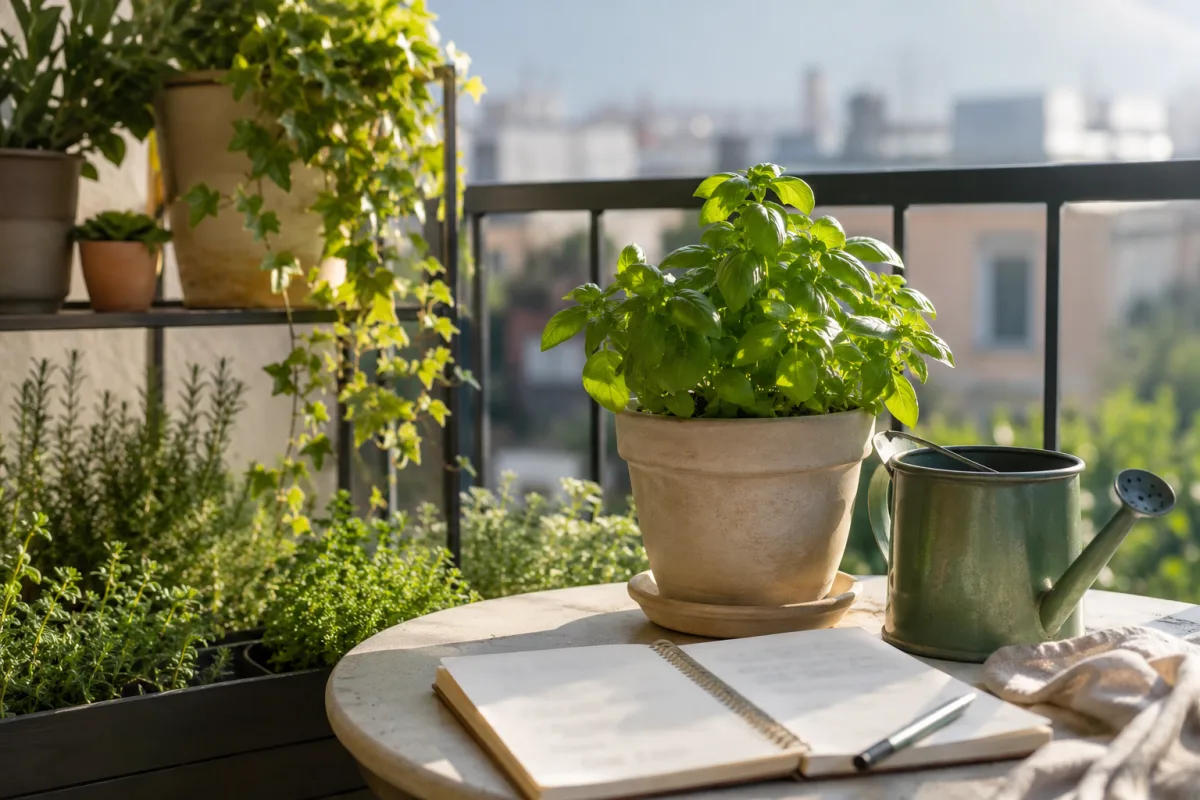
You do not need a yard, and you do not need ambition. Pick one plant, one container, and one repeatable task. Check it at the same time each day for two weeks. Notice your mood before and after, but do not demand a dramatic result — the point is a steady thread of contact with a living thing, not a perfect garden. Choose a forgiving plant first, because early success builds momentum while a fussy one just adds stress.
The right setup depends entirely on your space and energy, not on how a garden "should" look:
| Your space | Low-effort start | What it gives you |
|---|---|---|
| Windowsill only | A pot of basil or mint | Daily routine, scent, a tiny harvest |
| Balcony or step | One container of lettuce or a pepper plant | Movement, sunlight, visible growth |
| Small yard | A single raised bed with two crops | Fuller routine, more time outdoors |
| No space of your own | A community plot or a neighbor's plants | Connection plus fresh air |
Growing something edible adds a quiet bonus: a few basil leaves or one ripe pepper links effort to season and can make meals feel more deliberate. A harvest log slots neatly beside a mood note, and Livecub's food-journal guide can double as that tracker.
Where Gardening's Help Ends
Honesty about limits keeps the benefit real. Gardening is not a substitute for therapy or medication when those are needed, and the research is genuinely encouraging but not precise — studies vary by design, population, activity, and dose, so the effect is worth taking seriously without being prescribed like a drug. Use it as one support among several: light, movement, routine, nature, and contact.
Expect some loss, too, because it is built into the activity. Plants die, seeds fail, bugs arrive, heat scorches leaves. That is frustrating, but it teaches repair without moral weight — the plant did not fail because you are a failure. Keep a few notes, change the light or the watering, try a sturdier plant, and move on. A gardening mindset that budgets for failure lasts far longer than one that expects a flawless harvest.
A word on safety: wear gloves when needed, wash your hands after handling soil, protect your skin from sun, drink water, lift carefully, and avoid chemicals you do not understand. Anyone with a weakened immune system should ask a clinician about soil exposure before digging in.
Common Questions
Does gardening actually improve mental health? Research links gardening and green space with better well-being, mood, and quality of life for many people, though it works as support rather than treatment.
How much time does it take to help? Even short, regular sessions count. The routine and the attention rest matter more than the hours.
Can it replace therapy? No. It can sit alongside professional care, but clinical symptoms still need clinical help.
What if I have no outdoor space? A windowsill herb, a balcony pot, a seed tray, or a community plot all deliver the same core ingredients.
On a low-energy day, you do not have to redesign anything. Fill a pot, break up the soil, water something slowly. Soil work is grounding precisely because it is physical and small, and a single quiet task is often enough to shift the afternoon.

Linda Fehrman
Edits general wellness and relationship explainers. Health material is educational, avoids diagnosis and links to health-authority guidance.



Leave a reply
Replying to