
Pack for Problems, Not Just Photos
The best things to take travelling are the items that keep a small problem from becoming a trip-ruining one. Clothes matter, but documents, medication, payment, phone power, and weather-ready layers usually matter more. A pretty suitcase cannot help if your passport copy, charger, or prescription is missing.
Use this five-item framework before any trip: identity and documents, medication and health basics, money and payment backups, phone power and offline information, and adaptable clothing. The exact items change by destination, but the categories stay useful.
The U.S. State Department's travelers checklist is a strong starting point for international trips because it covers documents, insurance, destination rules, and emergency planning.
1. Documents and Copies
Start with the documents that let you travel: passport, visa if needed, driver's license, boarding passes, hotel details, travel insurance, emergency contacts, and reservation numbers. Keep the originals secure but reachable on travel days. Do not bury them under clothes.
Bring copies too. A paper copy of your passport, insurance, and itinerary can help if your phone dies. A digital copy stored offline can help if paper is lost. Give a trusted person at home your itinerary and a way to reach you in an emergency.
For domestic trips, the same idea still helps. Keep a photo of your ID, hotel address, car rental details, and insurance card where you can reach them offline. Travel problems do not wait until you cross a border.
Use a document pouch that opens quickly but closes securely. Airports, rental counters, hotels, and ferry terminals all create moments where papers move in and out. A single document home lowers the chance of leaving something on a counter.
If the trip is remote or weather-sensitive, documents also include route notes and local contact information. Livecub's Spiral Jetty travel guide is a good reminder that drive time, roads, and conditions can be part of the plan, not an afterthought.
2. Medications and a Small Health Kit
Medication belongs in your carry-on, not checked luggage. Bring prescriptions in original containers when possible, plus enough for the trip and a little extra in case of delay. Add glasses, contacts, hearing aid batteries, inhalers, allergy supplies, or other daily health items.
CDC's Pack Smart guidance recommends planning for prescriptions, destination health needs, and travel delays. That advice applies even to short trips because a missed medication can change the whole day.
A small health kit can include pain reliever, bandages, blister care, motion sickness items, stomach medicine, hand sanitizer, sunscreen, and any destination-specific items. Keep it small enough to carry. A kit left in checked luggage is not useful when you need it on a train, trail, or plane.
Think about the first 24 hours. If luggage is delayed, can you still take medicine, brush your teeth, manage contacts or glasses, and sleep comfortably? A tiny kit in the carry-on can protect that first day.
Destination matters too. A city weekend may need blister care and allergy medicine, while a hiking trip may need insect repellent and extra socks. Pack for the most likely discomforts, not every medical possibility.
3. Payment Backups
Carry more than one way to pay. A credit card, debit card, small amount of local cash, and a backup card stored separately can protect you if a card is declined, lost, or blocked. Tell your bank about international travel if needed.
Do not keep every card and all cash in one wallet. Split backups between a money belt, hotel safe, second pouch, or trusted travel companion when appropriate. If one bag disappears, you still have a way to move, eat, and reach help.
Payment planning also includes knowing where cash matters. Some markets, buses, small towns, tolls, tips, and parking areas may not accept cards. Livecub's Petoskey travel guide is domestic, but the lesson travels: local stops often work better when you have flexible payment options.
Before leaving, check card expiration dates and daily withdrawal limits. Add the bank's support number somewhere outside the wallet. If the card is blocked, you do not want the only help number trapped in the same banking app that will not load.
Keep one emergency payment option separate from the main wallet. It can be a backup card, a small cash envelope, or a trusted companion's split fund. Payment separation is the useful part, because losing one pouch should not end the day.
4. Phone Power and Offline Information
Your phone may hold maps, boarding passes, hotel addresses, translation tools, tickets, and emergency contacts. Pack a charger, power bank, plug adapter if needed, and a short cable. Charge before long transfers, not after the battery warning appears.
Save key information offline: maps, hotel address, passport copy, insurance number, tickets, and emergency contacts. Mobile service can fail in airports, mountains, rural roads, cruise ports, and crowded events. Offline access is travel insurance for your phone.
TSA's travel tips can help with security screening and carry-on planning before flights. Check battery and liquid rules before packing, especially if you use power banks, medical liquids, or special equipment.
Bring one cable more than you think you need, but not a nest of tangled cords. A short cable for transit and a longer one for hotel rooms can cover most situations. Label adapters if you travel with family so they return to the right bag.
Offline information should include addresses in the local language when relevant. A taxi driver, pharmacist, or station worker may be able to help faster if the destination is written clearly. Screenshots are helpful when translation apps fail.
5. Adaptable Clothing and Footwear
Pack clothing that can be layered, reworn, and matched across outfits. A light jacket, comfortable walking shoes, weather-appropriate layers, and one cleaner outfit often beat a suitcase full of single-use pieces. Choose fabrics that dry well if laundry is limited.
Footwear deserves extra thought. New shoes can ruin a trip with blisters. Bring shoes that already work for your feet and the terrain. If walking, trails, cobblestones, cruise decks, or stairs are likely, comfort beats style.
Livecub's walking sticks guide points to a wider packing truth: gear should match the ground under your feet. Travel clothing is not only about looking right; it is about moving safely and comfortably.
Use a simple color range so pieces mix without much thought. Two bottoms, three tops, one layer, and one weather shell can create several outfits. Laundry access can reduce the bag more than another pair of shoes.
Pack one comfort item if it solves a real problem. Earplugs, an eye mask, a scarf, or a small snack can make delays and noisy hotels easier. The trick is choosing useful comfort, not filling the bag with maybes.
How to Keep the Bag Manageable
A good packing list can still become too much. Limit duplicates, choose items that serve more than one purpose, and leave room for laundry or purchases. If you cannot lift or carry the bag comfortably, the packing list needs editing.
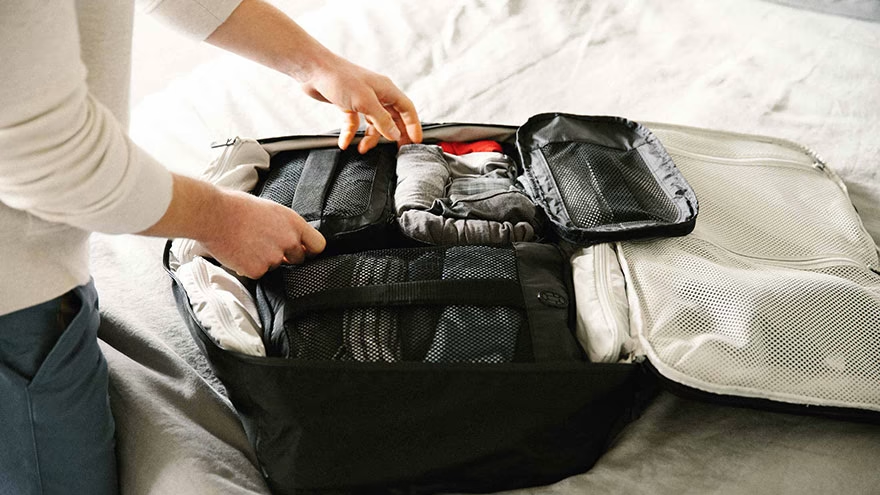
Pack the first-day essentials in one place: documents, medication, charger, one layer, toiletries, and a clean shirt. If checked luggage is delayed, you can still function. If the trip is carry-on only, use packing cubes or pouches so small essentials do not vanish.
Before leaving, do a last check using actions rather than categories. Confirm that you can prove identity, pay, contact someone, take medication, and stay warm, dry, charged, and oriented. If yes, the core list is working.
After each trip, remove what you did not use and note what you missed. Your personal packing list should get sharper over time. The goal is not a perfect bag; it is a bag that fits how you travel. Keep that list nearby.
Frequently Asked Questions
What are the five most useful things to take travelling?
Take documents and copies, medications and health basics, payment backups, phone power with offline information, and adaptable clothing with comfortable shoes.
Should medication go in checked luggage?
No. Keep medication in your carry-on because checked bags can be delayed, lost, or inaccessible during travel days.
How much cash should I travel with?
Carry enough for small purchases, tips, transit, or emergencies, but do not keep all cash in one place. Use cards and backups too.
What should I save offline before travelling?
Save maps, hotel addresses, tickets, insurance details, emergency contacts, passport copies, and any transport information you may need without service.

Timothy Davidson
Edits step-by-step general-interest guides for clarity, realistic limits and source verification.



Leave a reply
Replying to