
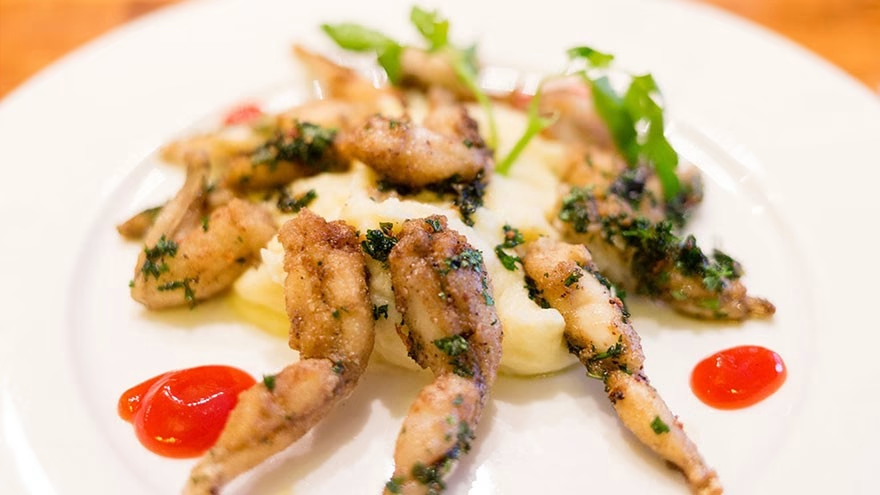
The United States imports an average of 2,280 tonnes of frog legs every year — the equivalent of up to one billion frogs — yet many Americans have never encountered them outside a menu footnote. That gap between global appetite and domestic familiarity is partly cultural, partly logistical. Frog legs are a staple across France, China, Indonesia, and the American South, and once you understand where to source them, how to spot quality, and what heat does to their delicate muscle fibers, the cooking itself is straightforward. This guide covers every step: buying frog legs fresh or frozen, reading quality, understanding the sustainability picture, cleaning and prepping, and executing four classic cooking methods well.
What do frog legs actually taste like?
The reflexive answer — "like chicken" — is not wrong, but it undersells the distinction. Frog legs sit somewhere between chicken breast and a mild white fish: the texture is firm and slightly springy before cooking, then turns tender and very finely grained once heat works through it. The flavor is genuinely mild, almost sweet, with none of the gaminess associated with other wild proteins.
The reason for that mildness is physiological. Frog leg muscle contains very low concentrations of myoglobin, the iron-carrying protein that gives beef and duck their deep, iron-forward flavor. Chicken white meat is similarly myoglobin-poor, which is why the comparison holds. The texture, though, diverges slightly from chicken: the individual muscle fibers in frog legs are shorter and finer, making the meat flake a little — closer to crab or shrimp than to a chicken thigh. Cook them past their window (roughly three to five minutes per side over medium-high heat) and they tighten, shrink, and lose that delicate quality fast. Most people who claim to dislike frog legs encountered an overcooked batch.
Fat content is negligible, which means frog legs pick up the flavors of whatever surrounds them — butter, garlic, lemon, Cajun spice, a light batter. That neutrality is a cooking advantage, not a liability.
Where can you buy frog legs?
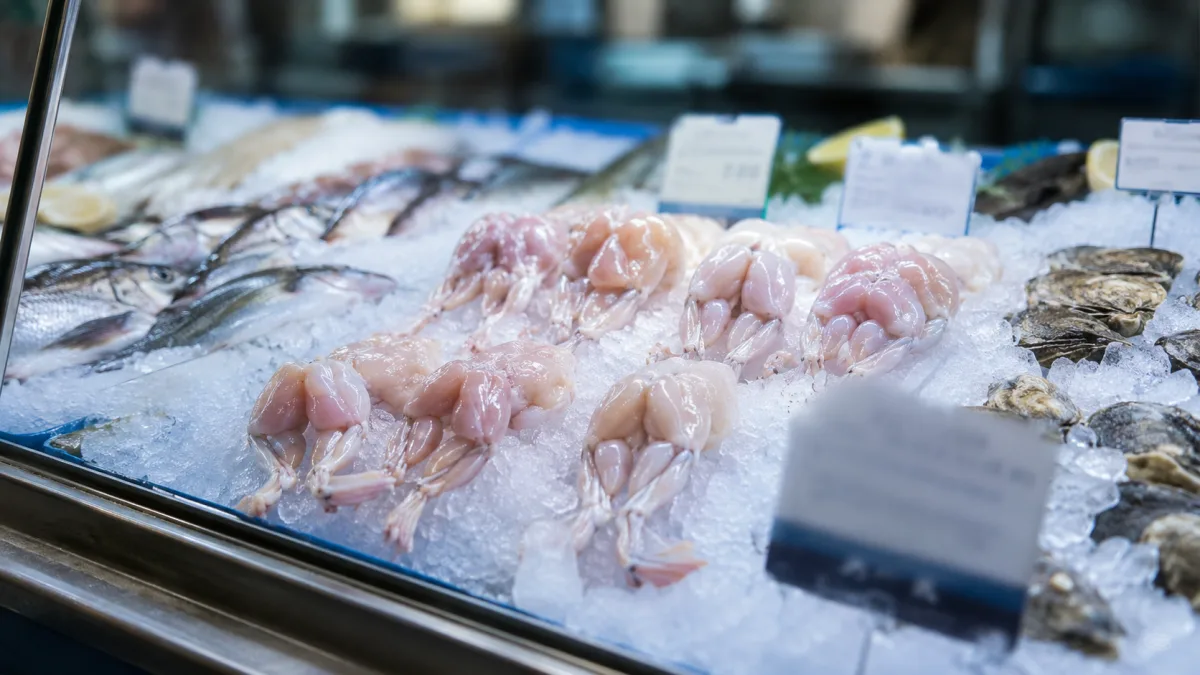
Asian grocery stores are by far the most reliable domestic source. Chains like 99 Ranch Market or H Mart carry them frozen year-round, and Asian online grocers such as Weee! deliver nationally. Specialty food retailers — D'Artagnan being the best-known — stock cleaned, frozen pairs suitable for classic French preparations. Amazon carries frozen five-pound bags from commercial suppliers, usually sourced from Indonesia or China. Instacart partners with several grocers and fishmongers who carry them fresh or frozen depending on location.
Fresh frog legs are harder to find but not impossible. Some fishmongers and butcher shops in coastal cities carry them seasonally. In the South — Louisiana especially — they appear at live seafood markets and roadside stands during bullfrog season. If you are gigging your own American bullfrogs (legal in many states with a valid fishing license), you will have access to the freshest possible product. Store-bought legs have nearly always been frozen at some point in their transit from Indonesia, Vietnam, or China, even if sold as "fresh" at retail.
See also our guide to cooking and serving foie gras for other specialty ingredients that reward careful sourcing.
How do you choose fresh vs frozen frog legs?
Counterintuitively, frozen legs sold by a reputable supplier are often fresher than "fresh" legs sitting in a display case. Commercially frozen frog legs are blast-frozen within hours of processing; a fresh product that has traveled several days through distribution may have deteriorated more. The practical test is packaging: look for tightly sealed bags with no visible ice crystals clustered around the meat. Large ice deposits signal temperature fluctuation during transit — partial thawing and refreezing — which damages texture and shortens shelf life.
For fresh legs, the quality indicators mirror those for good seafood. The flesh should be light pink to pale white and slightly translucent, never gray or discolored. Firmness matters: press a leg gently and it should spring back. Any sliminess or mushiness means the proteins have already begun to break down. The smell should be clean and very faint — a mild, slightly aquatic scent. A sharp ammonia odor or a sour, fishy smell is a hard stop; do not buy them.
Pair size to your cooking method. Jumbo legs (four to a pound or fewer) hold up to pan-searing and grilling. Smaller legs, often sold six to eight per pound, suit deep-frying, where their larger surface-to-mass ratio yields a higher crust-to-meat ratio — which is, for many people, the entire point.
Are frog legs sustainable to eat?
The sustainability picture is genuinely complicated, and it depends almost entirely on species and sourcing. A 2023 peer-reviewed study in Nature Conservation found that the European Union alone imports an average of 4,600 tonnes of frog legs per year, with Indonesia supplying roughly 74% of that volume. The study identified numerous problems: many traded species have uncertain IUCN conservation status, some are listed on the IUCN Red List as threatened, and the trade lacks standardized health or ecological certification. India and Bangladesh — once the dominant suppliers — banned frog leg exports in 1987 and 1989 respectively after their wild frog populations collapsed, removing a critical natural predator of agricultural pests and mosquitoes from both ecosystems.
The American bullfrog (Rana catesbeiana) is the species most likely to appear in US markets. It has the highest farming potential of any food frog, and commercial bullfrog aquaculture operations exist in China, Taiwan, Ecuador, and Brazil. Farmed bullfrogs, raised in controlled pond systems, represent a more defensible choice than wild-caught Indonesian frogs of uncertain population status. The irony is that the American bullfrog is itself considered one of the world's 100 worst invasive species when introduced outside its native range — escaped farmed bullfrogs have disrupted amphibian communities across Europe and South America.
The practical takeaway: buy frog legs labeled as farmed rather than wild-caught, and favor suppliers who can name the source country and species. Farming removes the pressure on wild populations, and a well-managed aquaculture operation keeps the ecological risks local and controlled.
How do you prepare and clean frog legs?
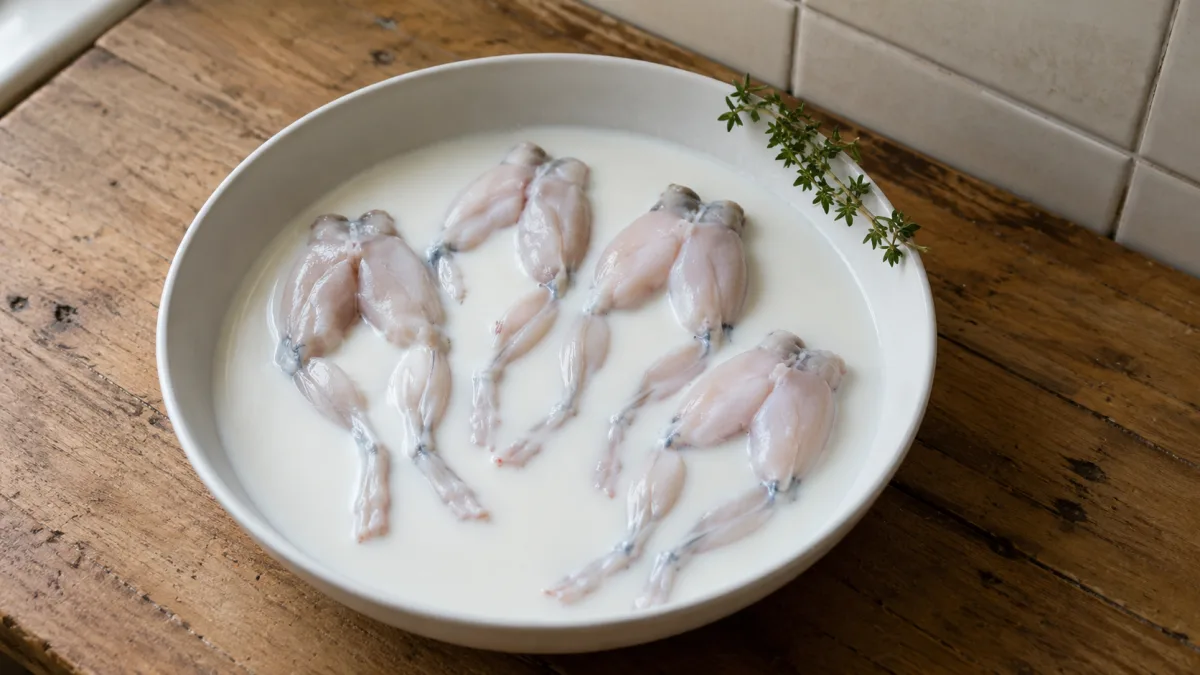
Most frog legs sold commercially arrive already cleaned and separated — skinned pairs joined at the hip, ready for a marinade. If you are working with whole wild-caught frogs, the prep takes about ten minutes per frog once you get the rhythm.
Start by making a shallow incision through the skin just behind the jaw line, then cut all the way around the neck. Slip a thumb under the skin at the throat to loosen it, then use a firm grip (pliers help with slippery freshly caught frogs) to pull the skin straight back toward the hind feet in one motion — it peels off like a tight glove. Cut the feet and head off, then split the carcass down the breastbone, remove the internal organs, and rinse the legs thoroughly under cold running water. If you want only the hind legs, cut them from the body at the hip joint before rinsing.
Whether you are using commercially purchased legs or freshly cleaned ones, a milk soak is worth the hour it takes. Submerge the legs in whole milk and refrigerate for 45 minutes to an hour. Milk's mild lactic acid and enzyme content gently softens the surface proteins without the harshness of a vinegar or citrus-acid marinade — the kind of extended contact that can degrade delicate texture rather than improve it. The soak also draws out any residual blood, which whitens the meat and gives you a cleaner base flavor. After soaking, pat the legs completely dry before dredging or seasoning; surface moisture will steam rather than sear the meat, and you lose the crust.
Read our related guide on how to cook goose for more techniques that apply to lean, delicate proteins that punish overcooking.
How do you cook frog legs — the classic methods?
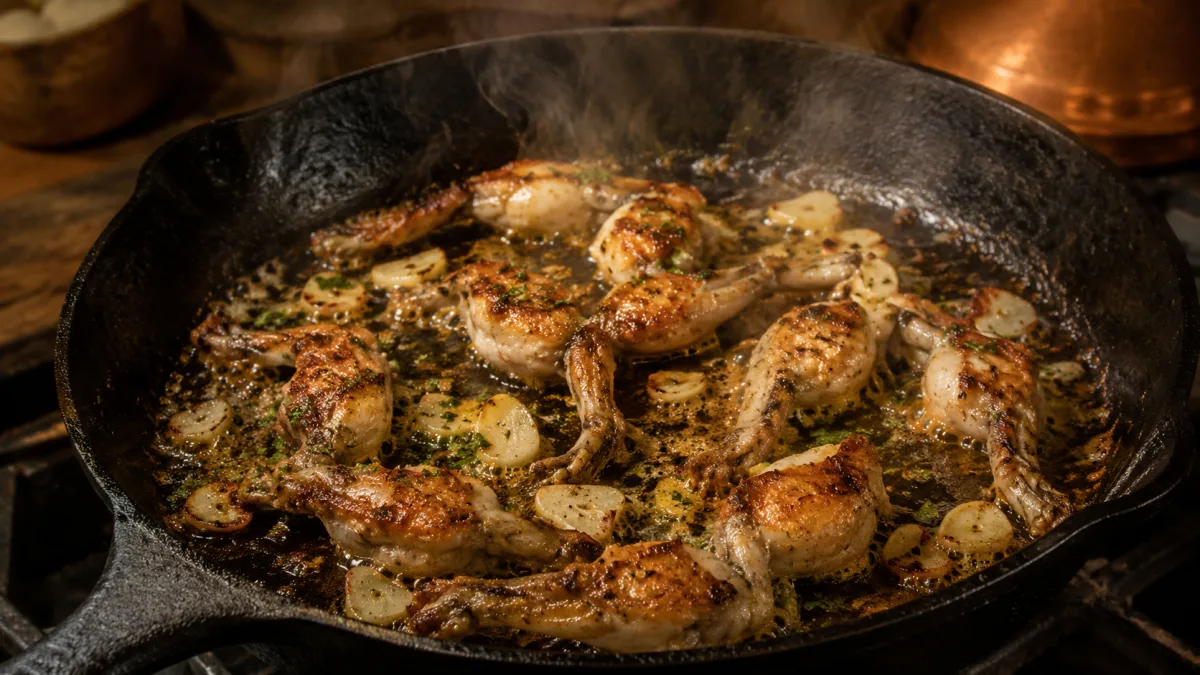
Four preparations cover the major traditions, and they are not interchangeable — the method shapes the final character of the dish.
French Provençale (cuisses de grenouille à la Provençale): Dredge milk-soaked, dried legs in seasoned flour and shake off the excess. Heat clarified butter — ghee works perfectly — in a heavy skillet until a faint wisp of smoke appears, then add the legs without crowding. Cook three to four minutes per side until golden, flip only once (the flour coating is fragile). Set aside on a rack. Discard the pan butter, wipe the pan, add fresh unsalted butter, and sauté thinly sliced garlic for one minute. Kill the heat, add lemon juice, pour over the legs, finish with minced flat-leaf parsley. Using clarified butter for the cook and whole butter for the sauce is not fussiness — clarified butter has a higher smoke point and will not burn during the sear, while whole butter carries the fat-soluble aromatics in the final sauce far more expressively than clarified.
Cajun pan-fried: Build a spiced flour or cornmeal dredge — smoked paprika, garlic powder, cayenne, dried thyme, salt — and dredge the legs twice for a thicker crust. Fry in a cast-iron skillet in neutral oil at around 350°F until deep golden. The Cajun tradition pairs them with a quick bordelaise or a remoulade on the side.
Chinese salt-and-pepper: Coat the legs in cornstarch and fry at high heat until the coating is shatteringly crisp. Toss immediately with fried garlic, fresh chili, and scallion in a dry wok with coarse salt and white pepper. The legs absorb none of the sauce — they stay crisp — and the aromatics perfume each bite without soaking through the crust.
Italian fritto: A thin beer or sparkling water batter (flour, egg, cold carbonated liquid) produces a lighter, more airy crust than flour-dredging alone. The CO₂ in the batter expands in hot oil and creates a lacy, open structure. Serve with lemon wedges and nothing else. The key temperature for all frying methods: FoodSafety.gov recommends reaching 145°F internally for fish and seafood; apply that same minimum to frog legs and confirm with an instant-read thermometer if you are uncertain.
Regardless of method, frog legs cook in three to five minutes per side. Set a timer. They will tell you they are done by color and aroma before temperature does.
What sauces and sides pair best with frog legs?
Their mild flavor means frog legs tolerate bold accompaniments without being overwhelmed, but they also get lost next to very heavy, dominant flavors. The sweet spot is bright and fatty: lemon butter sauces, aioli, herb-forward vinaigrettes, remoulade. A classic French preparation calls for nothing beyond the browned butter and parsley already in the pan. Cajun versions want a sharp remoulade with plenty of Creole mustard and hot sauce.
On the side: fingerling potatoes roasted in duck fat, thin green beans with a shallot vinaigrette, or a simple bitter greens salad. The goal is contrast — something acidic or green to cut through the richness of whatever fat you cooked in. Crusty bread for the pan sauce is non-negotiable in the French preparation.
For drinks, lean white wine — a Muscadet, a Chablis, or a dry Alsatian Riesling — matches the delicacy of the meat without overpowering it. A cold lager or pilsner works equally well for the Cajun or Chinese preparations.
For more ideas on unusual yet satisfying preparations, see our guide to cooking greens or our rundown on six stir-fry sauces — the latter pairs directly with the Chinese salt-and-pepper method above.
Frequently Asked Questions
Do frog legs really taste like chicken?
Partially. The flavor is mild and slightly sweet in the same way chicken breast is — both have very low myoglobin content — but the texture of frog leg meat is finer and slightly more flaky, closer to crab or shrimp than to poultry. Preparation matters more than species: a well-seasoned, properly cooked frog leg tastes significantly better than the generic "like chicken" shorthand suggests.
Can you eat parts of the frog other than the legs?
Yes. The whole skinned frog is edible, and in some French country cooking the body (minus head and organs) is cooked whole. However, the hind legs carry by far the most meat, and the muscle quality there is meaningfully better than the bony front limbs or back section. Commercial suppliers sell only the hind leg pairs for exactly that reason.
Is it safe to eat wild-caught frog legs?
Wild-caught American bullfrogs are legal to harvest in many US states with a valid fishing license. The safety consideration is proper cleaning and thorough cooking — reaching an internal temperature of at least 145°F kills bacteria and any parasites present. Wild frogs from polluted water sources may carry higher contaminant loads, so source from clean waterways and check your state's game regulations before gigging.
How long do fresh frog legs last in the refrigerator?
Fresh frog legs keep for one to two days in the refrigerator, stored in a sealed container on the bottom shelf. Frozen legs can be held for up to three months without significant quality loss. Thaw overnight in the refrigerator rather than at room temperature to minimize bacterial growth during the defrost window.
Why do frog legs sometimes move after death?
This is a neurological phenomenon, not a sign of life. Frog legs contain motor neurons that remain electrically excitable for some time after the frog dies. Sodium or potassium ions in a marinade or on a salted surface can trigger these neurons, causing the muscles to contract visibly. It is unsettling the first time, but it does not affect the flavor or safety of the meat.
What is the best single tip for a first-timer cooking frog legs?
Dry the legs completely before they hit the pan, and do not move them once they are down. Surface moisture creates steam that prevents browning; a wet leg will stew in the butter rather than sear in it. Pat with paper towels after the milk soak, let them air-dry on a rack for ten minutes, then cook over genuinely hot fat — you want to hear a decisive sizzle the moment they touch the pan.

Tory Stearns
Edits practical household, travel and lifestyle explainers. Claims that can change are linked to current primary or subject-authority sources.




Leave a reply
Replying to