
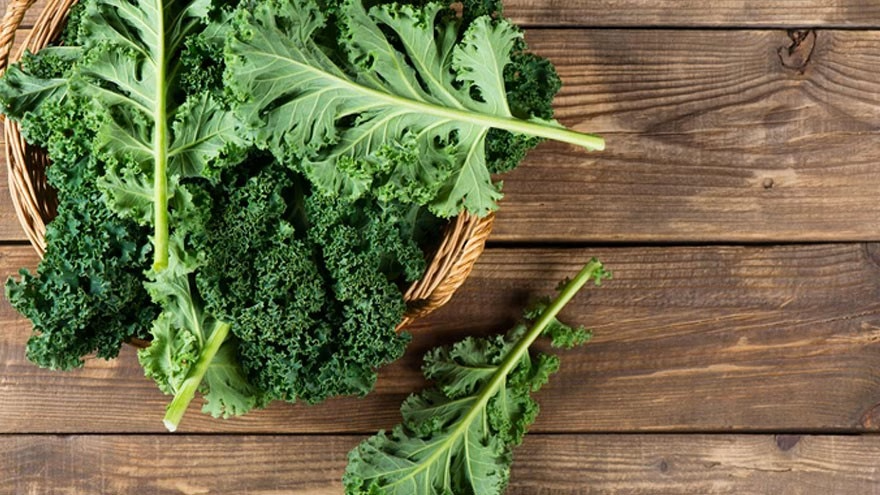
Kale can be tender, bitter, silky, crisp, or tough depending on what you buy and how you treat it. The difference is rarely magic. It is freshness, storage, washing, stem prep, seasoning, and heat. This guide to buying and cooking kale keeps the focus on useful kitchen choices: which bunch to choose, when to massage, when to saute, and when to let the pot do the work.
What kind of kale should you buy?
Look for leaves that are deeply colored, lively, and free from slimy spots. Stems should look fresh, not dried out. Avoid bunches with yellowing, strong sulfur smell, or heavy wet decay in the twist tie area.
Curly kale is sturdy and common. Lacinato kale, sometimes called dinosaur kale, has flatter dark leaves and a softer texture when cooked. Baby kale is tender and better for quick salads than long cooking.
Buy the type that fits the dish. Curly kale holds up in soups and roasted chips. Lacinato kale slices neatly for salads and quick sautes. Baby kale is convenient, but it wilts faster and can bruise in the bag.
The FDA gives general produce safety guidance for buying, storing, washing, and separating fresh produce. Its produce safety guide is useful for kale because leafy greens need clean handling.
How should kale be stored?
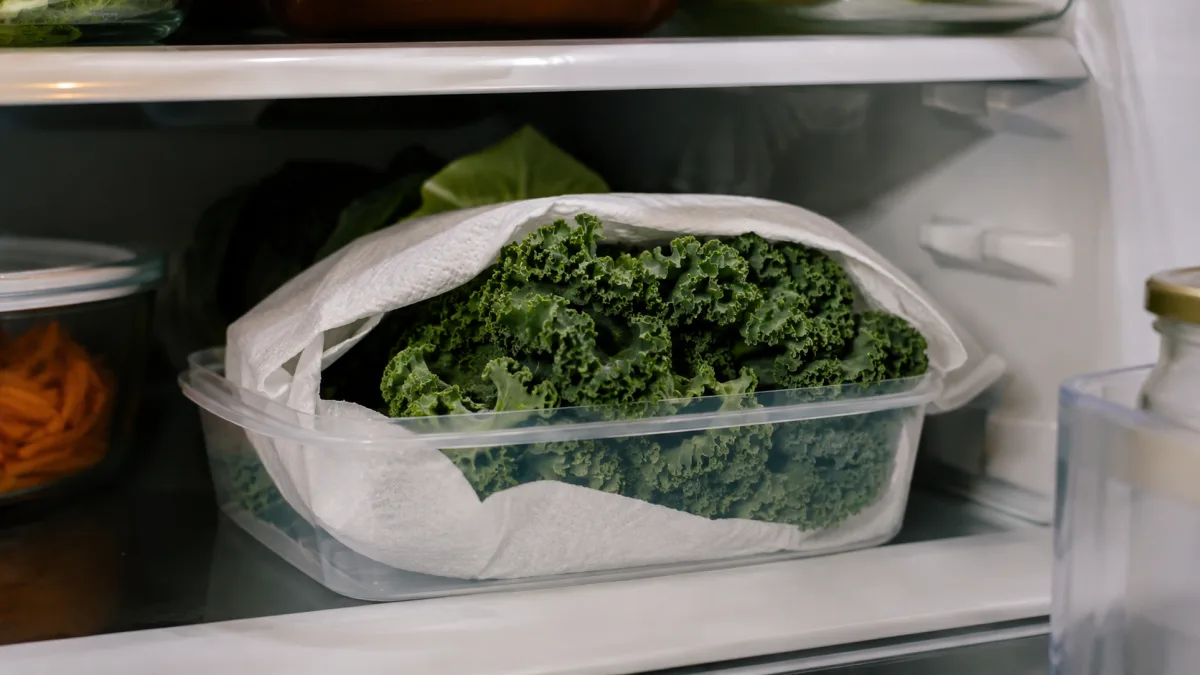
Keep kale cold and dry enough that it does not rot, but not so dry that it wilts immediately. Wrap it loosely in paper towel and place it in a bag or container with some airflow. Wash close to cooking rather than before storage.
If the leaves are already damp, dry them before refrigerating. Trapped water makes kale collapse faster. Storage starts at the store; do not choose a soaked bunch and expect it to improve at home.
For another greens-focused kitchen guide, Livecub's guide to cooking greens pairs well with kale prep.
How do you wash and prep kale?
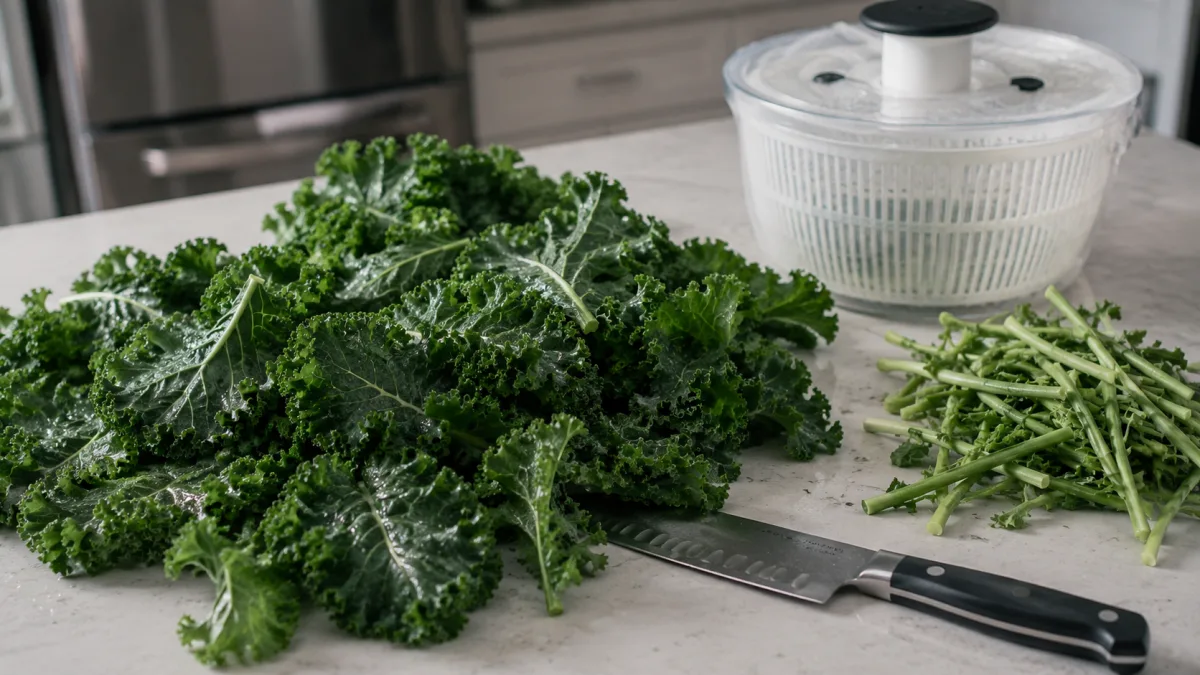
Separate leaves, rinse well, and check the ribs where soil can hide. Dry the leaves if you plan to saute, roast, or make salad. Wet kale in a hot pan steams before it browns.
Removing stems
Hold the stem with one hand and strip the leaf away with the other. Chop tender stems finely for soups if they look fresh.
Cutting leaves
Stack leaves, roll them loosely, and slice into ribbons for salads or quick cooking. Tear larger pieces for braises and soups.
Drying
Use a salad spinner or towels. Dry leaves take dressing and heat better than dripping leaves.
When should you massage kale?
Massage kale when it will be eaten raw. Add a little salt, oil, lemon juice, or vinegar, then rub the leaves until they darken and soften. This breaks down stiffness and makes the salad easier to chew.
Do not massage baby kale hard. It is already tender and can turn limp quickly. Sturdier curly kale and lacinato kale benefit more from the treatment.
Massage is a texture tool, not a requirement for every kale dish.
How do you saute kale well?
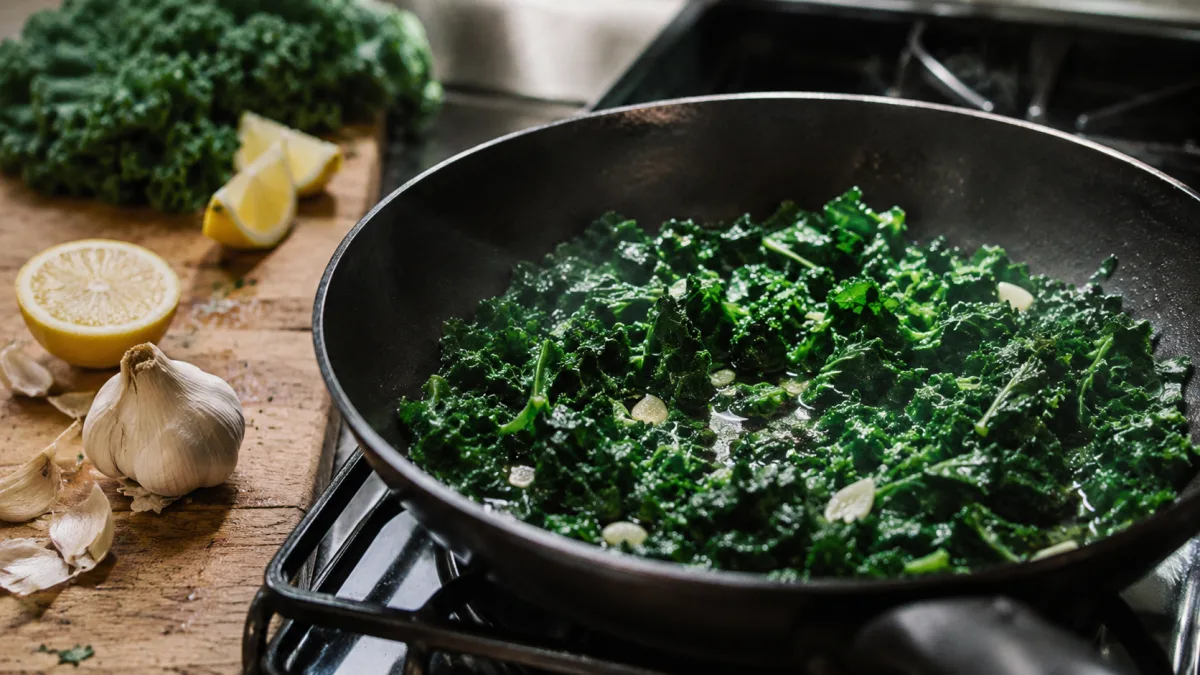
Heat oil in a wide pan, add garlic or shallot briefly, then add chopped kale with a pinch of salt. Toss until the leaves wilt and turn glossy. Add a splash of water or broth only if the pan is too dry.
Finish with lemon, vinegar, chile flakes, Parmesan, toasted nuts, or a small amount of butter. For sauce ideas that work with greens, Livecub's stir-fry sauces guide can help with salty-sour-sweet balance.
If the kale tastes flat, it usually needs acid or salt. If it tastes harsh, it may need more cooking time or a little fat. If it tastes watery, cook off the moisture before adding the final seasoning.
How do soups and braises change kale?
Longer cooking turns kale softer and deeper. Add chopped kale to bean soup, sausage soup, lentils, tomato broth, chicken soup, or braised greens. Add stems earlier and leaves later if you want better texture.
Purdue Extension FoodLink provides produce information for kale, including storage and preparation context. The Purdue FoodLink kale page is a helpful reference for basic kale handling.
For a poultry pairing, Livecub's guide to cooking goose shows why bitter or sturdy greens can balance richer meat.
Can you make kale chips?
Yes, but kale chips need dry leaves and a light hand with oil. Tear leaves into even pieces, remove tough stems, dry completely, toss with a small amount of oil and salt, then bake until crisp. Crowded pans steam the leaves instead of crisping them.
Watch the last few minutes closely. Kale can move from crisp to bitter quickly. Add cheese, chile, lemon zest, or spice blends after baking if the seasoning burns easily.
Dry leaves matter more than extra oil. Too much oil makes the chips heavy and uneven.
How do you choose raw or cooked kale?
Choose raw kale when you want chew, freshness, and make-ahead strength. Choose cooked kale when you want softness, warmth, and a side dish that can take garlic, broth, beans, sausage, or eggs.
Raw kale needs thinner cuts and stronger dressing. Cooked kale needs enough salt and acid at the end. Both versions can be good, but they should not be treated the same way.
How much kale should you buy?
Kale shrinks during cooking, but not as dramatically as spinach. One bunch may look large in the cart and become a modest side dish after trimming stems and cooking. For salads, one bunch can go farther because the leaves stay bulkier.
When cooking for guests, buy a little extra and prep it early. Washed, stemmed leaves are easier to use, and extra kale can move into soup, eggs, pasta, or grain bowls the next day.
How can kale fit meal prep?
Stem and wash leaves ahead, then store them dry. Cook grains, roast vegetables, or mix a dressing separately. Assemble close to serving unless you are using a sturdy kale salad that benefits from a short rest.
For cooked meals, saute kale and keep it as a base for eggs, beans, pasta, rice, potatoes, or roast meat. It reheats better with a splash of water, broth, or lemon than in a dry pan.
Can kale be frozen?
Kale can be frozen for cooked uses. Wash, trim, blanch briefly if you want better quality, cool quickly, squeeze dry, and pack in portions. Frozen kale is better for soups, stews, and smoothies than crisp salads.
Livecub's fresh vegetable freezing guide is useful for thinking about blanching, portioning, headspace, and labeling.
What mistakes make kale unpleasant?
The common mistakes are buying old leaves, storing them wet, skipping stem removal for salads, under-seasoning, over-massaging baby leaves, and cooking in a crowded pan. Another mistake is expecting raw kale to behave like lettuce.
Kale needs salt, acid, fat, and texture. Lemon, vinegar, apple, nuts, cheese, beans, sausage, eggs, potatoes, and grains can all help it feel like food instead of a health assignment.
What meals work well with kale?
Use kale under roast chicken, beside pork, in white bean soup, with pasta and sausage, in grain bowls, with fried eggs, or folded into mashed potatoes. It can be a side dish, but it can also be the green layer that keeps a rich meal from feeling dull.
For a party table, cut kale smaller than you would for a casual bowl. Guests should be able to take a clean serving without dragging long leaves across the platter. Smaller cuts also help dressing reach every bite and make leftovers easier to use in eggs, soup, pasta, or grain bowls the next day without extra prep or chopping at lunch time later too.
Frequently Asked Questions
Can kale stems be eaten?
Yes, if they are fresh and tender enough. Chop them finely and cook longer than the leaves.
Is raw kale better than cooked kale?
Neither is always better. Raw kale works in sturdy salads, while cooked kale is often easier to season and digest.
Why is my kale bitter?
The leaves may be older, under-seasoned, or cooked without enough fat and acid. Salt, lemon, garlic, and longer cooking can help.
Can kale replace spinach?
Sometimes, but kale is tougher and usually needs more cooking time. Baby kale is the closest swap for raw spinach.
Kale gets better when you stop treating it like lettuce. Buy fresh leaves, dry them well, remove tough stems, and choose the cooking method that fits the dish.

Cashie Evans
Covers parenting and practical household topics with clear steps, safety notes and links to current guidance.




Leave a reply
Replying to