
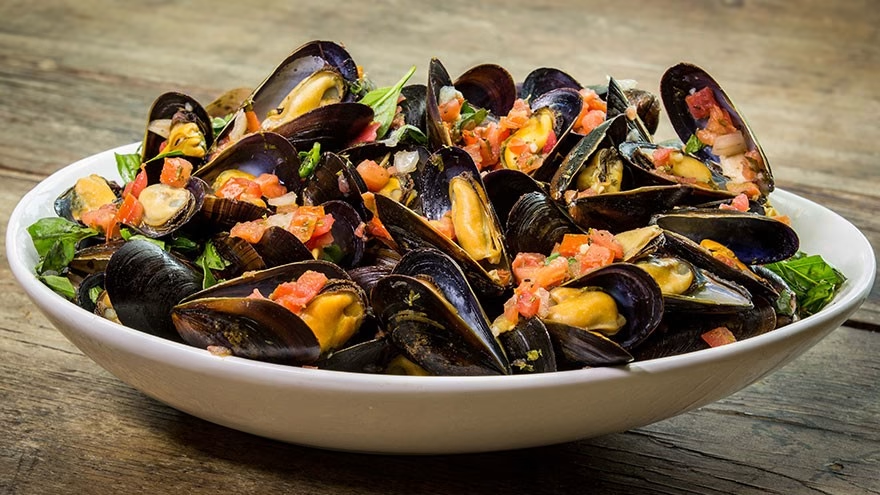
Good mussels are simple; bad mussel handling is not. The shell should be alive when you buy it, cold when you carry it home, breathable in the refrigerator, clean before cooking, and open after heat. A practical guide to buying and storing mussels starts with safety because shellfish gives you fewer second chances than dry pantry food.
What should fresh mussels look and smell like?
Fresh mussels should smell clean, mild, and like the sea, not sour, rancid, strongly fishy, or ammonia-like. FDA seafood guidance says fish should smell fresh and mild, and the same smell test helps with shellfish. If a bag of mussels smells bad at the counter, do not buy it.
Look for closed shells or shells that close when tapped. The FDA seafood selection guide says live clams, oysters, and mussels should close when tapped and cracked or broken shells should be discarded. A shell that stays open after a tap is not worth arguing with.
Cold chain starts at the counter. Mussels should feel cold, not room temperature, and the bag should not be sitting in a puddle of warm liquid. If you have a long drive, bring an insulated bag and make seafood the last stop before going home.
Buy only what you plan to cook soon. Mussels are not a flexible pantry ingredient, and quality drops fast when dinner gets pushed back twice. A smaller, fresher purchase is better than a bargain bag that sits too long.
Seafood confidence grows with practice. If you are learning other less-common proteins, Livecub's frog legs buying and cooking guide uses the same buyer habit: freshness first, recipe second.
What tags and labels matter when buying mussels?
Live shellfish sold in sacks or containers should have tags that identify the source and certified dealer. FDA says these tags include specific product information, including the processor's certification number, showing the shellfish were harvested and processed under national shellfish safety controls.
Buy from a market that keeps shellfish cold and can answer basic questions. Avoid mussels sitting in warm displays, sealed in stagnant water, or sold without source information. Traceability matters because shellfish safety depends on approved waters and handling.
If you harvest recreationally, follow local closures and advisories. The Interstate Shellfish Sanitation Conference warns that recreational harvesters should use only waters approved for harvesting and follow state or local health warnings.
At home, keep the tag or source information until the meal is done. Restaurants and retailers have formal requirements, but a home cook still benefits from knowing where the shellfish came from if something smells wrong or a recall appears. That small paper trail is part of cooking shellfish with care.
How do you store mussels at home?
Mussels need to stay cold and alive. The Interstate Shellfish Sanitation Conference mussel guidance says mussels in the shell should be refrigerated between 32 and 45 degrees Fahrenheit and stored loosely covered with a clean, damp towel. It also says not to store them in airtight containers, plastic bags, or water.
That last point surprises many cooks. Mussels breathe. A sealed bag can suffocate them, and a bowl of fresh water can kill them. Place them in a bowl or colander set over a bowl, cover with a damp towel, and keep them in the refrigerator until cooking.
Drain collected liquid instead of letting the shells sit in it. A colander over a bowl works because meltwater or shell liquid can fall away while the towel stays damp above. Keep them away from ready-to-eat foods so raw seafood liquid cannot drip onto salad, fruit, or cooked leftovers.
Use mussels as soon as possible after purchase. Do not save them for a vague dinner later in the week. If your plan changes, cook them rather than treating live shellfish like carrots.
How do you clean mussels before cooking?
Rinse mussels under cold running water and scrub shells with a stiff brush or coarse sponge. Pull off beards if they are present. Some farmed mussels arrive quite clean, but a quick inspection still catches grit, broken shells, and dead ones.
Do not soak mussels in fresh water. Do not clean them hours in advance and leave them wet in a sealed container. Clean close to cooking time, then cook promptly.
Discard rules are simple: cracked, broken, bad-smelling, or nonresponsive mussels go out. After cooking, shells that do not open should also be discarded.
Clean late, cook soon. If you scrub and debeard too early, you stress the mussels and add moisture to storage. Set up the pot first, then clean the shellfish, then move directly to heat.
How long should mussels cook?
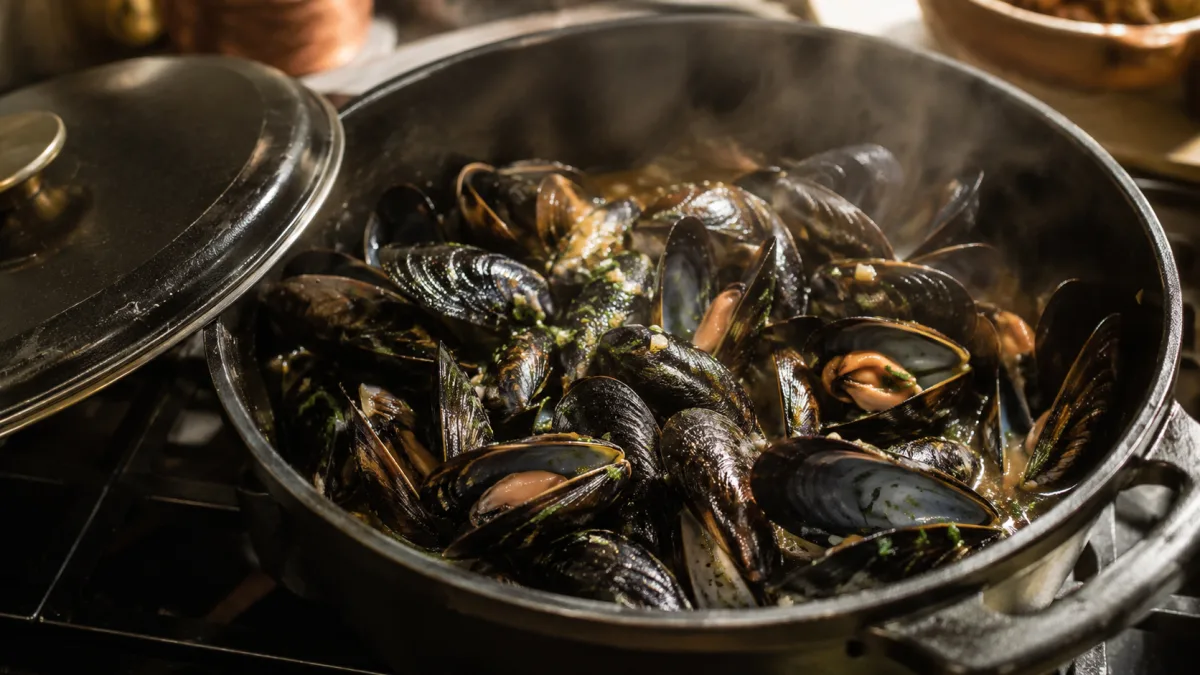
Mussels cook quickly. ISSC says that when boiling or steaming mussels, small pots help even cooking; after shells open, boiling should continue 3 to 5 minutes, and steaming should take 4 to 9 minutes. FoodSafety.gov also says clams, mussels, and oysters open during cooking and ones that do not open should be thrown out.
Use a wide pot only if it is not crowded. Aromatics, wine, broth, tomato, coconut milk, garlic, herbs, or chile can flavor the steam. The mussels should sit above a small amount of liquid rather than drown in it.
Have a serving bowl ready before the shells open. Mussels go from done to rubbery quickly, and the sauce can over-reduce while you look for tongs. Lift opened mussels into the bowl, pour the cooking liquid over them, and leave grit behind in the bottom of the pot.
For sauce ideas, Livecub's stir-fry sauce guide is not a mussel recipe, but it is useful for thinking about salt, acid, sweetness, heat, and aromatics in a fast pan sauce.
For a richer seafood meal, keep the mussels light and choose one stronger side or sauce. Livecub's foie gras serving tips sit in a different cooking lane, but the plating lesson is similar: rich ingredients need restraint around them.
Who should avoid raw or undercooked mussels?
Raw or partially cooked shellfish carries higher risk for some people. ISSC lists higher-risk conditions including liver disease, chronic alcohol abuse, cancer, diabetes, inflammatory bowel and stomach diseases, steroid dependency, AIDS, and immune deficiencies. People in higher-risk groups should avoid raw or undercooked mussels unless their clinician says otherwise.
FoodSafety.gov says cooking seafood thoroughly is the safest route and notes that freezing does not kill all harmful germs. The FoodSafety.gov shellfish handling page also says seafood should be put on ice or refrigerated within two hours of purchase, or one hour if exposed to temperatures above 90 degrees Fahrenheit.
Keep raw shellfish away from cooked foods, salads, and clean utensils. Wash hands and surfaces after handling raw seafood.
For guests, ask before serving shellfish instead of assuming everyone eats it. Allergies, pregnancy, immune status, and personal comfort can all change the plan. A simple pasta, salad, or vegetable side makes the meal easier if someone skips the mussels.
Cooked mussels should not sit out through a long dinner. Move leftovers to a shallow container once the meal is over, chill them promptly, and reheat only until hot. If the smell changes after storage, do not try to rescue them with garlic or wine.
For mixed dishes, separate raw prep from the finished plate. Use clean tongs for cooked mussels, a clean bowl for serving, and a clean spoon for sauce. That habit matters as much as the recipe.
When in doubt, choose caution over saving a few shells.
Frequently Asked Questions
Can I store live mussels in water?
No. Store them cold and loosely covered with a damp towel, not submerged in water or sealed in an airtight bag.
Should I throw away mussels that are open before cooking?
Tap them first. If they close, they are alive. If they stay open, discard them. Also discard cracked, broken, or bad-smelling mussels.
Can cooked mussels be frozen?
Mussel meats can be frozen, but texture softens. ISSC says home-frozen mussel meats should be kept in tight containers or freezer bags with liquid and maintained at 0 degrees Fahrenheit.
Why did some mussels stay closed after cooking?
Do not force them open and eat them. FoodSafety.gov says clams, mussels, and oysters that do not open during cooking should be thrown out.
Buy mussels like a cautious cook: check the tag, smell the bag, test the shells, keep them cold but breathable, and cook them before freshness turns into a gamble.

Chiara Bradshaw
Covers education, culture and creative topics with an emphasis on readable explanations and verifiable references.



Leave a reply
Replying to