
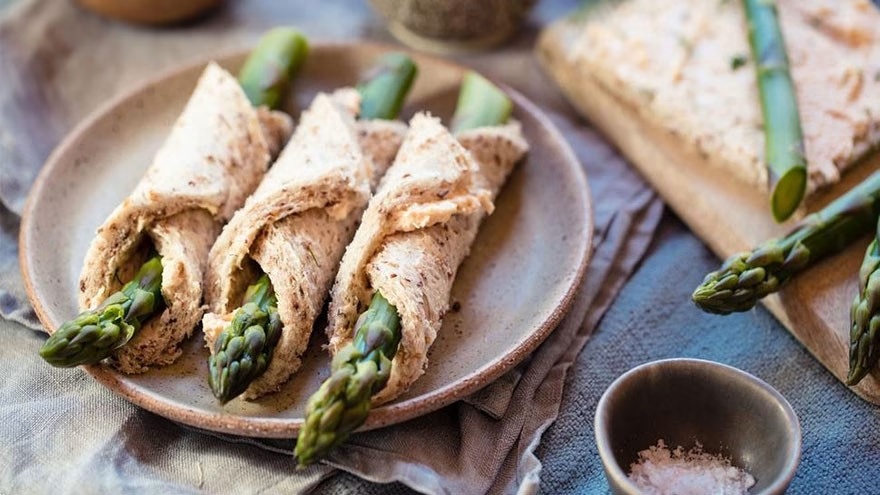
The smartest thing about this asparagus rolls recipe has nothing to do with the ingredients—it's the method. You assemble everything days before your party, slide the rolls into the freezer, and bake them straight from frozen the morning of the event. The result: golden, buttery, bite-sized appetizers that taste freshly made, with none of the last-minute kitchen panic. That combination of cream cheese, blue cheese, and just-blanched asparagus wrapped in flattened white bread has been winning over cocktail-party crowds since the 1960s, and for good reason—it works every single time.
Why this asparagus roll recipe works for entertaining
Asparagus rolls belong to a category of retro American appetizers—alongside deviled eggs and stuffed mushrooms—that have never really gone out of style. They emerged in the mid-century cocktail party era, when hosts prized recipes that could be prepared hours or even weeks ahead so they could actually enjoy their own gatherings. This version with cream cheese and blue cheese is a particularly well-balanced example: the fat in the cream cheese creates a stable, spreadable base, while the blue cheese punches through with enough sharpness to stand up to the earthy asparagus.
The freezer-to-oven method is genuinely clever food science. When the assembled rolls go into the freezer, the filling firms and the butter coating hardens around the outside. As that butter hits a 400°F oven, it creates a rapid, even crisping on the bread surface—more uniform than you'd get from refrigerated rolls, which tend to bake unevenly. Frozen rolls also hold their cylindrical shape perfectly; chilled-but-not-frozen rolls can sag open in the oven. You can freeze these up to a month ahead, which makes them one of the most genuinely make-ahead party foods in any repertoire.
Yield-wise, the math lines up neatly: 24 slices of bread, each rolled and cut into four pieces, gives you 96 bite-sized appetizers—enough for a substantial party spread from a single recipe.
Choosing the right asparagus and bread
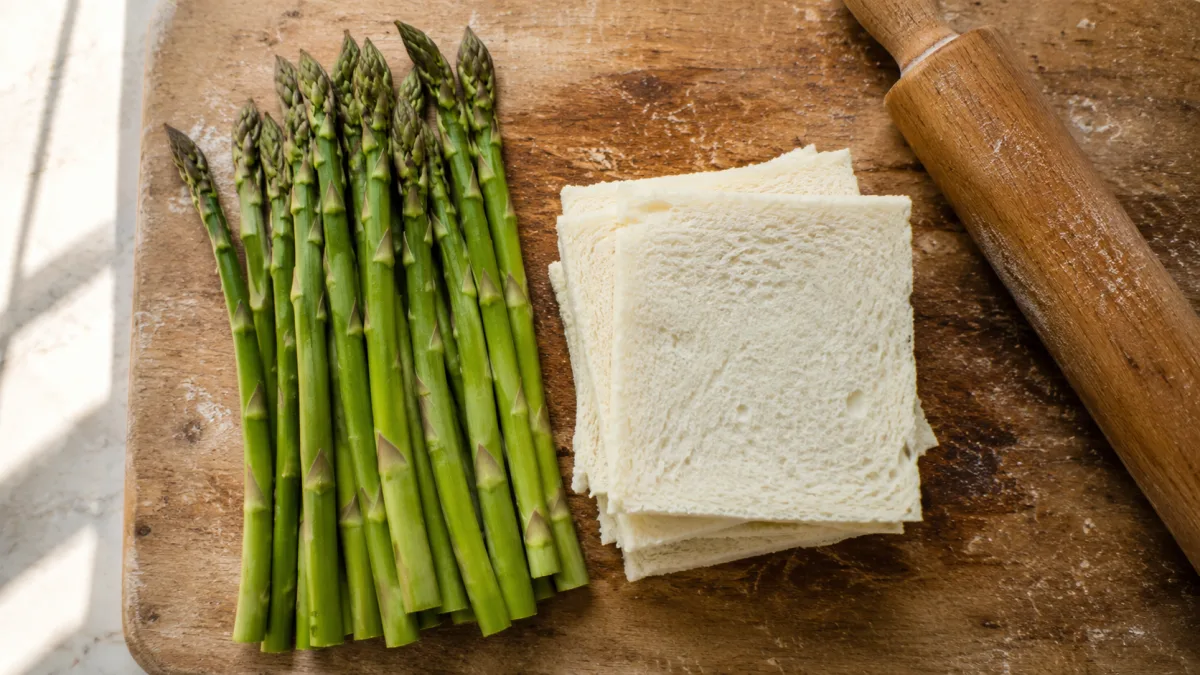
Asparagus thickness matters more here than in almost any other preparation. You want medium spears—roughly the diameter of a pencil—not the thin "grass" variety and not the thick woody stalks sold as "jumbo." Thin spears overcook in the time it takes the bread to brown; thick spears are difficult to roll around and tend to tear the bread as you wrap. Medium spears are also structurally ideal: they sit at the center of the roll and give each bite a satisfying snap of vegetable against the creamy filling.
Look for firm, tightly closed tips with no feathering or spreading. The color should be vivid green all the way down the spear, with no yellowing near the cut end. A standard 1-pound bunch contains between 20 and 28 spears—close enough to the recipe's 24 that one bunch will almost always cover you.
For the bread, standard white sandwich bread (not thick-cut, not thin-sliced artisan) is the right call. It needs enough body to hold the filling but enough pliability to compress without tearing. Whole-grain bread can work but is stiffer and more prone to cracking; sourdough is too chewy. The crust gets removed entirely before rolling, which eliminates the stiff edge that would otherwise split when you try to roll the slice tight.
How to blanch asparagus for the perfect texture
Parboiling the asparagus before assembly solves two problems at once. Raw asparagus releases steam as it cooks inside the roll, and that steam turns the bread soggy from the inside out. Par-cooked asparagus has already shed most of its moisture, so it bakes cleanly inside the bread shell. It also means the asparagus reaches perfect tenderness exactly when the bread reaches golden-brown—no timing mismatch.
Bring a large pot of generously salted water to a full boil. Add the asparagus and cook for 2 to 3 minutes, depending on thickness—2 minutes for medium spears, 3 minutes for anything closer to large. While the asparagus cooks, prepare an ice bath: a large bowl filled with cold water and a tray of ice cubes. The moment the spears are done, pull them out with tongs and plunge them directly into the ice bath for at least 1 full minute.
That ice bath step is not optional. Residual heat continues cooking vegetables even after they leave the pot; without the cold shock, asparagus spears that were perfectly crisp-tender at 2 minutes become soft and waterlogged by the time you finish assembly. The rapid cooling also locks in the bright green chlorophyll, which is a visual bonus when the cut rolls reveal their spiral cross-section on the serving plate. After the ice bath, drain the spears thoroughly and pat them completely dry—any surface moisture will work against you during assembly.
The cream cheese and blue cheese filling
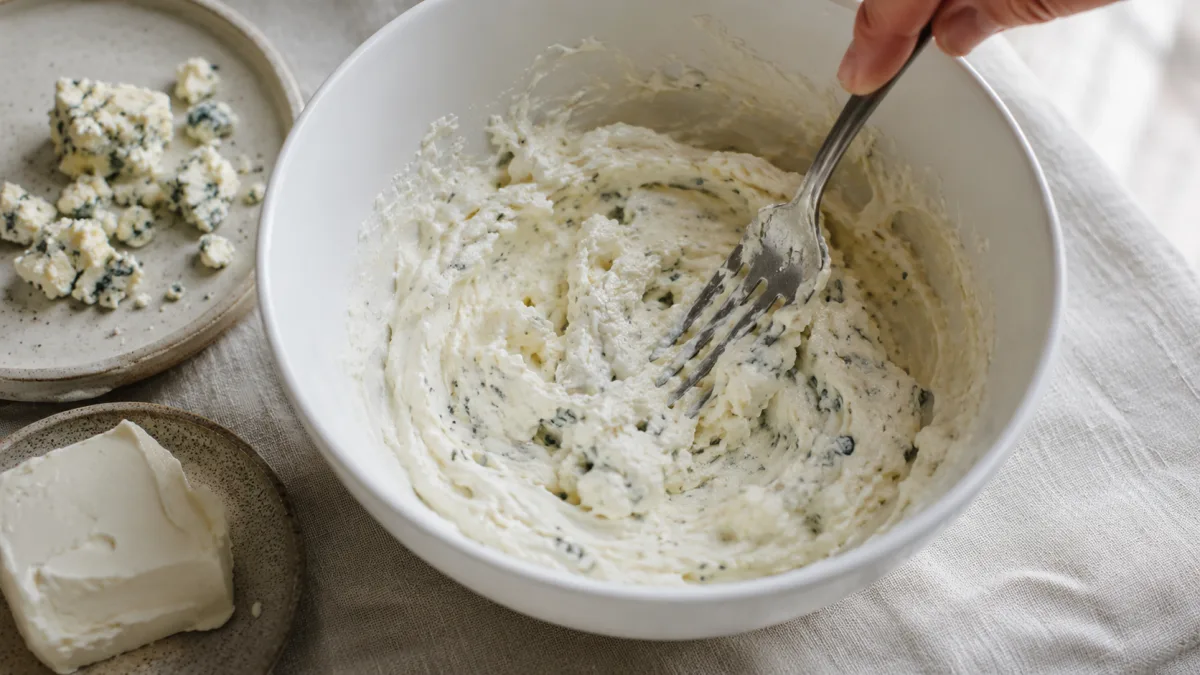
The filling formula is straightforward, but the cheese choice has a real effect on the final flavor. The recipe calls for equal weights of cream cheese and blue cheese (8 oz each), which produces a rich, cohesive spread with a moderate tang. Full-fat cream cheese is the right choice here—its higher fat content keeps the filling stable in the oven and gives the rolls a more satisfying richness than low-fat alternatives.
Blue cheese selection is worth a moment of thought. Gorgonzola Dolce—the softer, younger style of Italian Gorgonzola—blends most smoothly and produces the mildest result, which makes it the most crowd-friendly option. Danish blue is a useful middle-ground choice: sharper than Gorgonzola but still widely available and budget-friendly. Roquefort, made from sheep's milk and aged in natural caves, delivers a pronounced tanginess that's excellent if your guests appreciate a bolder flavor. Stilton is the most crumbly of the group; it blends well when both cheeses are at full room temperature, though you may need to work the mixture slightly longer with a fork to get it smooth.
For those who want to avoid blue cheese entirely, a soft goat cheese (chèvre) makes an elegant substitution—tangy and creamy, with a different character that complements the asparagus equally well. Flavored cream cheeses (herb-and-garlic style) are another easy variation that skips the mixing step entirely.
Both cheeses must be genuinely at room temperature before you mix them—not just slightly soft. Cold cream cheese will never fully incorporate the blue cheese, leaving streaks and an uneven texture. Allow at least 45 minutes out of the refrigerator before mixing. Combine them with a fork rather than an electric mixer; overbeating incorporates air and makes the spread harder to apply evenly. Season sparingly with black pepper; blue cheese is already quite salty, so taste before adding any salt.
Step-by-step assembly instructions
Set up your workspace before you start rolling: bread slices with crusts trimmed and laid flat, the cheese mixture in a bowl with a butter knife or offset spatula, blanched and dried asparagus spears at hand, and a baking sheet lined with parchment nearby.
Take one trimmed bread slice and roll it firmly with a rolling pin—four or five passes in each direction until it's noticeably thinner and more pliable. The rolling compresses the gluten network in the bread, making it flexible enough to wrap around the asparagus without cracking at the edge. Don't be tentative about this step; bread that's only lightly flattened will crack mid-roll.
Spread a generous, even layer of the cheese mixture all the way to the edges of the bread—thin spots will leave dry patches in the finished roll. Lay one asparagus spear across the short end of the bread slice, tip slightly overhanging the edge. Roll the bread tightly around the spear, maintaining firm pressure as you go. Set the finished roll seam-side down so it holds its shape.
Pour the melted butter into a shallow dish or bowl. Working in small batches, dip each roll fully into the butter, turning to coat on all sides. The butter is what creates the exterior crispness in the oven—don't skip or reduce it. Place butter-coated rolls on the parchment-lined baking sheet, not touching each other.
Freeze the rolls in a single layer on the baking sheet for at least 1 hour and up to overnight. Once frozen solid, they can be transferred to a zip-top freezer bag and stored for up to one month. When ready to bake, cut each roll into four equal pieces straight from frozen—a sharp serrated knife works best. Arrange the pieces cut-side up on an ungreased baking sheet and bake at 400°F for 15 minutes, until the outsides are golden and the cheese is bubbling at the edges.
The make-ahead freezer method
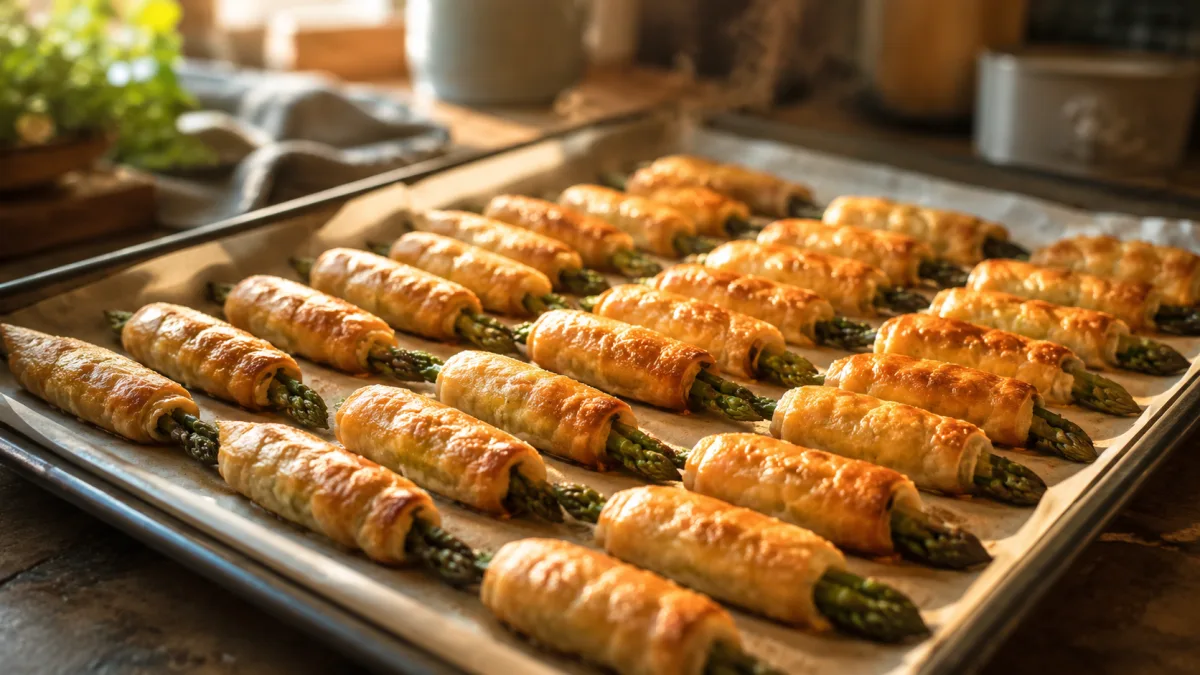
The freezer step is the recipe's single greatest feature. Most party food either requires same-day prep or suffers noticeably when made days ahead. These rolls sidestep that entirely. The assembled, butter-coated rolls freeze in a solid cylinder that bakes up exactly as intended—the hard-frozen butter baste crisps immediately when it hits the hot oven, and the bread browns evenly before the filling has a chance to soften too much.
Bake directly from frozen without thawing. Thawed rolls bake unevenly and the bread can become steamy rather than crisp. The 15-minute bake time at 400°F is calibrated for rolls going straight from the freezer to the oven. Pull them when the bread is golden-brown and slightly firm to the touch at the edges—they'll continue to crisp slightly as they cool for two minutes on the pan.
For a large party, consider making the rolls in two batches separated by a week or two and storing both batches frozen. Stagger your oven times if you have multiple trays—two trays can bake simultaneously if you rotate them halfway through.
Variations and serving ideas
The base recipe is forgiving and takes well to variation. Adding two or three thin slices of prosciutto to each roll—laid on the bread before the cheese spread—gives you a more substantial bite with a saltier, meatier character that works especially well as a cocktail party snack alongside something sparkling. Fresh herbs in the filling are another easy move: two tablespoons of finely minced chives, tarragon, or dill stirred into the cheese mixture adds a brightness that the plain recipe doesn't have.
Instead of a plain butter dip, try rolling the butter-coated assembled rolls in finely grated Parmesan or panko breadcrumbs before freezing—this creates a crunchier, more textured exterior. For serving, a simple lemon aioli (good store-bought mayonnaise whisked with fresh lemon juice and a small amount of garlic) makes an excellent dipping companion that cuts through the richness of the cheese filling.
These rolls are particularly well-suited to bridal showers, baby showers, holiday gatherings, and brunch spreads—any occasion where you want something that looks more effortful than it actually was. Pair them with a seafood centerpiece for a buffet table, or serve alongside a corn soufflé for a more substantial spread. For a retro-themed party, they pair beautifully with classic braised chicken dishes in a nod to the cocktail-party traditions of the era.
Asparagus Rolls Recipe
Yield: 96 pieces (24 rolls, cut into fourths) | Prep: 30 minutes + 1 hour freeze | Bake: 15 minutes | Temp: 400°F
Ingredients
- 24 slices sandwich bread
- ½ cup (1 stick) soft light margarine or softened butter
- 8 oz (225g) cream cheese, softened to room temperature
- 4 oz (115g) blue cheese (Gorgonzola Dolce, Danish blue, or Roquefort), softened
- 24 spears fresh asparagus, medium thickness, trimmed
- ½ cup (1 stick) butter, melted, for dipping
Instructions
- Blanch the asparagus: Bring a large pot of salted water to a full boil. Add asparagus and cook 2–3 minutes. Immediately transfer to an ice bath for 1 minute. Drain and pat completely dry with paper towels.
- Make the filling: Using a fork, beat the cream cheese, blue cheese, and margarine together in a bowl until smooth and spreadable. Both cheeses must be at room temperature. Season lightly with black pepper; taste before adding salt.
- Prepare the bread: Remove crusts from all 24 slices. Using a rolling pin, flatten each slice with firm pressure until noticeably thinner and pliable.
- Assemble: Spread cheese mixture evenly over the entire surface of one bread slice, reaching all edges. Place one asparagus spear at the short end, tip overhanging slightly. Roll tightly and set seam-side down.
- Butter coat: Dip each assembled roll in the melted butter, turning to coat all sides. Place on a parchment-lined baking sheet.
- Freeze: Freeze rolls in a single layer for at least 1 hour, or overnight. Once solid, transfer to freezer bags if storing longer (up to 1 month).
- Cut and bake: When ready to serve, remove from freezer and cut each roll into fourths using a sharp serrated knife. Arrange cut-side up on an ungreased baking sheet. Bake at 400°F for 15 minutes, until golden brown. Do not thaw before baking. Serve warm.
Frequently Asked Questions
Can I use canned asparagus instead of fresh?
Canned asparagus is much softer than fresh and has already been fully cooked, so it won't hold its shape well inside the roll and the texture contrast is largely lost. Fresh asparagus that has been blanched and chilled gives you a firm, bright-green spear at the center of each roll. If fresh asparagus is out of season, frozen asparagus spears (thawed and patted dry) are a workable alternative—just skip the blanching step since they're already par-cooked.
Do I have to use blue cheese, or can I substitute something milder?
Blue cheese is traditional and gives the filling its distinctive tang, but the recipe is flexible. Soft goat cheese (chèvre) is the closest in texture and also delivers a pleasant acidity. Cream cheese with herbs mixed in (garlic-and-herb style) produces a milder, more neutral roll that's very crowd-friendly. Brie, with the rind removed, blends smoothly with cream cheese for a rich, buttery result. Whatever you substitute, maintain the same total volume of soft cheese.
How far ahead can I make these?
Up to one month in the freezer, kept in a sealed zip-top freezer bag. The flavor remains excellent; the main limitation is freezer odor absorption if stored longer. For the best results, make them one to two weeks before your event—enough time to feel fully relaxed about the party, without any quality compromise. The assembled rolls can also sit in the refrigerator (unbaked) for up to 24 hours before freezing if you prefer to work in stages.
My rolls keep unrolling before I can dip them in butter. What am I doing wrong?
Two common causes: the bread wasn't flattened enough with the rolling pin, or the cheese layer was applied too thin at the far edge of the bread. The cheese acts as the adhesive that seals the roll. Make sure the filling goes all the way to the outer edge, and apply firm pressure as you roll. Setting the finished rolls seam-side down on the baking sheet before dipping in butter also helps them hold shape long enough to freeze solid.
What dipping sauce goes well with these at a party?
A simple lemon aioli works beautifully: whisk 3 tablespoons of good mayonnaise with 1 teaspoon fresh lemon juice, a small pinch of garlic powder, and salt to taste. The acidity cuts through the richness of the cheese filling. Honey mustard is another crowd-pleaser, especially if you've added prosciutto to the rolls. For a bolder option, a light horseradish cream sauce pairs well with the earthiness of the asparagus. Serve the dipping sauce in a small ramekin alongside the plated rolls so guests can take as much or as little as they like.
Sources and verification
Check current details with these primary or subject-authority sources before acting on the information.

Linda Fehrman
Edits general wellness and relationship explainers. Health material is educational, avoids diagnosis and links to health-authority guidance.




Leave a reply
Replying to