
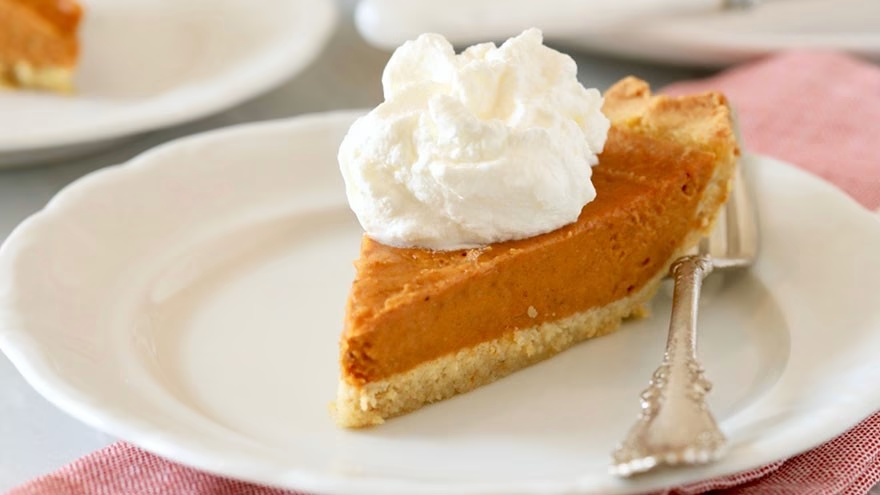
Banana pumpkin pie sits somewhere between classic pumpkin custard and banana cream comfort. The banana softens the spice and adds a mellow sweetness, while pumpkin keeps the filling earthy and autumnal. The trick is balance: too much banana can make the pie loose or muddy; too much spice can bury the fruit.
This recipe uses a baked pie crust, pumpkin puree, ripe banana, eggs, evaporated milk, sugar, and warm spices. Because the filling contains eggs and dairy, it should be treated like a custard pie for food safety. Cool it, refrigerate it, and do not leave it sitting out all afternoon.
What Does Banana Add To Pumpkin Pie?
Banana adds sweetness, aroma, and a softer texture. It also makes the filling taste rounder, especially if you use a very ripe banana. The flavor should be noticeable but not loud. Think pumpkin pie with a banana note, not banana pudding in a crust.
Use one medium ripe banana for a 9-inch pie. Mash it very smooth or blend it with the liquid ingredients. Lumps of banana can create wet pockets, so smooth texture matters.
The banana should be heavily speckled but not fermented-smelling. If it smells sharp, boozy, or sour, use another one. Banana flavor gets stronger as the pie chills, so a restrained amount tastes better the next day than an overloaded filling.
What Ingredients Do You Need?
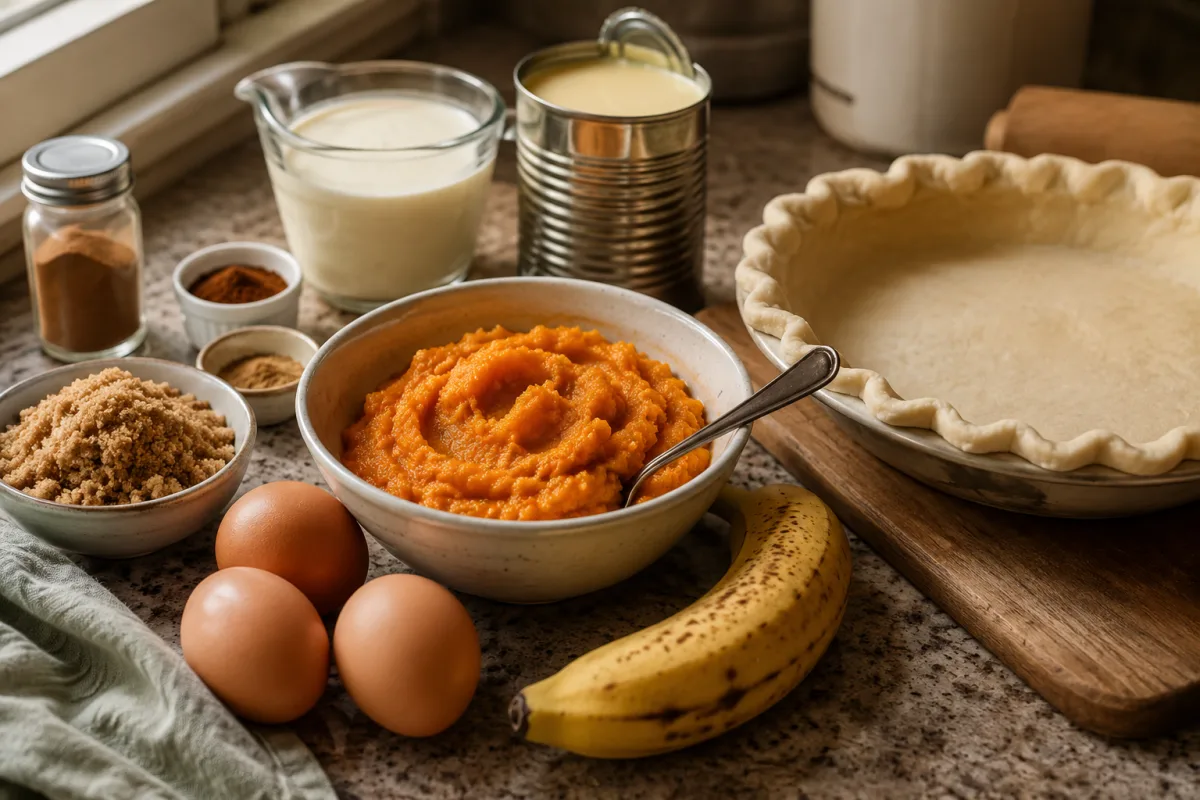
Use one 9-inch pie crust, 1 cup pumpkin puree, 1 medium very ripe banana, 2 large eggs, 3/4 cup evaporated milk, 1/2 cup brown sugar, 1/4 cup granulated sugar, 1 teaspoon cinnamon, 1/2 teaspoon ginger, 1/4 teaspoon nutmeg, 1/4 teaspoon salt, and 1 teaspoon vanilla.
Use plain pumpkin puree, not pumpkin pie filling. Pie filling already contains sugar and spices, which makes the recipe harder to control. If you want to improve your crust first, Livecub's cookie display guide is about presentation, but it reminds bakers that dessert success often starts before the final table.
If banana sizes vary, measure the mashed fruit. About 1/2 cup is enough. More than that can loosen the custard, dull the pumpkin, and make the center slow to set. If your banana is large, save the extra for whipped cream or breakfast.
Should You Blind Bake The Crust?
Yes, a partial blind bake helps. Pumpkin-style custard fillings are wet, and banana adds more moisture. A partially baked crust is less likely to turn pale and soft on the bottom. Line the crust with parchment, add pie weights, bake until the edge sets, then remove weights and bake briefly until the bottom looks dry.
If your crust shrinks, it may have been stretched into the pan or baked too warm. Chill the shaped shell before blind baking. A sturdy crust matters because the filling is soft.
Pie weights should fill the crust high enough to support the sides. Dried beans, sugar, or ceramic weights all work if they are used with parchment. After removing them, give the bottom a few more minutes so it looks dry rather than raw and shiny.
How Do You Make The Filling?
Mash the banana until smooth. Whisk in pumpkin, eggs, evaporated milk, sugars, spices, salt, and vanilla. For the smoothest filling, blend the banana with the milk first, then whisk everything together. Do not whip in too much air; foam can make the top bake unevenly.
Taste the filling before adding eggs if you want to adjust spice. Once eggs are in, avoid tasting raw filling unless you are comfortable with that risk. The finished pie should taste like pumpkin first, with banana rounding the edges.
For an especially smooth pie, pass the filling through a fine sieve before pouring it into the crust. This catches banana fibers, spice clumps, and bits of egg. It is optional, but it gives the finished slice a cleaner custard texture.
How Long Do You Bake It?
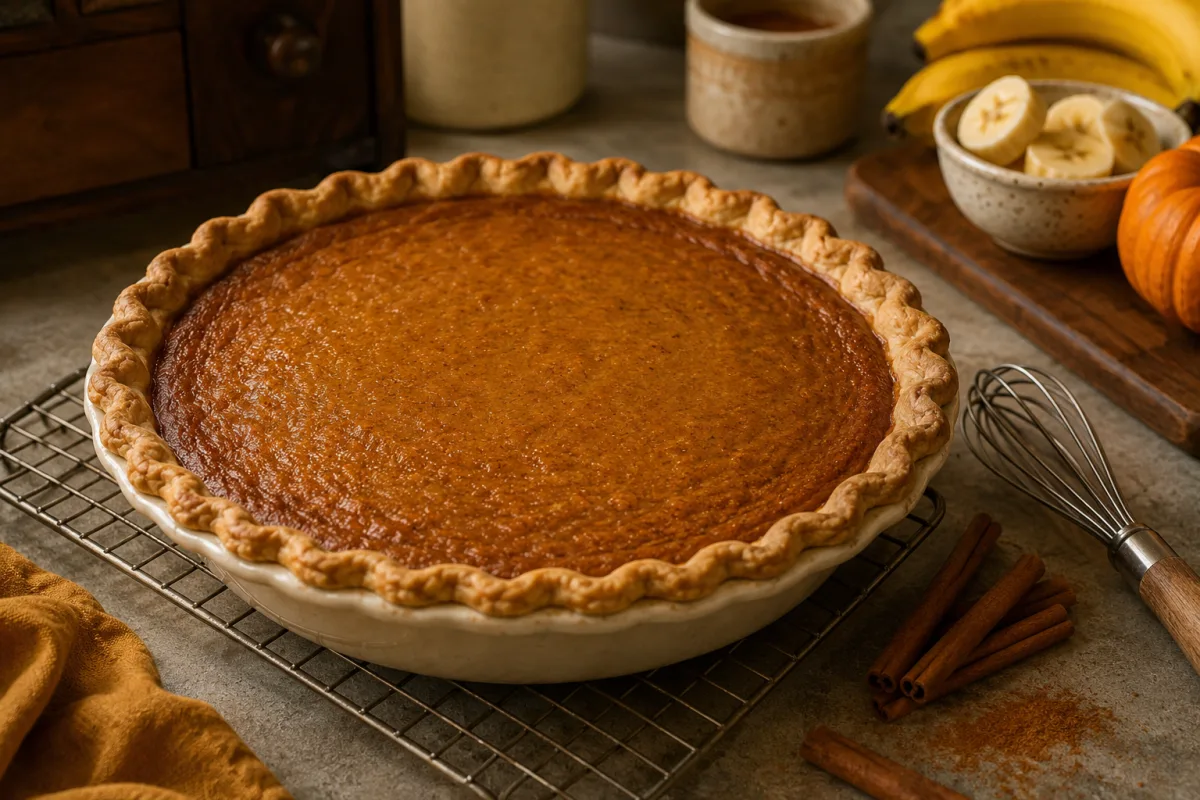
Bake at 375 degrees Fahrenheit until the edges are set and the center still has a slight wobble. Depending on the pie plate and oven, that may take about 40 to 50 minutes after a partial blind bake. A knife test can overbake custard-style pies, so watch the center.
King Arthur Baking notes that pumpkin pie filling is basically a custard and continues cooking as heat moves from the edge toward the center. Pulling the pie before the center is completely firm helps prevent cracking.
How Do You Know It Is Done?
The outer two inches should look set, while the center jiggles softly rather than sloshing. The top may look slightly puffed near the edge. If you use a thermometer, many custard pies set around the upper 170s to 180 degrees Fahrenheit, but texture and carryover still matter.
Cool the pie on a rack. Do not slice it hot. The filling needs time to set. Cutting too early can make even a well-baked pie look loose.
If the center sloshes when the pan moves, bake longer. If only the middle trembles slightly, stop and let carryover heat finish the job. A cracked top is usually a sign of too much heat, too much time, or fast cooling.
How Should You Serve Banana Pumpkin Pie?
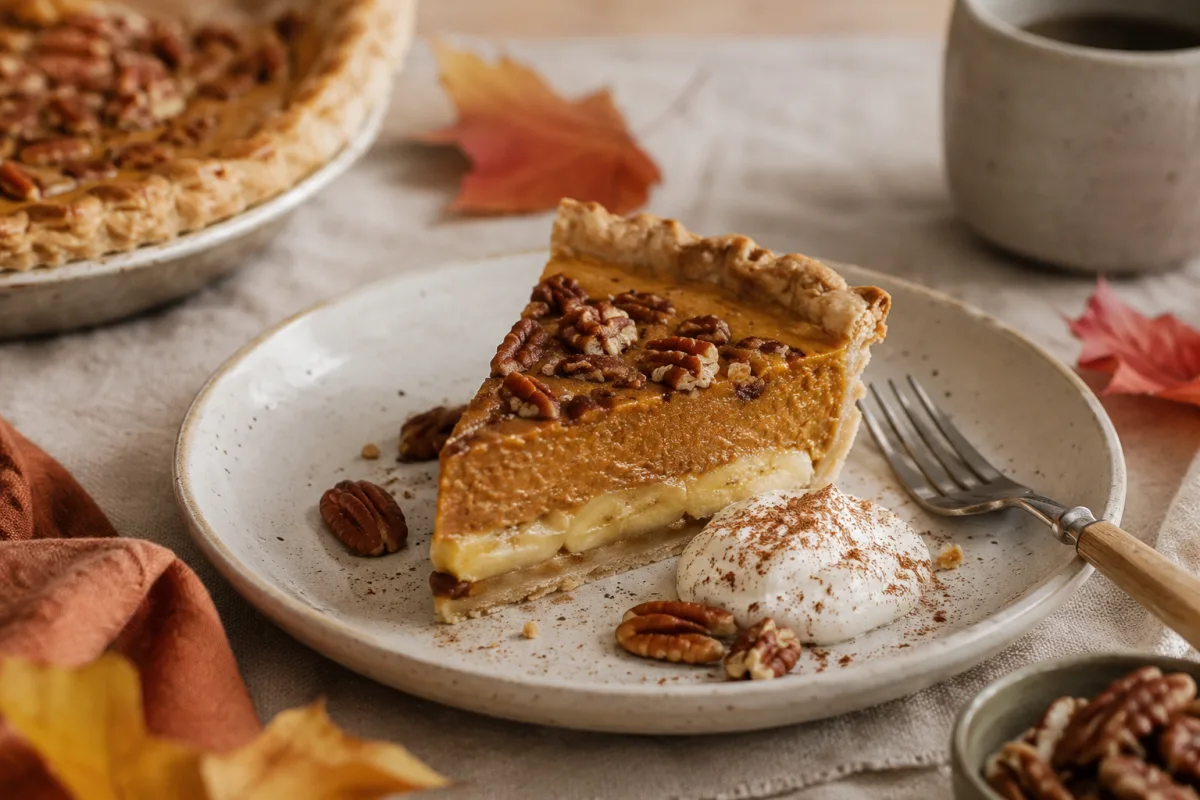
Serve chilled or cool room temperature after proper refrigeration. Whipped cream, a little cinnamon, toasted pecans, or a thin drizzle of caramel can work. Keep toppings simple so the banana and pumpkin do not disappear.
For a holiday dessert table, pair it with something chocolate or crisp. Livecub's Mom's Best Fudge Icing can inspire a chocolate contrast, while Livecub's Christmas cookie ornaments add a crisp, decorative option.
How Do You Store It Safely?
Because the filling contains eggs and dairy, refrigerate the pie after it cools. Do not leave it at room temperature for more than two hours. Cover loosely once cool so condensation does not drip onto the top.
Iowa State University Extension says homemade pumpkin and pecan pies made with fresh ingredients should be refrigerated because bacteria grow quickly between 40 and 140 degrees Fahrenheit. The USDA also advises refrigerating pumpkin pie and leftovers within two hours. Treat banana pumpkin pie the same way.
Label leftovers if the holiday refrigerator is crowded. Use the pie within three to four days, and keep it covered so it does not pick up onion, turkey, or spice cabinet smells. Custard pies are best when storage is boring and consistent.
Can You Make It Ahead?
Yes. Bake the pie the day before, cool it, refrigerate it, and garnish before serving. Custard pies often slice better after chilling. If the crust softens slightly in the refrigerator, that is normal. A partial blind bake helps reduce the problem.
You can also make the crust ahead and freeze it unbaked or par-baked, depending on your method. Keep the filling fresh because banana can darken and change flavor if mixed too far ahead.
If you need to travel with the pie, chill it fully first, keep it level, and move it in a cooler for longer drives. Add whipped cream after arrival so the surface stays clean.
What Mistakes Should You Avoid?
Do not use green bananas, pumpkin pie filling, too much banana, or an unbaked crust. Do not overbake until the center is stiff. Do not leave the pie on the counter overnight. Do not add extra liquid without reducing something else.
If you want a savory recipe before dessert, Livecub's basic corn souffle recipe can share the same holiday table. Both dishes reward gentle baking and a little patience.
Frequently Asked Questions
Can I use fresh pumpkin?
Yes, if it is well-drained and smooth. Watery puree can make the pie loose.
Can I use sweetened condensed milk?
You can, but reduce the sugar and expect a sweeter, thicker filling.
Can banana pumpkin pie be frozen?
It can be frozen, but custard texture may change. Refrigerating for a day ahead is usually better.
Why did my pie crack?
It may have baked too long or cooled too fast. Pull it while the center still has a gentle wobble.
How long can it sit out?
No more than two hours at room temperature because the filling contains eggs and dairy.
What Is The Best Version?
The best banana pumpkin pie tastes like pumpkin pie first, with banana adding warmth and softness. Use one ripe banana, a partially baked crust, gentle spices, and careful cooling. Then refrigerate it like the custard pie it is.

Linda Fehrman
Edits general wellness and relationship explainers. Health material is educational, avoids diagnosis and links to health-authority guidance.



Leave a reply
Replying to