
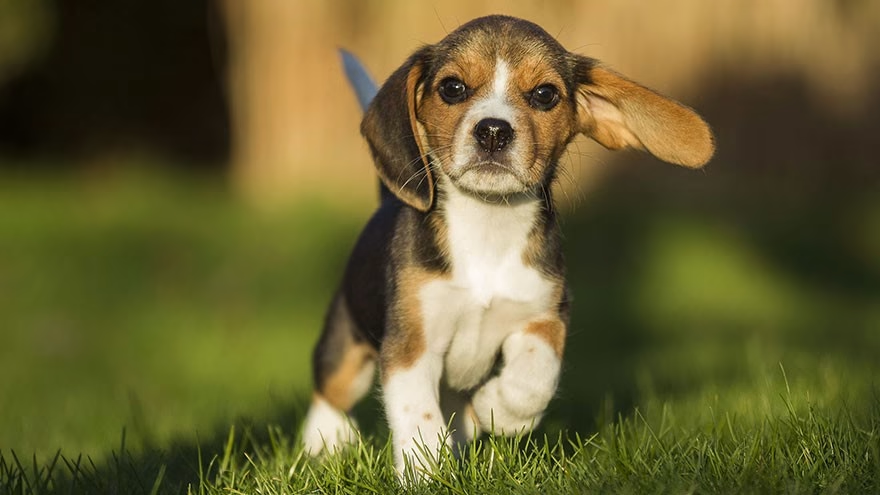
A Beagle training guide should start with the nose. Beagles were bred to follow scent, work with other hounds, and keep moving even when the trail is more interesting than the person holding the leash. Training is not about defeating that instinct. It is about building rules around it.
A Beagle can be friendly, funny, food-motivated, and affectionate. It can also bay, pull, raid trash, follow a scent out of earshot, and ignore a recall that seemed solid indoors. The plan needs rewards, management, scent work, and patience.
Beagles usually do best when the owner stops asking, "Why is he being stubborn?" and starts asking, "What is more rewarding than me right now?" That question leads to better training choices.
What Makes Beagle Training Different?
The American Kennel Club notes that Beagles were bred to hunt in packs and are generally easygoing companions. Pack history and scent drive shape daily training. A Beagle often wants company and wants to follow smells.
That means food rewards, sniff breaks, and clear routines matter. A Beagle that gets no scent outlet may create one by pulling, digging, or raiding. Use the nose as part of training instead of treating every sniff as disobedience.
When Should Training Start?
Start when the puppy comes home. Teach name response, hand target, come, sit, wait, drop it, leave it, crate, house training, and calm handling. Keep sessions short and reward generously. A Beagle puppy learns fast when the reward is better than the distraction.
Do not wait for adolescence. Teenage Beagles can discover independence, scent trails, and selective hearing. Early practice gives you a base before the outside world becomes louder.
House training and crate training should be boring in the best way: same door, same schedule, same reward, same calm return. A Beagle that gets too much freedom too soon may rehearse sneaking away to sniff, chew, or potty.
How Do You Train Recall?
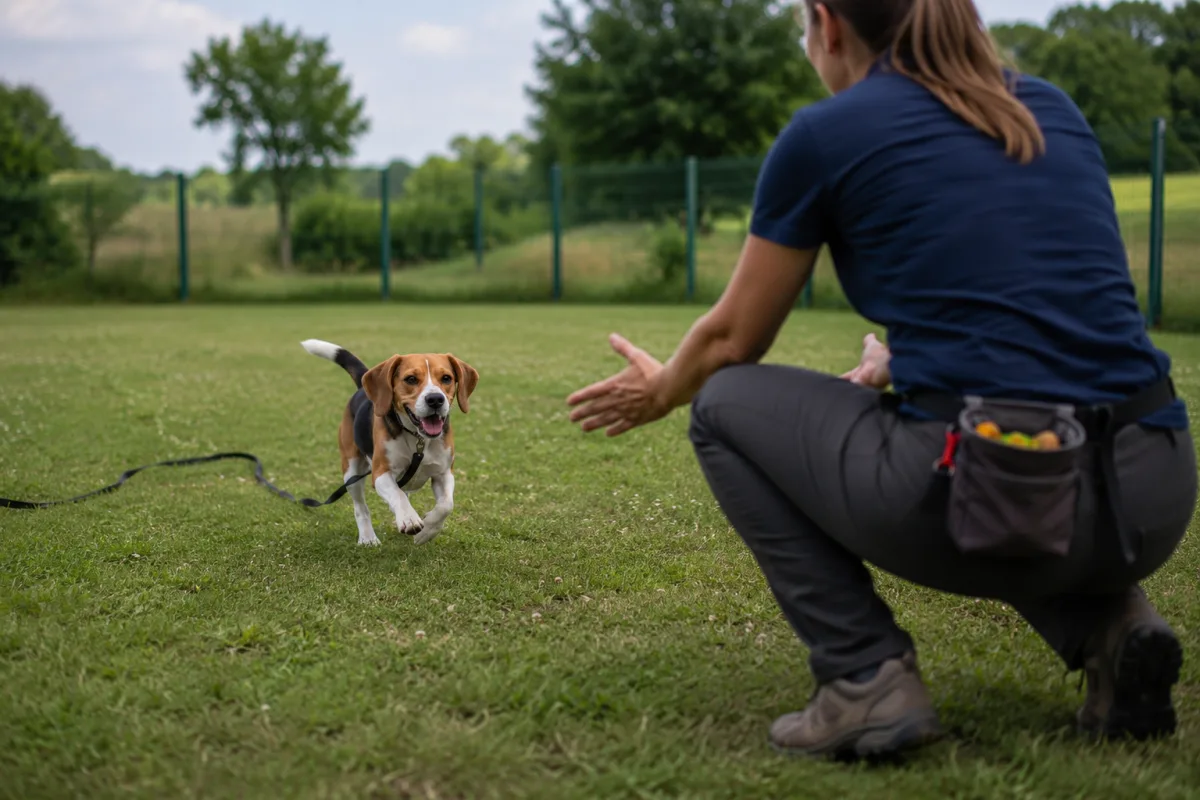
Recall needs many easy wins. Start indoors, then fenced spaces, then a long line in quiet outdoor areas. Pay heavily when the dog comes. Release the dog back to sniffing sometimes so recall does not always mean fun is over.
The National Beagle Club of America is the AKC parent club and reflects the breed's hound background. That background is why off-leash freedom in open areas should be treated carefully. A good recall is valuable, but secure fencing and long-line practice are still smart management.
If you compare another active breed, Livecub's German Shorthaired Pointer questions show how hunting instincts change training expectations across breeds.
Practice emergency recall separately. Pick a special cue, pay with an exceptional reward, and use it rarely. Build it when nothing exciting is happening before you expect it to work near wildlife, dropped food, or an open gate.
Never punish a Beagle for coming back late. The dog may connect the punishment to returning, not to the delay. If the return was slow, pay anyway, shorten the distance, and make the next repetition easier.
How Do You Stop Leash Pulling?
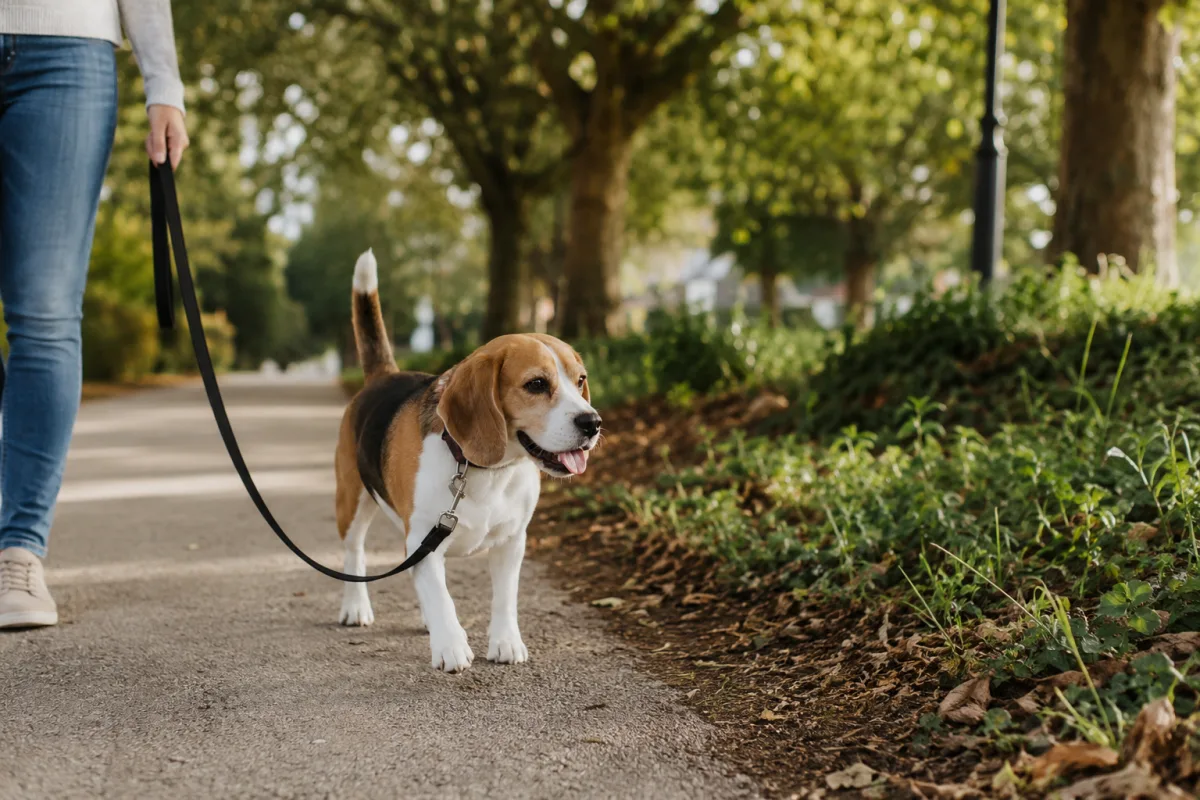
Leash pulling usually starts with the nose. The Beagle smells something ahead and the body follows. Practice in low-distraction places, reward beside-you walking, stop when pulling starts, and release the dog to sniff as a reward when the leash is loose.
Do not turn every walk into a heel drill. Beagles need sniff time. Use two modes: polite walking when moving through streets and permission-based sniffing in safe spots. Clear modes reduce frustration for both of you.
Carry rewards where the dog can smell them, but do not bribe every step. Mark the moment the leash loosens, reward near your leg, then move again. The Beagle should learn that walking with you makes more sniffing possible.
How Much Exercise Does A Beagle Need?
Most Beagles need daily exercise plus mental work. Walks, scent games, food puzzles, training, hide-and-seek, and safe play help. A tired Beagle should not be exhausted; it should be satisfied.
PetMD notes that Beagles do best with active families and need exercise, training, mental stimulation, and healthcare. That mix is the point. A walk without thinking may not settle a Beagle for long.
Scent work can be easy at home. Hide a few treats in boxes, scatter kibble in the grass, or ask the dog to find a toy. Nose games turn the Beagle's strongest instinct into structured work.
Exercise should also match age and weight. A young puppy, senior Beagle, or overweight dog needs gradual conditioning. Add time slowly and watch recovery after walks, not only excitement at the start.
How Do You Handle Barking And Baying?
Beagles can be vocal. Alert barking, baying, boredom noise, and demand barking need different responses. First identify the trigger. Then reduce rehearsal, teach quiet, and reward calm recovery.
Do not yell over the dog. It often adds energy. Use distance from the trigger, window management, food scatter, mat training, and structured greetings. If your Beagle is noisy in an apartment, solve the routine before neighbors solve it for you.
Teach a recovery pattern after one alert. Call the dog away, reward, and send it to a mat or food puzzle. The aim is not silence forever; it is a dog that can stop and reset.
How Do You Prevent Food Raiding?
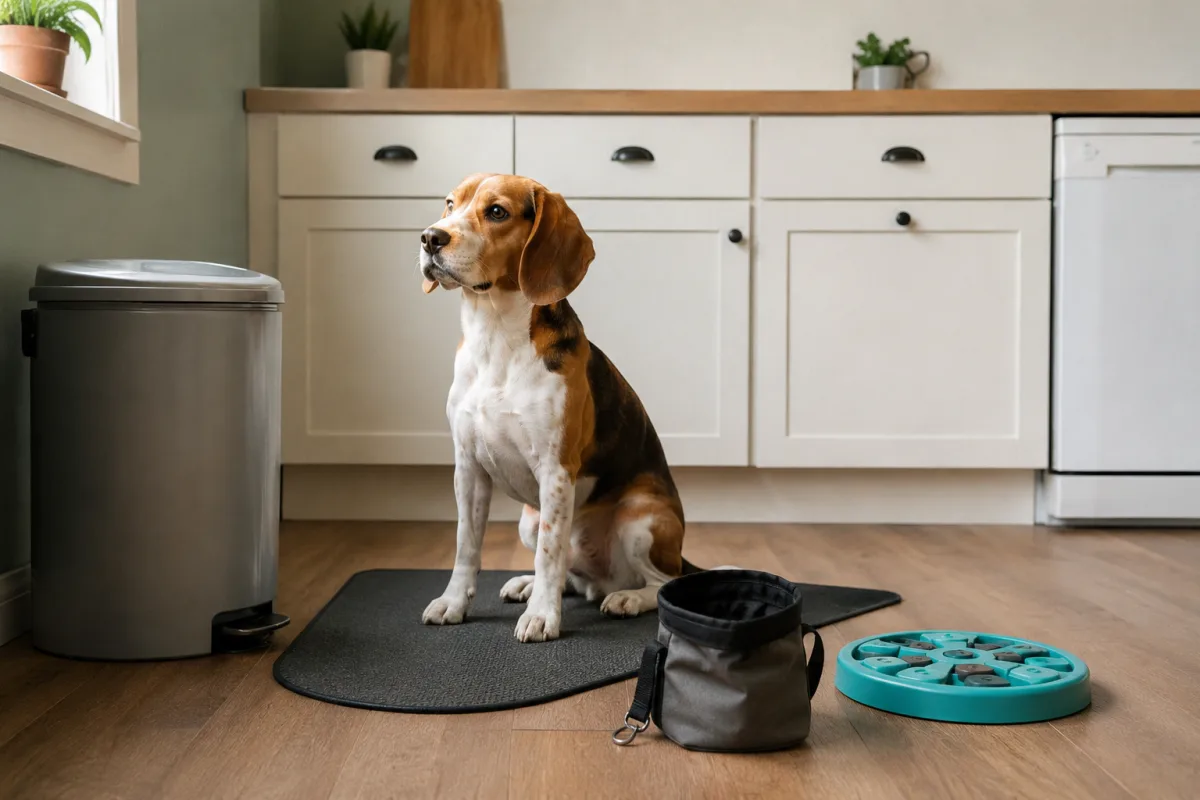
Beagles are often highly food motivated. Keep trash secured, counters clear, bags closed, and food out of reach. Train leave it and drop it with real rewards, not just correction after the dog already stole something.
Food motivation is useful when trained well. Use measured treats or part of meals for recall, handling, and leash work. If you are comparing small hounds, Livecub's Basset Hound questions show another scent-driven breed with its own training challenges.
Secure habits beat constant correction. Use lidded trash cans, closed pantry doors, and family rules about backpacks and lunch boxes. Every successful raid teaches the dog that searching pays.
Can Beagles Live With Other Pets?
Many Beagles enjoy other dogs because of pack instincts, but small pets need caution. Rabbits, guinea pigs, chickens, and running cats can trigger chase. Use gates, leashes, crates, and supervision instead of trusting one calm moment.
Teach calm observation and reward the dog for turning away. The goal is not to shame the Beagle for having instincts. The goal is to protect every animal in the home.
With children, teach everyone the same rules. No teasing with food, no chasing the dog with stolen items, and no opening gates casually. A family training plan works better than one adult trying to fix every mistake later.
What Training Mistakes Should You Avoid?
Do not punish the dog after it finally returns. Do not let it off leash in unfenced areas before recall is ready. Do not leave food within reach and then blame the dog for being a Beagle. Do not skip ear, paw, and grooming handling.
For handling routines, Livecub's longhair Dachshund grooming guide is not about Beagles, but it shows why cooperative care should be trained before it is urgent.
Practice ear handling in particular. Beagles can be prone to ear trouble because their ears hang close and trap moisture. Reward calm ear checks so cleaning or vet exams do not become a wrestling match.
Frequently Asked Questions
Are Beagles hard to train?
They can be challenging because scent is so rewarding, but they learn well with food, games, and consistency.
Can Beagles be trusted off leash?
Many should stay leashed or fenced in open areas because scent trails can override recall.
Why does my Beagle ignore me outside?
The scent environment is stronger outside. Practice gradually and pay better for attention.
Do Beagles bark a lot?
Some do. Barking and baying need trigger management, quiet training, and enough daily activity.
What is the best reward for Beagle training?
Food is often powerful, but sniffing, play, and release back to exploration can also work.
What Is The Best Training Mindset?
Train the Beagle's nose, not against it. Use food, scent work, long-line practice, secure spaces, and clear routines. The breed becomes easier when sniffing has rules instead of being treated as a problem. Give the nose a job, then ask for manners around it. A dog that gets fair chances to sniff usually has more attention left for the person. Practice that balance every day, inside, outside, and around guests before bad habits harden.

Chiara Bradshaw
Covers education, culture and creative topics with an emphasis on readable explanations and verifiable references.
Leave a reply
Replying to