
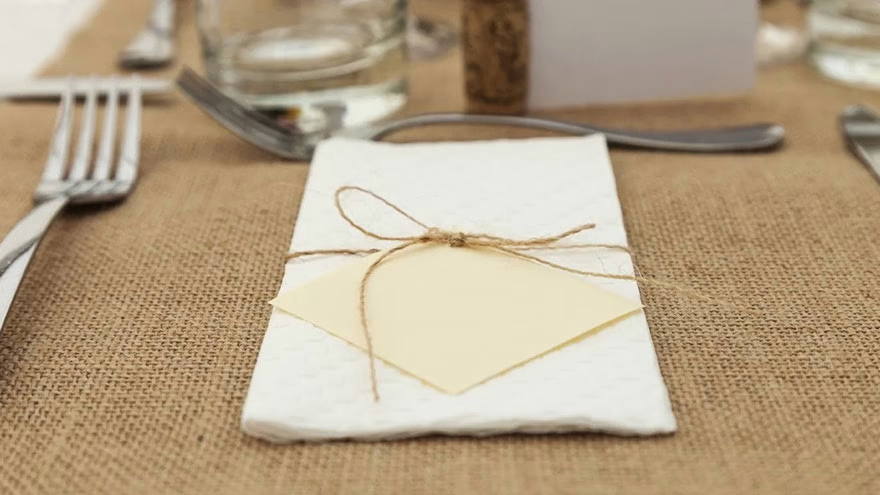
Napkins do two jobs before anyone compliments the table: they protect clothes and make the meal feel intentional. Good buying and folding napkins decisions start with how people actually eat at your table. A stiff white linen square may look beautiful in a photo, but a washable cotton set may serve weeknight pasta, children, guests, and holiday leftovers much better.
What size napkins should you buy?
Choose size by meal style. Smaller napkins work for breakfast, lunch, cocktails, and dessert. Larger napkins feel better for dinner, saucy food, and holiday meals. If you buy only one size, choose a medium-to-large dinner napkin that folds cleanly and covers a lap without swallowing a small table.
Before buying, fold a towel or paper square to the approximate size and place it beside your plates. That quick test shows whether the fold crowds the fork, covers the charger, or looks tiny on a large table.
If you stage dessert tables or party food, Livecub's cookie display guide can help you think about napkins as part of flow, not just decoration.
Which napkin fabric is best?
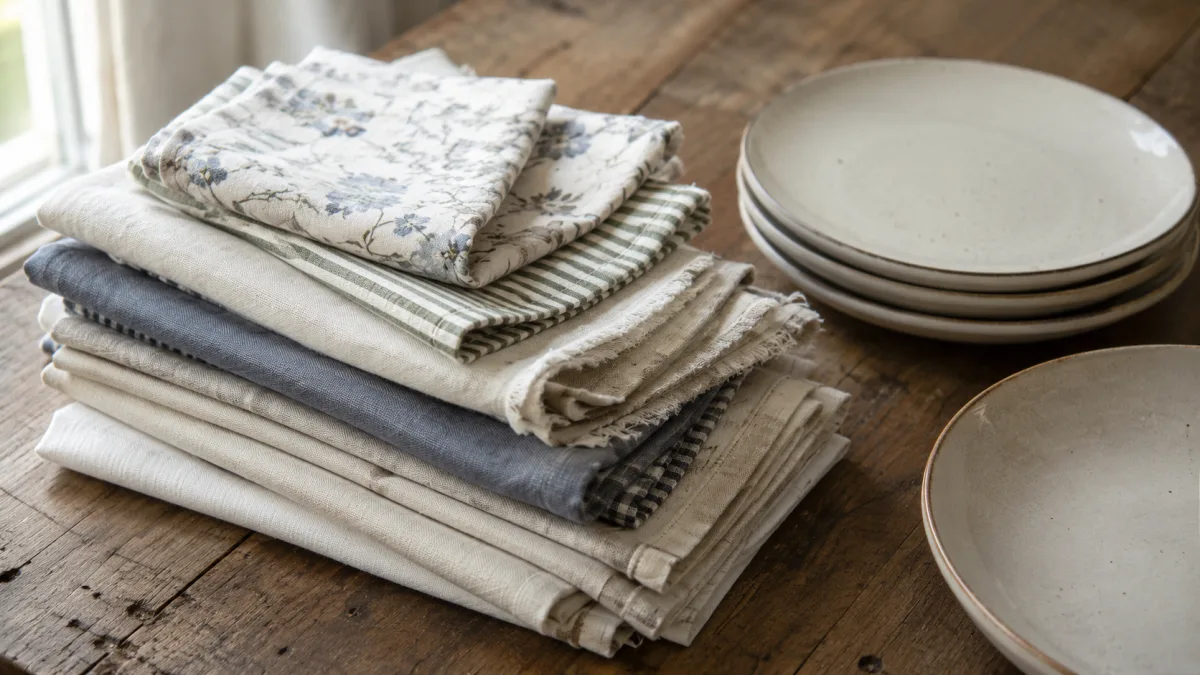
Fabric changes feel, fold, stain behavior, and care. Cotton is practical, absorbent, and easier for everyday use. Linen looks relaxed and elegant but wrinkles more. Cotton-linen blends can split the difference. Polyester resists wrinkles but may feel less absorbent and less pleasant on the lap.
Buy for laundering. If you hate ironing, do not buy napkins that only look good pressed flat. If you host children often, avoid fabrics that make every tomato sauce mark feel like a crisis.
Color matters too. White feels classic and can often handle stronger stain treatment, but it shows everything. Dark colors hide stains but can fade. Patterns forgive real meals better than solids.
Should you buy napkins for formal or everyday meals?
Buy for the meals you actually host most often. Everyday napkins should be soft, washable, and easy to fold. Formal napkins can be larger, smoother, and more structured, but they still need to survive the menu.
A good compromise is one durable everyday set and one calmer dinner set. The everyday set can handle pasta, children, and lunch. The dinner set can come out for guests, holidays, or meals where the table is part of the mood.
Do not let formality choose the fabric alone. A formal dinner with barbecue ribs still needs napkins people are willing to use.
How many napkins do you need?
Buy at least two more than your usual table count. For a household of four, eight napkins gives breathing room for guests, spills, and laundry. For holiday hosting, buy enough for the largest realistic gathering, not the fantasy table you host once every decade.
Mixing sets can work if the colors share a mood. Four blue napkins and four patterned blue napkins look intentional. Four random leftovers can look like the laundry failed unless the table is casual on purpose.
If you host memorial meals or family gatherings, Livecub's memorial birthday ideas can help with tone; table linens should support the mood without making the meal feel staged.
Where should napkins go in a place setting?
The Emily Post Institute says the napkin can go to the left of the fork or on the plate in a basic setting. Its basic table setting guide also explains utensil placement for simple settings. That gives home hosts permission to keep things clean rather than overcomplicated.
For a small table, place the napkin on the plate. For a wider table, place it to the left. If you use napkin rings, the napkin can sit in the center of the plate or above it depending on the place setting.
The fold should not block the meal. If guests have to dismantle a sculpture before sitting down, the fold is working against the table.
Are napkin rings worth buying?
Napkin rings are useful when the table needs shape but you do not want a complicated fold. They also help families reuse lightly used napkins for another meal if each person has a ring or marker. For large dinners, rings can make setup faster.
Choose rings that do not snag fabric, roll off the plate, or crowd the glassware. Wood, metal, ceramic, ribbon, and simple cord can all work. Avoid heavy rings for outdoor tables where guests are already balancing plates and drinks.
Rings should solve a problem. If they only add another item to store, skip them and fold simply.
Which napkin folds are worth learning?
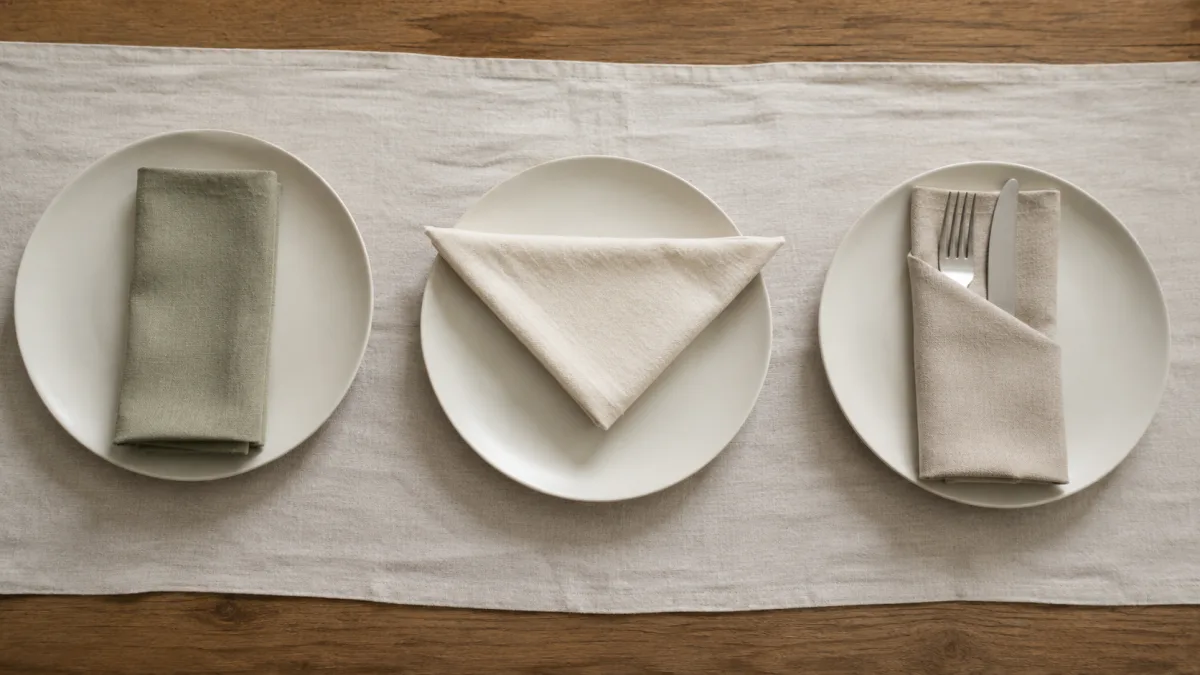
Most homes need three folds: rectangle, triangle, and pocket. A rectangle is calm and works with formal or casual meals. A triangle feels relaxed and takes seconds. A pocket holds flatware for buffets, picnics, and outdoor meals.
Rectangle fold
Fold the napkin in half, then in half again. Place it to the left of the fork or centered on the plate. This fold is best when the fabric has a border, monogram, or texture you want to show.
Triangle fold
Fold corner to corner and place the long edge toward the guest. It works well for casual tables and patterned napkins. It is fast, forgiving, and easy for children to help with.
Pocket fold
Fold a rectangle, then tuck one layer back to create a pocket for utensils. Use it for buffets, outdoor meals, or crowded tables where fork placement needs control.
How do you keep napkins from looking wrinkled?
Remove napkins from the dryer while slightly damp and smooth them flat. Fold them before they cool completely. If the care label allows ironing, press the edges and fold lines. If not, choose a relaxed fold that works with the wrinkles instead of fighting them.
The Spruce table-linen care guide says many tablecloths and napkins can be machine washed or hand washed at home unless the care label says dry clean only. The table linen care guide is a useful reminder to check labels before treating all fabrics the same.
Store napkins folded loosely, rolled, or stacked with room to breathe. Heavy creases become harder to remove if napkins sit crushed under serving trays.
What storage mistakes make napkins harder to use?
The main mistake is storing napkins so tightly that using them feels like work. If they are trapped behind serving platters, they will stay there. Keep everyday napkins near the table or kitchen drawer where people can grab them.
Separate seasonal napkins from daily ones. Holiday linens can live in a labeled bin, but daily napkins should be reachable. Check for stains before storing long-term so marks do not sit for months.
How should you handle stains?
Deal with stains before washing when possible. Shake crumbs, blot oil, rinse water-based stains, and treat according to the care label. Do not put stained napkins in a hot dryer until you are satisfied; heat can set some marks.
Keep a small stain plan for common meals: oil, wine, tomato, chocolate, and coffee. Napkins are easier to use freely when you already know how you will wash them.
Do not save good napkins forever. Fabric that never reaches the table is storage, not hospitality. Use the nice set for real meals and accept that care is part of ownership.
How do napkins change a buffet or party table?
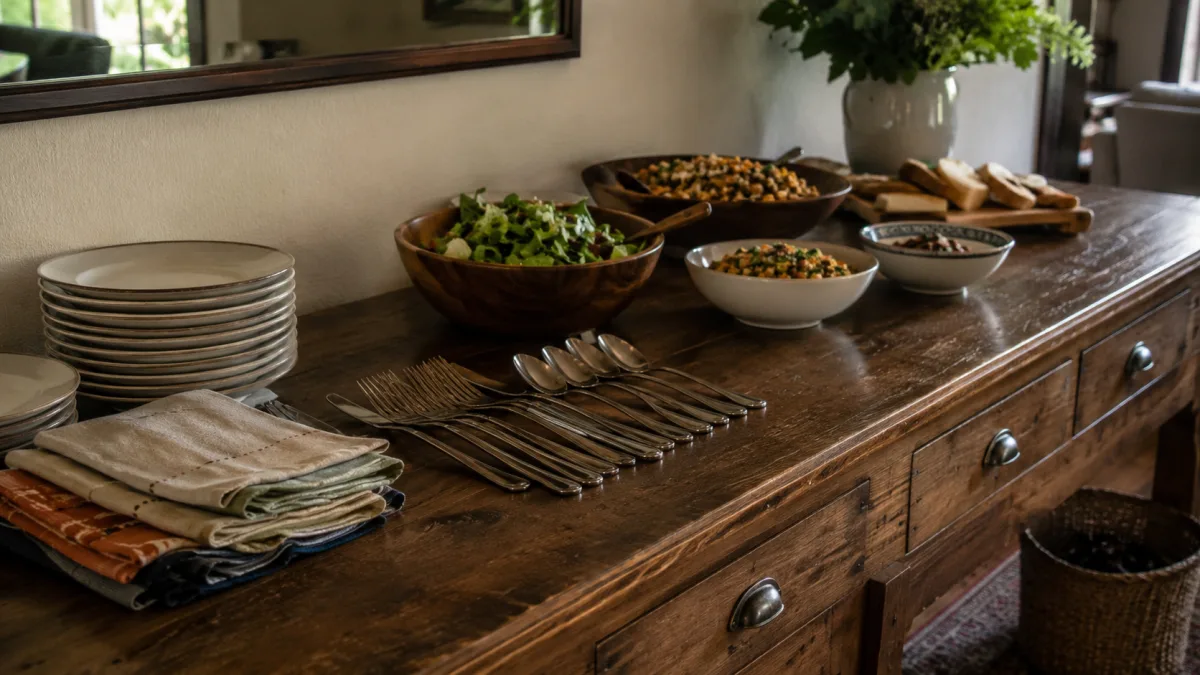
For buffets, napkins need to be reachable before food and again near seating. Flatware pockets can help guests carry utensils, but loose stacks are faster for crowded rooms. Put extra napkins near saucy dishes, children's seats, and dessert.
If the menu includes rich or messy food, use napkins that guests do not feel afraid to touch. Livecub's goose cooking guide is a good example of a meal where cloth needs to be generous and practical. Livecub's tiramisu guide fits the other end: dessert napkins can be smaller and softer.
Frequently Asked Questions
Are cloth napkins better than paper napkins?
Cloth feels better and can be reused, but it needs laundering. Paper is convenient for messy outdoor meals or very large casual groups.
What is the easiest napkin fold?
The rectangle fold is the easiest reliable fold. It works with most fabrics, table sizes, and levels of formality.
Should napkins match the tablecloth?
They can, but they do not have to. Matching feels formal; coordinated color or pattern often feels more relaxed and lived-in.
Can I mix different napkins at one table?
Yes, if the colors or patterns share a clear connection. Repeat at least one color so the mix looks intentional.
Buy napkins you are willing to wash, fold them simply, and let the food and people carry the table.

Chiara Bradshaw
Covers education, culture and creative topics with an emphasis on readable explanations and verifiable references.


Leave a reply
Replying to