
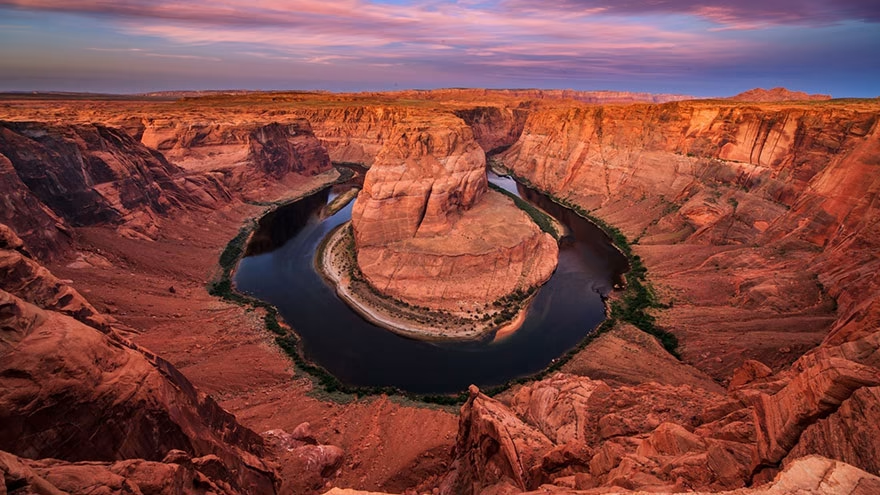
Start by verifying the exact location
Elk Rub Canyon is not a major developed campground name that every map labels clearly. Before packing, confirm the exact road, land manager, and nearest ranger district or park boundary. Arizona has national forest, state, tribal, private, and park lands close enough to confuse a casual plan.
The broad region around northern Arizona often points travelers toward Coconino or Kaibab country, so begin with official forest pages such as Coconino National Forest and verify rules for the specific site before relying on old campground comments.
Do not assume dispersed camping is allowed
Dispersed camping rules can change by road, season, fire risk, restoration work, and local order. A bare patch near a canyon does not automatically mean camping is legal or wise.
If the trip becomes more of a scenic drive than a campout, use the same access discipline you would use for remote landscape visits: know the road, rules, weather, and turnaround choice.
Carry water as if none exists
Arizona canyon country can be dry even when a map shows washes or seasonal water. Bring drinking water, cooking water, hand-washing water, and a reserve for delays. Do not count on filtering unless a current source confirms water is present and legal to use.
A comfortable camp can become stressful quickly when water is guessed. Put water in the vehicle before the last town, not after the road turns rough.
Respect elk and other wildlife
Grand Canyon National Park warns visitors to stay at least 100 feet from elk on its elk safety page. Even outside the park, the same distance mindset is useful. Elk are large wild animals, not camp entertainment.
Wildlife viewing requires patience. The habits used for watching large animals at a distance apply in Arizona too: stay back, use a lens, and never offer food.
Check fire restrictions before building a menu
Fire restrictions can make a campfire illegal or unsafe. Wind can also make a legal fire a bad idea. Bring a stove that fits current rules, and plan food that works without a wood fire.
If your trip involves camp comfort and rough ground, compare the same safety thinking with outdoor gear choices. Camp comfort should not outrank air quality, fire danger, or local rules.
Use maps that work without service
Download maps before leaving town and carry a backup. Canyon roads, forest roads, and wash crossings can look similar after dark. Mark the vehicle location and note major junctions on the way in.
The National Park Service hiking safety page at nps.gov gives the same core message: tell someone where you are going and carry what the route requires.
Leave the site cleaner than you found it
Pack out trash, food scraps, foil, bottle caps, and microtrash. Camp on durable surfaces where camping is allowed, keep vehicles on legal roads, and avoid widening sites with new tire tracks.
Low-impact habits matter in every outdoor setting, from canyon camping to waterfall hikes. Popular places lose access when visitors treat them as disposable.
Make the plan fit real life
The useful version of this topic is the one that fits the reader's actual situation. The trip should match the actual road, the legal camping status, the current fire rules, and the group's tolerance for dry, remote conditions. A plan that only works on paper will not survive a normal week, a tired afternoon, or a small mistake.
Start with the constraint that is least flexible. That may be time, money, safety, access, health, policy, family expectations, or local rules. Once that limit is clear, the rest of the choices become easier to sort.
Watch for the mistake that changes the outcome
The common mistake is treating an unclear map pin as proof that camping is available and suitable. It usually happens because people want the answer to be simpler than it is. Slow down long enough to separate facts from hopes.
Good judgment is often quiet. It looks like reading the policy, checking the weather, asking one more question, saving a record, or choosing the smaller step before the larger one.
Use a short checklist before you commit
Before acting, check the basics: land manager, legal camping status, road condition, water supply, fire restrictions, weather, offline maps, wildlife distance Keep the list short enough that you will actually use it. A long checklist that nobody opens is just decoration.
If another person is involved, confirm the same points in plain language. Most bad decisions in everyday life are not caused by missing expert knowledge; they are caused by assumptions nobody tested.
Know when to pause
Pause when you cannot confirm who manages the land, the road looks beyond the vehicle, or fire restrictions are unclear. A pause is not failure. It is a way to keep a small uncertainty from becoming a costly problem.
If the situation involves health, legal rights, safety, money, or another person's trust, get qualified help instead of forcing a quick answer. The right next step may be slower, and that is often the point.
Turn the advice into one next step
Do not try to solve the whole subject at once. Pick the first item that can change the decision today, then check it against the practical list: land manager, legal camping status, road condition, water supply, fire restrictions, weather, offline maps, wildlife distance That keeps the work grounded instead of letting the topic become a vague intention.
A small verified step is better than a confident guess. In practice, that may mean reading the rule, checking the map, saving the message, measuring the space, asking the clinic, reviewing the profile, or confirming the payment terms before anything else moves.
Keep notes while details are fresh
Good notes do not need to be formal. Write down the date, source, name, rule, price, condition, or answer while it is still fresh. That record gives you something calmer to use later if memory, stress, or another person's version of events starts to blur the issue.
For this topic, notes should focus on the decision point rather than every side thought. Record the fact that would change your choice, then leave room for updates if a source, policy, weather report, profile detail, or schedule changes.
Match the advice to the stakes
Low-stakes choices can move with common sense and a short check. Higher-stakes choices need more patience, especially when safety, health, pay, travel money, family trust, or another person's comfort is involved. The amount of checking should rise with the possible cost of being wrong.
This is where the earlier pause point matters: you cannot confirm who manages the land, the road looks beyond the vehicle, or fire restrictions are unclear. If that line is close, slow the plan down. Speed is useful only when the basic facts are solid.
Think about the second effect
Many everyday decisions have a second effect that shows up later. A message changes trust, a campsite affects access, a workplace rule changes morale, a food choice affects leftovers, and a travel booking can affect the whole budget. Look past the first convenient answer.
The second effect is usually where regret hides. Before you finish, ask who else is affected, what becomes harder tomorrow, and what proof you would want if the decision had to be explained later.
Close the loop cleanly
Once the choice is made, finish the small administrative work around it. Save the link, send the note, pack the item, label the container, confirm the route, update the file, or tell the other person what happens next.
A clean close keeps the subject from staying half-open in your head. It also makes the advice easier to repeat the next time, because you are not rebuilding the whole decision from memory. A short final note can also reveal a weak plan before it creates extra work for someone else later. That is often the difference between knowing what to do and actually doing it.
Frequently Asked Questions
Is Elk Rub Canyon a developed campground?
Do not assume that. Treat it as a location that needs verification through current land-manager sources.
If you need toilets, water, or reservations, choose a confirmed developed campground instead.
Can I dispersed camp nearby?
Maybe, but only if the specific road and land manager allow it. Rules change by area and season.
Check current forest or park orders before setting up.
How much water should I bring?
Bring enough for drinking, cooking, cleaning, pets, and delays. Dry canyon country does not forgive light water planning.
For warm weather or rough roads, bring more than the simple meal plan suggests.
Are elk dangerous around camp?
They can be. Keep distance, do not approach, and never feed them.
Large animals can injure people even when they seem calm.

Chiara Bradshaw
Covers education, culture and creative topics with an emphasis on readable explanations and verifiable references.



Leave a reply
Replying to