
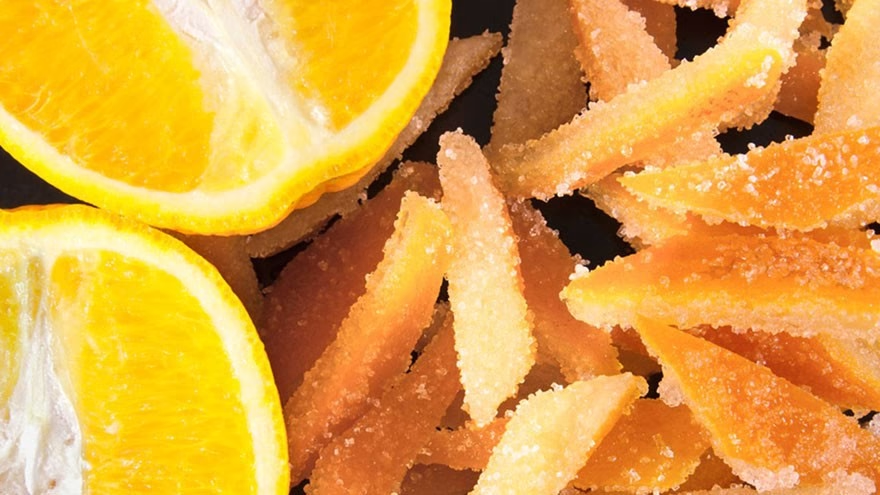
A good candied citrus peel recipe solves two problems before it ever looks festive: bitterness and stickiness. Citrus peel has fragrant oil in the colored zest and bitter compounds in the white pith, so the method has to soften the peel, tame the edge, and replace raw chew with a glossy sugar bite. The work is slow, not hard. Cut clean strips, blanch them, simmer them in syrup, dry them properly, and the candy stops tasting like a kitchen experiment.
Use oranges, lemons, grapefruit, or thick-skinned limes. Oranges are the easiest starting point because they have a forgiving balance of sweetness, oil, and pith. Grapefruit tastes grown-up and slightly bitter. Lemon peel is sharper and better as a garnish. Lime peel can be excellent, but it needs extra care because the bitterness reads louder.
What Citrus Works Best?
Choose firm fruit with bright skin and no soft spots. Organic fruit is useful if you can get it, but it still needs washing. The FDA's produce safety guidance says to wash produce under running water before preparing it, even when you do not plan to eat the outer skin, because cutting can move surface dirt or bacteria inside.
Thicker peels make plumper candy. Thin-skinned mandarins can work, but the strips are fragile and dry fast. Grapefruit needs longer simmering; lemons need a lighter hand with final sugar; oranges sit in the middle and behave well for a first batch.
If you are making a holiday dessert table, candied peel pairs well with small sweets such as fudge icing on brownies or simple chocolate cake. Citrus cuts sweetness, which is why a few strips can make a rich tray feel less heavy.
How Do You Cut The Peel?
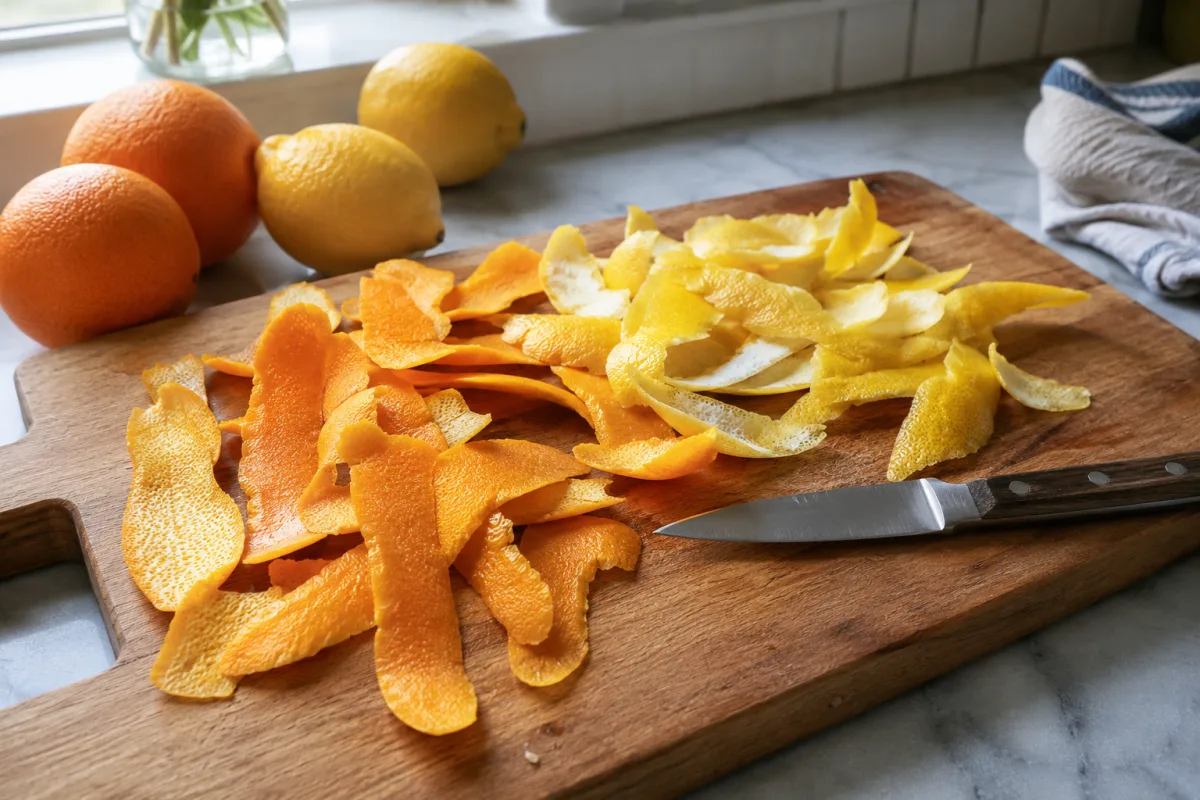
Score the fruit from top to bottom into four or six panels, then pull the peel away in wide pieces. Slice the peel into strips about 1/4 inch wide. Keep some pith; do not shave the peel down to paper. A little pith gives the finished candy body, and blanching will soften the bitter edge.
Use a sharp knife and a steady board. Ragged pieces cook unevenly. Very narrow strips can turn leathery before the center absorbs syrup. Wide strips are easier to dip in chocolate later, but they need more drying time.
Save the fruit for juice, curd, salads, or marinades. Candied peel should not require wasting the citrus flesh. If you are already planning a baking day around basic corn souffle or another mild dish, citrus juice can become a sharp glaze, syrup, or bright side drink.
Why Blanch Citrus Peel?
Blanching softens the peel and pulls out some bitterness. Put the strips in a saucepan, cover with cold water, bring to a boil, then drain. Repeat once or twice for orange and lemon; repeat more for grapefruit if the taste is still harsh. Bite a cooled strip after blanching. It should taste citrusy and bitter, not punishing.
King Arthur Baking breaks the candying process into preparing, blanching, and simmering the peel in sugar syrup. That sequence matters because syrup cannot fix a strip that is still tough and aggressively bitter.
Do not rush the drain. Wet peel dilutes the syrup and slows the candying step. Shake the colander, spread the strips for a few minutes, and let steam escape before they go into the sugar.
How Do You Simmer The Peel In Syrup?
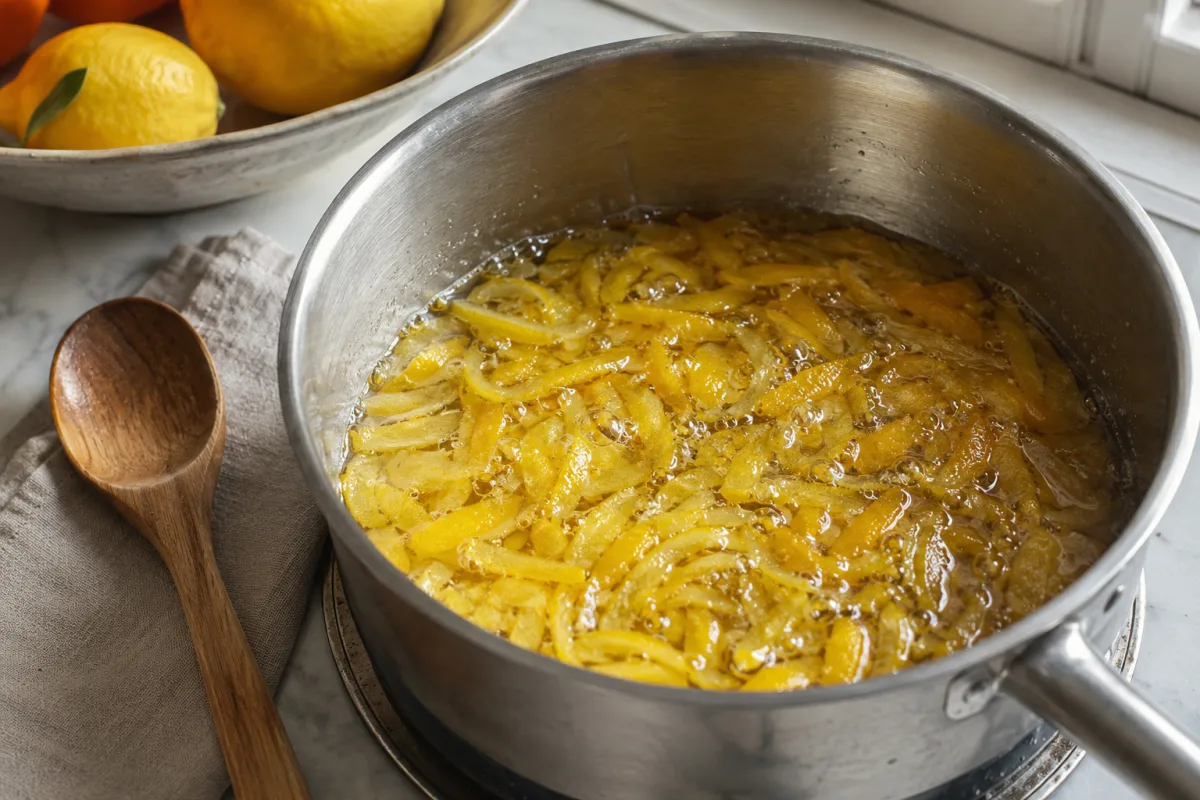
Use equal parts sugar and water by volume, enough to cover the peel. For a medium batch, 2 cups sugar and 2 cups water is comfortable. Bring the syrup to a simmer, add the blanched peel, and cook gently until the strips look translucent and taste tender, often 45 to 70 minutes depending on thickness.
A hard boil makes problems. It can tear delicate strips, crystallize the syrup around the pan, and leave the center under-candied. Keep the syrup at a calm simmer. If the level drops before the peel is tender, add a splash of hot water.
Martha Stewart's candied citrus peels use citrus, sugar, and water in the same basic family of methods. The difference between recipes is usually strip size, blanching time, and drying style, not a secret ingredient.
How Should Candied Peel Dry?
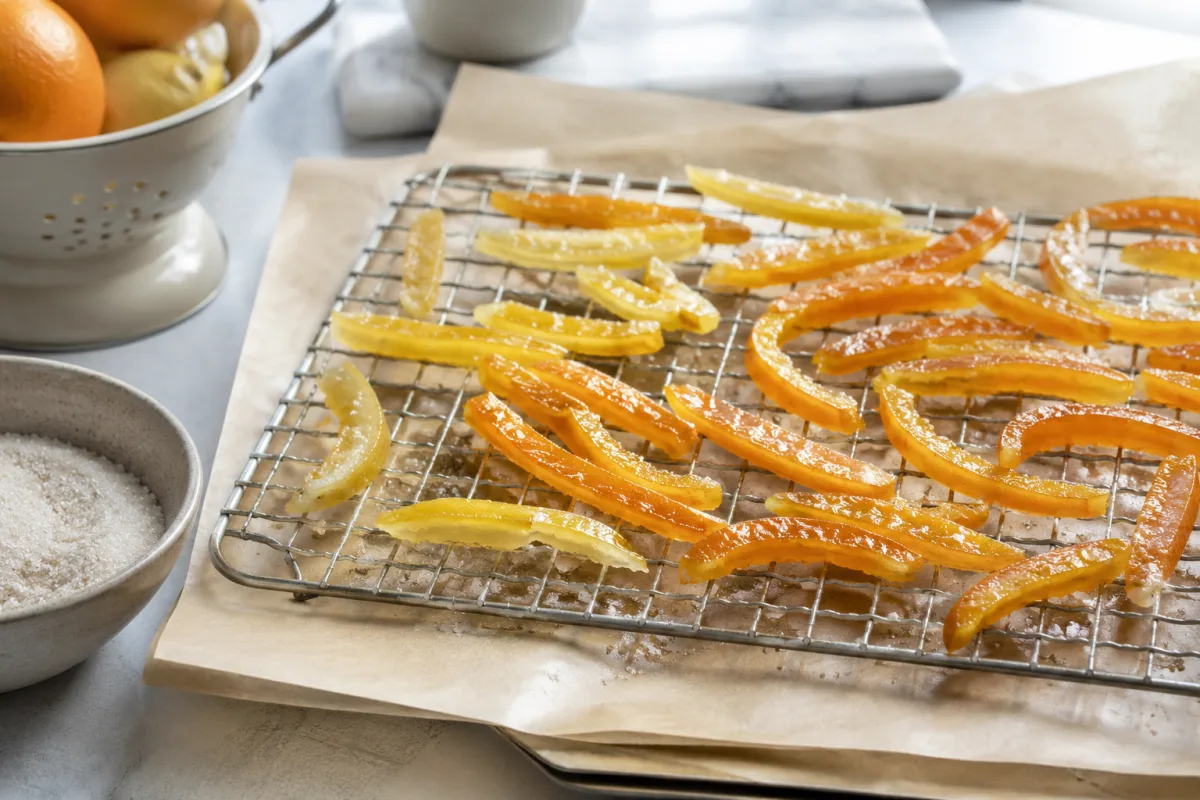
Lift the strips from the syrup with a fork or slotted spoon and set them on a rack over a rimmed sheet pan. Let them dry until tacky but no longer wet. This can take several hours. If the room is humid, give them more time rather than burying wet strips in sugar.
Roll tacky strips in granulated sugar for a classic finish. For a cleaner chocolate-dipped version, let the strips dry longer and dip only one end in melted dark chocolate. Put dipped peel on parchment until set.
Candied peel is excellent in Christmas cookie ornaments when the pieces are chopped finely and the cookie is meant to be eaten. Keep decorative-only items separate from edible candy jars so nobody has to guess.
How Do You Store Candied Citrus Peel?
Once dry, store candied peel in an airtight container with parchment between layers. Keep it cool and dry. If the strips feel damp after a day, spread them out and dry them longer before sealing. Trapped moisture is what makes pieces clump, weep, or grow stale fast.
You can also freeze well-dried peel. Pack it tightly, press out excess air, and thaw only what you need. The texture may soften a little, but chopped peel for baking handles freezing better than glossy gift strips. If the freezer is crowded, keep the peel in a rigid container so the strips do not break.
Keep the leftover syrup. It tastes like citrus and can sweeten tea, glaze pound cake, moisten sponge cake, or brush over fruit. Strain it first so small peel pieces do not ferment in the jar.
If you want cleaner edges, cut the peel before blanching and keep the strip size consistent. If you want a softer old-fashioned candy, leave the strips a little wider and simmer until they bend without snapping. Tiny changes in thickness change both drying time and chew.
Write down the strip width that worked. Next December, memory will not be as accurate as a kitchen note.
How Do You Use Candied Peel?
Use whole strips as candy, dip them in chocolate, chop them into scones, fold them into fruitcake, add them to biscotti, or use thin pieces as a garnish for cakes and puddings. A little goes a long way. The flavor is concentrated, so scatter rather than dump.
Candied peel also works as a color and texture accent on a dessert board. If you are building a tray from an ultimate guide to cookie displays, citrus peel gives height and shine without another frosted cookie.
The usual failure is impatience. If the peel is bitter, blanch longer next time. If it is sticky, dry longer. If it is hard, simmer more gently. One small process change fixes most batches.
For gifts, pack only fully dry strips. A jar that looks charming on the counter can trap moisture if the candy is still tacky-wet, and that trapped moisture turns neat sugar crystals into syrup. Use parchment between layers, add a small handwritten date on the tag, and tell the recipient whether the peel is plain, chocolate-dipped, or intended for baking.
Frequently Asked Questions
Can I leave the white pith on citrus peel?
Yes, leave some pith for body. Very thick grapefruit pith may need trimming, but removing all pith can make thin, brittle candy.
Why is my candied citrus peel bitter?
It probably needed more blanching, or the citrus was naturally bitter. Grapefruit and lime often need extra blanching compared with orange.
Why did my syrup crystallize?
Hard boiling, stirring sugar crystals down the pan sides, or letting the syrup reduce too far can trigger crystallization. Use a gentle simmer.
Can I dip candied peel in chocolate?
Yes. Dry the peel until it is no longer wet, then dip one end in melted dark chocolate and set it on parchment.
How long should candied peel dry?
Several hours is normal. The strip should feel tacky, not wet. Humid rooms may need overnight drying.
Candied citrus peel rewards patience more than precision. Wash the fruit, blanch until the bitterness calms down, simmer gently, and do not seal the candy until the surface is truly dry.

Cashie Evans
Covers parenting and practical household topics with clear steps, safety notes and links to current guidance.




Please H E L P!
I’m simmering the peels in the sugar syrup now but they look so thin compared to your picture. Was I not supposed to remove all the pithy flesh?
Thank you in advance for your help.