
Start With the Model, Not a Guess
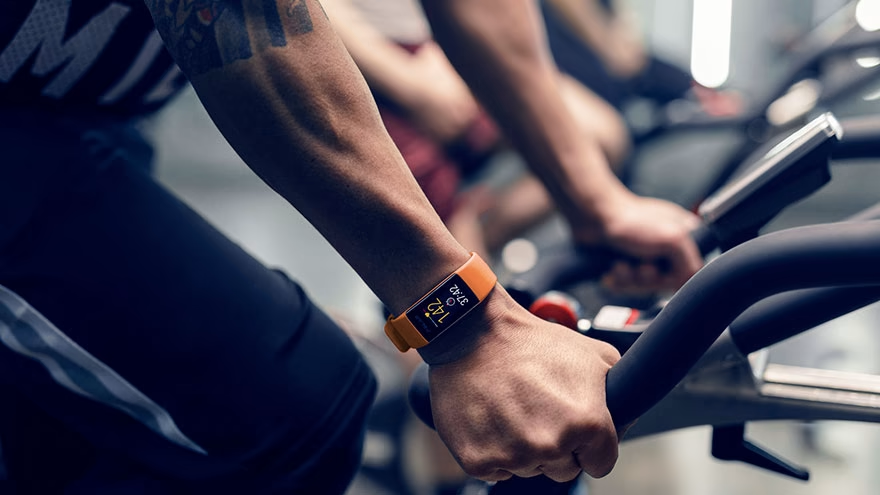
Sportline heart rate watch instructions vary because Sportline sold several models with different buttons, sensors, straps, and modes. A Solo fingertip model does not behave exactly like a Duo model with a chest strap, and a pedometer watch adds another layer.
The safe starting point is the model number on the back of the watch or inside the manual. Use that to find the right button names and mode order before changing settings.
The watch can only help if it is set up for your body. Time, user profile, target zone, sensor contact, and battery condition all affect the experience.
Set Time and User Profile First
Most Sportline watches use a Mode button to move through screens and a Start, Stop, Reset, or Lap button to change values. Hold the setting button until the display flashes, then adjust time, date, age, weight, sex, stride length, or target zone depending on the model.
A Sportline 960 manual hosted by Performance Health lists common operating modes such as time, chronograph, countdown timer, exercise, and heart rate. That is a useful reminder that these watches are not just clocks; the modes need to be understood before a workout starts.
If you also use a chest strap system, Livecub's How to Replace the Battery in a Polar T31 HRM Chest Strap is a related maintenance guide, even though the hardware is different.
Wear the Watch Snugly
For fingertip-sensor Sportline watches, the watch must sit flat against the wrist. A loose watch makes the sensor less reliable. The metal back should contact the skin, and the watch should not slide around during measurement.
For models that use finger sensors on the face, use the pads of the fingers rather than poking with fingertips. Press gently and evenly. Pressing too hard can create muscle noise and make the reading worse.
Clean contact matters. Sweat, lotion, dirt, cold fingers, and dry skin can all interfere with readings.
Measure Heart Rate Without Rushing
Manuals for Sportline Solo-style watches often describe touching the sensors for several seconds until the watch reads the electrical signal. If the watch fails to read, wait, relax the hand, clean the sensors, and try again.
The ManualsLib page for the Sportline Solo 915 includes sections on measuring heart rate, time and date, alert mode, and battery. The larger lesson is that contact-based watches need patience and the correct hand position.
Do not use a single odd reading as medical truth. Compare it with how you feel, a manual pulse check, and repeated readings.
Enter Personal Data With Care
If your model asks for age, weight, sex, stride length, or zone settings, enter them slowly. Wrong profile data can affect calorie estimates, target alerts, and workout summaries.
Do not overtrust calorie numbers. Older watches often use simple formulas. They can be useful for comparing your own workouts, but they are not a lab measurement.
Stride length matters for pedometer-style models. Measure a normal walking stride rather than guessing from height. Recheck it if your walking pace changes a lot.
Use Target Zones Carefully
The American Heart Association's target heart rate chart explains the common 50 to 70 percent moderate range and 70 to 85 percent vigorous range based on estimated maximum heart rate.
Those zones are estimates. Medication, fitness level, caffeine, heat, stress, and illness can change the number. Use the watch as a guide, not a command.
Livecub's What Are Basic Aerobic Steps? fits this point because pulse is useful only when matched to the workout goal.
Use Chronograph and Timer Modes
Many Sportline watches include a chronograph for timing workouts and a countdown timer for intervals. Practice starting, stopping, resetting, and switching modes before exercising.
If you are timing hard and easy efforts, write the plan first. For example, walk for two minutes, jog for one minute, repeat ten times. The watch should support the plan, not create confusion mid-workout.
Button practice counts. A watch is much less frustrating when your hands know the sequence before your breathing is high.
Set Alerts Conservatively
Some watches allow upper and lower heart rate alerts. Set these zones based on a realistic workout goal, not the hardest number you can imagine.
A beginner walking session, a treadmill interval, and a recovery ride should not all use the same alert range. Change the zone when the workout changes, or turn alerts off if they make you anxious.
Alerts are reminders. They are not a substitute for symptoms, effort, breathing, or medical advice.
Improve Readings During Exercise
Fingertip watches can be harder to read while moving because the body is bouncing and the hand is tense. Slow down, stand still, and measure during a brief break if the watch needs contact.
Chest-strap systems usually read more continuously, but straps need moisture, placement, and battery health. Wrist-only devices can vary by model and skin contact.
If your session includes steady cardio, Livecub's What Are Basic Aerobic Steps? can help create predictable movement that is easier to track than chaotic stop-and-go work.
Maintain Battery and Sensors
If the display fades, buttons lag, alarms fail, or readings become erratic, check the battery. Some Sportline models use small coin cells and require careful back removal, while others should be serviced to protect seals.
Wipe the watch after workouts, dry it before storage, and avoid leaving it in a hot car or damp gym bag. If the model is not rated for swimming, do not treat it as waterproof.
For higher-intensity conditioning such as Livecub's Benefits of Running Bleachers, confirm the watch is secure before the session. A loose watch will not improve at higher speed.
Know When the Watch Is Not Enough
A heart rate watch cannot diagnose chest pain, fainting, unusual shortness of breath, or a rhythm that feels wrong. Stop exercising and get appropriate help if symptoms feel concerning.
People with heart conditions, blood pressure concerns, diabetes, pregnancy, or medications that affect pulse should ask a clinician how to monitor effort. The watch can support that plan, but it should not replace it.
The best instruction is simple: set it correctly, wear it correctly, read it calmly, and let your body have the final vote.
Keep a Small Troubleshooting List
If readings look wrong, check the easy things first: battery, sensor cleanliness, strap fit, finger pressure, cold skin, and mode selection. Then compare with a manual pulse.
If the watch repeatedly gives readings that do not match how you feel, do not build training decisions around it. A simple watch should make exercise clearer, not more confusing.
Use the Watch With Simple Workouts First
Test the watch during easy walking before trusting it during intervals or hills. A steady walk makes it easier to see whether readings rise and fall in a believable way.
After that, try a basic cardio session: five minutes easy, ten minutes moderate, five minutes easy. The heart rate should usually climb during the middle and drop during the cool-down.
Learn the device during calm workouts. A hard session is the worst time to discover that the buttons, strap, or sensor do not behave the way you expected.
Keep the Manual or a Photo Handy
Older Sportline watches are easy to forget between uses because button sequences are not always intuitive. Keep a PDF, printed page, or phone photo of the key setup instructions.
This is especially useful for daylight saving changes, battery replacement, and target-zone resets. A small reference prevents random button pressing that changes settings by accident.
Store that reference with your training gear, not in a kitchen drawer. The instructions are most useful when the watch starts acting odd right before a workout.
Frequently Asked Questions
Why will my Sportline watch not read my heart rate?
The watch may be loose, sensors may be dirty, fingers may be too dry, or pressure may be uneven. Clean the contact points and try again calmly.
How do I set the time?
Most models use Mode to reach time settings and a held setting button to make numbers flash. Use the exact manual for your model.
Are target heart zones exact?
No. They are estimates. Use them with the talk test, symptoms, fitness level, and medical guidance when needed.
Can I swim with a Sportline heart rate watch?
Only if your specific model is rated for swimming. Water resistance varies, so check the model manual before using it in water.

Linda Fehrman
Edits general wellness and relationship explainers. Health material is educational, avoids diagnosis and links to health-authority guidance.

Leave a reply
Replying to