
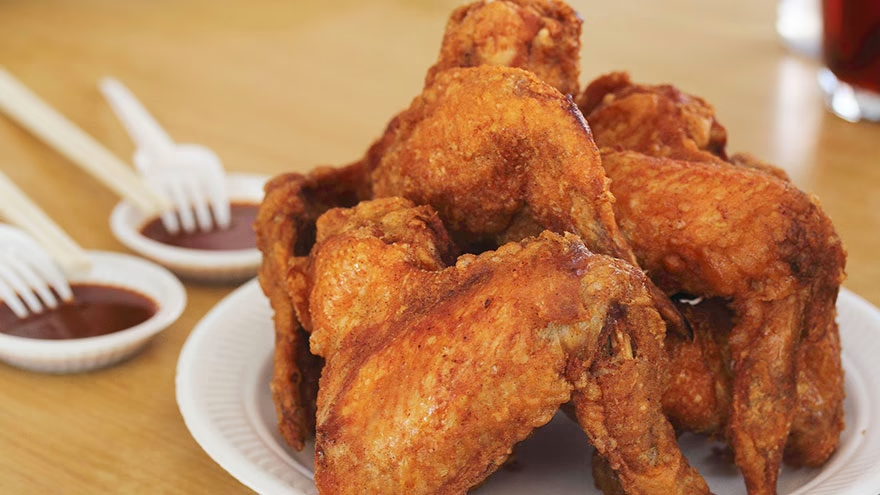
Most fried chicken wings begin with hot oil. These Chinese fried chicken wings begin with a cold pan and low heat — and that single decision changes everything. By placing the wings skin-side down over gentle warmth, you give the subcutaneous fat time to liquefy and seep out before any serious browning happens. The wings essentially fry themselves in their own rendered fat, building a foundation of flavor that no amount of added oil can replicate. Once the fat is out, you crank the heat and let the Maillard reaction do its work, driving the skin to a deep, crackling golden-brown. Then comes the sauce: a long-simmered blend of Shaoxing wine, soy, oyster sauce, palm sugar, and a full roster of whole spices that reduces into a lacquer-thick glaze. It is not a quick weeknight dish — the technique takes about 45 minutes — but the result is a plate of wings that looks and tastes nothing like what you get from a fryer basket.
What makes these Chinese fried chicken wings different?
Standard fried wings go into hot oil from the start. The skin seizes immediately on contact, trapping the fat underneath rather than releasing it. You get a cooked wing, but the skin can turn soft beneath the surface if moisture has not had time to escape. The cold-start, low-heat method inverts that logic entirely. Think of it like rendering duck breast or bacon: you want the fat out of the way before you apply serious heat. Over roughly 20 minutes at low temperature, the skin begins to pull away slightly from the meat as the fat renders into the pan. By the time you raise the burner to medium, there is very little moisture left in the skin — just protein and a thin film of liquid fat — so the Maillard browning happens fast and evenly.
The sauce sets these wings apart from any buffalo or teriyaki version. It borrows from two culinary traditions: the Shaoxing wine and star anise read as classic Chinese braising flavors, while the mirin brings a Japanese sweetness and the glossy sheen it is known for. The lemongrass is the wildcard — unusual in a Chinese context, but its volatile citrus-herbal oils (released when you crack the stalks) cut through the richness of the rendered fat and keep the glaze from feeling heavy. The result is sweet, salty, fragrant, and faintly anise-forward, reduced to the consistency of thin syrup so it clings to every curve of the wing.
Key ingredients and what they do
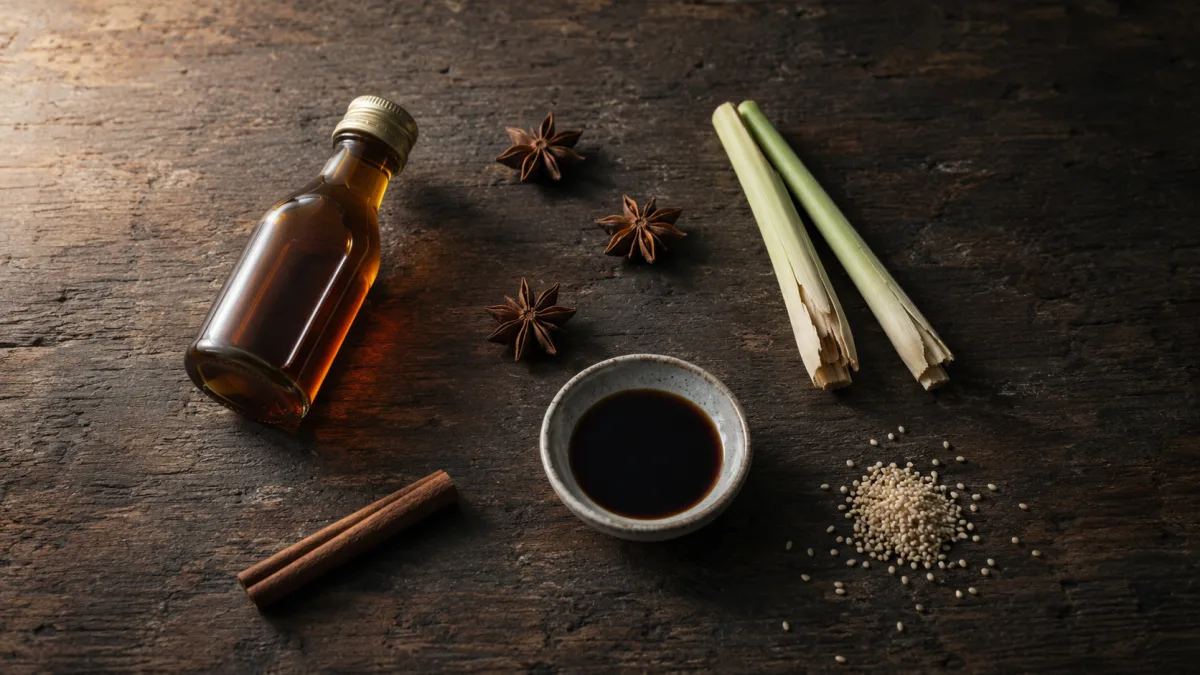
Understanding why each ingredient is here makes it easier to substitute confidently — and to know what you are tasting when the wings hit the table.
Shaoxing wine is a fermented rice wine from Shaoxing city in Zhejiang Province, China, with records of production going back over 2,000 years. Dark amber in color and mildly sweet, it carries about 14–15% alcohol and a nutty, slightly oxidized depth that plain rice wine or sake cannot fully replicate. According to The Woks of Life, the best widely available substitute is dry cooking sherry, which shares the same oxidized, fortified character. One trap to avoid: the salt-added "Chinese cooking wine" sold in many Western supermarkets is a different product that will throw off the saltiness of any sauce that already contains soy. The cooking wine sold at Chinese grocery stores already has a small amount of salt in it too, so taste before adding more.
Mirin is Japanese sweet rice wine — lower in alcohol than sake and considerably higher in sugar. It gives sauces their characteristic gloss and rounds out sharpness. Its presence alongside Shaoxing wine is part of what makes this recipe a fusion-leaning dish rather than a strictly traditional Chinese preparation. The sweetness works with the palm sugar to build the sticky glaze without requiring an aggressive reduction.
Palm sugar vs. demerara: the recipe offers both as options and the distinction is real. Palm sugar (sometimes labeled coconut palm sugar) has a glycemic index of around 35 and a toasty, faintly caramel-coconut character that reads as savory-sweet in a spiced braise. Demerara carries a molasses note and a GI closer to 55, with slightly coarser crystals that dissolve cleanly once the sauce simmers. Both add complexity that white granulated sugar cannot match. They produce a subtly different finish — palm sugar a little rounder, demerara a little deeper — but either works.
Star anise contains 80–90% anethole by essential oil content — the same flavor compound found in anise seed and fennel. It is one of the five pillars of Chinese five-spice powder, alongside cinnamon, cloves, Sichuan peppercorns, and fennel seeds. In long-cooked savory dishes its initially medicinal punch mellows into a warm, sweetly fragrant background note. Three pods is enough to register without dominating the sauce.
Oyster sauce contributes concentrated umami from oyster extract plus a starch component that helps the sauce cling to the protein rather than pooling on the plate. Paired with soy sauce, the two together create a layered savory base that neither achieves alone. If the recipe specifies only "soy sauce," light soy is the safer choice: it adds seasoning without turning the glaze excessively dark. A tablespoon of dark soy, added at your discretion, deepens the color without significantly changing the salt level.
Lemongrass: always crack or bruise the stalks before dropping them into any liquid. The volatile aromatic oils that give lemongrass its citrus-herbal character are locked inside cell walls. Cracking breaks those walls open, releasing the oils into the sauce. A stalk left whole and unbruised contributes almost nothing.
Chinese fried chicken wings — full recipe and ingredients
This recipe serves 4 to 6 as a shared dish or appetizer. Total time is roughly 45 minutes, with most of that spent monitoring rather than doing. A wide, straight-sided pan or a wok both work well — you need room for the wings to lie flat in a single layer. Have a lid that fits your pan, a wooden spoon or silicone spatula for deglazing, and a pastry brush for the final glazing step. A meat thermometer is strongly recommended — see the food safety section below.
Ingredients
- 10 to 12 whole chicken wings
- Kosher salt
- 2/3 cup water
- 2/3 cup Shaoxing wine (substitute: dry cooking sherry)
- 1/3 cup palm sugar or demerara sugar
- 2/3 cup soy sauce (light soy preferred)
- 1/3 cup mirin
- 1/3 cup oyster sauce
- 1 piece (3–4 inch) fresh ginger, sliced 1/4-inch thick
- 3 garlic cloves, smashed and peeled
- 1 cinnamon stick (3–4 inch)
- 2 lemongrass stalks, cracked
- 3 star anise pods
- 1 or 2 dried Sichuan peppers, stems removed
- 1 tablespoon vegetable oil
- 1 tablespoon sesame seeds, toasted
- Fresh spinach, for serving (optional)
- 3 or 4 spring onions, thinly sliced on the diagonal (optional)
Step-by-step cooking method
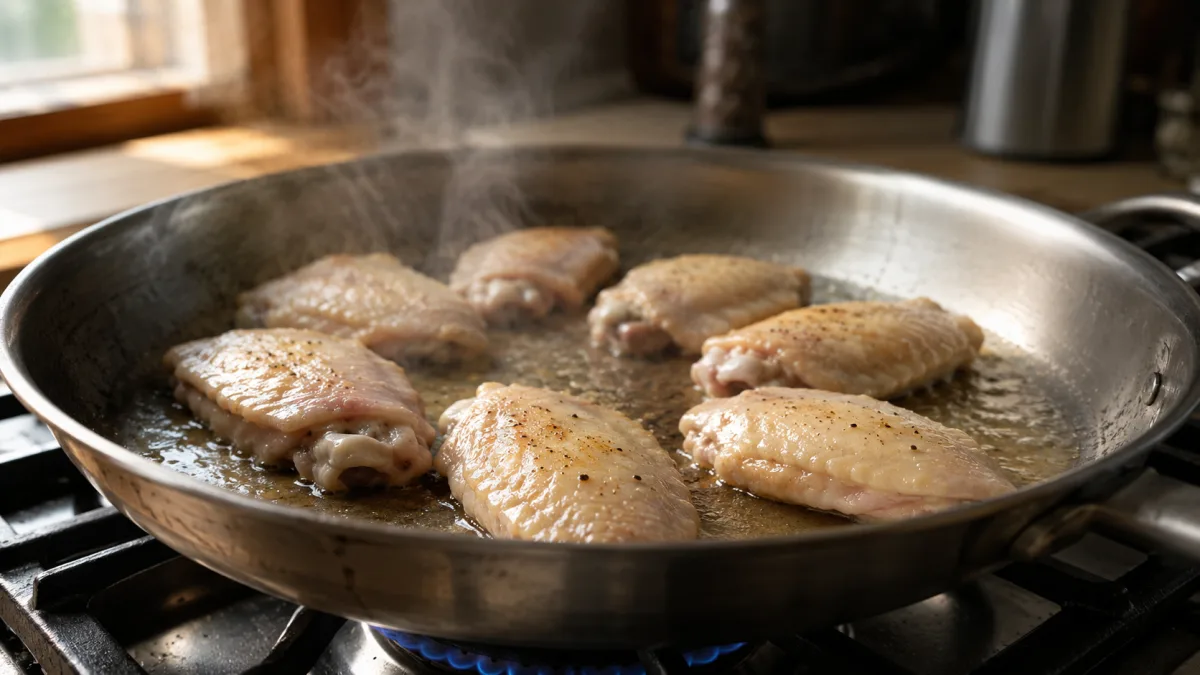
The recipe moves through three distinct phases: fat rendering, frying, and sauce reduction. Rushing any phase — especially the first — undercuts the result. Read through all the steps before starting, because the sauce needs to be ready before the wings finish frying.
- Prep the wings: Pat them thoroughly dry with paper towels. Surface moisture is the enemy of crispy skin. Salt lightly on both sides and leave at room temperature while you prepare the sauce — about 10 minutes is enough.
- Make the sauce base: Combine water, Shaoxing wine, palm sugar, soy sauce, mirin, oyster sauce, ginger, garlic, cinnamon, lemongrass, star anise, and Sichuan peppers in a saucepan. Bring to a boil, stirring to dissolve the sugar, then remove from heat. The sauce will finish cooking later in the pan with the wings.
- Start the rendering: Add vegetable oil to your widest pan or wok over low heat. Arrange wings skin-side down in a single layer. Cover with a lid and cook undisturbed for about 20 minutes. You will hear a quiet sizzle and see fat pooling in the pan. Resist the urge to turn up the heat — patience here is what separates genuinely crispy skin from merely browned skin.
- Fry to golden: Once the skin looks visibly thinner and a shallow pool of rendered fat sits in the pan, raise the heat to medium. Fry skin-side down until deeply golden-brown, about 4 to 6 minutes. Turn and fry the underside for 5 minutes. The wings should be nearly cooked through at this stage.
- Add the sauce: Pour the sauce into the pan. Scrape the bottom with your wooden spoon to incorporate any browned bits — that fond adds depth to the finished glaze. Cover and simmer for 10 minutes.
- Reduce the glaze: Uncover. Turn the wings skin-side down and continue simmering until the sauce reduces to a thick, syrupy consistency, about 20 more minutes. Watch carefully during the last few minutes; the high sugar content means the sauce can catch and burn quickly once it thickens past a certain point.
- Finish and serve: Turn the wings in the sauce to coat all surfaces. Use a pastry brush to work the glaze into the joints and crevices. Sprinkle with toasted sesame seeds and serve immediately.
How to know when the wings are fully cooked
The USDA sets the safe minimum internal temperature for all poultry at 165°F (74°C). For chicken wings, insert an instant-read thermometer into the thickest part of the wingette or drumette, keeping the probe away from bone — bone conducts heat differently from muscle tissue and will return a falsely high reading. A clean 165°F at the thickest point means harmful bacteria have been destroyed.
If you do not have a thermometer, two visual cues together give reasonable confidence: the juices run clear (not pink) when you pierce the meat at the joint, and the meat pulls away from the bone at the knuckle without resistance. Both are useful signals, but neither is as reliable as a probe. The 20-minute uncovered simmer in Step 6 goes a long way toward ensuring all wings reach temperature simultaneously, since they are spending an extended period in near-boiling liquid.
Wings vary in size. Larger wings from older birds may need a few extra minutes. If your thermometer reads below 165°F after the sauce has already reduced, add a small splash of water to the pan, cover it, and continue cooking at medium-low until all wings hit temperature.
Variations and serving suggestions
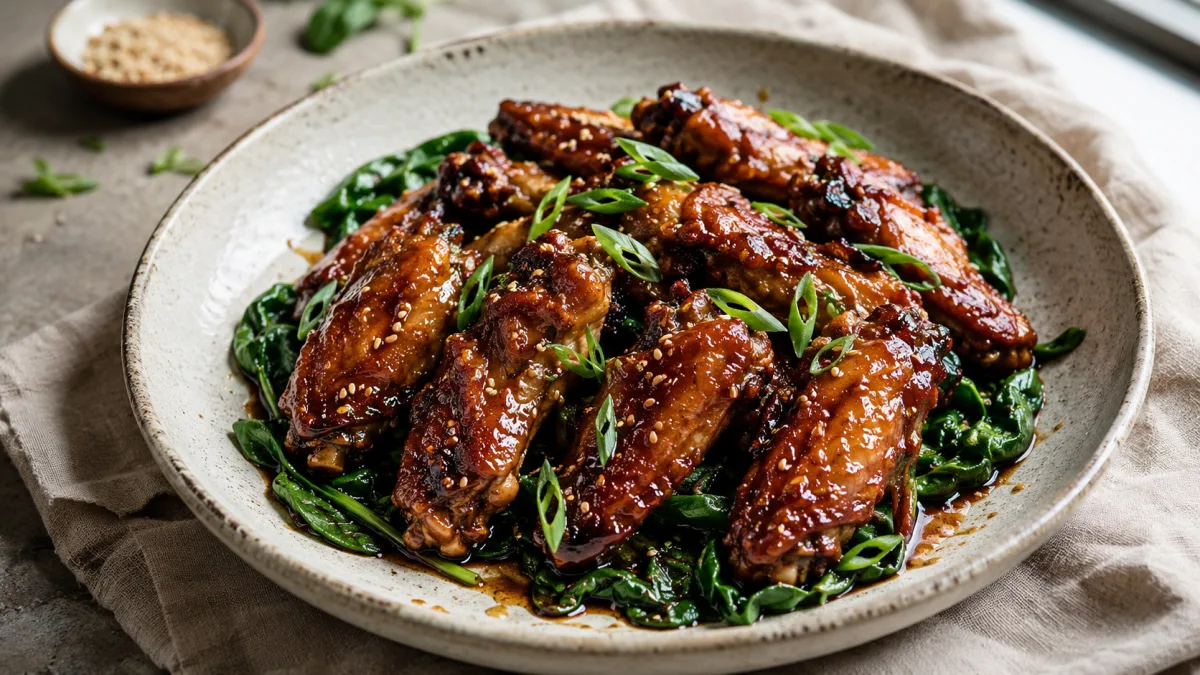
The sauce takes substitutions well. For a deeper color and slightly richer finish, swap one tablespoon of light soy for dark soy — it adds caramel richness and a darker lacquer without significantly changing the salt level. If Sichuan peppers are unavailable, a small pinch of white pepper delivers mild heat; it won't replicate the numbing tingle that comes from hydroxyl-alpha-sanshool in Sichuan peppercorns, but it keeps the spice note in place.
For an air fryer version, skip the fat-rendering phase. Pat the wings dry, season with salt, and air fry at 400°F (200°C) for 22–25 minutes, flipping halfway. Make the sauce separately in a small saucepan, reduce until syrupy, then toss the cooked wings through it just before serving. The rendered-fat depth won't be there, but the glaze still delivers. A 3-minute pass under a high broiler after tossing in the sauce caramelizes the exterior further if you want extra char.
For plating, pile the wings on a thick bed of fresh spinach — the leaves wilt slightly under the residual heat and absorb the overflow glaze. Scatter thinly sliced spring onion tops across the pile for color and a mild allium note. These wings sit well alongside a homemade Asian seasoning mix for dipping, or follow them with the Easy Yugoslavian Chicken Recipe if you are cooking for a large group. For a wider spread, the flavor profile pairs naturally with the Grilled Whole Duck Recipe.
Frequently Asked Questions
Can I use regular cooking wine instead of Shaoxing wine?
The "Chinese cooking wine" sold in many Western supermarkets has salt added to classify it as a cooking ingredient rather than an alcoholic beverage. Using it here will throw off the salt balance of the sauce significantly. Dry cooking sherry is the best substitute — it shares the oxidized, nutty depth of Shaoxing wine without the extra salt. Mirin alone is not a good swap; it is far sweeter than Shaoxing and would make the sauce cloying without reducing the palm sugar quantity to compensate.
What part of the chicken wing should I use — whole wings or pre-cut?
The recipe calls for whole wings, which you can leave intact or separate at the joints into drumettes and wingettes (flats) before cooking. Pre-cut pieces work perfectly and are often easier to source. Whole wings take slightly longer to render because there is more mass, but the process is the same. Skip the wing tips — they have almost no meat and tend to burn during the long reduction phase.
Why does the recipe start on low heat instead of a hot pan?
Starting cold on low heat is the rendering phase. The goal is to melt the subcutaneous fat stored beneath the skin before the exterior browns. Drop wings into a hot pan and the skin proteins seize immediately, trapping the fat inside and producing a greasier, less crispy result. The low-heat start takes patience — about 20 minutes — but produces a substantially crispier skin because the fat has already vacated by the time high heat hits.
Can I make the sauce ahead of time?
Yes. The sauce base from Step 2 can be prepared up to two days ahead and refrigerated. Bring it to room temperature before adding it to the pan in Step 5. Do not pre-reduce it separately — it needs the chicken drippings and the browned fond from the pan to build its full depth of flavor.
Is there a way to make this without alcohol?
Replace the Shaoxing wine with chicken stock. The fermented rice-wine aromatics will be absent but a good stock adds body and savory depth. Omit the mirin and increase the palm sugar by about one tablespoon to compensate for the missing sweetness. The sauce will be less complex but still carries real flavor from the star anise, cinnamon, ginger, and lemongrass.
What is the best way to reheat leftover wings without losing the glaze?
Reheat in a covered pan over low heat with a tablespoon of water — the steam loosens the glaze without burning it. An air fryer at 375°F for 3 minutes crisps the skin back up nicely; brush with any reserved sauce immediately after. Store leftovers in an airtight container in the refrigerator for up to 3 days. The USDA recommends reheating cooked poultry to an internal temperature of 165°F before eating.

Timothy Davidson
Edits step-by-step general-interest guides for clarity, realistic limits and source verification.




Leave a reply
Replying to