
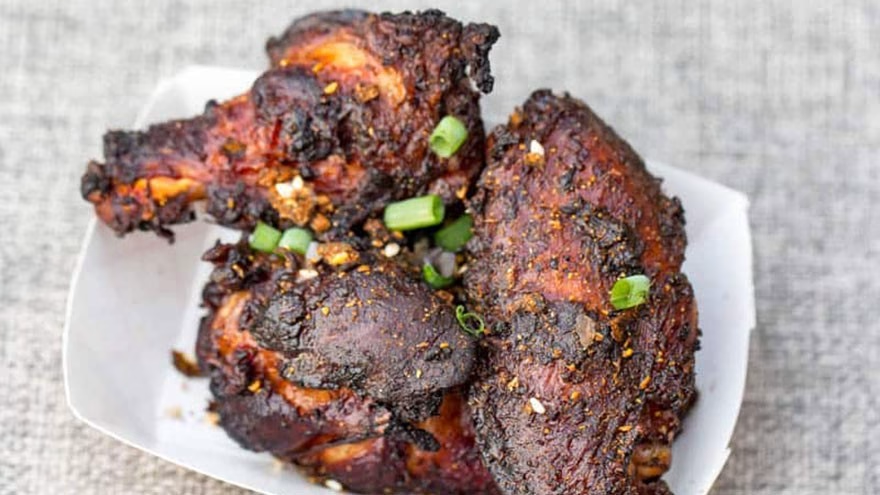
Yugoslav cooking was never one cuisine — it was six republics, two autonomous regions, and centuries of layered influence from the Ottoman Empire, Austro-Hungarian rule, and the Adriatic coast all pressing their marks onto a single table. Chicken prepared with walnut sauce sits squarely in that Ottoman inheritance: the technique of grinding nuts into a thickened, garlicky sauce traveled north and west through the Balkans as the empire expanded, leaving close cousins in Turkish, Bosnian, and Serbian kitchens alike. This easy Yugoslavian chicken recipe — roasted whole and blanketed in a butter-roux walnut sauce — is straightforward to execute and deeply satisfying once you understand what each step is actually doing.
The Dish and Its Balkan Roots
The pairing of poultry and crushed walnuts has roots in Caucasian cooking that migrated into Ottoman imperial kitchens by the 17th century. From Constantinople, the technique spread into the Balkans: Bosnia adopted it into begova čorba territory, Serbia folded walnut paste into sweets and festive meat dishes, and pockets of similar preparations appeared across the region wherever Ottoman influence ran deep. The Yugoslavia that existed from 1945 to 1991 united six republics — Slovenia, Croatia, Bosnia and Herzegovina, Serbia, Montenegro, and North Macedonia — each with its own cooking vocabulary, yet all sharing that underlying Ottoman grammar of spiced meats, ground nuts, garlic, and slow-cooked gravies.
This particular recipe reads like a home cook's adaptation of that tradition: a whole bird roasted covered in a little water, then sauced with a butter-and-flour roux extended with ground walnuts and pan drippings. The format is familiar to any Balkan household cook. The result is a rich, deeply savory dish that stands on its own against a simple salad — as the original author wisely noted, a small portion goes a long way.
Ingredients and What They Each Contribute
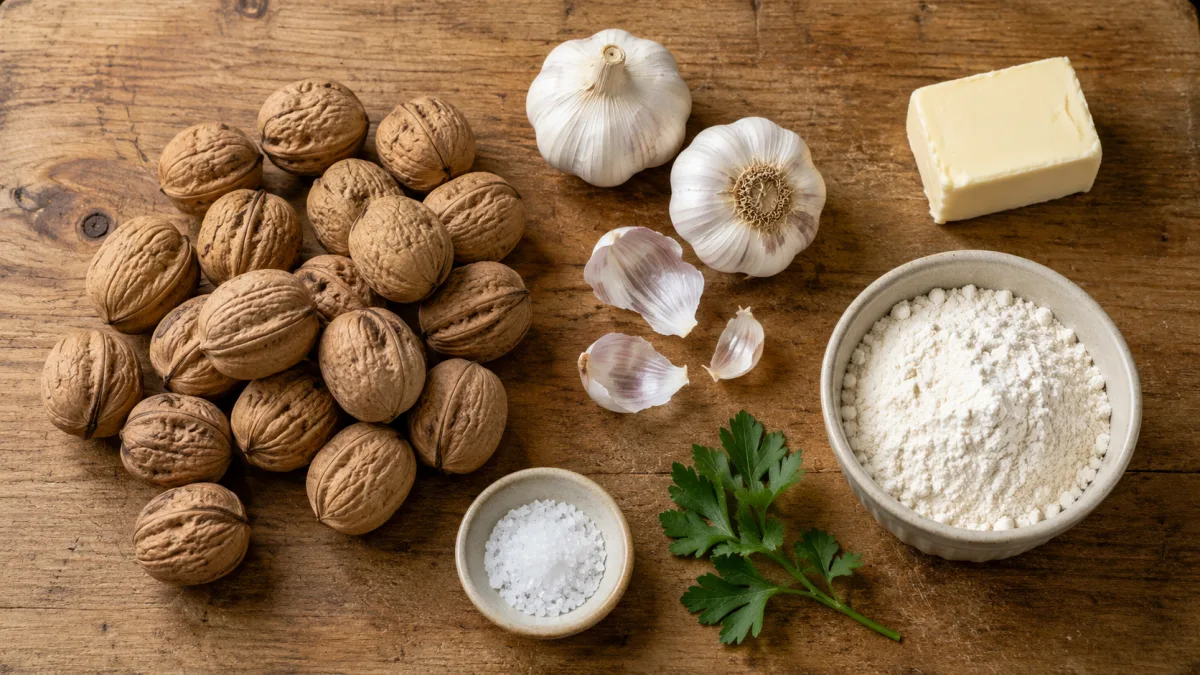
The ingredient list is short, which makes quality count. Each component has a structural role in the final dish, not just a flavor role.
- 1 kg (2.2 lbs) whole chicken — a broiler-fryer in the 2–2.5 lb range works well; the covered roasting method suits smaller birds that cook through in 50–55 minutes at 350°F (175°C).
- 500 g (about 4 cups) shelled walnuts, ground — this is the backbone of the sauce. Ground, not merely chopped: the walnut oils release into the butter base and thicken the sauce naturally. Buy fresh walnuts; stale ones carry a sharp bitterness that no amount of garlic will hide.
- 40 g (3 tablespoons) unsalted butter — forms the fat base of the roux. Salted butter can be used but dial back any added salt.
- 20 g (2½ tablespoons) all-purpose flour — the thickener. Combined with butter in equal parts by volume, it creates a blond roux that keeps the sauce from breaking when the chicken drippings are added.
- 50 g (about ¼ cup) finely grated garlic — grated, not minced. Grating breaks cell walls more completely, releasing allicin into the sauce rather than leaving distinct pieces that could burn during cooking. This quantity is bold; reduce to 30 g if you want the walnut flavor to dominate more clearly.
- Salt and black pepper — season the bird generously before roasting; the drippings that form in the pan will carry that seasoning directly into the sauce.
- A sprig of fresh parsley — placed in the roasting pan during cooking, it perfumes the drippings and can be minced and scattered over the finished dish for a fresh green note.
- 1 dl (scant ½ cup) water — added to the covered roasting dish; it steams the bird from below, keeping the breast meat from drying out during the initial 50-minute cook.
Step-by-Step Method
Follow the sequence below closely. The two-stage cooking process — roasting first, then saucing and returning to the oven — is what distinguishes this dish from a simple baked chicken. The sauce needs those few extra minutes in heat to bind and penetrate the cut pieces.
- Preheat your oven to 350°F (175°C). This temperature is confirmed safe by the USDA for whole chicken roasting: a 2.2 lb (1 kg) bird at 350°F takes approximately 1 hour 15 minutes to 1 hour 30 minutes. Use a meat thermometer to verify the thickest part of the thigh reads 165°F (74°C) before removing from the oven — color alone is not a reliable indicator.
- Pat the chicken dry with paper towels. Season generously inside and out with salt and freshly ground black pepper. Place the parsley sprig inside the cavity.
- Set the chicken breast-side up in an oven-proof dish. Pour the water into the base of the dish. Cover tightly with a lid or two layers of foil — the steam is what keeps the breast moist during the long roast.
- Roast covered for 50 minutes, then uncover and check internal temperature. If not yet at 165°F, continue roasting uncovered in 10-minute intervals until the thermometer confirms it is done. Uncovering at the end crisps the skin slightly.
- Remove the chicken. Pour the pan drippings into a small jug and reserve — they are essential to the sauce. Let the chicken rest for 10 minutes before cutting.
- Cut the rested chicken into 8 pieces: 2 drumsticks, 2 thighs, 2 wing portions, and 2 breast halves. Arrange in a single layer in a heatproof baking dish.
- Make the walnut sauce: melt the butter in a saucepan over medium heat. Sprinkle in the flour and stir constantly for 90 seconds — you want a pale blond color, not raw white, not brown. This cooks out the floury taste and starts the roux.
- Add the ground walnuts and grated garlic to the roux, stirring to combine. Pour in the reserved chicken drippings gradually, stirring after each addition to keep the sauce smooth. If the drippings are not enough to reach a pourable consistency, add a splash of warm water.
- Simmer the sauce over low heat for 3–4 minutes, stirring constantly. It should thicken to the consistency of a loose gravy — it will tighten further in the oven.
- Pour the sauce evenly over the arranged chicken pieces. Return the dish to the 350°F (175°C) oven, uncovered, for 5–10 minutes. The sauce will bubble at the edges and set lightly around the chicken. Serve immediately while hot.
The Walnut Sauce Explained
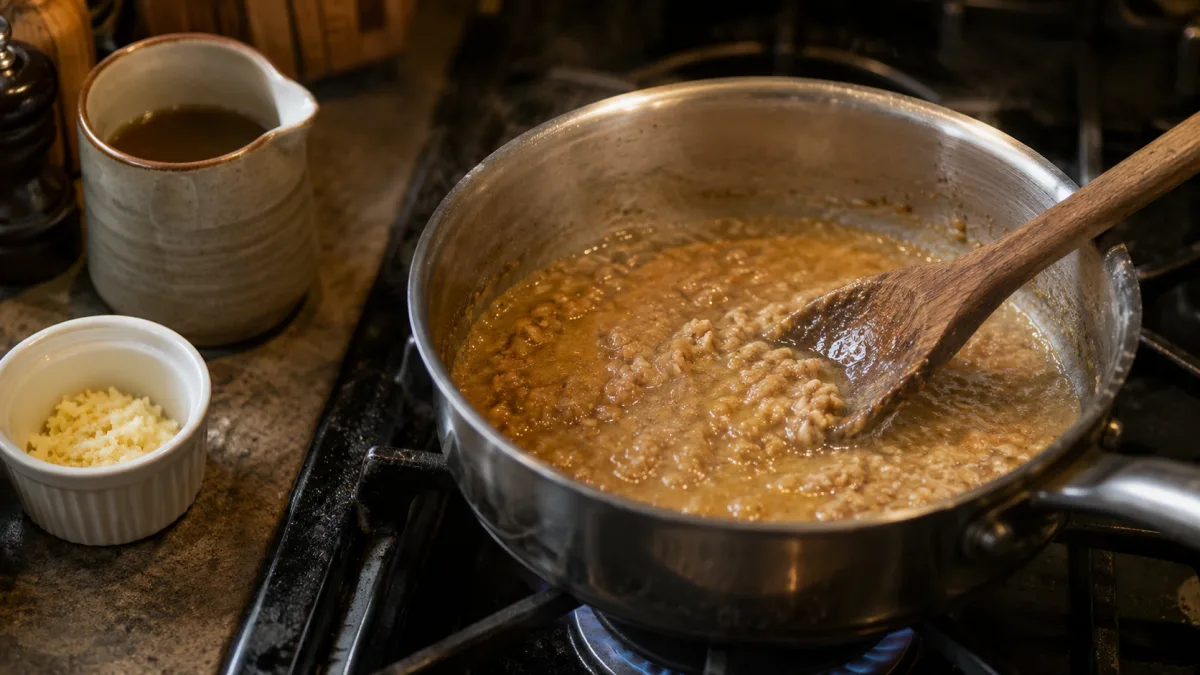
The sauce in this recipe is a roux-based preparation rather than the blended, soaked-bread style of Italian salsa di noci or the cold emulsion used in Circassian chicken. Understanding the mechanics tells you what can go wrong and why.
A roux is equal parts butter and flour cooked together to eliminate the raw starch flavor. After 60–90 seconds over medium heat, the flour granules absorb the butter and begin to swell. At this stage — pale blonde, slightly nutty in aroma — the roux is ready to receive liquid. Add the ground walnuts before the liquid: the walnut oils, released by grinding, will combine with the butter-flour matrix to create a more cohesive emulsion. Then add liquid gradually. Drizzle the drippings in 2–3 tablespoons at a time, whisking after each addition. This prevents lumps from forming, which happen when cold liquid hits a dry roux all at once.
Ground walnuts add more than flavor. They contribute tannins and oils that interact with the butter fat to produce a sauce with significant body — this is why the dish is rich enough that, as the original recipe suggests, a modest portion served with a light salad is often exactly right. If the sauce seems too thick after adding all the drippings, a tablespoon of warm water loosens it without diluting the walnut flavor.
The garlic goes in with the walnuts, not at the end. Raw garlic added to a finished sauce has a sharp, almost medicinal quality. Cooking it in the roux — even the 3–4 minutes of simmering — mellows the allicin compounds and integrates the garlic as a background note rather than a foreground punch. If you grate rather than mince, the garlic disperses evenly through every tablespoon of sauce.
Serving Suggestions
This is a rich main course and does not need much accompaniment to be complete. A simple green salad dressed with lemon juice and olive oil cuts through the heaviness of the walnut sauce effectively. Crusty white bread — the kind that can absorb sauce from the pan — is the traditional Balkan accompaniment; in Serbian and Croatian households, a thick slice of pečeni kruh (baked bread) alongside a meat dish is standard.
For a fuller Balkan-style meal, consider starting with a light broth-based soup, as a first course before the chicken. In Yugoslav tradition, lunch — the main meal of the day — often began with something liquid before moving to meat and vegetables. If you want a starchy side, plain boiled potatoes with parsley work without competing with the walnut sauce. Rice absorbs the sauce well, but the dish is heavy enough that a vegetable-focused plate is usually the better call. You might also explore a grilled whole duck recipe for another traditional whole-bird preparation that pairs well with similar accompaniments.
Variations Worth Trying
The core technique — roasted chicken finished in a nut-based sauce — is flexible. A few adjustments shift the dish's character significantly without abandoning the original concept.
- Toast the walnuts first. Spread the shelled walnuts on a baking sheet and place in the 350°F oven for 8–10 minutes before grinding. Toasting drives off moisture, concentrates the oils, and eliminates some of the raw bitterness from the tannins. The sauce gains a deeper, darker flavor. Pull them the moment they smell nutty — another 2 minutes past that point and the oils turn acrid.
- Add paprika to the sauce. A teaspoon of sweet Hungarian or Serbian paprika stirred into the roux with the flour gives the sauce a reddish tint and a gentle earthiness that nudges the dish further into Balkan flavor territory.
- Use bone-in chicken pieces instead of a whole bird. Thighs and drumsticks cut the initial roasting time to 40–45 minutes at 350°F. Confirm 165°F internal temperature. The technique for the sauce is identical.
- Substitute hazelnuts for half the walnuts. Hazelnuts have a sweeter, more delicate flavor. A 50/50 blend softens the intensity of the walnut sauce without eliminating its character — a good option if you find the all-walnut version too assertive.
For those who enjoy exploring global chicken preparations, the Chinese fried chicken wings technique offers an interesting contrast in how different culinary traditions approach the same bird. Similarly, Philippines corned beef is another example of how immigrant and regional cuisines adapt available ingredients into distinctive dishes.
Storage and Reheating
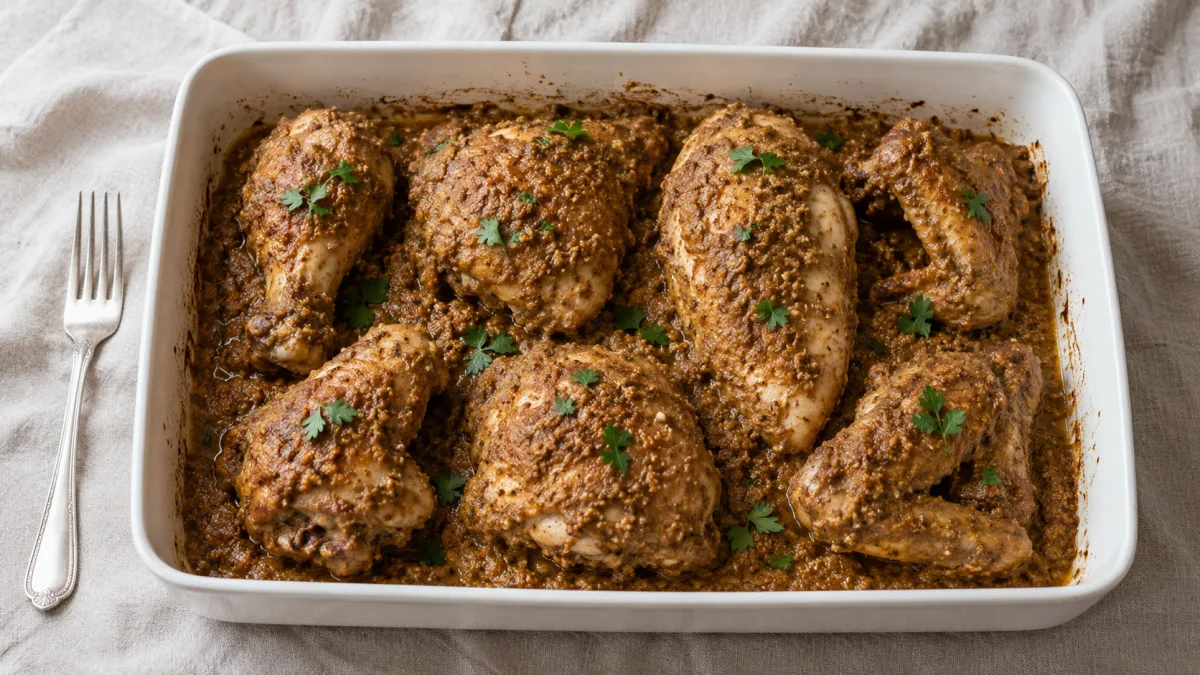
Leftover chicken with walnut sauce keeps well. Transfer pieces and sauce together into an airtight container and refrigerate within two hours of cooking. According to USDA guidelines, cooked chicken remains safe in the refrigerator for 3 to 4 days. The walnut sauce will thicken considerably when cold — this is normal. Reheat gently: place pieces and sauce in a covered oven-proof dish with a splash of water added, then warm at 325°F (163°C) for 15–20 minutes until the chicken reaches 165°F throughout. Avoid microwave reheating if possible; it tends to make the walnuts slightly rubbery and steams the sauce unevenly.
The dish also freezes acceptably for up to 3 months. Thaw overnight in the refrigerator before reheating. The sauce may separate slightly after freezing; stir it back together over low heat on the stovetop before serving.
If you enjoy rich, make-ahead dishes like this one, the easy clambake recipe is another one-pot preparation worth bookmarking, and the asparagus rolls recipe makes a light starter that would pair well with the chicken for a dinner party menu.
Frequently Asked Questions
What temperature should I roast the chicken to for this Yugoslavian recipe?
The oven should be set to 350°F (175°C). More importantly, the internal temperature of the chicken — measured at the thickest part of the thigh, away from bone — must reach 165°F (74°C). This is the USDA-established minimum safe internal temperature for all poultry. The original recipe omitted the oven temperature; 350°F is confirmed appropriate by USDA roasting charts for a bird in this weight range.
Can I use pre-ground walnut flour instead of grinding whole walnuts?
You can, with a caveat: commercial walnut flour is often very finely processed and dried, which affects how it behaves in the roux. Whole walnuts ground in a food processor retain more oil and produce a coarser, oilier paste that integrates more naturally with the butter. If using walnut flour, reduce the quantity by about 20% and expect a slightly lighter-colored, drier sauce that may need more drippings to reach the right consistency.
Why does the recipe call for so much garlic — 50 grams seems like a lot?
It is a significant quantity, approximately 10–12 large cloves. In Yugoslav and broader Balkan cooking, garlic is used assertively — it is not background seasoning here, it is a primary flavor alongside the walnut. The cooking process (simmering in the roux for 3–4 minutes, then returning to the oven) mellows the raw bite considerably. If you are serving guests with garlic sensitivity, 30 g is a reasonable starting point that still keeps the dish recognizably Balkan in character.
Is this dish related to Circassian chicken?
The two dishes share an ancestor. Circassian chicken — a Turkish preparation of poached chicken blanketed in walnut-bread sauce — entered Ottoman imperial kitchens in the 17th century and spread across the territories the empire controlled, including the Balkans. This Yugoslav version uses a butter-roux method rather than a bread-thickened emulsion, and the chicken is roasted rather than poached, but the underlying logic — poultry plus ground walnuts plus garlic — comes from the same culinary lineage.
What can I serve alongside this dish to balance the richness of the walnut sauce?
The walnut sauce is dense and filling, so contrast is the goal. A crisp green salad with a tart lemon dressing is the most effective pairing. Plain boiled or roasted potatoes work well as a starch — they absorb the sauce without adding competing richness. Avoid cream-based sides or heavy grain dishes; they tip the meal into uncomfortable territory. In summer, sliced tomatoes and cucumbers with a little salt and vinegar — a standard Balkan meze accompaniment — cut through the fat cleanly.
Can I make the walnut sauce ahead of time?
Yes, with care. Prepare the sauce up to 24 hours in advance and refrigerate it separately. Reheat over low heat, adding a tablespoon or two of warm water to loosen it, stirring constantly — walnut sauces thicken significantly when cold. Do not boil it after reheating; sustained high heat can break the emulsion and produce a greasy, separated result. Roast the chicken and pour the pre-made (reheated) sauce over the cut pieces before the final 5–10 minutes in the oven.
How do I prevent the sauce from becoming lumpy?
Three habits prevent lumps. First, cook the roux for a full 90 seconds before adding anything — undercooked flour clumps when it contacts liquid. Second, add the drippings in small increments, stirring after each addition before adding more. Third, make sure the drippings are warm, not cold from sitting on the counter; a large temperature difference between the roux and the liquid causes the starch to seize. If lumps do form, pass the sauce through a fine-mesh strainer or give it 20 seconds with an immersion blender before pouring over the chicken.

Chiara Bradshaw
Covers education, culture and creative topics with an emphasis on readable explanations and verifiable references.




Leave a reply
Replying to