
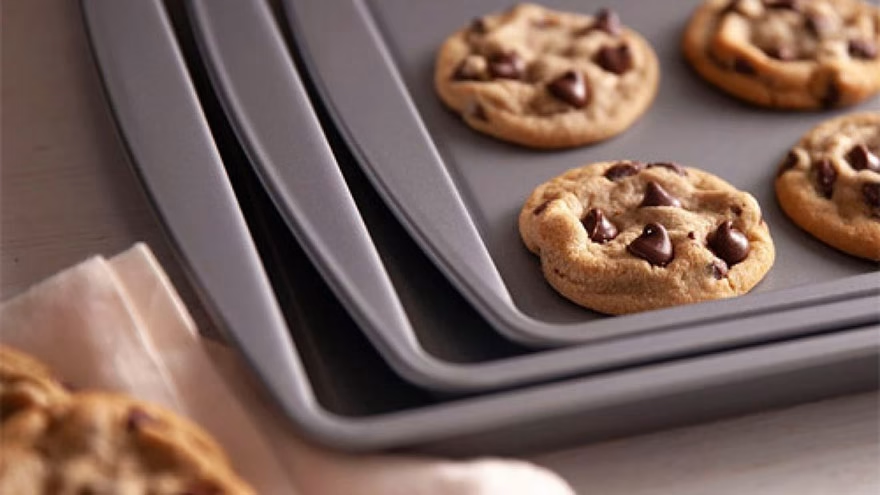
A good sheet pan can make the same cookie dough look like two different recipes. Dark metal pushes browning, thin pans warp, insulated pans slow the bake, and an oversized pan blocks air in a small oven. Choosing baking sheets is less about buying the prettiest set and more about matching metal, size, rim style, and finish to the food you actually make.
What size baking sheet should most home cooks buy?
For most home kitchens, a half-sheet pan is the workhorse because it gives enough surface area for cookies, vegetables, chicken pieces, granola, slab cakes, and freezer prep. King Arthur Baking describes the common half-sheet pan as 13 by 18 by 3/4 inches and recommends choosing a pan that allows 2 inches of clearance on all sides for air circulation.
The King Arthur baking pan guide also warns that a sheet should be substantial enough not to warp, buckle, or create hot spots at high heat. That matters more than a brand name printed on the bottom.
Measure your oven before buying a stack of full-size or extra-large pans. If the pan nearly touches the oven walls, heat cannot move evenly around the food. Cookies near the edge may overbrown while the center stays pale.
How are sheet pans and cookie sheets different?
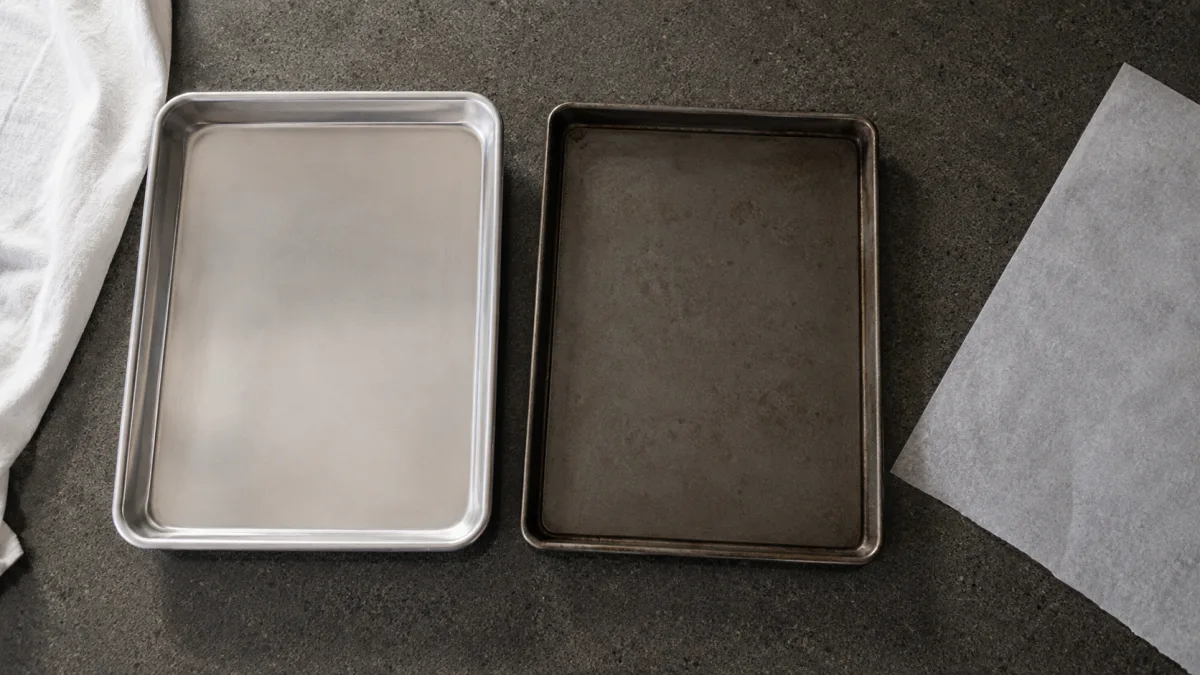
Sheet pans usually have rims on all sides. That rim is useful for roasting vegetables, baking bacon, catching juices under a pie, carrying dough, or moving a batch of cookies safely. A rimmed pan is the better first buy because it handles both baking and savory cooking.
Cookie sheets are flatter and often have one open side so cookies can slide off more easily. That can help with delicate cookies or large batches, but the open edge is less useful for oil, sauce, or vegetables. If storage space is tight, buy rimmed half-sheet pans first and add a cookie sheet only if your baking style needs it.
If you make display trays or large dessert tables, pan shape affects presentation as much as baking. Livecub's cookie display guide is a separate planning problem, but evenly baked cookies are the starting point for any good display.
Which baking sheet material works best?
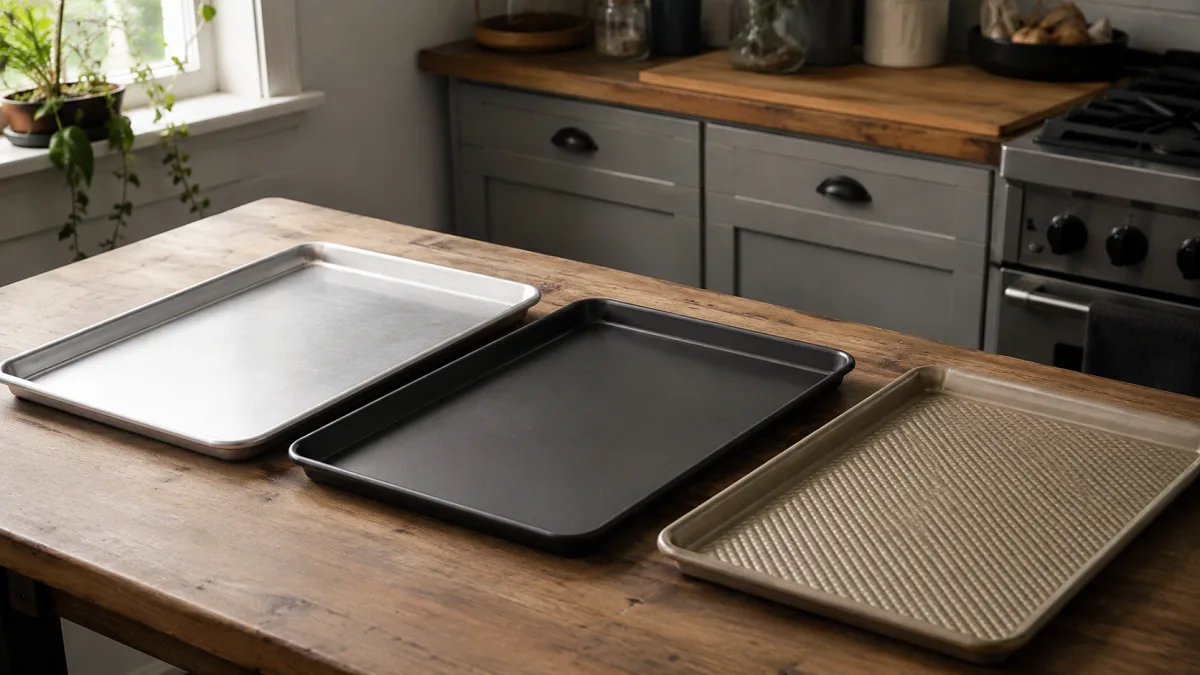
Material changes how quickly the pan absorbs and moves heat. The right choice depends on whether you bake pale cookies, crisp roasted vegetables, pastry, or sticky sheet-pan dinners. No single pan does every job perfectly.
Natural aluminum
Natural aluminum is the safest default for cookies and general baking because it heats quickly and evenly without an added coating. Light-colored aluminum helps avoid scorched cookie bottoms and gives you a clear view of browning. It can discolor with use, but discoloration does not make it useless.
Aluminized steel
Aluminized steel is heavier and often stiffer. It can resist warping better than a flimsy pan, though weight and coating quality vary. It is a good option for frequent roasting if you want a pan that feels solid in the hand.
Nonstick coated pans
Nonstick pans release sticky foods easily, but many are darker than bare aluminum. Dark surfaces absorb heat faster, so cookies may brown too quickly underneath. If you already own a dark nonstick pan, reduce oven temperature by about 25 degrees Fahrenheit for delicate cookies and watch the first batch closely.
Insulated cookie sheets
Insulated sheets make it harder to burn cookie bottoms, but they also slow browning. That can leave cookies dry by the time the tops look done. They are useful for very pale cookies, not for general roasting or crisp edges.
Why do color and thickness change baking results?
Pan color acts like a heat dial. Shiny, light pans reflect more heat and bake more gently. Dark pans absorb heat and push browning faster. Thick pans hold heat better, while thin pans respond quickly but may bend when they move from a cold sink to a hot oven.
Warping is not just annoying. When a pan twists, oil slides to one corner, cookie dough spreads unevenly, and roasted vegetables stop sitting flat against hot metal. A pan that pops in the oven is telling you it may be too light for the work you ask from it.
For recipes where texture matters, test one pan at a time. A tiramisu may not use a sheet pan directly, but baking ladyfinger-style components or sponge layers still depends on even heat; Livecub's tiramisu guide shows how small texture errors affect the finished dessert.
Are food-contact coatings and old pans safe?
Food-contact safety is a separate question from baking performance. The FDA says a food contact substance includes cookware, food preparation surfaces, and substances used to make cookware non-stick. The FDA food contact materials page explains that qualifying substances must be authorized for their intended use before marketing in the United States.
Use pans according to their labels. Do not cut directly on nonstick coatings, use metal tools if the manufacturer forbids them, or place a coated pan under a broiler unless the instructions allow it. A scratched coating does not always mean panic, but a peeling, flaking, or unknown coating is a reason to retire the pan.
Skip mystery bakeware if it has no manufacturer, no material information, and a coating you cannot identify. Bargain pans are not a bargain if they warp, shed coating, or bake so unevenly that you replace them after a month.
How many baking sheets do you need?
Two matching half-sheet pans are enough for most cooks. Matching pans let you rotate trays without changing the bake because one pan is darker or thinner than the other. Add a quarter-sheet pan for small batches, toaster ovens, crumb coating, freezing berries, or holding prepped ingredients.
For savory cooking, a rimmed sheet pan with a wire rack adds range. The rack lifts food away from liquid, helps air move around wings or breaded cutlets, and lets roasted meats rest without sitting in juices. If you cook goose, duck, or fatty cuts, a rack and rimmed pan are more useful than a flat cookie sheet; Livecub's goose cooking guide is a good example of why rendered fat needs a safe place to go.
How should baking sheets be cleaned and stored?
Wash pans according to their material and coating. Bare aluminum often does best with hand washing, a soft sponge, and patience. Dishwasher detergent can dull aluminum. Nonstick pans need gentler tools because scratches shorten their useful life.
Brown stains are not failure. A well-used bare sheet pan develops marks from oil, sugar, and high heat. Scrub sticky residue and burned food, but do not expect a working pan to look new forever.
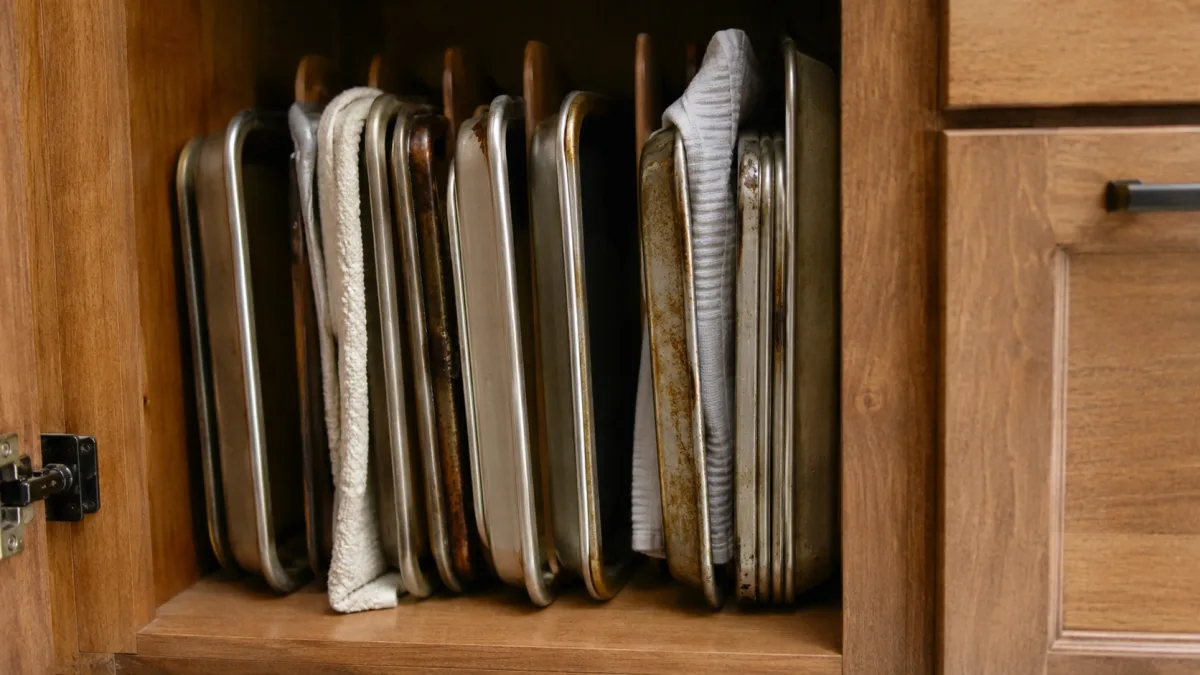
Store sheets upright or nested with a towel between delicate coatings. Do not stack heavy cast-iron or ceramic dishes on top of thin sheet pans. A bent rim can make the pan rock on the oven rack.
What baking sheet should you use for each job?
Use a light aluminum half-sheet pan for most cookies, scones, granola, and roasted vegetables. Use parchment when sticking or cleanup matters. Use a dark pan only when you want stronger browning or are willing to adjust temperature and timing.
For sticky sauces, line the pan or choose a rimmed pan you do not mind scrubbing. Livecub's stir-fry sauce guide is stovetop-focused, but the same sugar and salt logic applies to sheet-pan glazes that can burn at the edges. For frosting-heavy baking days, fudge icing also benefits from pans that cool cake layers evenly before decorating.
Buy slowly. One sturdy half-sheet pan that fits your oven beats a five-piece set where two pans warp and one never leaves the cabinet.
Frequently Asked Questions
Is aluminum or nonstick better for baking sheets?
Light aluminum is usually better for cookies and general baking because it browns more evenly. Nonstick helps release sticky foods, but darker coatings can overbrown bottoms.
Why do my baking sheets warp in the oven?
Thin metal expands unevenly when heat changes quickly. Heavy-gauge pans resist that movement better, and avoiding sudden cold-water contact while hot can help.
Can I roast vegetables on a cookie sheet?
A rimmed sheet pan is safer. Vegetables release moisture and oil, and a flat cookie sheet can spill when you move it.
Do stained baking sheets need to be replaced?
No, not if the pan is bare metal, clean, flat, and not shedding material. Replace pans that warp badly, flake coating, rust deeply, or no longer sit level.
Start with two sturdy, light-colored half-sheet pans that fit your oven. Learn how your recipes brown on them before buying specialty shapes.

Timothy Davidson
Edits step-by-step general-interest guides for clarity, realistic limits and source verification.




Leave a reply
Replying to