
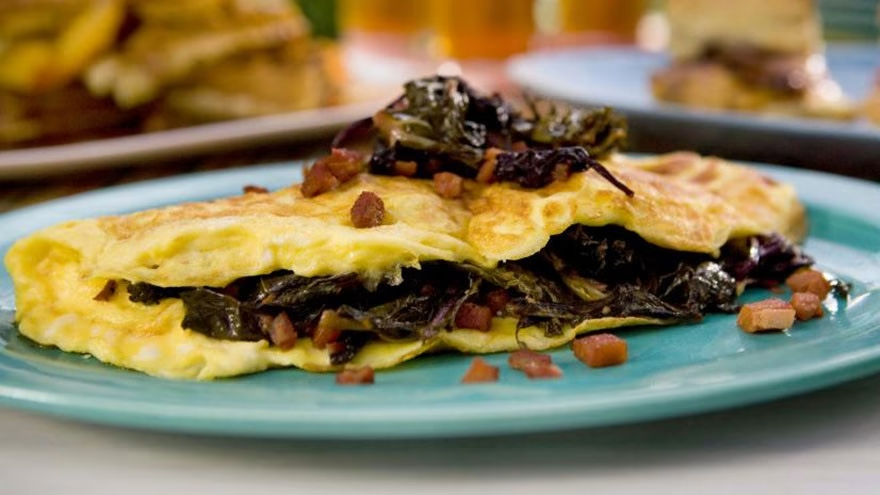
Collards can make an omelet feel sturdy instead of watery, but only if the greens are cooked before the eggs set. A good collard greens omelet chops the leaves small, softens the stems, drives off moisture, and keeps the eggs gentle enough to fold. Rush those steps and the filling leaks into the pan while the eggs turn rubbery.
What makes collard greens work in an omelet?
Collards are hearty leafy greens with smooth leaves and firm stems. USDA SNAP-Ed says they are in season in spring, fall, and winter, and can be added to soups, stir-fries, pasta dishes, or sauteed for a weeknight side. That sturdiness is why they can handle a skillet before meeting eggs.
The USDA SNAP-Ed collard greens page also recommends refrigerating collards in a plastic bag for up to 5 days. Use them while the leaves are still firm. Limp greens cook, but they lose the clean bite that makes the omelet taste fresh.
If you like using greens beyond breakfast, Livecub's asparagus rolls recipe is a different dish, but it follows the same rule: vegetables need their own timing before they meet a delicate wrapper or egg base.
What ingredients do you need?
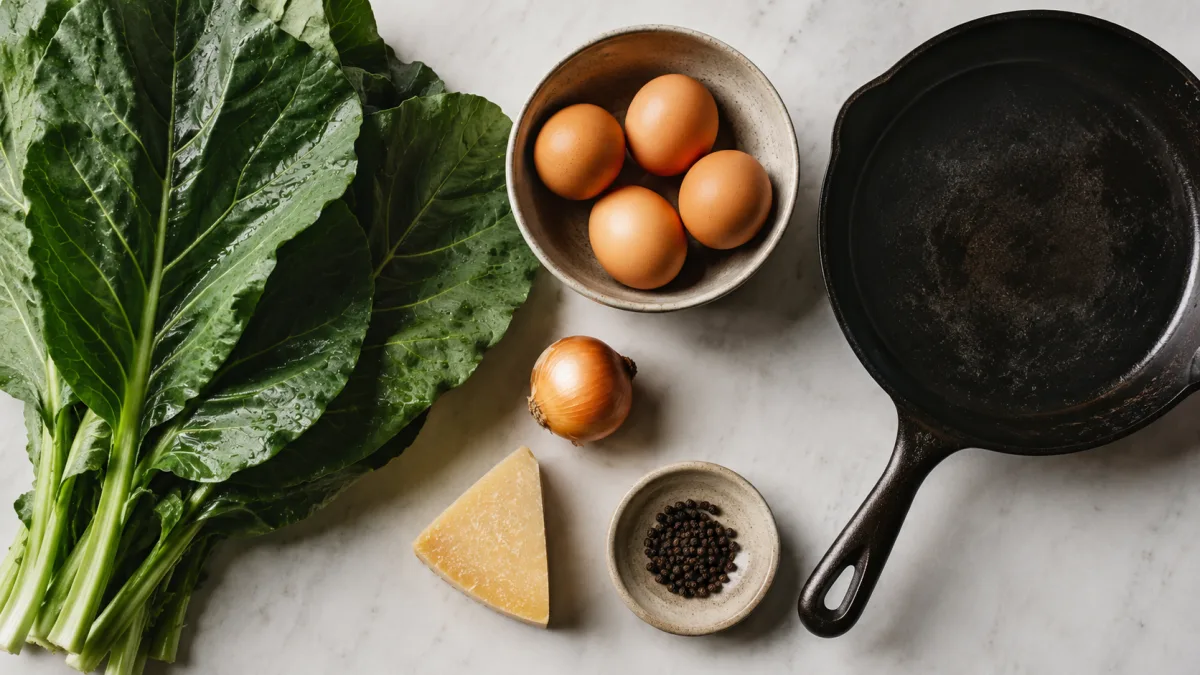
This recipe makes one large omelet or two smaller ones. The filling is flexible, but the collards should be cooked before the eggs go in. That keeps the omelet tender instead of steamed.
- 3 large eggs
- 1 packed cup finely chopped collard greens, stems removed or minced small
- 1 tablespoon water or milk
- 1 teaspoon olive oil or butter, plus more if needed
- 2 tablespoons minced onion or scallion
- 1 small garlic clove, minced
- 2 tablespoons shredded cheddar, feta, or goat cheese
- Salt, black pepper, hot sauce, lemon juice, or vinegar to finish
Chop the collards finely. Long ribbons pull against the folded eggs and make the omelet tear. Small pieces spread through the filling and cook faster.
How do you prep collards for an omelet?
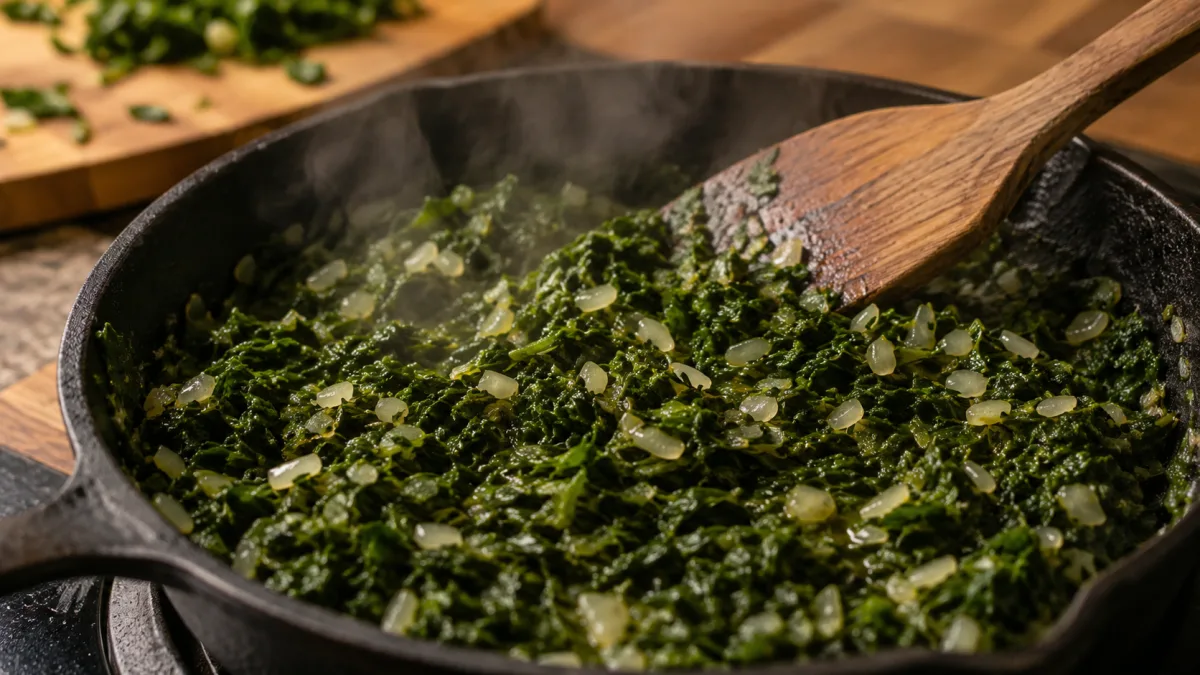
Wash the leaves, dry them, and remove thick stems. Tender stems can be minced and cooked with onion; tough stems should be saved for stock or discarded. Stack the leaves, slice thinly, then chop across the ribbons so the pieces are small enough to fold.
Heat oil or butter in an 8- or 10-inch nonstick or well-seasoned skillet. Add onion and minced stems first, then cook until they soften. Add garlic for the last 30 seconds. Add the chopped leaves with a pinch of salt and cook until the greens darken, soften, and stop releasing visible moisture.
Moisture control is the recipe. If the collards still look wet, keep cooking for another minute before adding eggs. Wet greens make the omelet weep and thin the egg layer.
How do you cook the eggs safely without overcooking them?
FDA egg safety guidance says fresh eggs can contain Salmonella and that eggs should be refrigerated, handled with clean surfaces, and cooked until yolks and whites are firm. For an omelet, that means set eggs, not a runny center hidden under greens.
The FDA egg safety page says scrambled eggs should not be runny and leftover cooked egg dishes should be refrigerated and used within 3 to 4 days. Keep that in mind if you make several omelets for meal prep.
Whisk eggs with water or milk, salt, and pepper until the whites are fully broken up. Lower the skillet to medium-low, add a little more fat if the pan looks dry, and pour in the eggs. Pull the edges toward the center with a spatula so uncooked egg can flow into the gaps.
What is the best way to fold a collard greens omelet?

When the eggs are mostly set but still glossy on top, spread the cooked collards over one half. Add cheese and any extras, then cover the skillet for 30 to 60 seconds so the top finishes gently. Fold the plain side over the filling and slide the omelet onto a warm plate.
If folding makes you nervous, make a half-moon instead of a tight restaurant roll. A collard greens omelet should eat well before it looks perfect. Torn eggs still taste fine if the filling is seasoned and the eggs are cooked.
Use acid at the end. A few drops of hot sauce, lemon juice, or vinegar brighten collards without making the eggs watery. Add liquid seasoning on the plate, not in the egg mixture.
What can you add to the filling?
Collards like smoke, salt, onion, chile, and tang. Keep add-ins small and already cooked so the omelet does not wait on raw vegetables. The egg layer only needs a short finish.
Cheese
Feta, goat cheese, cheddar, pepper jack, and Parmesan all work. Use a small amount because too much cheese can make the filling heavy. Crumbled cheese spreads more evenly than thick slices.
Protein
Cooked ham, turkey, sausage, leftover chicken, or corned beef can turn the omelet into a larger meal. Livecub's Philippines corned beef recipe is a useful leftover idea if you want a salty, savory filling with greens.
Seasoning
Black pepper, smoked paprika, red pepper flakes, cumin, and garlic all fit. If you want a blend, Livecub's Asian seasoning mix guide can help you think about salt, aroma, heat, and balance rather than dumping in a random spice mix.
What should you serve with it?
For breakfast, serve the omelet with toast, fruit, tomatoes, or roasted potatoes. For brunch, add a small salad or vegetable side. Because collards bring structure, the plate does not need a heavy starch unless you want a bigger meal.
If you are building a brunch spread, a soft side dish such as corn souffle works better than another dense egg dish. Keep the rest of the table lighter if the omelet already has cheese and meat.
How do you store and reheat leftovers?
Omelets are best fresh, but leftovers can work if handled quickly. Cool cooked egg dishes promptly, refrigerate in a shallow container, and use within the FDA's 3 to 4 day window for cooked egg leftovers. Reheat gently so the eggs do not squeeze out moisture.
A microwave works if you use short bursts at low power. A covered skillet over low heat gives better texture. Do not leave cooked eggs on the counter during a long brunch; warm room-temperature eggs are a food safety problem, not a convenience.
Meal prep the filling, not the omelet. Cook chopped collards with onion and seasoning, refrigerate that mixture, then make fresh eggs in the morning. The finished omelet tastes cleaner, and breakfast takes only a few minutes.
What mistakes make a collard omelet tough or watery?
The biggest mistake is adding raw collards directly to the eggs. The greens need time to soften and release water before the egg layer sets. If they cook inside the omelet, the leaves stay chewy and the filling leaks.
The second mistake is using high heat to hurry breakfast. High heat browns the bottom before the top sets, so the omelet tears when folded. Medium-low heat gives the eggs time to firm without turning dry.
The third mistake is overfilling. A small amount of well-seasoned greens tastes better than a stuffed omelet that cannot close. Keep heavy add-ins to a few tablespoons, especially if you use cheese or meat.
Use the pan size to control thickness. An 8-inch skillet gives a thicker omelet for one person, while a 10-inch skillet spreads three eggs thinner and folds more easily around the greens.
Serve it while warm.
Frequently Asked Questions
Can I use frozen collard greens in an omelet?
Yes, but thaw and squeeze them very dry. Frozen greens hold water, and excess moisture makes the eggs loose.
Do collards need to be boiled first?
No. Finely chopped collards can be sauteed directly in the skillet. Tougher leaves or stems may need a little more time before the eggs are added.
Can I make this omelet dairy-free?
Yes. Skip the cheese and use olive oil instead of butter. Add acid, herbs, or hot sauce so the filling still tastes finished.
How do I keep the omelet from tearing?
Use a nonstick or seasoned pan, keep heat moderate, chop the greens small, and fold when the eggs are set but still flexible.
Cook the greens first, keep the eggs gentle, and finish with a small hit of acid. That is the difference between a clean collard omelet and a wet one.

Chiara Bradshaw
Covers education, culture and creative topics with an emphasis on readable explanations and verifiable references.




Leave a reply
Replying to