
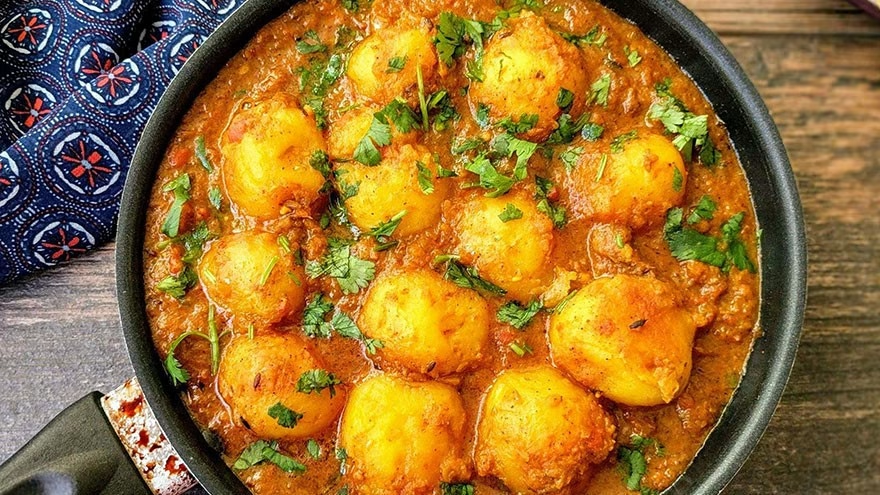
Dum aloo works because the potatoes are not just sitting in sauce; they absorb spice, fat, tang, and heat slowly. The best dum aloo recipe gives baby potatoes enough surface texture to grip the gravy, then cooks the yogurt-based sauce gently so it tastes rounded instead of sharp or split. You can fry the potatoes for the classic texture or roast them for a lighter home version, but the dish still needs patience at the simmer.
What is dum aloo?
Dum aloo is a North Indian potato curry built around small potatoes and a spiced gravy. Many home versions use yogurt, tomato, onion, ginger, garlic, and warm spices. Kashmiri-style versions may lean more heavily on yogurt, fennel, ginger, and chile rather than a tomato-onion base. Restaurant versions often use more oil and cream than a home cook needs.
The "dum" idea points to slow, covered cooking. For potatoes, that means the sauce should simmer gently long enough to season the potato centers. If the gravy only coats the outside, the dish tastes like boiled potatoes with curry on top.
If you enjoy potato dishes across different cuisines, Livecub's Yugoslavian chicken recipe shows how potatoes and sauce can share flavor in a completely different comfort-food direction.
What ingredients do you need for dum aloo?
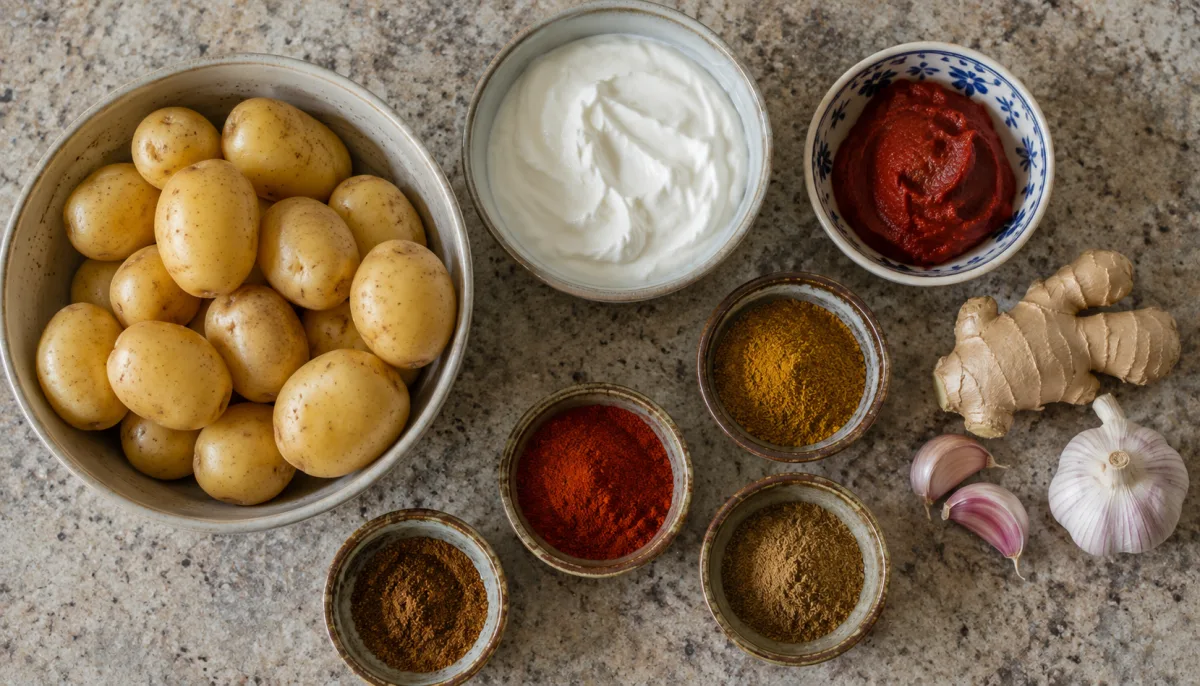
This version keeps the ingredient list practical while preserving the main texture: tender potatoes in a thick, spiced gravy. Use small potatoes if possible. If you have large potatoes, cut them into big chunks so they do not disappear into the sauce.
- 1 1/2 pounds baby potatoes, scrubbed
- 3 tablespoons neutral oil, divided
- 1 cup plain whole-milk yogurt, whisked until smooth
- 1 medium onion, finely chopped or grated
- 2 teaspoons grated ginger
- 3 garlic cloves, minced
- 1 tablespoon tomato paste or 1/2 cup crushed tomato
- 1 teaspoon cumin seeds
- 1 teaspoon ground coriander
- 1/2 teaspoon ground turmeric
- 1 teaspoon Kashmiri chile powder or mild paprika plus cayenne to taste
- 1/2 teaspoon fennel powder
- 1/2 teaspoon garam masala
- 1 to 1 1/2 cups water
- Salt, cilantro, and lemon juice to finish
Whole-milk yogurt is easier to cook than low-fat yogurt because it is less likely to split. Whisk it first and keep the heat low when it enters the pan. If you want a richer sauce, add a spoon of cashew paste rather than more cream.
Measure the spices before the pan gets hot. Dum aloo moves quickly once the onion base is ready, and hunting for turmeric while garlic browns is how the gravy gets harsh. Keep water nearby too, since a spoonful can rescue spices that begin sticking before the yogurt goes in.
How do you prepare the potatoes?
Boil the potatoes in salted water until just tender, then drain them well. Peel them if you want a smoother restaurant-style finish, or leave thin skins on for more texture. Prick each potato a few times with a fork so the gravy can reach beyond the surface.
For the classic texture, shallow-fry the drained potatoes in 2 tablespoons oil until golden in spots. For a lighter version, toss them with oil and roast at high heat until the edges wrinkle and brown. The goal is not deep-fried crunch. It is a dry, textured surface that can hold sauce.
Do not overboil the potatoes. They should yield to a knife but still hold their shape when shaken in a pan. If they crack apart before the gravy stage, the finished dish becomes potato mash in sauce rather than whole potatoes with seasoned centers.
FDA guidance on potato cooking notes that soaking raw potato slices before frying or roasting can reduce acrylamide formation and that cooking to golden yellow rather than dark brown helps. That advice is most relevant to chips and fries, but the same FDA potato preparation guidance is a useful reminder not to chase dark, bitter browning.
How do you make the yogurt gravy without curdling?
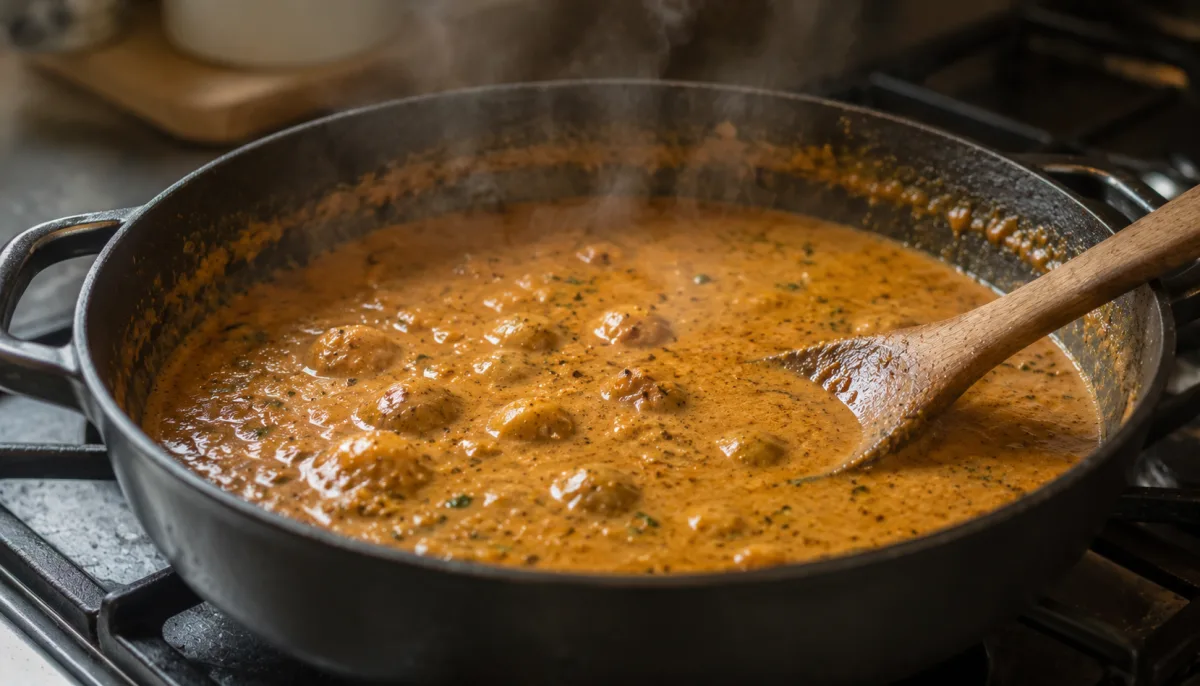
Heat 1 tablespoon oil in a heavy pan. Add cumin seeds and let them sizzle briefly. Add onion and cook until the raw smell is gone and the onion turns golden at the edges. Add ginger and garlic, then cook for about a minute. Stir in tomato paste, coriander, turmeric, chile, fennel, and salt.
Lower the heat before adding yogurt. Add the whisked yogurt a spoonful at a time, stirring constantly. Once the yogurt is in, keep the pan at a gentle bubble rather than a hard boil. If the sauce looks tight, add a splash of water.
Curdling usually comes from heat shock. Cold yogurt hitting a very hot pan can split. Low heat, whisked yogurt, and gradual addition make the sauce much more forgiving.
The gravy should taste slightly stronger than you want before the potatoes go back in. Potatoes mute salt, chile, and acidity as they simmer. If the sauce tastes perfect before the potatoes, it may taste quiet after 20 minutes.
How long should dum aloo simmer?
Add the browned potatoes and enough water to loosen the gravy. Cover the pan and simmer gently for 15 to 20 minutes, stirring once or twice so nothing sticks. The potatoes should taste seasoned in the center, and the gravy should cling without becoming pasty.
Finish with garam masala, chopped cilantro, and a little lemon juice if the sauce tastes flat. Rest the dish for 10 minutes before serving. Potatoes absorb flavor as they sit, so dum aloo often tastes better after a short pause.
Resting is part of the recipe, not a delay. The sauce thickens, the surface oil settles, and the potato centers taste less plain. If the pan looks dry after resting, loosen it with hot water by the spoonful instead of adding more oil.
Serve with rice, naan, roti, or a simple vegetable side. If you want a seasoning shortcut for another meal, Livecub's Asian seasoning mix guide is not Indian, but it is useful for thinking about how spice blends need salt, aroma, heat, and balance.
How do you store and reheat dum aloo?
Cool leftovers promptly and refrigerate them in a shallow container. USDA FSIS says leftovers can be kept in the refrigerator for 3 to 4 days or frozen for 3 to 4 months. Reheat gently with a splash of water because potato curries thicken in the refrigerator.
The USDA leftovers guidance is worth following for any cooked potato dish. Cooked potatoes are no longer a dry pantry food; they are moist, cooked food that needs refrigeration.
Do not reheat hard and fast if the gravy contains yogurt. Warm it slowly, stir often, and stop once hot. A high boil can make the sauce grainy.
If the sauce separates after chilling, stir in hot water one spoon at a time while reheating. Do not judge the texture while it is still cold, because potato starch firms the gravy in the refrigerator.
What goes well with dum aloo?
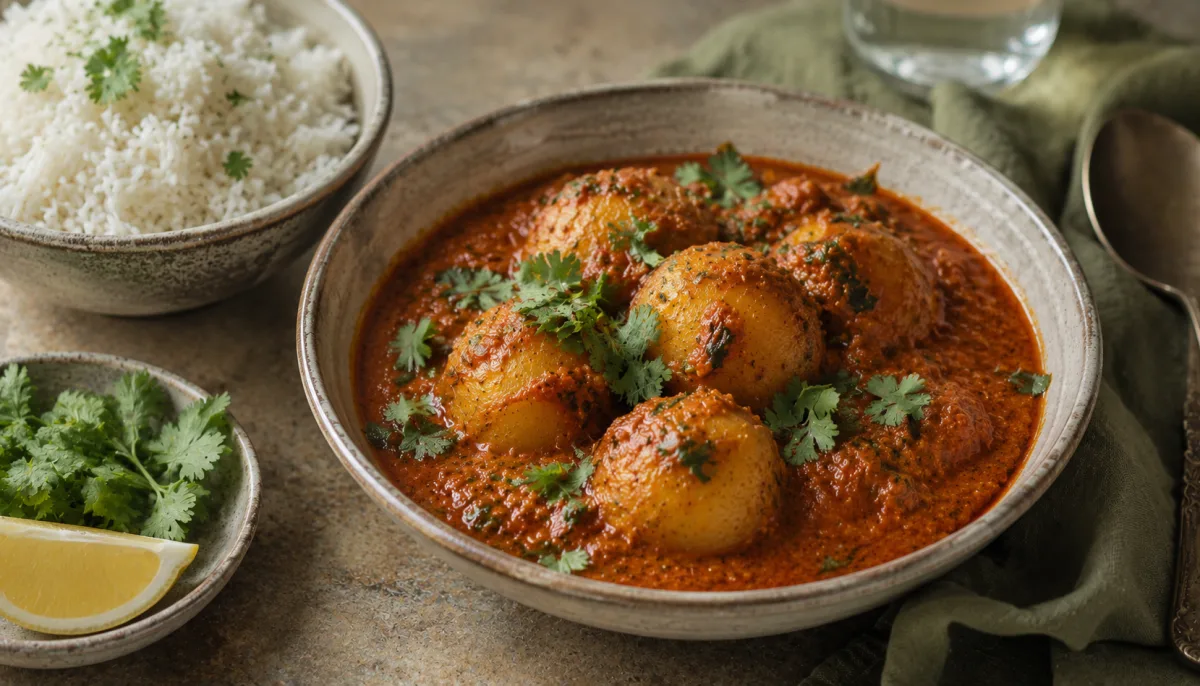
Dum aloo is rich enough that it benefits from contrast. Serve it with plain basmati rice, cucumber salad, roasted cauliflower, dal, or a sharp pickle. If the meal includes another fried dish, keep the potato version roasted or use less oil.
For a casual spread, pair it with a bright vegetable and a simple dessert. Something familiar like fudge icing belongs to a different cuisine, but the idea is useful: one rich dish is enough, and the rest of the meal should support it.
Frequently Asked Questions
Can I make dum aloo without frying?
Yes. Roast or pan-brown the potatoes with a small amount of oil. You still want a dry, textured surface before simmering, or the sauce will slide off.
Why did my yogurt gravy split?
The heat was likely too high or the yogurt was added too quickly. Whisk the yogurt, lower the heat, add it gradually, and avoid a hard boil after it goes in.
Can I use regular potatoes instead of baby potatoes?
Yes. Cut them into large chunks and avoid overboiling. Waxy or all-purpose potatoes hold their shape better than very floury potatoes.
Is dum aloo very spicy?
It does not have to be. Kashmiri chile powder gives color and mild heat. Add cayenne only if you want more fire, and balance the final sauce with salt and lemon.
The best dum aloo tastes patient. Brown the potatoes, keep the yogurt gentle, simmer until the centers are seasoned, and let the dish rest before you judge the salt.

Tory Stearns
Edits practical household, travel and lifestyle explainers. Claims that can change are linked to current primary or subject-authority sources.




Leave a reply
Replying to