
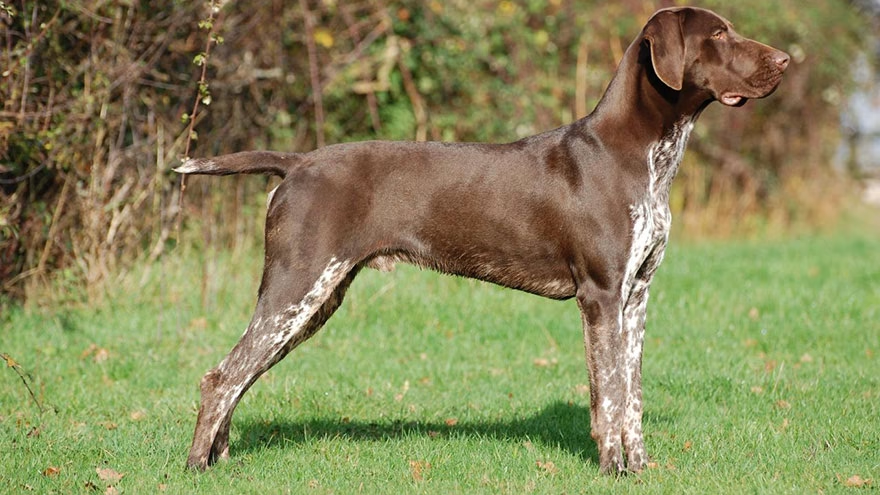
German Shorthaired Pointer Training Guide should start with the truth of the breed: this is a smart, athletic pointing dog built to move, search, and work with people. A German Shorthaired Pointer can be affectionate and funny at home, but it is rarely a good match for a low-activity household.
Training works best when it gives the dog a job. If the only plan is "stop being wild," both owner and dog will struggle. If the plan includes exercise, structure, recall, impulse control, scent work, and rest, the breed can shine.
Know The Breed Before You Train
The AKC's German Shorthaired Pointer page describes the breed as friendly, smart, and willing to please, with high energy. Those traits explain why GSPs do well with active owners and why under-exercised dogs can become hard to live with.
Livecub's German Shorthaired Pointer questions can sit beside this training guide for breed basics. The training plan should respect the hunting background even if your dog never hunts.
Start With Daily Exercise
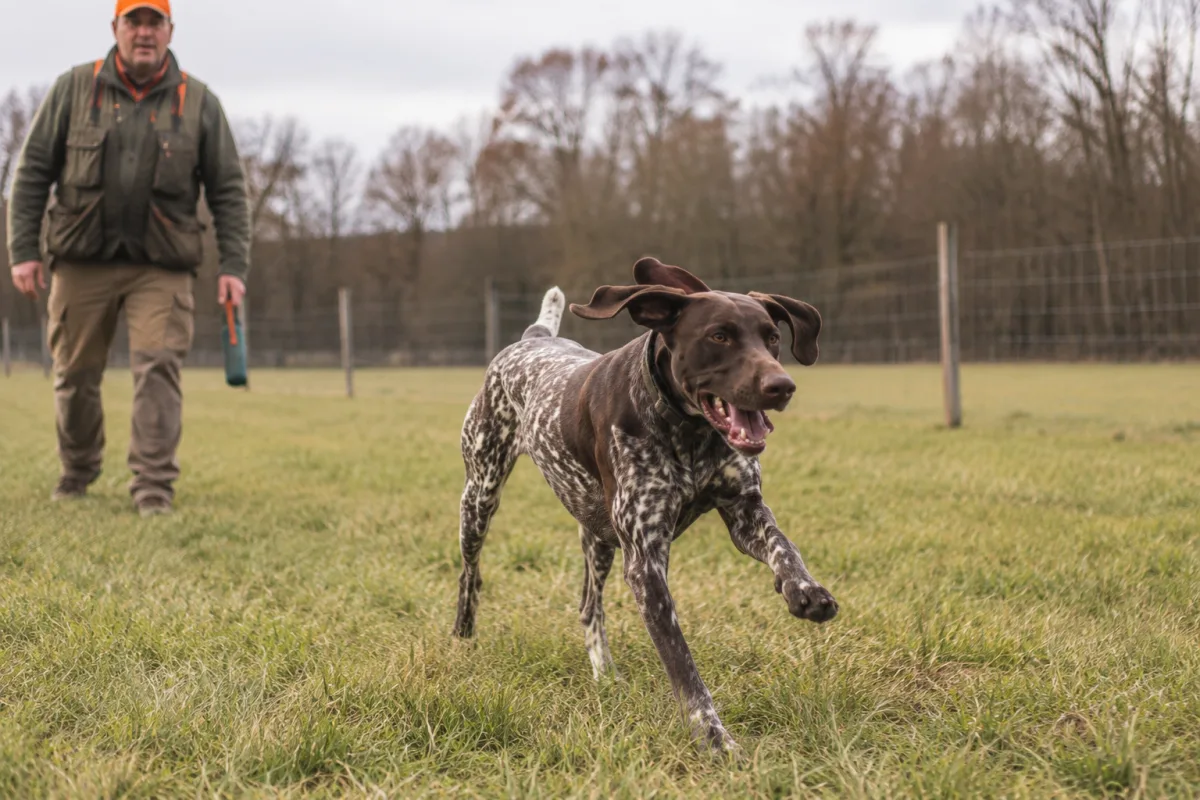
Most young healthy GSPs need serious daily activity: running in safe areas, long walks, hiking, swimming, retrieving, field training, scent games, or dog sports. A leash walk around the block may not touch the dog you brought home.
Build fitness gradually. Puppies need age-appropriate movement, not forced distance running. Adults need conditioning before long hikes or hard field days. A tired GSP should be satisfied, not limping.
Use a mix of physical and mental work. A long run may tire the body while leaving the brain ready to invent trouble. A shorter outing with recall practice, scent work, and calm settling afterward often creates a better dog than raw mileage alone.
Teach Recall Like It Matters
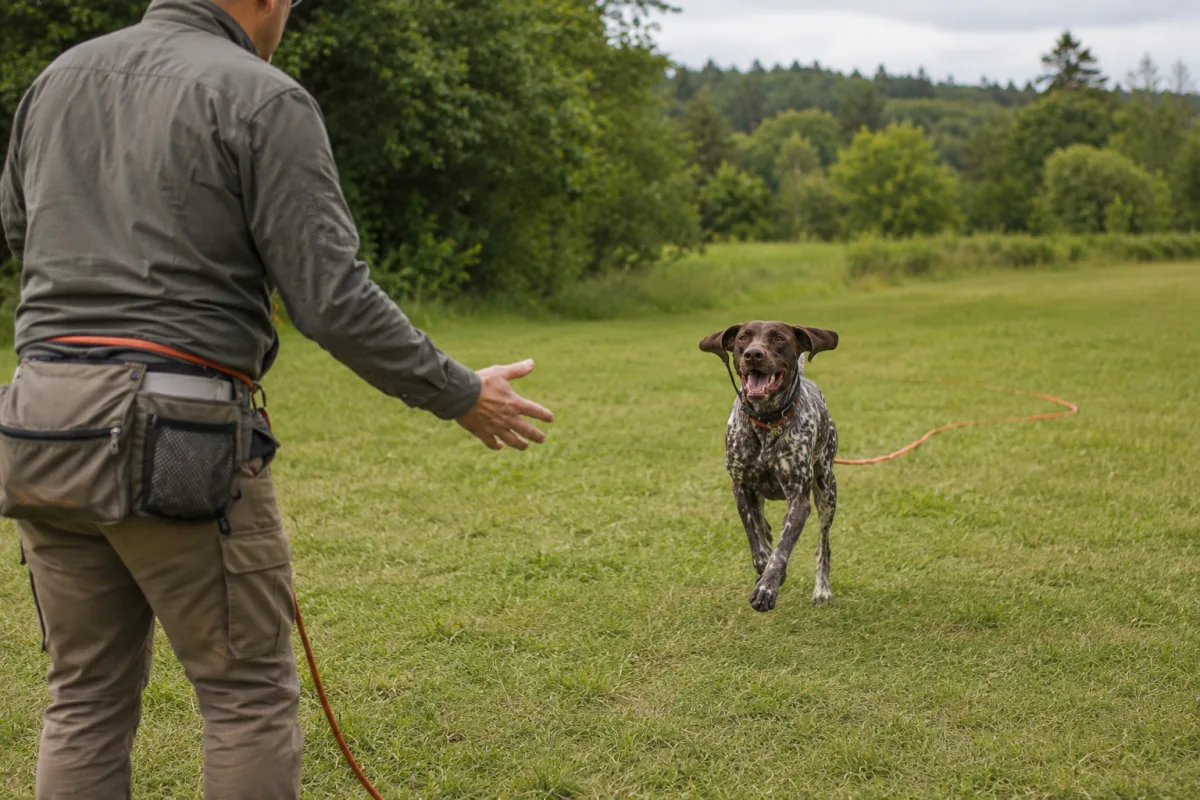
Recall is a safety skill for a fast hunting breed. Start indoors, then fenced areas, then long-line practice in low-distraction outdoor spaces. Use high-value rewards, happy releases, and many easy repetitions.
Do not poison the cue by calling the dog only when fun ends. Call, reward, and release back to sniffing or play often. A GSP should learn that coming back does not always mean the good part is over.
Leash Manners For A Powerful Dog
A GSP that pulls can make walks miserable. Reward checking in, changing direction with you, and walking on a loose leash. Practice before the dog is overstimulated. If every walk starts with a frantic launch, spend five minutes on calm door exits first.
Use well-fitted walking gear and avoid relying on strength. Training should make the leash quieter, not turn every walk into a contest.
Use sniff breaks as a reward for polite walking. Ask for a few calm steps, mark the behavior, then release to sniff. That teaches the dog that cooperation earns access to the environment.
Channel The Nose
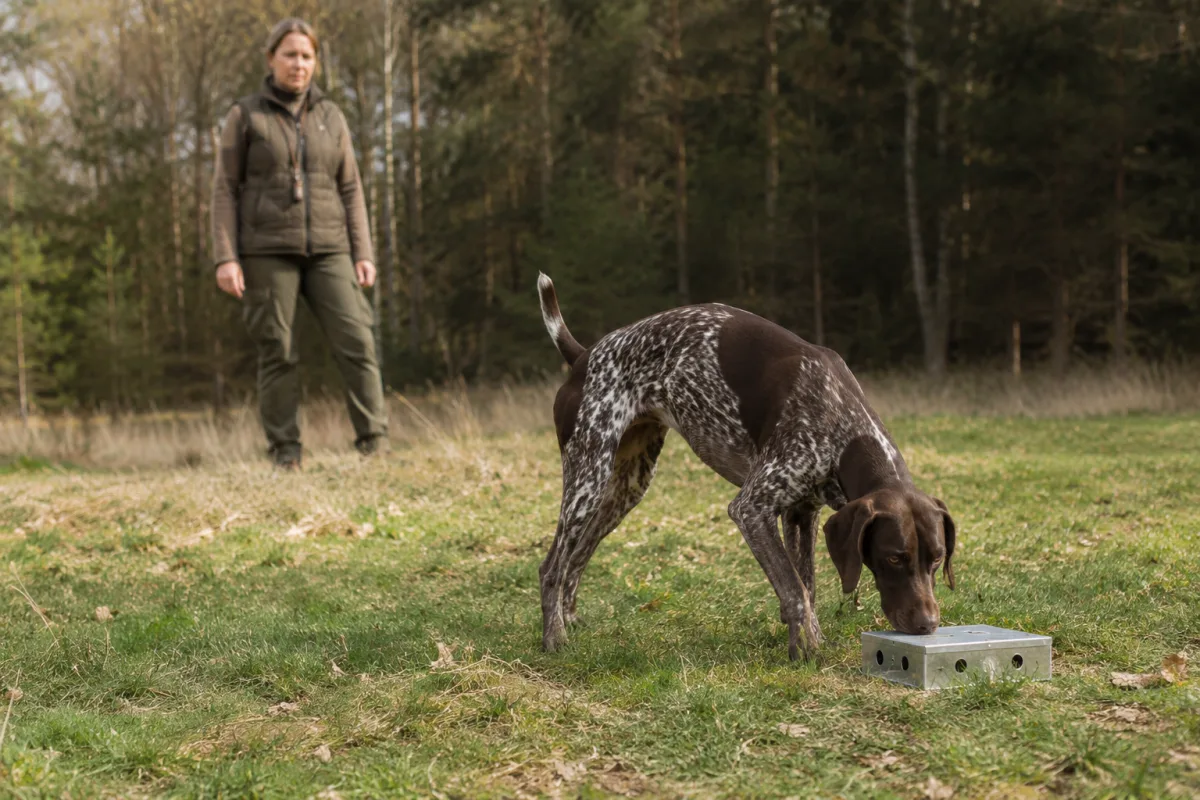
German Shorthaired Pointers are scent-driven. Use that instead of fighting it. Hide treats, play find it, teach place boards, build simple scent trails, and reward check-ins while the dog explores. Structured sniffing can settle the mind.
The German Shorthaired Pointer Club of America has breed resources that reflect the breed's field heritage. Even a companion GSP benefits when training respects what the dog was built to do.
Start scent games indoors with easy hides, then move to the yard, then to new places. If the game gets too hard, the dog may start scanning wildly instead of working carefully. Good scent work builds confidence in layers.
Impulse Control Without Crushing Drive
Teach wait at doors, leave it, drop, stay, settle, and place. These cues do not remove drive. They give the dog a way to hold itself together until released. Reward stillness around food bowls, leashes, toys, and open gates.
Keep sessions short. A few clean repetitions are better than drilling until the dog fails. End while the dog is still engaged.
Use real-life rewards. Waiting at the door earns the yard. Checking in earns a release to sniff. Dropping a toy earns another throw. A high-drive dog learns faster when the reward matches what the dog wanted in the first place.
Crate, Rest, And Off Switch
Many GSP owners focus on exercise and forget rest. A dog that never learns to settle can become overtired and frantic. Teach crate or mat rest with chews, calm praise, and predictable quiet time.
If the dog is exercised but still cannot relax, review sleep, routine, anxiety, and whether the dog is getting too much constant stimulation. More running is not always the answer.
Create a daily rhythm: hard movement, water, cool-down, food at the right time, rest, and later mental work. A predictable rhythm helps the dog understand when action is available and when the household is quiet.
Training Around Children And Guests
GSPs can be loving family dogs, but their speed and enthusiasm can knock over children. Teach four feet on the floor, mat greetings, and toy-in-mouth greetings if that helps the dog channel excitement.
For breed comparison, Livecub's Miniature Schnauzer questions and largest dog breeds guide show that size alone does not define training difficulty. Energy, speed, and impulse control matter.
Practice greetings before visitors arrive. Ring the bell, send the dog to a mat, reward calm waiting, and release only when the dog can keep its feet down. If the dog cannot do that yet, use a leash or gate while training catches up.
Adolescence And Setbacks
Many GSPs feel hardest during adolescence. The body gets stronger before judgment catches up. Go back to easier environments, pay well for attention, and reduce freedom where the dog rehearses bad habits. Regression is a training phase, not a personality verdict.
If off-leash reliability disappears, return to a long line. If house manners fall apart, rebuild mat work and door routines. The goal is to protect the habits you want until maturity helps.
Do not confuse maturity with automatic calm. Keep training into adulthood with field games, obedience refreshers, and controlled freedom. A GSP that keeps learning is usually easier to live with than one that only gets tired.
Grooming And Handling
The short coat is easy, but handling still matters. Teach paw checks, ear checks, tooth brushing, nail trims, and towel drying. Field dogs need skin, foot, and ear checks after brush, water, and rough ground.
Livecub's longhair Dachshund grooming guide covers a different coat, but the handling principle transfers. Cooperative care is trained before the dog is sore.
Health And Training Changes
If a GSP suddenly refuses jumps, resists touch, tires quickly, coughs, limps, or becomes irritable, check health. Pain or illness can look like stubbornness. Livecub's Staffordshire Bull Terrier health guide is a different breed, but the same rule applies: behavior and health are linked.
Ask your vet about safe exercise if the dog is growing, recovering from injury, overweight, or entering senior years.
Field dogs also need paw and ear checks after rough cover or water. Seeds, cuts, ticks, and ear moisture can make the next training day painful. A two-minute check after each outing protects the work you are trying to build.
Frequently Asked Questions
Are German Shorthaired Pointers easy to train?
They are smart and trainable, but high energy and prey drive require consistency, exercise, and strong recall practice.
Can a GSP live in an apartment?
Some can with serious daily exercise and training, but many struggle in low-activity homes.
How much exercise does a GSP need?
Most healthy adults need substantial daily physical and mental work, often more than a simple neighborhood walk.
Should I hunt with my GSP?
Not necessarily, but the dog still needs outlets for scenting, searching, running, retrieving, and working with you.
How do I stop pulling?
Practice loose leash skills in low-distraction places, reward check-ins, and prevent pulling from getting the dog to rewards.
The Training Bottom Line
Train a German Shorthaired Pointer by meeting the dog's need to move, think, smell, and work with you. Recall, leash manners, impulse control, handling, and rest are not extras. They are what make this high-drive companion livable. Keep sessions short, pay well for attention, and build freedom only after the dog can respond around real distractions. If the dog struggles, make the setting easier before adding pressure. Clear practice beats frustration, especially with a fast dog that learns patterns quickly and repeats them daily. Protect the good patterns every single week.

Chiara Bradshaw
Covers education, culture and creative topics with an emphasis on readable explanations and verifiable references.
Leave a reply
Replying to