

Most families do not struggle in December because the house is imperfect or the meal is too plain. They struggle because the season asks for travel, money, patience, cooking, cleaning, gift decisions, school events, family diplomacy, and cheerful faces all at once. The way through is not to make the season bigger. It is to decide, on purpose, what deserves your energy and what can be smaller this year.
A calmer holiday is still a real holiday. Children remember warmth, food, jokes, rest, and small rituals far more than they remember one parent silently carrying the whole production.
Name the season you can actually have
Before you accept invitations or plan menus, name the year you are actually in. A family with a newborn, a sick parent, a tight budget, or a child struggling at school does not need the same plan as a rested family with spare time and money.
The American Psychological Association has reported that the holidays bring happiness and stress together, especially around family, money, and expectations. Its coverage of holiday stress is a useful reminder that the pressure is common, not a private failure. Write down three priorities: a quiet morning, one shared dinner, a religious service, a cookie afternoon, a call with distant relatives. When a new demand appears, hold it against that short list before saying yes.
Decide the hard things first
Holiday stress compounds when big decisions are made late, in the car, or in front of disappointed relatives. Deciding a few things early removes most of the friction. The table pairs the seasonal pressure points with the single decision that shrinks each one.
| Pressure point | The one decision to make early |
|---|---|
| Gifts | Set a per-person limit and pick a format (list, name draw, or one shared experience) |
| Travel | Choose realistic arrival and departure windows, not a meal time you cannot control |
| Food | Fix the menu and the fridge space for leftovers before the grocery run |
| Kids' routines | Protect sleep and one rest window, even when the day runs long |
| Difficult relatives | Decide topics, timing, and the line you will use to step away |
| Hosting load | Assign whole tasks to named people before the day begins |
None of these decisions require a family meeting. They just move the choice to a calm moment instead of a tense one.
Protect kids' routines where you can
Holiday excitement can push children straight past their limits. Late nights, extra sugar, long drives, unfamiliar houses, and a stream of instructions can turn a good day into a hard evening. Keep the anchors that hold a child steady: sleep, meals, quiet time, and clear transitions. If bedtime has to move, protect a rest window earlier in the day. If meals are unpredictable, carry a snack that does not depend on the host's timing.
Children often look ungrateful when they are simply overstimulated. A short walk, a dark room, headphones, or ten minutes alone with one parent can rescue an afternoon that seemed lost.
It also helps to warn children about what is coming. A day with three houses, a long car ride, and a late dinner is easier for a small child who has been told the shape of it in advance. Naming the plan, and naming the exit, gives a child something to hold onto: "We will open gifts, eat, and then we are going home for bath and bed." Predictability does more to prevent meltdowns than any amount of managing them after they start.
Set money rules before shopping starts
Holiday budgets fail when every purchase feels small on its own. Gifts, wrapping, travel, food, postage, outfits, school events, tips, and decorations pile up faster than anyone tracks. Set a total number first, then divide it into gift limits, travel limits, and food limits, and mark which traditions are free. Tell relatives early if the plan is changing, because most disappointment is easier to handle before the money is spent.
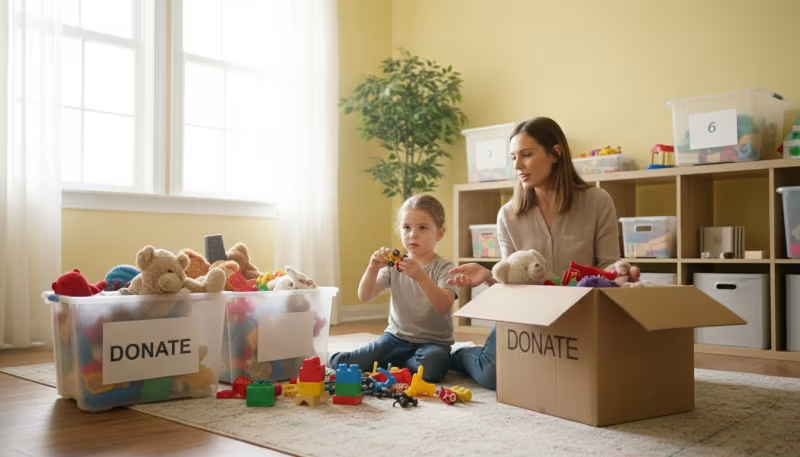
Children can handle honest limits. "This year we are choosing one gift and one family outing" is clearer and kinder than pretending everything is possible and quietly resenting the bill later. For gifts, a simple formula helps: one wanted item, one useful item, and one shared activity. The exact recipe matters less than stopping the pile from becoming the measure of love, and refusing to use a wrapped package to fix a feeling it was never going to reach.
Among adults, the quiet fix is often to stop buying for everyone. A name draw, a spending cap, or a single shared experience replaces a dozen obligatory purchases with one, and most relatives are relieved rather than offended. Naming that plan early, before anyone has started shopping, is what makes it land well.
Make family boundaries plain
Some holiday stress comes from logistics. Some comes from people. Boundaries are not speeches; they are decisions about time, topics, travel, alcohol, sleeping arrangements, and what you will do if a conversation turns mean. Managing stress through realistic expectations and support usually means fewer explanations and more practical limits.
Short scripts, practiced before you need them, do the work: "We are leaving by seven," "We are not discussing that today," "The kids need a break," or "That joke is not okay." If the holiday also carries grief, boundaries may need more tenderness than firmness. Ideas for honoring someone during a celebration can help a family make room for remembrance without forcing everyone into the same emotional shape on the same day.
Plan food safety alongside the menu
Holiday food tends to sit out too long because people graze, talk, clean slowly, and wait for late guests. Food safety belongs in the plan, not in a panic after dessert. FoodSafety.gov's holiday food safety guidance advises keeping hot foods hot, cold foods cold, and refrigerating perishable items within a limited window. That matters for turkey, seafood, eggs, rice, cut fruit, and every container of leftovers.
If the centerpiece is a bird, pair the recipe with a thermometer, a carving plan, and shallow containers for storage. A guide to cooking a goose is only half the job; the other half is getting the leftovers cooled and covered before the table conversation runs another hour. Decide the fridge space before you cook, so there is somewhere for the food to go.
Share the work and protect the host
Holiday labor turns unfair the moment one person holds the entire list in their head. Write the tasks down: shopping, cooking, wrapping, cleaning, travel, childcare, dishes, photos, cards, and calls. Then assign whole tasks rather than vague help. "Bring rolls and take home the serving tray" beats "help with food." "You handle breakfast the morning after" beats "support me more."
Hosts disappear inside that work. They cook, find towels, manage children, clear plates, and notice every empty bowl, and they rarely get to sit down. Build breaks into the day before resentment sets in: a meal the host does not cook, a twenty-minute quiet window, a cleanup crew that starts before midnight. Hosting should not mean serving silently. A family holiday is still a holiday for the person who opened the door.
Guests can make this easy by arriving with a job in mind rather than waiting to be assigned one. Refilling drinks, taking the children outside, running the dishwasher, or bagging the trash are all things a guest can start without being asked twice. If you are the host, say what help looks like out loud before people arrive, because most relatives genuinely want to pitch in and simply do not know where the foil is kept or which leftovers are being saved. A short, honest instruction spares everyone the awkward hovering that helps no one.
Keep one recovery day and the traditions that still fit
Families often schedule the holiday as if no one needs to recover, so the day after becomes another round of travel, cleaning, and leftovers. If you can, protect one slow morning or evening for naps, laundry, a walk, or nothing at all. For the food that survives the main event, the logic behind freezing fresh produce applies to the whole table: portion what can be saved, label it, and stop pretending every leftover must be eaten immediately.
Traditions are allowed to change. A ritual that fit small children may not fit teenagers, and a large dinner may not fit a year with health limits or travel costs. Ask what people would genuinely miss if it disappeared, keep those pieces first, and let the rest shrink, rotate by year, or retire quietly. Keep one photo, one meal, one song, or one call if that is all the year can hold. A smaller tradition can still feel steady, and steadiness is what most children are really remembering.
Frequently Asked Questions
How can families reduce holiday stress?
Choose a few priorities, set a budget, protect sleep, share tasks clearly, and build a plan that matches the year your family is actually having rather than an ideal one.
How do you handle difficult relatives during holidays?
Use short boundaries, limit sensitive topics, set arrival and departure times, and plan breaks for children and adults before tension builds instead of after.
What should families simplify first?
Gifts, travel, meals, and events. These usually create the most cost, time pressure, and emotional strain, so trimming them frees the most room.
How long can holiday food sit out?
Follow current food safety guidance for perishable foods, which have a limited safe window at room temperature. Plan containers and fridge space before the meal so leftovers get stored promptly.

Patrick Harwood
Edits sports, consumer-finance and general legal explainers. Regulated or time-sensitive topics link to primary sources and are not professional advice.


Leave a reply
Replying to