
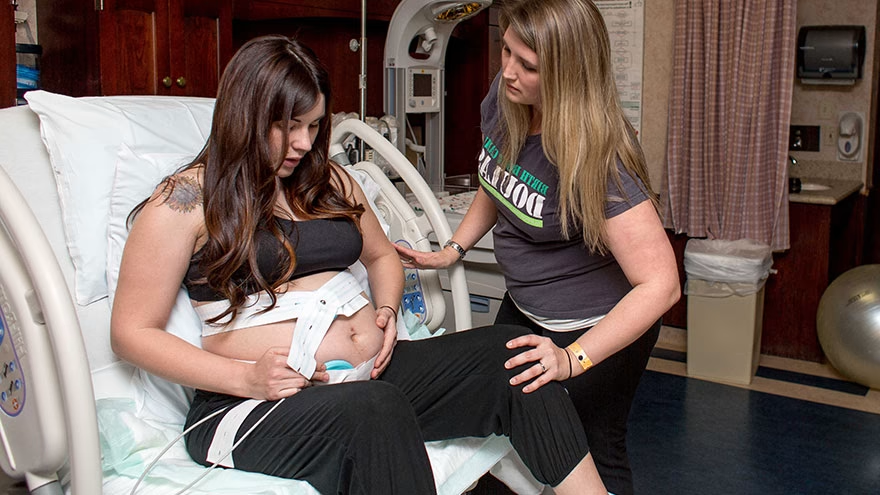
How to Become a Natural Childbirth Instructor is less about copying one birth philosophy and more about learning how to teach families clear, evidence-informed options. A good instructor explains normal labor, comfort measures, medical choices, partner support, and decision-making without pretending to control birth.
Certification paths vary, and the word natural can mean different things to different families. Treat it as an interest in low-intervention birth skills, not as a promise, pressure point, or judgment about medication.
Know The Role
A childbirth instructor teaches preparation. The job is to help pregnant people and partners understand labor stages, coping tools, hospital routines, common interventions, consent questions, and recovery basics.
The instructor is not the clinician. You can teach how to ask better questions, but diagnosis, fetal monitoring decisions, medication plans, and delivery decisions belong to the licensed care team.
Check Local Requirements
In many places, childbirth education is not licensed the way nursing, midwifery, or medicine is licensed. Employers, hospitals, birth centers, insurers, and private clients may still expect a known credential.
Before paying for training, look at the setting where you hope to teach. A hospital class program may prefer one credential, while private practice may care more about teaching skill, references, and current education.
Choose A Certification Path

Lamaze, ICEA, CAPPA, and other organizations offer childbirth educator training or certification paths. Compare cost, deadlines, exam rules, teaching evaluations, reading requirements, ethics rules, and renewal work.
Lamaze describes the LCCE credential and childbirth educator pathway on its site: Lamaze childbirth educator certification. Read the current requirements directly because details can change.
Compare Program Rules
ICEA lists steps that include enrollment, a workshop, study materials, an evaluated teaching series, observation of a childbirth class, and birth observations: ICEA childbirth educator certification.
CAPPA lists its childbirth educator requirements, including membership, training, reading, course work, completion deadlines, and recertification: CAPPA childbirth educator certification.
Learn Birth Physiology
A natural childbirth instructor needs a grounded understanding of labor physiology: contractions, cervix changes, hormones, fetal position, rest, hydration, pain patterns, and recovery.
Do not teach physiology as a script that every birth follows. Teach normal patterns and the reasons care teams may recommend monitoring, induction, medication, assisted birth, or cesarean birth.
Study Comfort Measures
Comfort measures can include breathing, movement, counterpressure, water, heat, cold, massage, vocalizing, privacy, upright positions, side lying, and partner support.
Livecub's early labor emotional support guide can help you frame support as timing, tone, consent, and useful presence rather than constant talking.
Teach Medical Options Fairly
A low-intervention class should still explain epidurals, IV medication, induction, augmentation, fetal monitoring, assisted delivery, cesarean birth, and newborn procedures without scaring people.
Families need language for choices, not a scorecard. A balanced instructor can say what a tool is, why it may be offered, what questions to ask, and how preferences can change.
Practice Teaching

Practice matters because knowing the topic is not the same as teaching it. Record a short lesson, teach a practice group, invite feedback, and notice where people look confused.
Use plain language. Replace long lectures with demonstrations, short explanations, and realistic scenarios such as back labor, an unexpected induction discussion, or a tired partner at 3 a.m.
Build Lesson Plans
A class series should have a clear arc: late pregnancy, early labor, active labor, transition, pushing, birth options, newborn moments, feeding basics, recovery, and when to call the provider.
Leave space for questions. Families often remember the answer to their own question more than a slide packed with facts.
Protect Scope
Write your scope in your class materials. State that the class is education, not medical advice, and that each family should follow its own clinician's guidance.
Do not review private test results, interpret fetal heart rate tracings, tell someone to refuse a recommended intervention, or promise that a specific method will prevent pain or surgery.
Support Different Birth Plans
Some students want unmedicated birth. Some want an epidural but still want movement, consent language, and partner skills. Some are planning repeat cesarean or VBAC discussions.
Good teaching makes room for each person. Livecub's staying close during pregnancy guide can help with the emotional side of preparing as a couple.
Make The Class Practical
Bring a birth ball, pillows, rebozo or sheet if used in your training, handouts, sample questions, and a plan for practicing positions safely.
Do not turn every comfort measure into a performance. Let students try, laugh, adjust, and decide which tools feel natural to their bodies.
Handle Sensitive Topics
Pregnancy and birth can bring anxiety, body changes, past trauma, loss history, family pressure, and money stress into the classroom.
Use opt-in participation, avoid forced sharing, and keep referral resources ready. Livecub's depression during pregnancy guide can help you recognize when education is not enough.
Keep Better Class Materials
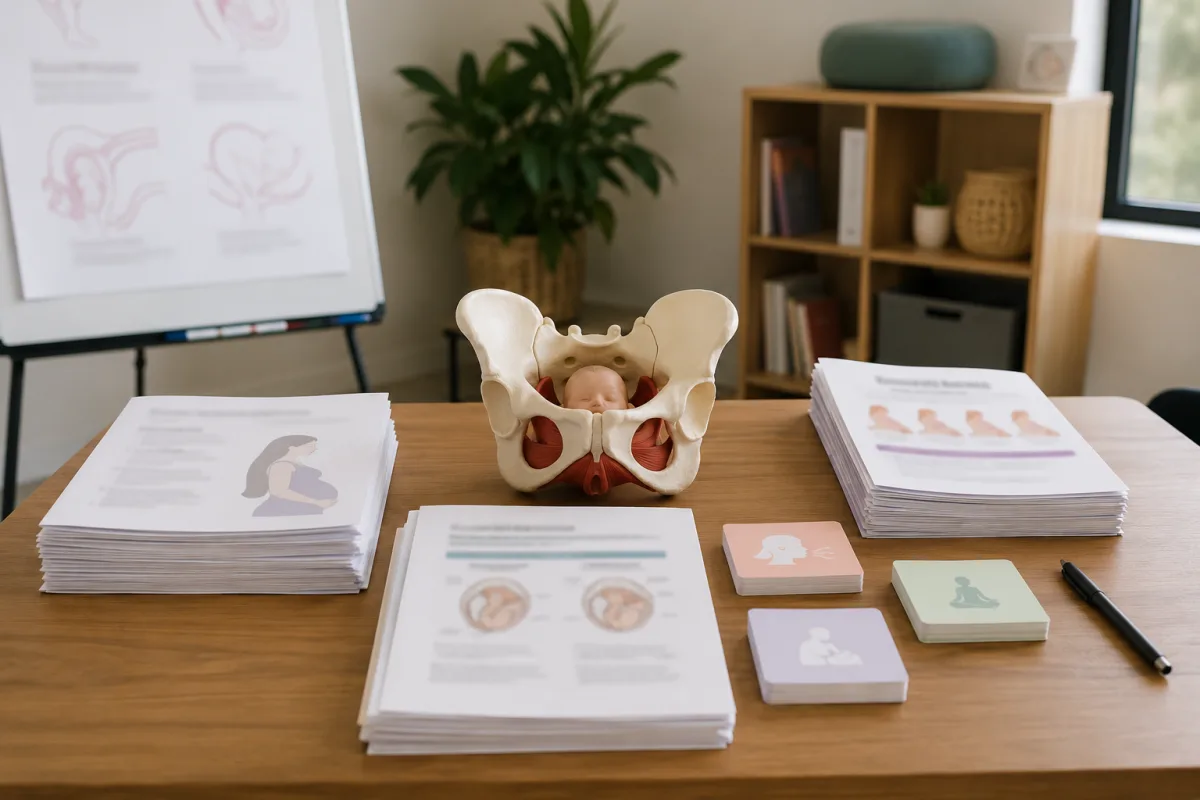
Handouts should be short, current, readable, and easy to use in a hospital bag. A one-page question list can beat a thick workbook nobody opens.
Review your materials after every class cycle. Remove outdated hospital policies, broken links, unsupported claims, and language that makes one birth choice sound morally better than another.
Plan Business Basics
If you teach privately, you need pricing, refunds, scheduling, privacy rules, basic bookkeeping, a cancellation policy, and a way to handle missed classes.
Check liability insurance and local business rules. If you teach inside a hospital, birth center, or community program, ask how curriculum approval and patient privacy rules work.
Maintain Certification
Most credentials require renewal, continuing education, fees, or proof of current practice. Put renewal dates on a calendar as soon as you certify.
Continuing education should include current research, communication skills, trauma-aware teaching, cultural humility, lactation basics, and local birth-system changes.
Keep A Feedback Loop
After each class, ask what felt useful, what felt unclear, and what students wanted more time to practice. Do not only collect praise.
Feedback can show where your teaching is too fast, too technical, too opinionated, or missing the questions families actually bring into labor.
Food And Comfort Notes
Some instructors also answer simple pregnancy comfort questions, including nausea, food tolerance, and energy during late pregnancy classes.
Stay basic and refer medical questions back to the provider. Livecub's bland pregnancy foods guide can support general nausea conversations without replacing care-team advice.
Teaching Voice
The best teaching voice is calm, specific, and ordinary. Students should feel that they are learning usable language, not being recruited into one perfect birth story.
Practice saying the same point three ways: a thirty-second version, a two-minute version, and a demonstration version. That helps when class energy changes.
Class Size
Small classes allow more practice and questions. Larger classes need tighter timing, clearer handouts, and more structure so quiet students are not lost.
If you teach online, plan camera-friendly demonstrations and shorter segments. Online learners often need more pauses and written summaries.
Referral List
Keep a referral list for lactation support, mental health support, pelvic floor therapy, doulas, midwives, physicians, social workers, and community resources.
Do not present a referral list as endorsement of one birth choice. Make it a practical map for needs outside your teaching scope.
Trauma-Aware Habits
Use opt-in practice, warn before sensitive topics, and never require people to close their eyes, be touched, or tell a story.
A trauma-aware class can still be warm and practical. The point is to give people choices while teaching skills.
Exam Preparation
If your certification path includes an exam, study the organization's outline instead of guessing from old class notes.
Build flashcards for physiology, terms, teaching ethics, and scope. Then practice explaining those points without sounding like a textbook.
Observation Notes
If observations are required, write down teaching methods, room setup, timing, and how the instructor handles hard questions.
Do not copy another instructor's personality. Notice what helps students learn, then build your own direct and respectful style.
After Certification
Certification is a starting point, not the end. The first year of teaching should include review, mentorship, feedback, and better class materials.
Save questions students ask repeatedly. Those questions show where your curriculum needs clearer examples.
Frequently Asked Questions
Do I need certification to teach natural childbirth classes?
Not always by law, but many employers and clients prefer training or certification from a known childbirth education organization.
Which certification is best?
The best fit depends on your budget, timeline, teaching setting, exam preference, renewal rules, and the kind of families you want to serve.
Can a childbirth instructor give medical advice?
No. An instructor can teach options and questions, but diagnosis and clinical recommendations belong to licensed maternity care professionals.
How long does it take to become certified?
It varies by program. Some paths include workshops, reading, teaching evaluations, exams, observations, and renewal requirements.
What makes a natural childbirth class useful?
Useful classes teach coping, movement, support, consent language, medical options, and flexibility without shaming medication or surgery.
A natural childbirth instructor earns trust by teaching clearly, staying inside scope, practicing the craft, and respecting that every family brings a different body, history, and birth plan.
Olivia Prete
Edits culture and personal-development articles, distinguishing opinion and experience from verifiable claims.




Leave a reply
Replying to