
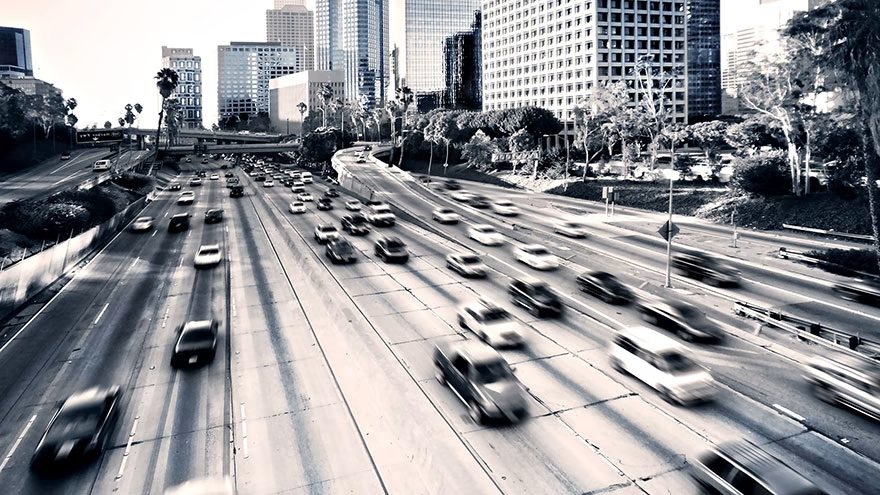
Traffic reporting is a journalism job with a map habit
A traffic reporter explains changing road conditions quickly enough that listeners, viewers, or app users can make better travel decisions. The job may sit inside radio, television, digital news, public information, or a traffic service company.
The Bureau of Labor Statistics groups reporters inside a wider media occupation and describes the job as keeping the public updated. Its reporters and journalists profile is a useful career baseline.
Learn the local road system until it feels familiar
Know highways, arterials, bridges, tunnels, transit hubs, school zones, event venues, airport approaches, and common bottlenecks. A traffic reporter who only reads incident text will sound slow when a closure affects a whole corridor.
Drive or ride major routes at different times if you can do it safely. Study maps when you cannot. The goal is to understand why one crash changes five other choices.
Practice writing for the ear
Traffic copy has to be short, spoken, and useful. A good report names the road, direction, location, cause when known, backup, and practical alternate route if there is one. It does not waste time with filler.
Clear workplace communication helps here. The habit behind customer service training also applies on air: say what the audience needs before you say what sounds clever.
Verify before you go live
Use official DOT feeds, traffic cameras, police or fire updates when available, producer notes, and trusted traffic platforms. The FHWA's national traffic information page at highways.dot.gov points drivers toward state road-condition sources.
If a report is unconfirmed, say less rather than pretending. A calm phrase such as reports of a crash near the interchange is safer than naming a lane closure you cannot confirm.
Understand weather without acting like a meteorologist
Rain, fog, snow, wind, heat, flooding, and low sun angles can change traffic. Use National Weather Service resources at weather.gov for context, and coordinate with the weather team when the station has one.
A traffic reporter does not need to forecast the whole storm. The job is to connect the condition to the commute: slick ramps, reduced visibility, ponding water, chain controls, or delays near schools.
Build live delivery under time pressure
Practice thirty-second, fifteen-second, and ten-second updates. Record yourself. Listen for rushed words, unclear exits, repeated phrases, and route names that sound alike. Live traffic rewards calm more than speed.
Shift work can be part of the career, especially mornings. Advice on staying awake at work matters because many traffic desks start before sunrise.
Develop newsroom and public-source discipline
Learn newsroom software, audio boards, IFB habits, map tools, social verification, and how to take producer direction. Also learn what not to say: names of injured people, speculation, graphic details, and unverified blame do not belong in a commuter update.
Administrative accuracy helps too. The note-taking habits behind office duty organization translate into clean incident logs and less confusion during a fast show.
Create a demo that proves usefulness
A demo reel should show concise updates, map awareness, live composure, and a voice that can be understood in a car. Include different conditions: normal congestion, crash delay, weather impact, event traffic, and a cleared incident.
If you are new, practice with old traffic maps and publicly available alerts, but do not present a fake emergency as current news. Label practice material clearly and keep the reel honest.
Make the plan fit real life
The useful version of this topic is the one that fits the reader's actual situation. The path should fit the local media market, shift schedule, voice skills, road knowledge, and comfort with live correction. A plan that only works on paper will not survive a normal week, a tired afternoon, or a small mistake.
Start with the constraint that is least flexible. That may be time, money, safety, access, health, policy, family expectations, or local rules. Once that limit is clear, the rest of the choices become easier to sort.
Watch for the mistake that changes the outcome
The common mistake is treating traffic reporting as reading alerts instead of verifying conditions and explaining routes clearly. It usually happens because people want the answer to be simpler than it is. Slow down long enough to separate facts from hopes.
Good judgment is often quiet. It looks like reading the policy, checking the weather, asking one more question, saving a record, or choosing the smaller step before the larger one.
Use a short checklist before you commit
Before acting, check the basics: local roads, traffic sources, broadcast copy, live reads, weather context, demo reel, newsroom tools, correction habit Keep the list short enough that you will actually use it. A long checklist that nobody opens is just decoration.
If another person is involved, confirm the same points in plain language. Most bad decisions in everyday life are not caused by missing expert knowledge; they are caused by assumptions nobody tested.
Know when to pause
Pause when you cannot confirm the road, direction, lane status, or source of an incident before reporting it as fact. A pause is not failure. It is a way to keep a small uncertainty from becoming a costly problem.
If the situation involves health, legal rights, safety, money, or another person's trust, get qualified help instead of forcing a quick answer. The right next step may be slower, and that is often the point.
Turn the advice into one next step
Do not try to solve the whole subject at once. Pick the first item that can change the decision today, then check it against the practical list: local roads, traffic sources, broadcast copy, live reads, weather context, demo reel, newsroom tools, correction habit That keeps the work grounded instead of letting the topic become a vague intention.
A small verified step is better than a confident guess. In practice, that may mean reading the rule, checking the map, saving the message, measuring the space, asking the clinic, reviewing the profile, or confirming the payment terms before anything else moves.
Keep notes while details are fresh
Good notes do not need to be formal. Write down the date, source, name, rule, price, condition, or answer while it is still fresh. That record gives you something calmer to use later if memory, stress, or another person's version of events starts to blur the issue.
For this topic, notes should focus on the decision point rather than every side thought. Record the fact that would change your choice, then leave room for updates if a source, policy, weather report, profile detail, or schedule changes.
Match the advice to the stakes
Low-stakes choices can move with common sense and a short check. Higher-stakes choices need more patience, especially when safety, health, pay, travel money, family trust, or another person's comfort is involved. The amount of checking should rise with the possible cost of being wrong.
This is where the earlier pause point matters: you cannot confirm the road, direction, lane status, or source of an incident before reporting it as fact. If that line is close, slow the plan down. Speed is useful only when the basic facts are solid.
Think about the second effect
Many everyday decisions have a second effect that shows up later. A message changes trust, a campsite affects access, a workplace rule changes morale, a food choice affects leftovers, and a travel booking can affect the whole budget. Look past the first convenient answer.
The second effect is usually where regret hides. Before you finish, ask who else is affected, what becomes harder tomorrow, and what proof you would want if the decision had to be explained later.
Close the loop cleanly
Once the choice is made, finish the small administrative work around it. Save the link, send the note, pack the item, label the container, confirm the route, update the file, or tell the other person what happens next.
A clean close keeps the subject from staying half-open in your head. It also makes the advice easier to repeat the next time, because you are not rebuilding the whole decision from memory. A short final note can also reveal a weak plan before it creates extra work for someone else later. That is often the difference between knowing what to do and actually doing it.
Frequently Asked Questions
Do I need a journalism degree?
A degree can help, but stations and services also look for clear delivery, writing, local knowledge, and reliability.
A strong demo and newsroom experience can matter a lot.
Can traffic reporters work remotely?
Some can, especially when traffic data and newsroom systems are remote. Others work inside a station or traffic operations center.
The setup depends on the employer and market.
What should be in a traffic demo?
Include short, clear reports with road names, direction, impact, and useful alternatives. Show calm correction if a condition changes.
Avoid long introductions and fake urgency.
Is weather knowledge required?
Basic weather awareness is needed because conditions affect road safety. You do not have to replace the meteorologist.
Learn how weather changes commute behavior.

Alyssa Curlin
Edits general health, nutrition and education explainers. Medical topics are educational and link to public-health guidance.




Leave a reply
Replying to