
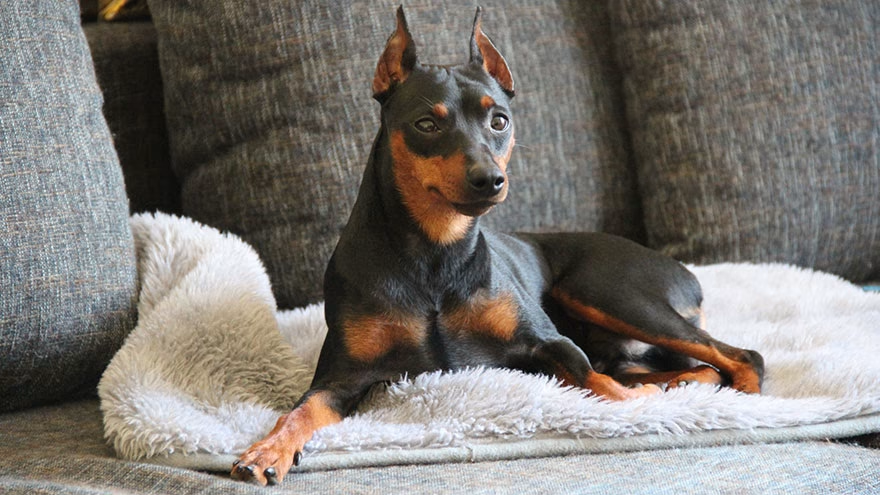
Min Pin basics — what you're working with
The Miniature Pinscher is not a miniature Doberman. This is perhaps the most persistent misconception in the dog world, and it matters because it sets entirely wrong expectations. The Min Pin predates the Doberman Pinscher by centuries. It was developed in Germany — likely from crossings of German smooth-haired Pinschers, Smooth Dachshunds, and Italian Greyhounds — to chase and kill rats in farm stables. The name itself is the clue: pinscher is a German word describing a dog that jumps on and fiercely bites its prey. Proper miniature pinscher care starts with understanding that you are working with a working terrier soul packed into a ten-pound Toy-group body.
The AKC recognized the breed in 1925 under the name "Pinscher," moved it to the Toy Group in 1930, and added "Miniature" to the name in 1972. Today the breed standard calls for a height of 10 to 12.5 inches and a weight of 8 to 10 pounds. The coat is smooth, hard, and short — a single layer with no insulating undercoat. Four colors are accepted: solid clear red, stag red (red with black hairs interspersed), black with sharply defined rust markings, and chocolate with rust markings.
The Min Pin walks with a distinctive hackney gait — a high-stepping, prancing stride that mirrors a hackney horse — which contributes to the nickname "King of Toys." That gait is not affectation. It reflects a compact, athletic structure built for quick movement through tight spaces. Admirers of the Doberman who want a toy-sized dog of similar bearing often end up with a Min Pin, and that is fine, as long as they understand that the personality beneath that sleek coat is curious, bold, and relentlessly busy rather than placid.
Feeding a Miniature Pinscher — portions, frequency, and weight management
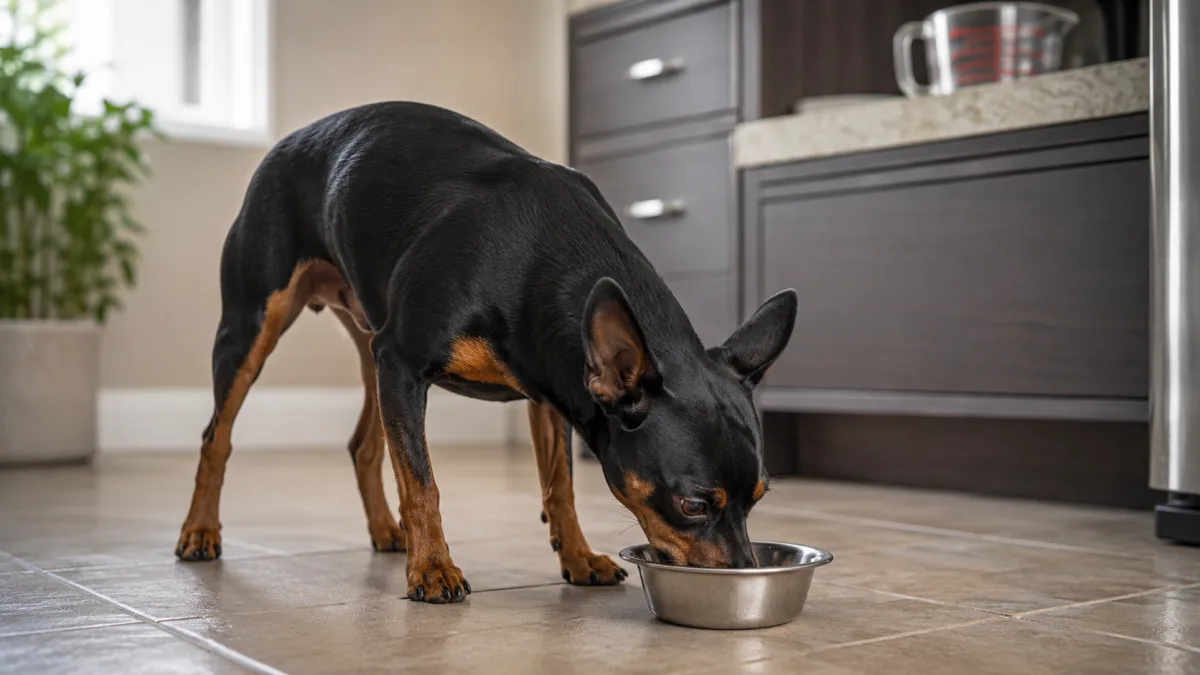
Small dogs have faster metabolisms per pound of body weight than large breeds. A ten-pound Min Pin burns proportionally more energy per kilogram than a ten-pound slice of a Labrador would — which is why small-breed formulas exist. They are calorie-dense and often sized for smaller kibble that a small jaw can actually chew properly. A healthy adult Min Pin at target weight typically needs between 300 and 400 calories per day, varying by activity level and individual metabolism. The practical translation is roughly a half-cup to three-quarters of a cup of a quality small-breed adult food, split into two meals.
Two measured meals per day is far better than free-feeding. Min Pins have a documented tendency toward obesity, and the problem is mechanical: small dogs look like they eat nothing, so owners underestimate how much a handful of treats actually costs. A single training treat is a trivial fraction of a Labrador's daily calorie budget; for a ten-pound dog, it is a meaningful percentage. Keep treats to no more than ten percent of daily calories and choose small, low-calorie options — a pea-sized piece is genuinely enough for a dog this size.
For body condition, you should be able to feel the ribs easily without pressing hard, but not see them prominently. If the ribs are buried, cut the portion back by ten percent and reassess in two weeks. A waist visible from above and a slight abdominal tuck from the side are the right targets. Min Pin puppies, especially very young ones, are vulnerable to hypoglycemia and should be fed three to four small meals daily until around four months of age.
Choose a food with a named animal protein (chicken, lamb, beef) as the first ingredient. Fat is important for coat health — that single smooth layer needs dietary fat to stay glossy and supple. Avoid foods where corn syrup or any form of sugar appears in the first few ingredients, and read the feeding guidelines on the bag as a starting point only, not a mandate. Bag guidelines are typically calculated for unaltered, moderately active dogs; a spayed or neutered Min Pin may need ten to fifteen percent fewer calories than the label suggests.
Exercise needs and daily activity
Thirty to forty-five minutes of vigorous activity per day keeps a Min Pin physically fit and mentally manageable. The emphasis is on vigorous. A slow stroll around the block does not count. Min Pins want to run, leap, climb, and investigate. A brisk walk combined with a structured play session — fetch, tug, or a chase game in a securely fenced yard — is the practical formula for most owners.
The fenced-yard qualification is non-negotiable. Min Pins are escape artists. They can scale surprisingly tall barriers, squeeze through small gaps, and bolt after anything that moves. A six-foot fence with no horizontal footholds is the realistic minimum. Dog parks can work if large dogs are segregated from small ones, but some Min Pins are bold enough to pick fights with much larger dogs, so read the individual dog before assuming the small-dog area is always safe.
Mental exercise matters as much as physical output. A bored Min Pin will find its own entertainment, and it will not be the entertainment you would choose. Puzzle feeders, trick training, scent work, and short agility sessions tap the breed's original working-dog intelligence. For a deeper look at training approaches that suit the breed's quick mind and easy distraction, see the Miniature Pinscher training guide.
Grooming — low effort, high payoff
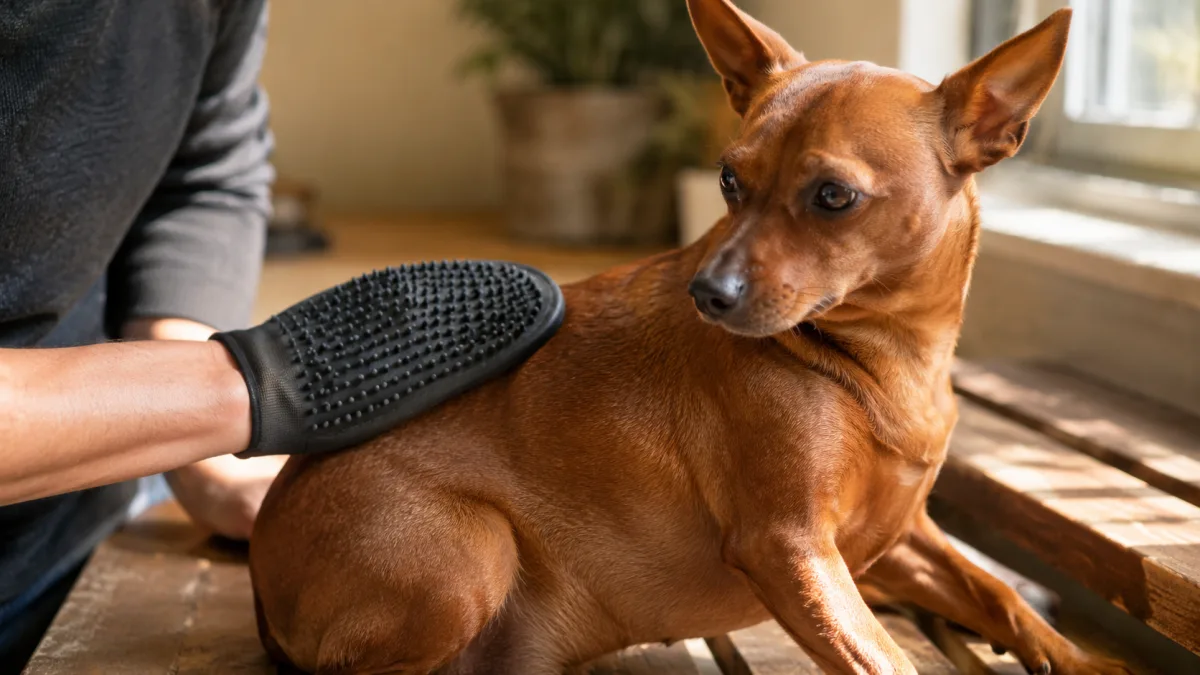
The Min Pin coat is the easiest to maintain of any breed in this size range. There is no trimming, no professional grooming appointment, no dematting. A soft rubber grooming mitt or a natural-bristle brush once a week removes dead hair, distributes skin oils along the coat shaft, and keeps that characteristic glossiness intact. The whole process takes five minutes. Compare that to the weekly hour-plus commitment of a double-coated breed, and the appeal of the smooth coat becomes obvious.
Bathing is needed roughly every four to six weeks, or when the dog is visibly dirty. Because the Min Pin has thin skin and no protective undercoat, use a gentle dog-formulated shampoo and make absolutely sure the rinse water is warm — not hot, not cold. Wrap the dog in a towel immediately after rinsing. These dogs chill fast when wet.
The teeth require the most consistent attention of any grooming task. Research consistently shows that extra-small breeds (under about 14 pounds) are two to five times more likely to develop periodontal disease than large breeds. The reason is structural: small dogs have proportionally large teeth relative to jaw size, which causes crowding and accelerates plaque accumulation. Daily tooth brushing with a dog-formulated toothpaste is the gold standard. Dental chews approved by the Veterinary Oral Health Council (VOHC) are a useful supplement but not a substitute for the brush.
Nail trimming every three to four weeks keeps the quick from growing forward. Overgrown nails affect the gait — a problem worth preventing in a breed whose elegant hackney movement is part of the appeal. Ears should be checked weekly; if there is dark debris or odor, clean with a cotton ball and a vet-approved ear cleaner, working only in the visible portion of the ear canal.
Common health problems in Miniature Pinschers
The Min Pin is a sturdy little dog by toy-breed standards, but several conditions appear with enough regularity to warrant monitoring.
Patellar luxation is the most common orthopedic issue in toy breeds and the Min Pin is no exception. The kneecap (patella) sits in a groove on the femur; in luxation, it slips sideways out of that groove. Severity is graded 1 through 4. Grade 1 luxation is intermittent and causes the dog to skip a step occasionally before the kneecap resets itself. Grade 2 may require manual manipulation to return the patella to position. Grades 3 and 4 involve permanent or near-permanent displacement and typically require surgical correction. Annual palpation by a veterinarian catches progression early, and OFA certification of breeding dogs reduces heritability in future litters.
Legg-Calvé-Perthes disease (LCP) affects small breeds almost exclusively. The blood supply to the femoral head — the ball at the top of the thigh bone — is disrupted, causing avascular necrosis: the bone tissue dies and the joint collapses. Onset is typically in puppyhood, between 3 and 18 months. The dog shows progressive hindlimb lameness and pain. The standard treatment is femoral head and neck ostectomy (FHO), a surgery that removes the dead bone and allows a fibrous false joint to form. Prognosis with surgery and physiotherapy is generally very good.
Progressive retinal atrophy (PRA) is a group of genetic eye diseases in which the photoreceptor cells of the retina degenerate over time, leading to eventual blindness. Affected dogs typically lose night vision first, then daytime vision over months to years. There is no treatment, but DNA testing of breeding stock can identify carriers and prevent affected puppies from being produced. When purchasing a puppy, ask specifically whether the parents have been DNA-tested clear for PRA.
Mucopolysaccharidosis Type VI (MPS VI) is a lysosomal storage disease caused by a mutation in the ARSB gene. The affected enzyme is responsible for breaking down certain complex sugar molecules; without it, those molecules accumulate in cells throughout the body. In Min Pins with two copies of the mutation, the results include skeletal abnormalities, cloudy corneas, and, in severe cases, progressive neurological deterioration. DNA testing is available and responsible breeders screen for it. A dog with one copy of the mutation (carrier) is clinically normal but can pass the gene to offspring.
Hypothyroidism is less common in small breeds than in medium and large ones, but it does occur in Min Pins. Symptoms include unexplained weight gain, lethargy, coat thinning, and increased shedding. A simple blood test (thyroid panel) confirms the diagnosis. Treatment is daily oral thyroid supplementation — straightforward to manage once established.
For general context on how health screening shapes breed-wide outcomes, the Staffordshire Bull Terrier health problems overview covers how genetic testing programs work across breeds.
Temperature sensitivity and environmental care
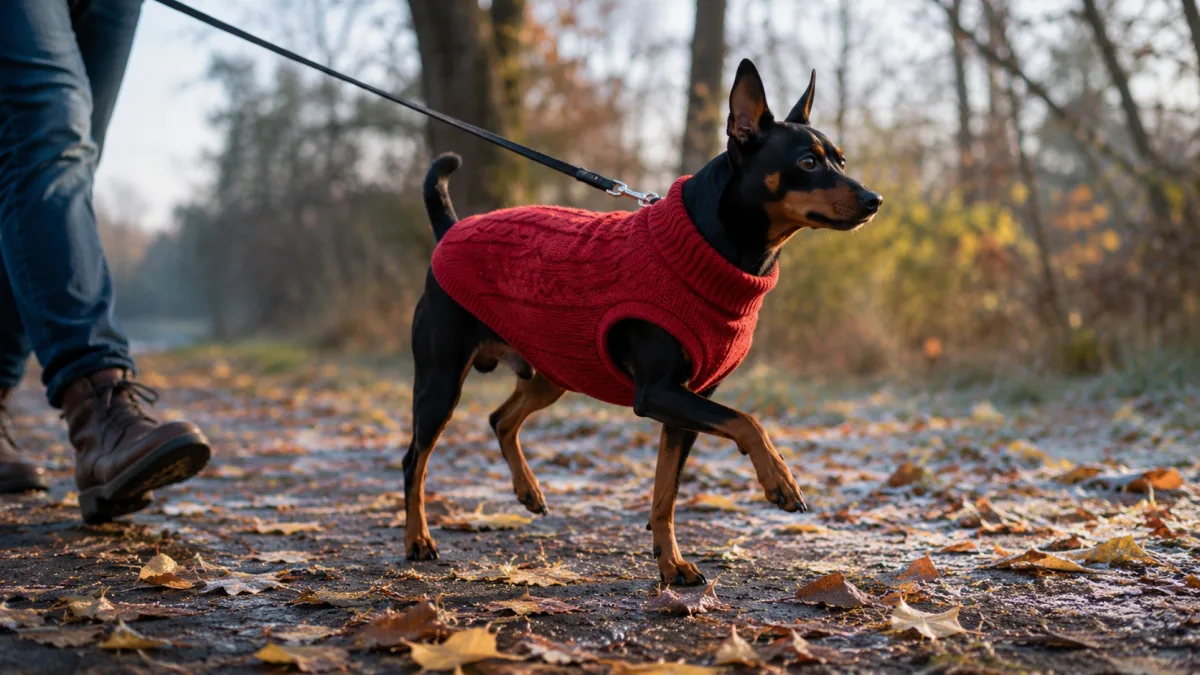
The single-layer smooth coat that makes grooming effortless creates a real vulnerability to cold. There is no insulating undercoat, virtually no body fat reserve, and relatively large surface area relative to mass. Below about 50°F (10°C), most Min Pins show visible discomfort — shivering, reluctance to move, tucking the body tight. A sweater or coat is not indulgent for this breed; it compensates for a genuine physiological limitation. For outdoor walks in cold weather, a well-fitted dog coat that covers the torso is practical equipment.
Heat carries its own risks. The Min Pin lacks the flat face of a brachycephalic breed, so it can pant normally and thermoregulate reasonably well — but its small body heats up quickly under vigorous exercise in high temperatures. Schedule intense activity in the early morning or evening during summer, provide constant access to fresh water, and watch for the early signs of heat stress: excessive panting, drooling, or a glazed expression.
Indoors, dry winter heating can cause skin irritation in thin-skinned small dogs. Keeping household humidity at a comfortable level and checking for dry or flaky skin during winter grooming sessions catches problems early. Because the Min Pin's coat offers almost no protection against abrasion, supervise interactions with rough surfaces or play equipment that might scrape the skin.
Veterinary care schedule and preventive health
Puppies need the core vaccination series at 8, 12, and 16 weeks of age, along with deworming at each visit. The discussion about spay or neuter timing typically happens around 6 months; your veterinarian can advise based on the individual dog's development. Rabies vaccination follows local legal requirements.
Adult Min Pins do well on an annual wellness exam schedule that includes a heartworm test and a fecal parasite check. Ask the veterinarian to palpate the knees at every visit — catching patellar luxation progression from Grade 2 to Grade 3 before symptoms worsen allows for better surgical planning. Eye exams are worth requesting periodically given the breed's PRA risk, particularly in dogs from lines that have not been DNA-tested.
Dental cleaning under general anesthesia will likely be needed on a regular cycle — often every one to two years — depending on how effectively home dental hygiene keeps tartar in check. This is one of the costs of owning a small breed that many owners do not anticipate. The investment is worthwhile: untreated periodontal disease in small dogs leads to tooth loss, chronic pain, and systemic bacterial exposure that can affect the heart and kidneys over time.
Heartworm prevention is year-round in most regions. Flea and tick prevention protocols depend on local parasite pressure. If you are purchasing a puppy from a breeder rather than adopting a rescue, ask for documentation of health testing on both parents: OFA knee and hip evaluations, DNA tests for PRA and MPS VI, and eye certification from a veterinary ophthalmologist. For a broader look at how health questions factor into small-breed ownership, the Miniature Schnauzer common questions guide covers similar territory for another German toy-adjacent breed.
Lifespan and long-term care
The Miniature Pinscher lives 12 to 16 years when well cared for — a longer window than most medium and large breeds, and toward the upper end even among toy dogs. The AKC lists 12 to 16 years; VCA Animal Hospitals notes 12 to 14 years as typical. Either way, adopting a Min Pin is a fifteen-year commitment for many owners. That long horizon changes the calculus on health investments: dental care, annual bloodwork, and knee monitoring are not nickel-and-diming — they are the difference between a healthy 14-year-old and a dog managing chronic pain and dental disease at 10.
Senior Min Pins — generally dogs over 10 — benefit from twice-yearly vet visits. Bloodwork at that stage catches kidney changes, thyroid shifts, and blood glucose trends early enough to manage medically. Arthritis from long-standing patellar luxation becomes more pronounced with age; joint supplements (glucosamine, omega-3 fatty acids) and veterinary-prescribed pain management improve quality of life substantially. Exercise remains important but may need to shift from high-impact running to slower, shorter walks that keep the muscles conditioned without stressing aging joints.
Diet should be reassessed in the senior years as well. Many dogs become less active and need fewer total calories. A senior-formula small-breed food with appropriate protein levels (enough to maintain muscle mass) and controlled fat and phosphorus levels supports aging kidneys. Some Min Pins thrive on their adult food well into old age; others need adjustment. Let body condition scores guide the decision rather than age alone.
If you are considering a Min Pin as a companion for another dog, the Basset Hound common questions guide and the Lhasa Apso common questions guide both touch on multi-dog household dynamics for breeds with strong personalities.
The single health-care habit that pays the greatest dividend across a Min Pin's long life is consistent dental care. The math is straightforward: extra-small dogs are disproportionately affected by periodontal disease, the disease is largely preventable with daily brushing, and prevention costs a fraction of what extraction surgery and anesthesia cost — not to mention the months of chronic discomfort between dental appointments that the dog never complains about but absolutely experiences. Start brushing the teeth at puppyhood so the dog accepts it as routine, and keep it up. Of all the things an owner can do for a Min Pin's long-term wellbeing, this is the one with the clearest return.
Frequently Asked Questions
Is the Miniature Pinscher related to the Doberman Pinscher?
No. Despite the visual resemblance, the two breeds share no direct lineage. The Min Pin is a much older breed, developed in Germany from German smooth-haired Pinschers, Smooth Dachshunds, and Italian Greyhounds — primarily to hunt rats in farm stables. The Doberman was created in the late 1800s by Karl Friedrich Louis Dobermann, more than two centuries after the Min Pin's ancestors were already established. The similar appearance is convergent; the breeds are not related.
How much exercise does a Miniature Pinscher need daily?
Plan for 30 to 45 minutes of vigorous activity per day. This can be a brisk leash walk combined with active play — fetch, tug, or running in a securely fenced yard. Mental stimulation through puzzle feeders or trick training counts toward the total. A Min Pin that does not get enough outlet for its energy will find its own activities, typically ones involving destruction or compulsive behavior.
Are Miniature Pinschers good for first-time dog owners?
They can be, with realistic expectations. Min Pins are confident, intelligent, and easily bored, which means they need consistent structure more than most toy breeds. They learn quickly but can use that intelligence to test boundaries just as fast. An owner who establishes clear routines and commits to regular mental and physical exercise will have a rewarding companion. An owner expecting a passive lapdog will find the breed challenging.
Do Miniature Pinschers need clothes in winter?
Yes, for most climates. The single-layer smooth coat provides almost no insulation. Below about 50°F (10°C), most Min Pins show visible discomfort, and in genuinely cold weather a properly fitted dog coat or sweater is practical rather than decorative. Pay particular attention to keeping the dog dry; a wet Min Pin loses heat rapidly. Bootees protect the paws from ice-melt chemicals and cold pavement on very cold days.
What is the most common health problem in Miniature Pinschers?
Patellar luxation — the kneecap slipping out of its groove — is the most frequently seen orthopedic issue in the breed. Mild cases (Grades 1–2) may never require intervention beyond monitoring; more severe luxation (Grades 3–4) typically requires surgical correction. Ask your veterinarian to check the knees during annual exams. Beyond that, PRA and MPS VI are the genetic conditions most worth verifying through breeder health testing before purchasing a puppy.
Sources and verification
Check current details with these primary or subject-authority sources before acting on the information.

Linda Fehrman
Edits general wellness and relationship explainers. Health material is educational, avoids diagnosis and links to health-authority guidance.
1 Comment
Join the discussion. Comments are moderated before appearing.