

How to Conduct a Job Interview is not about asking clever questions and trusting your gut. A good interview is prepared, consistent, respectful, job-related, and easy to compare across candidates. The goal is to learn whether the person can do the work, not whether the conversation felt familiar.
Interviewing also affects your reputation. Candidates notice disorganization, vague roles, repeated questions, and interviewers who seem distracted. A clean process helps the employer and the applicant.
What Should You Do Before The Interview?
Start with the job. Review the duties, required skills, work schedule, success measures, pay range if your process shares it, and what the new hire must handle in the first months. Then turn those needs into interview topics.
The U.S. Office of Personnel Management explains structured interviews as a method for measuring job-related competencies through consistent questions about behavior or proposed behavior. That is the right foundation.
How Do You Build A Structured Interview?
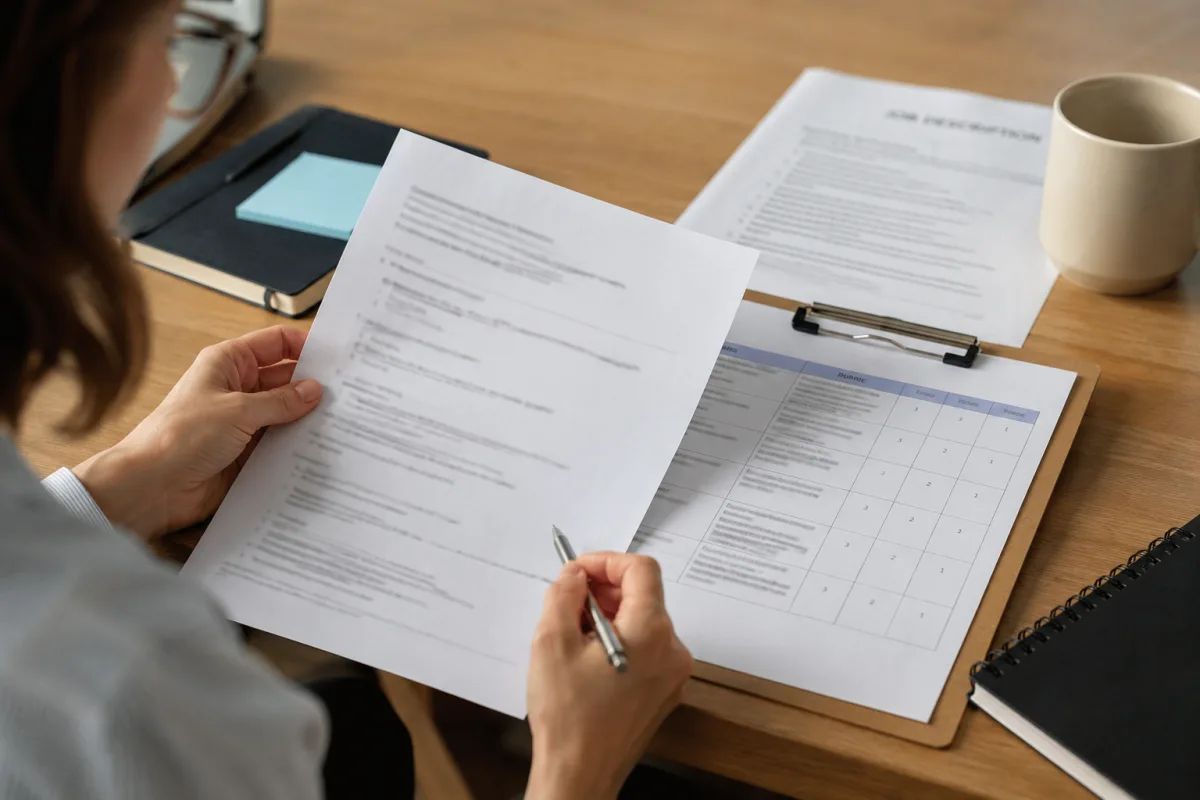
Choose 5 to 8 competencies that actually matter for the job: customer service, accuracy, teamwork, conflict handling, technical judgment, safety, writing, leadership, or schedule reliability. Write questions for each one.
Ask every candidate for the same role the same core questions. Follow-up questions are fine when they clarify an answer, but the core should stay consistent. That makes comparison fairer and notes more useful.
What Questions Should You Ask?
Use behavior and situation questions. "Tell me about a time you handled an upset customer." "Walk me through how you check your work for errors." "What would you do if two urgent tasks arrived at the same time?"
SHRM's sample interview questions are useful for building prompts, but do not copy questions blindly. Tie every question to the role. If customer pressure is central, Livecub's customer service complaints guide may help frame realistic service scenarios.
What Questions Should You Avoid?
Avoid questions about protected characteristics, family plans, childcare, religion, disability details, age, national origin, medical history, genetic information, or anything not needed for the job. Ask about the work requirement, not the personal category.
The EEOC explains that federal laws protect applicants and employees from employment discrimination based on categories including race, color, religion, sex, national origin, age, disability, and genetic information. Review the EEOC employees and applicants page before training interviewers.
How Should You Open The Interview?
Start with a brief welcome, your name and role, the expected length, the structure, and when the candidate can ask questions. A clear opening lowers stress without giving away answers.
Do not spend the first half selling the company or talking about yourself. The candidate needs context, but the interview time should mostly gather evidence about job-related skills and fit with the role's real demands.
How Do You Take Good Notes?

Write facts, examples, and ratings tied to the criteria. Avoid personal impressions like "seems nice" or "not our type." Notes should help someone understand why a score was given.
Score each competency soon after the answer, not three days later when the most charismatic candidate is easier to remember. A simple rubric can separate strong evidence, partial evidence, weak evidence, and no evidence.
How Do You Reduce Bias?
Use the same questions, a rubric, multiple trained interviewers when possible, and time to score before group discussion. Do not let one interviewer's first impression become the room's conclusion.
Structured process does not remove judgment. It improves the judgment by making people explain what evidence they heard. If workplace tension already affects a team, Livecub's rude coworker guide is a reminder that interpersonal behavior should be discussed through examples, not labels.
What Should Panel Interviewers Do?

Assign roles before the candidate arrives. One person opens, each person asks specific questions, one watches time, and everyone takes notes. Do not make the candidate answer the same question three times because the panel did not coordinate.
Panel interviews can feel intense, so keep the tone professional and human. Let the candidate know who is in the room and why. A panel should gather better evidence, not create an endurance test.
How Do You Make Practical Tests Fair?
Work samples can be useful when they mirror the job and respect the candidate's time. A short writing exercise, troubleshooting task, role-play, spreadsheet review, or presentation may show skill better than another abstract question.
Keep the task reasonable, explain the time limit, and score it with the same rubric for every candidate. Do not ask candidates to produce free work that the company will use. A test should measure ability, not exploit effort.
How Do You Handle Candidate Questions?
Leave time for them. Strong candidates often ask about success measures, training, team structure, schedule, management style, tools, and why the role is open. Answer honestly.
If you do not know, say you will follow up. Do not improvise promises about salary, remote work, promotion, or flexibility. A messy answer can create disappointment later.
How Do You Close The Interview?
Explain the next step, expected timing, and who will contact them if your process allows that detail. Thank them for their time. Make sure they know how to send follow-up material if requested.
Candidate experience matters even when you do not hire the person. A respectful close is part of the employer brand. Livecub's receptionist and administrative assistant duties shows how front-desk and coordination roles can shape first impressions in many workplaces.
What Happens After The Interview?
Score before discussion, compare evidence against the rubric, check references only through your approved process, and document the decision. Do not let unrelated personal similarity drive the final choice.
If feedback will be given, keep it factual and role-related. "We selected a candidate with more direct scheduling software experience" is safer and more useful than vague personality comments.
How Do You Train Interviewers?
Give interviewers the job criteria, question list, rubric, legal boundaries, note examples, and closing script. Do a short practice round before asking someone to interview real candidates.
Interviewing is a workplace skill. Livecub's customer service training ideas are a different topic, but the training lesson fits: people perform better when expectations are practiced, not merely announced.
How Do You Keep The Process Moving?
Decide who owns scheduling, reminders, room setup, score collection, candidate updates, and final decision notes. Delays often come from unclear ownership, not lack of interest.
Set a decision meeting before interviews start. If everyone waits until calendars are open, the strongest candidates may have accepted another offer. A fair process should also be timely.
How Do You Interview Remote Candidates?
Remote interviews need the same structure as in-person interviews, plus a few practical checks. Send the link early, test your camera and sound, explain who will join, and keep the question order clear.
Do not judge a candidate harshly for a brief technology issue unless the job itself requires live technical performance under pressure. Separate job skill from home internet luck. If the role is remote, ask about communication habits, availability overlap, and how they organize work.
Give remote candidates the same courtesy as local candidates: clear timing, focused questions, and a prompt close.
If the interview includes multiple remote stages, avoid making the candidate repeat basic background every time. Share notes internally, then use later rounds for deeper job evidence. Repetition wastes time and can make the process look disorganized.
Good coordination also keeps interviewers from asking off-script filler because they arrived unprepared and rushed again.
This article is general hiring information, not legal advice. Employment law varies by location and situation, so employers should work with qualified HR and legal professionals for policy, compliance, and interview-question review.
Frequently Asked Questions
How long should a job interview be?
Many interviews run 30 to 60 minutes, depending on role complexity and the number of questions.
Should every candidate get the same questions?
For the same role, the core questions should be the same so answers can be compared fairly.
Can I ask follow-up questions?
Yes, when they clarify the answer and stay tied to the role.
Should I take notes during the interview?
Yes. Keep notes factual, job-related, and connected to the scoring criteria.
What is the biggest interview mistake?
Relying on unstructured conversation and personal instinct instead of role-related evidence.
What Is The Best Interview Method?
Prepare the role criteria, ask structured questions, score with a rubric, avoid unlawful or irrelevant topics, and close with clear next steps. A good interview feels human, but it is still built on evidence.

Alyssa Curlin
Edits general health, nutrition and education explainers. Medical topics are educational and link to public-health guidance.




Leave a reply
Replying to