
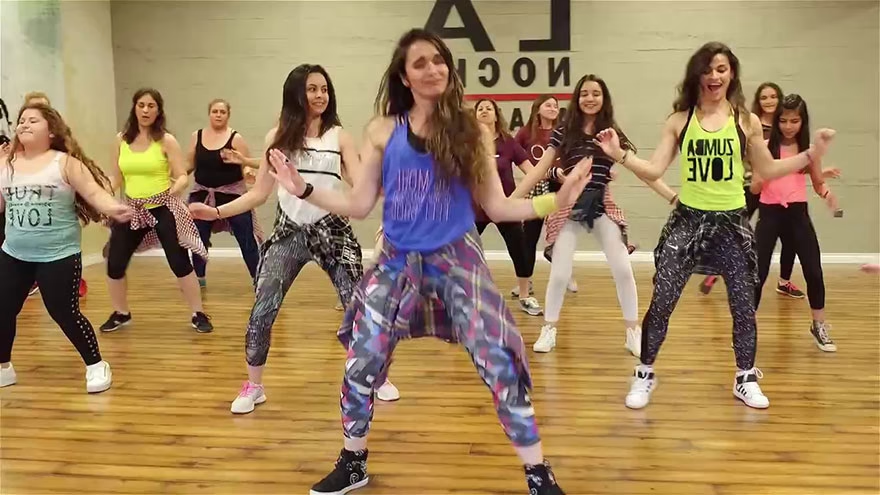
A Zumba Routine Starts With the Song
How to Create a Zumba Routine begins with listening, not inventing steps. The music tells you the rhythm, energy, repeats, breaks, and mood.
Choose a song you can count, cue, and repeat without guessing. If you are always surprised by the next section, students will be too.
The best choreography feels like it belongs to the song.
Know the Zumba Framework
Zumba's official instructor training page says its training covers fundamentals, cueing, choreography, class leadership, class structure, music, licensing, and ZIN membership.
That matters because a Zumba routine is not just any dance sequence over Latin music. If you are teaching under the Zumba name, use the current official training and license rules.
Create inside the format before trying to be clever.
Map the Song First
Listen and write down the structure: intro, verse, chorus, bridge, break, repeat, ending. Use simple labels rather than long notes.
Then choose one movement idea for each section. A chorus may repeat the same combination every time, while a verse may use a simpler step.
Mapping prevents the routine from becoming a string of unrelated moves.
Keep the Base Steps Simple
Most students want to move, sweat, and feel successful. They do not want a routine that feels like an audition.
Zumba's instructor FAQ says Basic training includes steps to four basic rhythms: merengue, salsa, cumbia, and reggaeton, plus how to put them together into a song and create a first class.
Use simple steps that fit the rhythm before adding turns, arms, or direction changes.
Use Repetition on Purpose
Repetition is not boring when the music is good. It helps students learn without stopping.
Repeat the chorus choreography. Repeat the intro move if the same musical phrase returns. Repeat a foot pattern while changing arms only after the class has the base.
Students relax when they recognize what is coming back.
Build in Low-Impact Options
Every routine should have a version without jumps, deep squats, fast turns, or high kicks. The lower-impact version should still feel musical.
Offer a step-touch instead of a jump, a march instead of high knees, a small turn instead of a spin, or arms at chest level instead of overhead.
Livecub's chair dancing guide can help instructors think about rhythm and expression with less impact.
Choose One Focus Per Song
One song can focus on hips, another on footwork, another on arms, and another on cardio drive. Trying to make one song do everything often creates clutter.
Students remember routines faster when each track has a clear personality. A merengue track may be upright and driving. A cumbia track may feel more grounded. A reggaeton track may use sharper accents.
Give each song a job, then let the whole class feel varied.
Practice Cueing Early
Cue before the change, not after it. Use body direction, hand signals, eye contact, and short words. A long explanation during a song usually arrives too late.
ACE Fitness' group fitness preview notes that beat-based classes often use choreography or movement combinations paired with music to organize a continuous workout.
Good cueing makes students feel like they learned fast.
Plan the Energy Curve
A class should not start at maximum intensity and stay there. Use a warmup, build through medium songs, peak with stronger tracks, then bring the body down.
Within one routine, think the same way. Intro can be simple, chorus can be bigger, bridge can reset, and ending can land cleanly.
Livecub's Tae Bo weight loss guide is a different format, but it uses the same idea of rhythm, intensity, and repeatable combinations.
Respect the Warmup and Cooldown
The warmup is not a throwaway song. It teaches students the movement style, raises temperature, and gives the instructor a first look at the room.
The cooldown should slow the beat, reduce arm height, settle breathing, and offer gentle stretches after the body is warm.
Skipping either one can make the class feel rushed and less professional.
Avoid Overloading Arms and Feet
If the footwork is new, keep arms simple. If the arms are expressive, use easier feet. Changing everything at once makes students freeze.
Layer the routine. Teach the step, add direction, add arms, then add style. Remove layers when the room looks lost.
Layering lets beginners stay while experienced students add flavor.
Test the Routine Without Music
Walk through the moves slowly before trying full speed. Check whether transitions are clean and whether the body faces a logical direction.
If you cannot explain the structure in a few phrases, the routine may be too busy.
Livecub's basic aerobic steps guide can help with simple movement blocks that transfer into dance fitness.
Rehearse Like You Teach
Practice facing the direction you will face in class. Practice cueing out loud, smiling when appropriate, and recovering when you miss a phrase.
Record one rehearsal. Watch for unclear arms, late cues, too many turns, or places where you stop breathing.
A routine that looks good alone still needs to work with tired, mixed-level students in front of you.
Keep Editing After Class
The first time you teach a routine is feedback. Notice where students followed easily, where they got lost, and where the energy dropped.
Edit one section at a time. Do not rewrite the whole song after one imperfect class.
Good Zumba routines often become better after real students have moved through them.
Create a Backup Version
Have an easier version ready for a smaller room, tired class, older group, or first-time crowd. That may mean fewer turns, lower arms, and more repetition.
A backup version keeps the routine useful instead of forcing one choreography onto every room.
Good instructors adapt without making the class feel like something went wrong.
Build a Full Class List
One song is not a class. Once a routine works, place it inside a full playlist with a warmup, rising energy, peak tracks, a recovery song, and cooldown.
Watch for repeated movement patterns. If three songs in a row use fast turns, the room may get dizzy or overloaded. If every track uses overhead arms, shoulders may fatigue before the legs do.
A class list should feel varied without becoming random.
Use Student Feedback Carefully
Students may love a song but struggle with the choreography. They may also dislike a song the first week and follow it easily by the third.
Ask specific questions after class: Did the chorus make sense? Were the turns too fast? Did the low-impact option feel natural?
Use the answers to edit the routine, not to rewrite your whole teaching style overnight.
Respect Copyright and Class Rules
If you teach publicly, music use and branded class rules matter. Follow the current Zumba license terms and the policies of the gym, studio, or community space.
Do not assume a playlist that works at home is cleared for every teaching setting. Ask the facility how music licensing is handled.
Professional routine creation includes the parts students never see.
Keep a Routine Notebook
Track each song, rhythm, main step, low-impact option, cueing challenge, and class response. A simple notebook prevents you from repeating the same mistake across several songs.
It also helps when you need to replace one track quickly. You can see which routine has a similar intensity and which one gives the class a needed break.
A routine library makes teaching calmer.
Teach the Same Routine More Than Once
New instructors often abandon routines too quickly. Students usually follow better the second or third time because the song feels familiar.
Keep strong routines in rotation long enough for the class to enjoy them, then refresh small details instead of replacing everything at once.
That consistency also lets you improve cueing instead of learning brand-new choreography every week under pressure before class starts again that day too.
Frequently Asked Questions
How do I start creating a Zumba routine?
Choose a song, map its structure, pick simple base steps, repeat key sections, and practice cueing before teaching.
Should a Zumba routine be hard?
It should feel energetic, not confusing. Use layers so beginners can follow and experienced students can add style.
How many moves should one song have?
Use only enough moves to match the song structure. Many strong routines repeat a few clear combinations.
Can I make my own Zumba choreography?
Licensed instructors should follow current Zumba rules and training. Use official resources when teaching under the Zumba name.

Chiara Bradshaw
Covers education, culture and creative topics with an emphasis on readable explanations and verifiable references.
Leave a reply
Replying to