
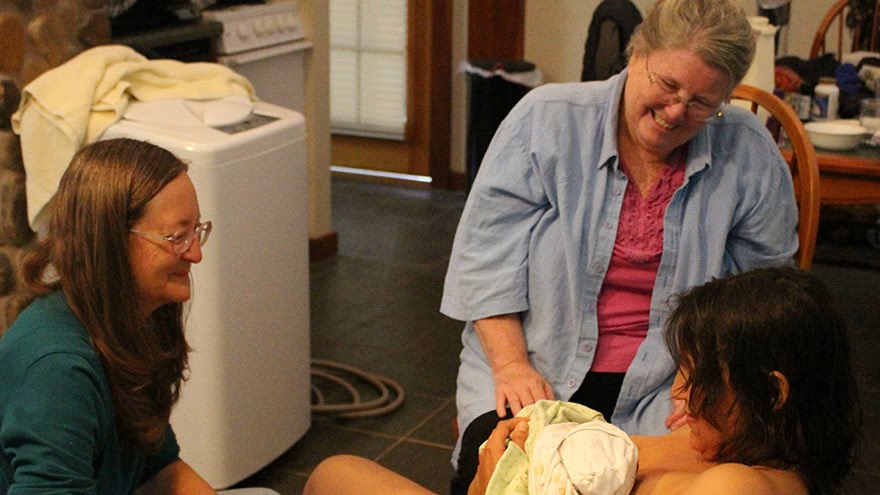
How to Give Birth at Home is not a do-it-yourself plan. A planned home birth, if considered at all, should involve a qualified maternity professional, careful risk screening, emergency transfer planning, and informed consent about risks.
This is general pregnancy education, not medical advice. Talk with your OB-GYN or midwife before making any birth setting decision, and call emergency services for urgent symptoms.
Start With Risk Screening
ACOG says planned home birth is associated with fewer interventions but higher risk of perinatal death and neonatal seizures than planned hospital birth. See ACOG's planned home birth guidance.
Home birth should not be treated as a lifestyle choice separated from medical risk. Fetal position, prior cesarean, twins, high blood pressure, diabetes, bleeding, and other factors can change safety.
Choose Qualified Care

A home birth should be attended by a qualified midwife or physician practicing in an integrated system with access to consultation and transfer. Credentials, licensure, malpractice coverage, and hospital relationships matter.
Ask who attends, who backs them up, what equipment they carry, and how they handle emergencies.
Know Contraindications
ACOG lists fetal malpresentation, multiple gestation, and prior cesarean delivery as absolute contraindications to planned home birth.
If any higher-risk factor applies, do not shop for someone who will ignore it. Ask why a hospital or birth center is recommended.
Build A Transfer Plan

The plan should name the hospital, route, travel time, transport threshold, who calls, who rides, and what records go with you.
The American Academy of Pediatrics also stresses planning for safe care of the newborn in its planned home birth statement.
Prepare The Space
The birth space should be clean, warm, well lit when needed, and easy for emergency responders to enter. Pets, clutter, and narrow paths can interfere with care.
A home birth room is not only about comfort. It must work under pressure.
Supplies
Your midwife or clinician should provide a supply list. Do not invent a medical supply plan from the internet.
Common household items may include clean towels, waterproof protection, trash bags, baby blankets, charged phones, and easy access to water, but medical supplies belong to the professional.
Early Labor
Early labor at home may involve rest, hydration, timing contractions, and staying in touch with your care team.
Livecub's early labor support guide can help partners think about useful support.
Food And Hydration
Labor can be long. Ask your care team what food and drink are appropriate for your situation.
If nausea is active, Livecub's bland diets for pregnancy may help with gentle food ideas, but follow labor instructions from your clinician.
Newborn Plan

The baby needs warmth, breathing assessment, feeding support, vitamin K discussion, eye care where applicable, newborn exam, and follow-up. Ask who does each step and when.
A home birth plan must include care after the baby is born, not only the delivery moment.
Emergency Signs
Call for help for heavy bleeding, fainting, seizure, severe headache, fever, green or foul fluid, shoulder dystocia concern, cord prolapse, poor fetal movement, or a baby who is not breathing well.
Do not wait for a transfer plan to feel polite. Emergencies need speed.
Emotional Readiness
Some people choose home birth after difficult medical experiences. That history deserves respect, but fear of hospitals should be discussed openly with a clinician.
If pregnancy mood is heavy or fear is taking over, Livecub's depression during pregnancy article may be relevant.
Partner Role
A partner can protect the space, time contractions, keep phones charged, manage pets, prepare food, and support transfer decisions. They should not act as the medical team.
For closeness and communication in pregnancy, Livecub's staying intimate during pregnancy is a separate support topic.
Paperwork
Keep prenatal records, blood type, test results, medication list, allergies, insurance card, pediatrician information, and emergency contacts in one folder.
If transfer happens, clear records can save time.
After Birth
Plan postpartum monitoring, bleeding checks, newborn feeding, safe sleep, and follow-up appointments. The first hours after birth still carry risk.
Home should feel calm, but it still needs medical follow-through.
Insurance And Costs
Ask about fees, what insurance covers, what is paid out of pocket, and what happens financially if transfer occurs. Cost should not be the only factor, but surprise bills can add stress.
Keep receipts, contracts, and backup hospital information in the same folder as medical records.
Group B Strep And Labs
Prenatal screening still matters in a home birth plan. Ask how group B strep, blood type, anemia, infections, and other tests are handled and shared.
A home setting should not mean skipping standard prenatal care.
Weather And Access
Weather, stairs, rural roads, traffic, locked gates, and poor cell service can all affect transfer time. Walk through the real route, not the ideal route.
If access is unreliable, that changes the risk discussion.
Prenatal Care Still Comes First
A home birth plan should sit on top of regular prenatal care, not replace it. Keep appointments, labs, ultrasounds, screening conversations, and medication reviews current so the birth team is not working from old information.
If a problem appears late in pregnancy, the plan may need to change. A good plan leaves room for that without treating the change as failure.
Equipment Boundaries
Ask exactly what equipment the clinician brings for bleeding, newborn breathing support, vital signs, sterile procedures, and emergency communication. You do not need to become the equipment manager, but you should understand what is available.
If the answer is vague, slow down and ask again. The point is not to collect gear; it is to know how problems will be recognized and escalated.
Water Birth Questions
Some families ask about laboring in water or delivering in water. That decision should be discussed with the care professional, including temperature control, sanitation, entry and exit, monitoring, and what would make the tub unsafe.
Do not assume a rented tub is harmless because it looks comfortable. Water changes access, movement, and emergency response.
Postpartum Bleeding Plan
Bleeding after birth needs a clear plan. Ask what amount is expected, what amount triggers treatment or transfer, how vital signs are checked, and who watches the birthing person while everyone is focused on the baby.
The hours after birth can feel quiet, but they still require active observation.
Baby Follow-Up
Ask when the newborn will be seen again, how weight, feeding, jaundice, temperature, and breathing will be checked, and how records reach the pediatrician. A birth at home still needs pediatric follow-up.
Write down the after-hours number before labor begins. Searching for it with a newborn in your arms is a poor system.
Consent And Backup Decisions
Talk through vitamin K, eye medication, newborn screening, cord management, transfer consent, and emergency decision-making before labor. Hard choices are harder when everyone is tired.
The strongest home plan is boring on paper: names, thresholds, phone numbers, records, and decisions already discussed.
Sibling And Household Plan
If there are older children at home, arrange childcare that does not depend on the laboring person's attention. Children may need meals, sleep, reassurance, and someone who can leave with them quickly if transfer happens.
The same applies to pets, deliveries, visitors, and work calls. A quiet room is easier to protect when the household plan is already assigned.
Pain Relief Expectations
Home birth pain relief options are different from hospital options. Discuss movement, water, breathing, massage, sterile water injections if offered, and what happens if the person wants an epidural.
Changing location for pain relief is a valid medical and emotional decision. It should not be framed as giving up.
After-Hours Communication
Clarify how to reach the midwife or clinician during early labor, active labor, and the first days after birth. Ask what information they want before they come to the house.
A good call script includes contraction pattern, fluid color, bleeding, fetal movement, temperature, pain, and any symptom that feels unusual.
What Not To Do
Do not delay calling because the room is not ready, do not ask the partner to catch the baby without guidance, and do not treat online birth stories as medical instruction.
A planned home birth is safest when everyone respects limits and gets help early.
Frequently Asked Questions
Is home birth safe for everyone?
No. Safety depends on pregnancy risk, provider qualifications, transfer access, and emergency planning.
Who should attend a home birth?
A qualified maternity professional with appropriate licensure, equipment, consultation, and transfer arrangements.
What makes home birth higher risk?
Breech position, twins, prior cesarean, medical complications, and poor transfer access can raise risk.
What should be in the transfer plan?
Hospital, route, travel time, call threshold, records, transport, and who handles each step.
Can I plan home birth without a midwife?
No. Unassisted birth carries serious risks and should not be treated as a safe plan.
Giving birth at home requires qualified care, strict screening, a real transfer plan, newborn care, and a low threshold for medical help. It is not a solo project.

Chiara Bradshaw
Covers education, culture and creative topics with an emphasis on readable explanations and verifiable references.




Leave a reply
Replying to