
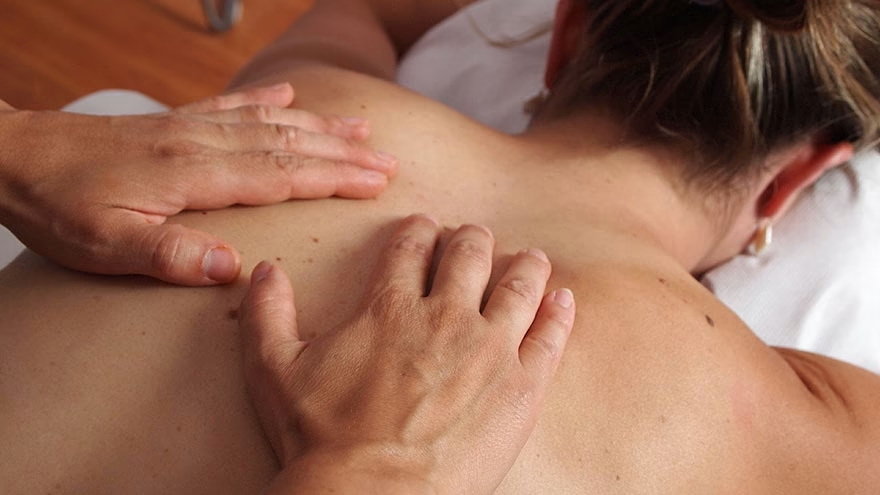
Ask before you touch
RAINN's Consent 101 guidance says consent should be clear, voluntary, and free of pressure. That applies inside marriage too.
A back rub is care only when she wants it. Ask if she wants a back rub, how much pressure feels good, and what areas to avoid.
Set up comfort first
Use a warm room, clean hands, trimmed nails, a towel, pillows, and a position that lets her breathe easily. Side-lying, sitting in a chair, or leaning forward may feel better than lying flat.
For a broader touch routine, massaging a wife can help you think about the whole setting, not only the hands.
Start with light pressure
Begin with broad, slow strokes over the shoulders and upper back. Let your hands warm the muscles before adding pressure. Avoid digging into the spine, ribs, kidneys, or painful spots.
Relaxation-focused ideas from relaxation massage fit well here because the goal is comfort, not fixing an injury.
Use feedback every few minutes
Ask short questions: lighter, firmer, higher, lower, or stop? Do not make her manage your feelings if she wants a change. Feedback is part of doing it well.
Planned Parenthood's page on talking about consent supports direct communication rather than guessing.
Avoid medical claims
A home back rub is not treatment for injury, nerve pain, severe spasm, fever, numbness, unexplained pain, or recent trauma. If pain is sharp, radiating, or unusual, stop and suggest medical advice.
Comfort touch should not become amateur therapy. The safest back rub respects limits.
Make the mood calm, not transactional
A back rub should not be used as a bargain for sex, forgiveness, or praise. If romance follows naturally, it should still be mutual and wanted.
If you want to make the evening romantic, homecoming romance ideas can inspire care without pressure.
End slowly
Finish with lighter strokes, then give her a moment before she sits up. Offer water, a blanket, or quiet. Do not immediately ask for a review like a customer survey.
For playful connection another time, romantic card games may fit better than extending touch when she is done.
Start with what can be verified
The practical version of this topic starts with checks that can be confirmed: consent, warm hands, trimmed nails, pillows, pressure, avoided areas, pain signs, feedback, stop signal, no pressure That keeps the decision tied to facts instead of mood, marketing, habit, or pressure.
Use the check before you make the bigger move. A quick review of records, rules, comfort, safety, fit, or timing can prevent a choice that becomes hard to undo.
Fit matters more than a perfect rule
The back rub should fit her consent, body position, pain level, pregnancy status, pressure preference, energy, and mood. This is why a simple answer can be misleading. The right move depends on the household, relationship, workplace, body, trip, animal, or setting in front of you.
When the setting changes, the advice should change with it. Repeating a rule without checking fit is how ordinary decisions turn into avoidable problems.
Watch the mistake that changes the outcome
The mistake to avoid is assuming marriage or romance removes the need to ask, listen, and stop when touch is not wanted. It usually happens when the first answer feels convenient enough that nobody checks the second effect.
Slow down at the point where the choice becomes hard to reverse. That point may be a deposit, a conversation, a medical decision, a trip launch, a workplace complaint, or a boundary around another person.
Keep a short record
Write down the source, date, name, plan, symptom, agreement, or rule while it is still fresh. A short record helps later if someone forgets, a policy changes, a pet gets sick, or a conversation needs to be revisited.
The record does not have to be formal. It only has to be clear enough that you can understand your own reasoning after the moment has passed.
Know when to pause
Pause when she says no, seems tense, has sharp pain, numbness, pregnancy concerns, recent injury, or asks you to stop. A pause is not overreaction. It is a way to keep the next step from being driven by uncertainty.
If the issue involves health, safety, rights, consent, money, or another living being, get the right kind of help. The right helper is part of the plan, not an admission that you failed.
Make the next step small and concrete
Choose one action that moves the decision forward without pretending the whole subject is solved. Call the clinic, ask the breeder, check the policy, set the room, pack the PFD, save the document, or say the boundary plainly.
A small action is useful when it removes confusion. If it creates more pressure or hides the real issue, it is the wrong step.
Review the result afterward
After the first action, notice what changed. Look at response, comfort, route fit, policy match, safety, timing, and whether the result matched the person or setting.
Good judgment improves when you review ordinary outcomes. The point is not to criticize yourself; it is to make the next decision cleaner.
Check the second effect
A decision rarely ends at the first result. A grooming choice affects comfort later, a romantic plan affects trust, a health choice affects cost, a rights complaint affects records, and a paddling route affects the return trip.
Look one step past the obvious benefit. If the second effect creates avoidable stress, change the plan before the first step locks you in.
Bring in the right person early
The right person may be a veterinarian, trainer, counselor, agency representative, land manager, experienced paddler, or the partner directly involved. Guessing alone is rarely the best path when the stakes are personal.
Ask a narrow question so the answer is useful. A clear question gets better help than a broad complaint that makes the helper rebuild the whole situation from the beginning.
Prepare for normal friction
Even a good plan meets friction. A puppy resists grooming, a partner feels tired, a policy answer takes time, a lake gets windy, or a breeder needs records before answering.
Build margin into the plan. Margin keeps ordinary delay from turning into irritation, pressure, or a rushed decision that ignores the facts you already collected.
Protect consent, comfort, and safety
For relationship topics, this means listening without punishment. For dog topics, it means reading stress, pain, heat, and fatigue. For work and travel topics, it means respecting rules that protect people from preventable harm.
A plan that requires someone to ignore discomfort is not a strong plan. Change the method before you ask another person or animal to carry the cost.
Use plain language when you explain it
Say what you checked, what you decided, and what happens next. Plain language lowers defensiveness and helps other people respond to the actual issue instead of guessing at your motive.
Clarity is a kindness when timing matters. It helps breeders, partners, managers, clinicians, and travel companions work with the same facts.
Leave room to change course
Changing course is not the same as quitting. It may mean choosing another breeder, calling the vet sooner, moving the kayak trip to a calmer day, changing the romantic plan, or using a formal workplace channel.
The better plan is the one that can respond to new information without becoming defensive. That flexibility is often what keeps the outcome steady.
Follow up before the details fade
A good follow-up can be very small. Save the record, send the thank-you note, schedule the vet visit, update the trip plan, confirm the boundary, or write down what the person said in their own words.
That small follow-up makes the advice usable later. It also keeps the next decision from starting with the same confusion you already worked through once. If another person is involved, share the update while it is still easy to understand.
Frequently Asked Questions
How much pressure should I use?
Start light and ask. Pressure should feel comfortable, not impressive.
Avoid the spine and painful areas.
Can a back rub help pain?
It may feel soothing for ordinary tension, but it is not medical treatment.
Stop for sharp, radiating, or unusual pain.
Should I use oil?
Only if she wants it and it will not irritate skin or stain fabrics.
A towel and clean hands may be enough.
Is consent needed if we are married?
Yes. Marriage does not remove the need for clear, pressure-free consent.
Care means listening.

Chiara Bradshaw
Covers education, culture and creative topics with an emphasis on readable explanations and verifiable references.




Leave a reply
Replying to