

How to Improve a Child's Focus at School starts by asking what is blocking focus. A child who is tired, anxious, hungry, confused, bored, overstimulated, or struggling with ADHD needs different support than a child who simply missed one instruction.
Better focus usually comes from clearer routines, smaller tasks, sleep, movement, teacher communication, and checking for health or learning concerns when patterns persist.
Start With Sleep
Poor sleep can look like poor motivation, inattention, irritability, or impulsive behavior. Before adding reward charts, check bedtime, wake time, screens, snoring, nightmares, and weekend sleep shifts.
HealthyChildren, from the AAP, recommends keeping screens out of children's bedrooms at night and turning off screens at least one hour before bedtime: HealthyChildren sleep habits.
If a child snores loudly, seems exhausted despite enough hours, or falls asleep in class, ask a pediatrician.
For school focus, consistency usually beats a dramatic bedtime overhaul. Move bedtime earlier by a small amount, protect the last hour from conflict, and keep the morning routine predictable.
Teachers often see sleep problems before parents do. If the child is yawning, irritable, or falling behind after lunch, ask whether tiredness is part of the classroom pattern.
Make Instructions Smaller

Many focus problems begin with instructions that are too long. Ask the teacher or child to break tasks into one or two steps at a time.
At home, say: put the worksheet in the folder, then bring me the backpack. Do not stack six steps and call it listening.
Have the child repeat the first step in their own words. That checks understanding without shaming them.
Visual cues can help, but keep them short. A child who cannot hold three spoken steps may not use a crowded checklist either.
If the child freezes after directions, ask what the first move is. Starting is often the hardest part, not caring.
Use Movement Strategically
Some children focus better after movement. A short walk, wall push-ups, carrying books, stretching, or a quick errand can reset attention.
Movement should not be used only as a reward after sitting still. For some kids, movement is part of getting ready to learn.
If a child is anxious about school performance, tryout nerves can offer transferable pressure-management ideas.
At school, movement can be quiet: handing in papers, standing at the back for a minute, using a foot band, or carrying a note. The best option is one the teacher can allow without disrupting the class.
At home, movement before homework can prevent a fight. Ten minutes outside may do more than another reminder to sit still.
Check For ADHD Patterns
ADHD is not diagnosed from one bad week. Look for patterns across settings: school, home, homework, friendships, chores, and transitions.
CDC says for children ages six and older, AAP recommends combining medication treatment with behavior therapy, including parent training, classroom interventions, peer interventions, and organizational skills training: CDC ADHD treatment.
If focus problems are persistent and impairing, ask the pediatrician or school about evaluation.
Create A Homework Landing Zone

At home, create one place for backpack, folder, pencils, charger, and current assignments. The goal is fewer missing-material battles.
Keep the area boring. Too many bins and labels can become another system to maintain.
A simple checklist often works better than repeated reminders from an annoyed adult.
Use Teacher Feedback Early
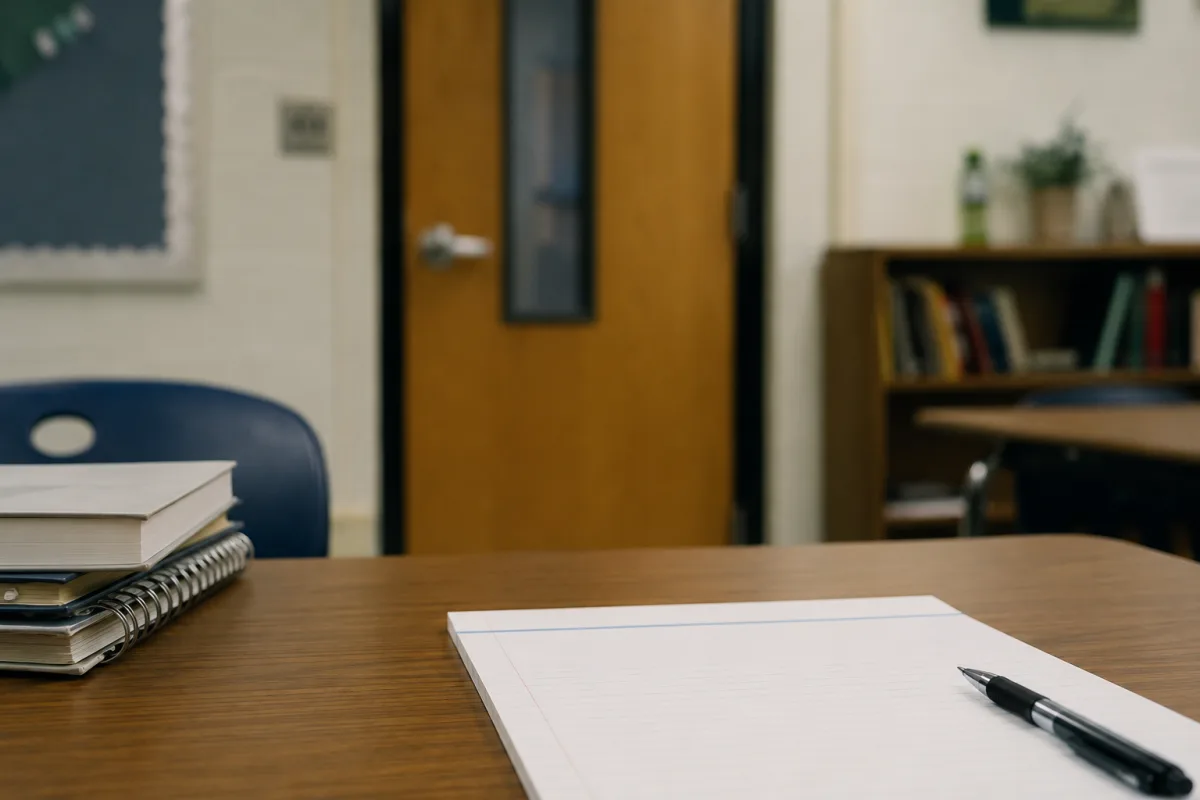
Ask the teacher what they see: drifting during instruction, rushing, forgetting materials, staring, talking, leaving the seat, or not starting work.
The pattern matters. A child who does not start may need task initiation support; a child who starts but stops may need chunking or feedback.
Ask what already helps at school before inventing a home plan.
Ask for examples, not labels. A note that says unfocused is less useful than a note saying the child loses place during multi-step math instructions.
If the teacher already uses a seating change, visual cue, or quiet prompt, copy the language at home so the child hears a familiar signal.
Reduce Mini Distractions
A child's focus can be chipped away by noise, clutter, hunger, itchy clothes, unclear directions, or social stress. Remove the easiest distractions first.
Do not make the child responsible for ignoring everything. Adults can change the environment too.
If hunger seems tied to attention dips, writing a food journal can be adapted into a simple snack, meal, and focus pattern check.
Use Positive Feedback
Catch the exact behavior you want repeated: you started within two minutes, you checked the folder, you asked for help before quitting.
Vague praise is less useful than specific feedback. It tells the child what worked.
Avoid making every school conversation about what went wrong.
Watch For Anxiety Or Mood
Focus can drop when a child is worried, sad, bullied, embarrassed, or afraid of mistakes. The child may look unmotivated while actually trying to avoid shame.
Ask neutral questions: what part of school feels hardest, when does your brain check out, and who helps you restart?
If speaking or participation is very difficult, selective mutism treatment may be a related topic to discuss with a professional.
Avoid asking why are you not focusing in an accusing tone. Many children do not know. Ask what was happening right before focus dropped.
If the child reports bullying, panic, headaches, stomachaches, or fear of a specific class, treat that as a real lead instead of a distraction from the focus problem.
Make Reading And Notes Active
For older children, passive rereading can look like studying while attention drifts. Try underlining one key sentence, writing a margin question, or explaining the idea out loud.
For younger children, use short reading blocks, finger tracking if helpful, and quick retells.
Focus improves when the task asks the brain to do something visible.
Coordinate Home And School
Choose one support to test across home and school for two weeks. Examples include a planner check, a first-step cue, a movement break, or a folder system.
Too many changes at once make it impossible to know what helped. A small shared plan is easier for the child and teacher to remember.
After two weeks, ask what got easier, what stayed hard, and whether the support should be kept, changed, or dropped.
Use the same words in both places when possible. A child who hears check the first step at school and home has one cue to learn, not two separate systems.
If the plan depends on a busy teacher doing ten extra steps each day, it may fail from overload. Keep school supports realistic.
Simple plans last longer.
Keep Rewards Small
Rewards can help some children start a task, but they should not replace skill-building. Keep them small, immediate, and tied to a clear behavior.
For example, reward starting homework within five minutes or checking the folder, not being good all week. Big vague goals create pressure.
If rewards make the child more anxious or argumentative, switch back to structure, feedback, and problem-solving.
Know When To Ask For Help
Ask for help if focus problems are persistent, affect grades or behavior, cause major homework battles, or come with sleep problems, anxiety, depression, headaches, vision concerns, hearing concerns, or developmental worries.
A pediatrician, teacher, school psychologist, or learning specialist can help sort out causes.
The goal is support, not blame.
Bring examples to the appointment or school meeting: unfinished assignments, teacher notes, sleep schedule, homework duration, and what has already been tried.
If the child does well in one subject and falls apart in another, say that. Uneven focus can point toward task difficulty, teacher fit, anxiety, interest, or learning gaps.
A clear pattern helps adults choose support instead of guessing from one difficult evening.
Frequently Asked Questions
What helps a child focus quickly?
Clear one-step directions, a short movement break, water, reduced distractions, and a visible first task can help.
Does poor focus mean ADHD?
Not always. Sleep, anxiety, hunger, learning issues, and unclear instructions can also affect focus.
Should I punish a child for not focusing?
Punishment rarely teaches focus skills. Use structure, feedback, and evaluation when patterns persist.
How can teachers help?
Teachers can use clear routines, chunked tasks, classroom behavior supports, movement breaks, and organizational tools.
When should I call the pediatrician?
Call when focus problems are persistent, impairing, or paired with sleep, mood, medical, or learning concerns.
This article is for general information only and isn't a substitute for medical or mental health advice. If symptoms affect daily life, talk with a qualified professional.

Linda Fehrman
Edits general wellness and relationship explainers. Health material is educational, avoids diagnosis and links to health-authority guidance.




Leave a reply
Replying to