
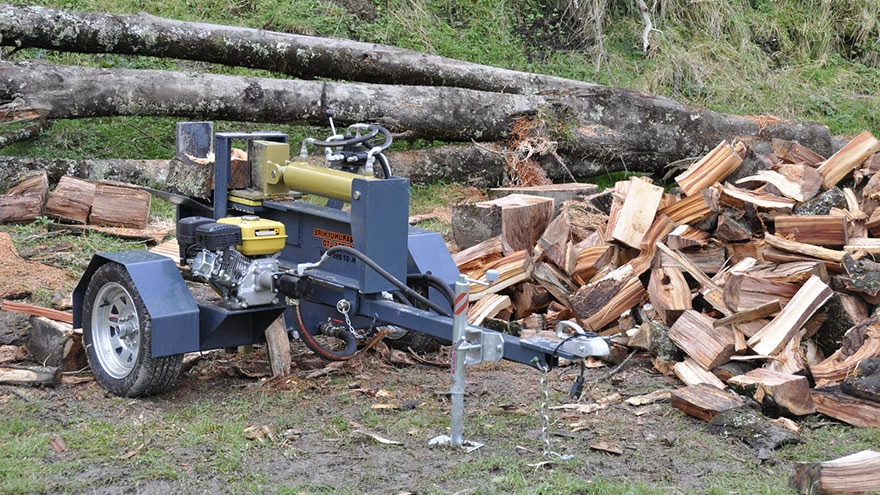
How to Make a Wood Splitter is a dangerous question if it turns into a casual welding project. A log splitter combines stored hydraulic energy, crushing force, moving steel, an engine or motor, and heavy wood that can twist without warning. This guide does not give a cut list or hydraulic build recipe. It explains the decisions, safety checks, and professional review a person needs before choosing between buying a certified splitter, repairing one, or fabricating only with qualified help.
Decide whether building is the right choice
For most homeowners, buying or renting a commercial splitter is the better answer. Commercial machines come with engineered frames, guards, labels, controls, pressure ratings, and manuals. A homemade splitter may look simple, but failure can mean crushed hands, burst hoses, flying steel, fire, or a towable machine that is unsafe on the road.
If the goal is saving money, price the whole project: steel, cylinder, pump, valve, hoses, fittings, engine or motor, reservoir, wedge, wheels, guards, paint, consumables, tools, testing, and professional inspection. The savings often shrink quickly.
Do not build from scrap guesses. A splitter is a force machine, not patio furniture.
Understand the main forces before design
A splitter frame has to resist the force created by the hydraulic cylinder pushing wood against a wedge or moving wedge. That force travels through welds, beams, pins, mounts, and stops. If one part is undersized, the machine may bend or fail under load.
Wood behavior adds uncertainty. Knots, twisted grain, frozen logs, and uneven cuts can push sideways or kick. The frame has to keep the log controlled while giving hands no reason to enter the danger zone.
Articles on wood stress failure and wood edgeband failure are not splitter design manuals, but they point to a useful lesson: material behavior under stress often surprises people who only look at the surface.
Respect hydraulic pressure and stored energy
Hydraulics can store and release energy fast. A hose, fitting, valve, cylinder, or pump must be rated for the system pressure and installed correctly. Leaks are not only messy; high-pressure fluid can penetrate skin and create a medical emergency.
OSHA's control of hazardous energy material explains why stored energy must be controlled during service. A splitter builder needs that mindset even in a home shop: shut down, relieve pressure, prevent restart, and verify before touching the system.
Pressure ratings are not suggestions. Every hose, fitting, and component must match the actual system, not the cheapest part available.
Design controls so hands stay out
Controls should let the operator run the machine without placing hands near the wedge, beam, or moving log. Commercial splitters often use control layouts that encourage the operator to stand in a safer position. A homemade control that can be bumped, tied down, or operated from the wrong side is a serious hazard.
OSHA's machine guarding topic gives the general principle: protect people from moving parts and points of operation. A splitter's point of operation is exactly where the temptation to reposition a log is strongest.
Never design around fast hands. Design around tired hands, cold gloves, awkward logs, and the person who reaches without thinking.
Have welding and frame work reviewed
A splitter frame needs welds that can handle repeated load. Pretty welds are not proof of strength, and heavy steel is not proof of good design. Beam size, bracing, weld preparation, pin mounts, axle placement, and cylinder alignment should be reviewed by someone qualified to evaluate structural work.
If you are not already a competent welder and fabricator, this is not the project to learn on. Practice welds belong on low-risk projects, not on a machine that crushes wood with hydraulic force.
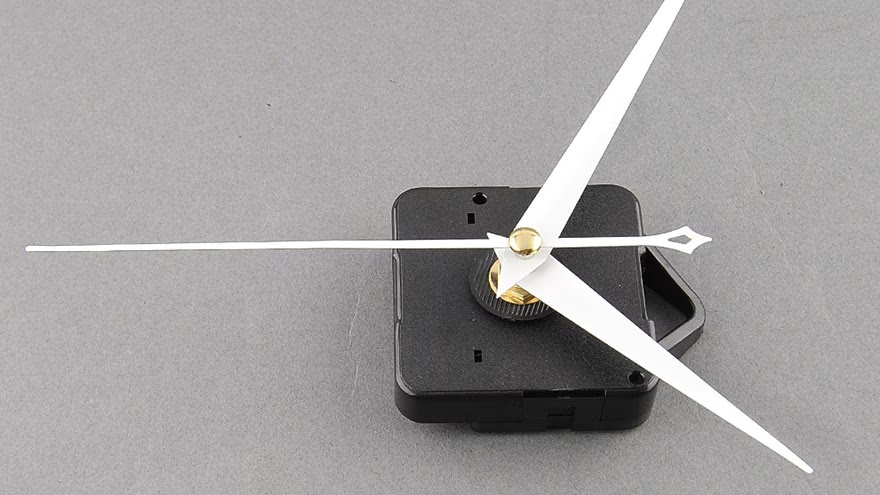
Other home projects, such as replacing clock hands, tolerate a small mistake. A splitter does not.
Plan guarding, shields, and work position
A safer splitter layout considers the operator's stance, log staging, split wood exit path, wedge movement, hose routing, engine heat, exhaust, and trip hazards. Hoses should be protected from abrasion, pinch points, and heat. Controls should be easy to release without leaning into danger.
Guards and shields should not block necessary visibility, but they should reduce exposure to moving parts, hot surfaces, and hydraulic spray. The operator should not have to stand over a hose or reach across the wedge path to control the machine.
The best guard is the one still in place. If a guard makes normal use impossible, people remove it, and the design has failed.
Think about power, noise, and location
Gas engines need ventilation, fuel storage, hot-surface awareness, and exhaust planning. Electric motors need correct wiring, weather protection, overcurrent protection, and safe extension cord practices. Both versions need stable ground and enough working room around the machine.
Noise and neighbors matter too. A splitter used near houses may require hearing protection, daytime scheduling, and a plan for chips and stacked wood. If the property itself is shared or governed by rules, a resource such as what is a townhome is a reminder that ownership context can affect what equipment is reasonable to use.
Choose the worksite before the machine. A powerful splitter in a cramped, sloped, cluttered area is still a bad setup.
Test with inspection, not bravery
Testing should be slow, controlled, and documented. Check leaks without hands near suspected pinholes, verify pressure relief, inspect welds, test controls, confirm return movement, and use small straight logs before difficult wood. Stop at the first sign of bending, binding, unusual noise, leaking, or heat.
Do not let bystanders stand near the machine during testing. Do not test at full force to prove a point. The goal is to find problems early, not to win an argument with a knotty log.
Retire a bad build. If the frame twists, the wedge binds, or hydraulics behave unpredictably, the answer is not more force.
Document the design before any metal is cut
A serious build starts on paper, not under a welding helmet. Draw the force path, component positions, guard locations, control position, hose routing, axle loads, engine or motor location, and operator stance. Then have someone qualified review the plan before buying parts.
Documentation also protects future maintenance. If no one knows the pressure rating, cylinder size, hose specification, or relief setting, the machine becomes harder to inspect and more dangerous to repair.
If it is not documented, it is not ready. Memory is a poor safety system for high-force equipment.
Plan maintenance before the first split
Maintenance needs safe access to the parts that will wear: hoses, fittings, filters, engine components, wedge surfaces, pins, wheels, and guards. A design that requires reaching into a pinch zone for routine checks is poorly planned.
Keep a maintenance log with inspection dates, leaks, hose replacements, weld concerns, and any abnormal behavior. Stop using the splitter when it changes sound, speed, alignment, or control feel.
Maintenance is part of the design. A machine that cannot be inspected safely cannot be trusted for long.
Choose renting when the job is occasional
If you split wood once or twice a year, renting may solve the real problem with less risk. A rental machine still needs careful operation, but it avoids designing, welding, storing, maintaining, and later explaining a homemade machine to someone else.
Compare rental cost with storage space, maintenance time, fuel, hydraulic fluid, and the risk of a poor build. Occasional work rarely justifies permanent machinery unless the property demands it.
Label limits clearly
Mark operating limits, warnings, and service notes where future users can see them. A machine should not depend on one person's memory.
Frequently Asked Questions
Is it cheaper to build a wood splitter?
Sometimes on paper, but rated components, steel, tools, testing, and professional review can erase the savings. Renting or buying is often safer.
Can I make a wood splitter from scrap metal?
Scrap metal is risky unless its grade, condition, and suitability are known. Unknown steel and unknown weld history do not belong in high-force machines.
What is the most dangerous part of a log splitter?
The crushing zone near the wedge and log is the obvious danger, but hydraulics, stored energy, hot engines, and unstable logs are serious too.
Should I add two-handed controls?
Control design should be reviewed by a qualified person. The goal is to keep hands away from the danger zone and prevent accidental activation.
The safest way to make a wood splitter may be to decide not to fabricate one. If you still proceed, treat it as engineered machinery that requires rated parts, guarding, inspection, and qualified review.

Tory Stearns
Edits practical household, travel and lifestyle explainers. Claims that can change are linked to current primary or subject-authority sources.


Leave a reply
Replying to