
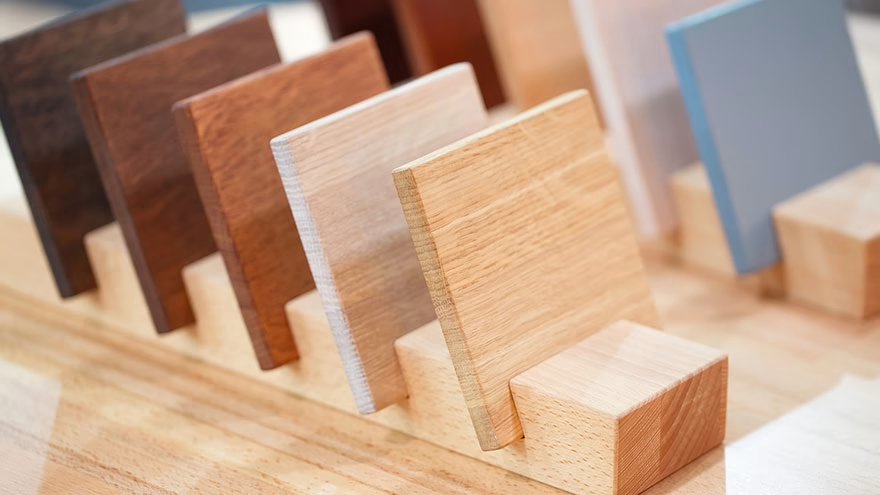
Wood Stress Failure Is About Load, Direction, and Real Conditions
Wood stress failure happens when a wood member is asked to carry more than it can safely handle in its actual condition. That condition includes species, grade, grain direction, moisture, knots, cracks, fasteners, span, age, and how the load is applied.
Wood is strong, but it is not equally strong in every direction. A board can behave differently under bending, compression, tension, shear, and fastener withdrawal.
Do not judge strength by thickness alone. A larger piece with splits, bad grain, wet service conditions, or poor connections can be weaker than a smaller piece used correctly.
What Does Stress Mean in Wood?
Stress is force over area. In practical terms, it is the pressure a load puts into the wood fibers. Strain is the movement or deformation that follows. Some deformation is temporary; failure happens when the material can no longer recover or carry the load safely.
The USDA Forest Products Laboratory's Wood Handbook explains wood as an engineering material, including mechanical properties, moisture effects, and design considerations. It is a better foundation than guessing from appearance.
In a house, stress appears in floor joists, rafters, beams, stair parts, decks, furniture frames, shelves, and fastened joints. Failure can be sudden, but many problems give warning signs first.
Those warning signs differ from finish problems such as drywall primer failure, where the issue is usually surface preparation, product compatibility, or moisture rather than a load path.
How Do Load Direction and Grain Affect Failure?
Wood is anisotropic, which means its properties vary by direction. It is generally stronger along the grain than across it. That is why a split following the grain can travel quickly once it begins.
Bending failure often shows as cracking, sagging, or a sudden break on the tension side of a member. Compression failure may show crushing, buckling, or fibers wrinkling under load. Shear failure can happen near supports or notches.
Knots, slope of grain, checks, and splits interrupt the fibers that carry load. A knot near the edge of a stressed board is not only cosmetic; it can reduce capacity where the member needs continuous fibers.
Load should travel through wood cleanly. Notches, holes, and fasteners placed in the wrong area can force stress into weak paths.
How Does Moisture Change Wood Strength?
Moisture changes size, stiffness, decay risk, and connection behavior. Wet wood can swell, dry wood can shrink, and repeated cycling can loosen joints or open cracks.
APA's builder tips discuss panel expansion and the need for spacing as materials reach moisture balance. The same larger principle applies to many wood assemblies: moisture movement must be allowed for or controlled.
Moisture also invites decay. A beam weakened by rot may fail under a load it once carried easily. Soft spots, dark staining, fungal growth, persistent dampness, or a musty smell deserve attention.
Outdoor structures need special care. Deck beams, stair stringers, porch posts, and railings face water, sun, fastener corrosion, and movement. A small crack may be harmless, or it may be the first sign of a load and moisture problem.
How Do Fasteners Create or Prevent Failure?
Fasteners do not only hold pieces together; they concentrate force. A screw, nail, lag, or bolt can split wood if it is too close to an edge, too large, poorly predrilled, overdriven, corroded, or asked to carry the wrong kind of load.
The American Wood Council's connection calculator shows that fastener capacity depends on member type, fastener type, geometry, and loading. That is why structural connection design is more than choosing a bigger screw.
Multiple smaller fasteners placed correctly may perform better than one large fastener that splits the member. Hardware rated for the application matters, especially outdoors or in load-bearing work.
If the failure involves another material, compare the mechanism. Porcelain insulator failure is not wood behavior, but it shares the same lesson: materials fail differently depending on stress, environment, and installation.
What Warning Signs Should Homeowners Notice?
Look for sagging floors, bouncing decks, cracked beams, widening splits, doors that suddenly bind, sloped floors, crushed bearing points, popped fasteners, stains near supports, and wood that can be dented easily with a screwdriver.
Furniture and cabinets show smaller versions: shelves bowing, chair legs loosening, table aprons splitting, or screws pulling out. Those failures may be annoying rather than dangerous, but they still reveal load and connection problems.
Do not cover warning signs with trim, paint, or filler before understanding them. Cosmetic repair can hide movement that is still active.
Movement over time matters. A hairline check that stays stable may be normal; a crack that grows after every season or load change needs investigation.
How Do Span and Support Change the Risk?
A shelf, joist, or beam becomes more stressed as the unsupported span grows. The same board that holds weight over a short distance may sag or crack when stretched farther between supports.
Support quality matters too. A beam sitting on a crushed post, rotted sill, loose hanger, or undersized bracket can fail at the connection before the middle of the member breaks.
Loads are not always obvious. A new tile floor, full aquarium, heavy bookcase, waterbed, safe, or storage area can add weight a structure was not designed to carry.
Changing the load changes the question. If a room or deck is being used differently than before, the old wood may no longer have the same safety margin.
When Should You Call an Engineer or Contractor?
Call a qualified professional when the wood is load-bearing, the failure is near a support, the member carries a roof, floor, deck, stair, balcony, or porch, or the damage involves rot, termites, fire, flood, or repeated movement.
Do not guess on beams, joists, rafters, posts, or structural connections. Temporary bracing may be needed before repair. Removing the wrong piece can shift load into an unsafe path.
For small nonstructural projects, such as trim, shelves, or furniture, you can often repair the problem after identifying moisture, grain, fastener, or adhesive issues. For structural work, design loads and code requirements matter.
If the issue is panel or trim edge behavior rather than a member under load, Livecub's guide to wood edgeband failure follows a more finish-oriented path.
What Should You Avoid With Suspected Wood Failure?
Do not add heavy loads to the area while deciding what happened. Do not drill extra holes, cut notches, or remove supports without understanding the load path. Those changes can make a marginal member worse.
Do not rely on filler, paint, or a sistered board that is attached only to damaged material. A repair has to transfer load into sound wood and proper supports.
Take photos, mark the ends of cracks with a pencil, and check later to see whether they grow. That simple record helps a contractor or engineer understand whether movement is active.
The safest repair starts with not making the failure harder to read.
Also check what changed shortly before the warning sign appeared. New furniture, a remodel, a roof leak, stored boxes, or a recent fastener repair can explain why the wood started behaving differently.
Those clues help separate a new overload from older shrinkage, checking, or cosmetic wear. They also help a professional decide which area to inspect first during an onsite visit.
If the area feels unsafe, keep people off it until it is checked.
Frequently Asked Questions
What is wood stress failure?
It is failure that occurs when wood can no longer carry the stress placed on it, considering load direction, grain, moisture, defects, fasteners, and support conditions.
Can a cracked wood beam still be safe?
Sometimes, but it depends on crack size, location, growth, load, moisture, and member role. Have load-bearing cracks evaluated by a qualified professional.
Does wet wood fail faster?
Wet service conditions can reduce performance, loosen connections, and promote decay. Moisture cycling can also create movement that stresses joints.
Do bigger screws make wood stronger?
Not always. Oversized or poorly placed fasteners can split wood. Correct fastener type, spacing, edge distance, and load path matter.
Can I repair structural wood failure myself?
Do not repair load-bearing failure by guesswork. Temporary support, design loads, code, and inspection may be needed.
Find the Load Path Before the Fix
Wood stress failure is not only a crack to patch. Understand where the load travels, how moisture and defects changed the member, and whether the repair needs engineering before the surface looks clean again.

Timothy Davidson
Edits step-by-step general-interest guides for clarity, realistic limits and source verification.

Leave a reply
Replying to