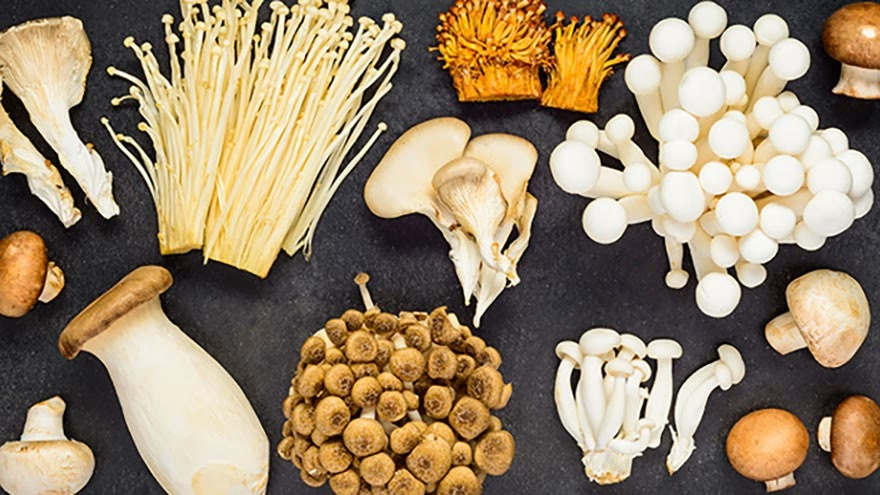
Mushrooms are easy to buy badly and easy to cook into a wet pile. They are also one of the fastest ways to make eggs, pasta, rice, toast, soup, steak, chicken, or greens taste deeper without much extra work. These tips for choosing and cooking mushrooms focus on freshness, storage, cleaning, browning, seasoning, and the point where a pan finally stops steaming and starts building flavor.
How do you choose fresh mushrooms?
Look for mushrooms that feel firm for their type, smell clean and earthy, and have no slimy patches. Avoid packages with heavy condensation, dark wet spots, or a sour smell. A little soil is normal. Slickness is not.
Buy only what you can cook soon unless you have a plan. Mushrooms do not improve in the refrigerator, and a bargain box becomes expensive if half of it turns wet. For a side dish, remember that mushrooms shrink a lot once their water cooks off. If mushrooms are the main ingredient, buy more than the raw volume suggests, especially for pasta, toast, grain bowls, omelets, soup toppings, and side dishes. The pan will shrink the pile quickly.
The FDA gives produce safety guidance for buying, washing, storing, and separating fresh produce, and its produce safety guide is useful background for mushrooms because they are handled like other fresh produce at home.
For a different vegetable-prep mindset, Livecub's guide to cooking greens shows how freshness, moisture, and timing change the final plate.
Which mushroom varieties should you buy?
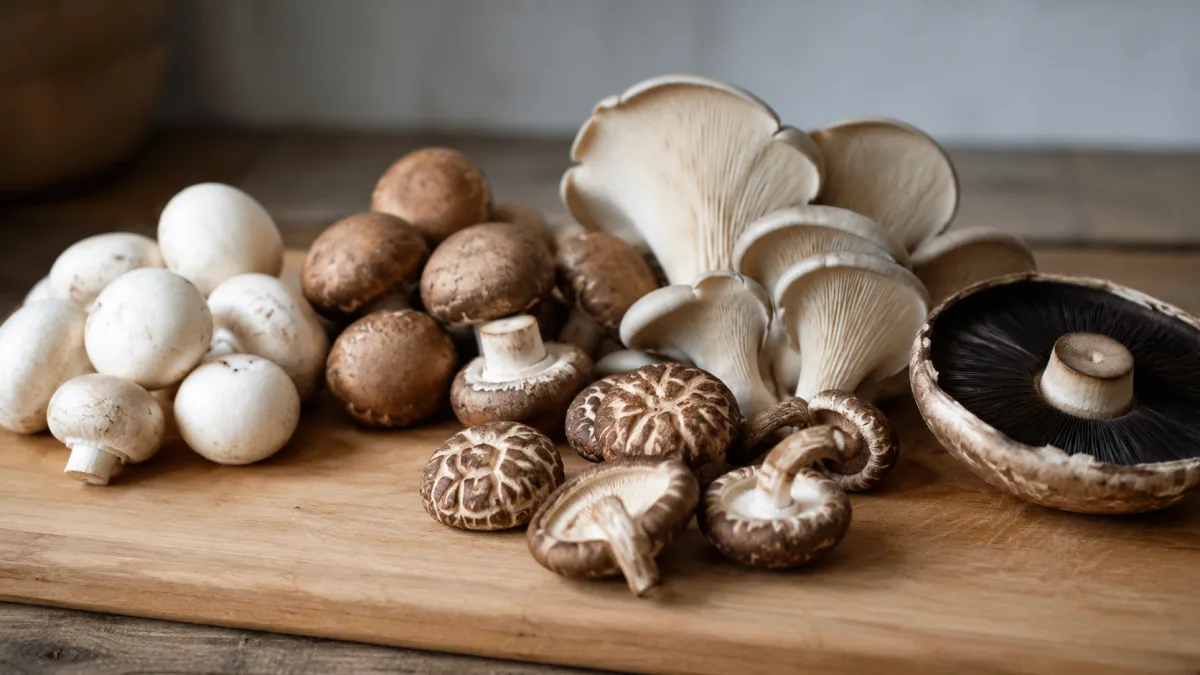
White button mushrooms are mild and cheap. Cremini mushrooms are a little deeper. Portobellos are mature creminis with a large cap and meaty texture. Shiitake bring stronger flavor and tougher stems. Oyster mushrooms cook quickly and can crisp at the edges.
For quick sauteing
Use cremini, button, oyster, or sliced shiitake caps. Cut similar sizes so the pan cooks evenly.
For stuffing or grilling
Use large portobello caps or big button mushrooms. Scrape gills only if you want a cleaner look or less dark liquid.
For soup and sauce
Use a mix if budget allows. Even a few shiitake or dried mushrooms can make a simple broth taste fuller.
How should mushrooms be stored?
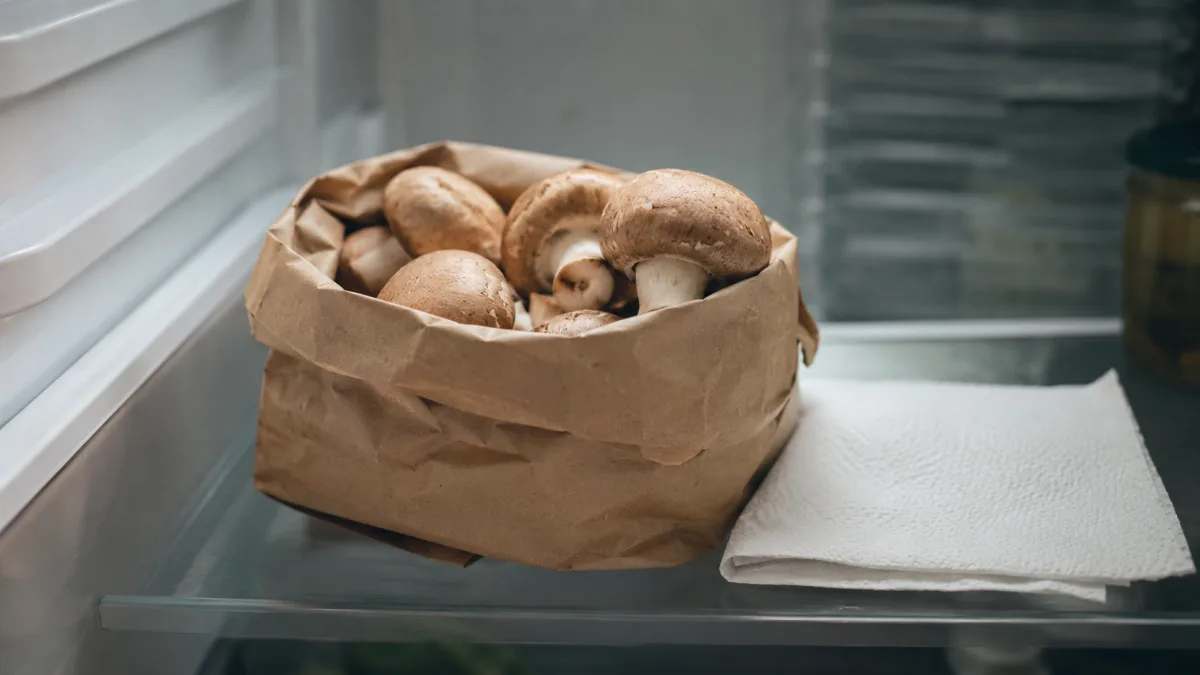
Store mushrooms cold and dry, with some airflow. A paper bag or a container lined with paper towel is usually better than a sealed plastic bag that traps moisture. Do not wash mushrooms before storing them.
The Mushroom Council's guidance on selection and storage supports keeping mushrooms refrigerated and dry. Its mushroom selection and storage guide is a practical reference for buying and holding fresh mushrooms.
Moisture is the enemy before cooking. Once mushrooms start sitting in trapped water, freshness drops fast.
Should you wash mushrooms?
Yes, but do it quickly. Wipe with a damp towel for mushrooms that are only lightly dirty. Rinse briefly under cool water if needed, then dry well. Do not soak them like beans.
Mushrooms already contain a lot of water, so the real problem is not a quick rinse; it is putting wet mushrooms into a crowded pan. Drying them gives browning a chance.
Clean right before cooking. That habit protects both texture and storage life.
How do you brown mushrooms instead of steaming them?
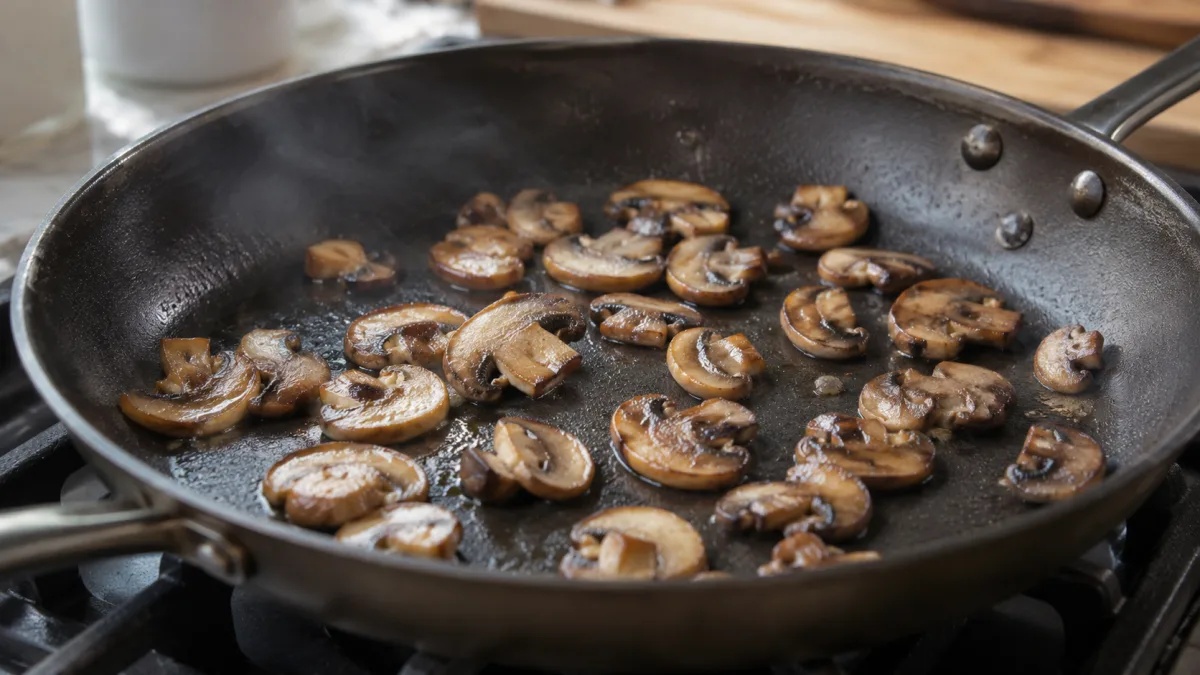
Use a wide pan, enough heat, and fewer mushrooms than you think. Add fat, spread the mushrooms out, and leave them alone long enough to lose water. Stirring every few seconds keeps them pale.
Salt timing depends on the result you want. Early salt draws out moisture and can help them cook down evenly. Later salt keeps browning more direct. Both can work, but crowding the pan will ruin either plan.
For sauce building after browning, Livecub's stir-fry sauces guide is useful because mushrooms soak up balanced liquid quickly once they have browned.
How do you avoid rubbery mushrooms?
Rubbery mushrooms usually come from low heat, too much stirring, or cooking them just long enough to release water without cooking that water away. Let them sit in contact with the pan. Turn them when the underside has color.
Cut size matters too. Very thin slices can collapse before browning. Thick pieces need more time but give a meatier bite. If you want mushrooms for pasta or toast, quartering small cremini mushrooms can work better than slicing them paper-thin.
Do not panic when the pan gets wet. Keep cooking until the liquid leaves and the mushrooms begin to sizzle again.
What seasonings work well?
Start with salt, pepper, garlic, shallot, thyme, parsley, butter, olive oil, soy sauce, vinegar, lemon, cream, wine, or stock. Mushrooms like savory support, but they can disappear under too much garlic or heavy sauce.
Season in layers. Salt enough for the mushroom, then add acid or herbs near the end so the flavor stays fresh. Butter at the end can round the pan without making everything greasy.
How can mushrooms be used in meals?
Add browned mushrooms to omelets, toast, pasta, rice bowls, burgers, roasted chicken, steak, soup, grain salads, and baked potatoes. They can stretch meat dishes, but they also stand on their own when cooked hard enough to get color.
For richer serving ideas, Livecub's foie gras serving guide is a reminder that earthy mushrooms often work best with small portions and sharp contrast.
If a mushroom dish is part of a party table, Livecub's cookie display guide still has useful serving lessons: small plates, clean edges, and food that stays attractive after ten minutes.
How can mushrooms stretch a meal?
Mushrooms can make a small amount of meat feel like more food. Brown them before adding ground beef, sausage, leftover chicken, or turkey. They bring moisture and savory flavor, but they should not be dumped in raw at the end.
They also help vegetarian meals feel more grounded. Add browned mushrooms to lentils, beans, polenta, risotto, noodles, baked potatoes, or eggs. A small splash of soy sauce or vinegar can sharpen the dish without making it taste like a sauce bottle.
Cook mushrooms before asking them to support the meal. Raw mushrooms folded into a finished dish often taste spongy and unfinished.
What about dried mushrooms?
Dried mushrooms are useful when fresh mushrooms are bland, expensive, or unavailable. Soak them in hot water until flexible, lift them out carefully, and strain the soaking liquid through a fine filter if you plan to use it.
That soaking liquid can carry grit, so do not pour the last spoonful straight into a sauce. Add the strained liquid to soup, rice, braises, or pan sauces. Chop the softened mushrooms finely if the texture is chewy.
Dried mushrooms are strong, so a little can be enough. They work best as a background flavor rather than the only texture in the dish.
How should cooked mushrooms be held or reused?
Cool cooked mushrooms, refrigerate them promptly, and use them in meals where a little moisture is welcome. Reheat in a skillet, soup, sauce, omelet, or grain bowl. If they look dry, add a spoonful of stock, water, or butter.
Do not store cooked mushrooms in a deep hot pile. Spread them out, cool them, and pack them once the steam has dropped. This protects texture and makes the next meal easier.
What safety mistakes should you avoid?
Do not forage wild mushrooms unless you have real expert identification. Store-bought mushrooms are the right choice for most home cooks. Also keep fresh mushrooms separate from raw meat, wash hands and boards, and refrigerate leftovers promptly.
Discard mushrooms that smell sour, feel slimy, or have heavy wet decay. Trimming one dry spot is different from trying to rescue a package that has clearly turned.
Frequently Asked Questions
Can mushrooms be eaten raw?
Some store-bought mushrooms are served raw, but many people prefer them cooked for flavor and texture. Follow package guidance and basic produce safety.
Why are my mushrooms watery?
The pan was likely crowded, the heat was too low, or the mushrooms went in wet. Use a wider pan and let moisture cook off.
Should mushroom stems be removed?
Remove tough shiitake stems and any dry ends. Button and cremini stems are usually fine if they look fresh.
Can cooked mushrooms be reheated?
Yes. Refrigerate leftovers promptly and reheat gently in a pan, soup, sauce, or grain dish instead of drying them out.
Good mushrooms need space, heat, and restraint. Buy them firm, keep them dry, cook off water, then season once they have something to say.

Cashie Evans
Covers parenting and practical household topics with clear steps, safety notes and links to current guidance.




Leave a reply
Replying to