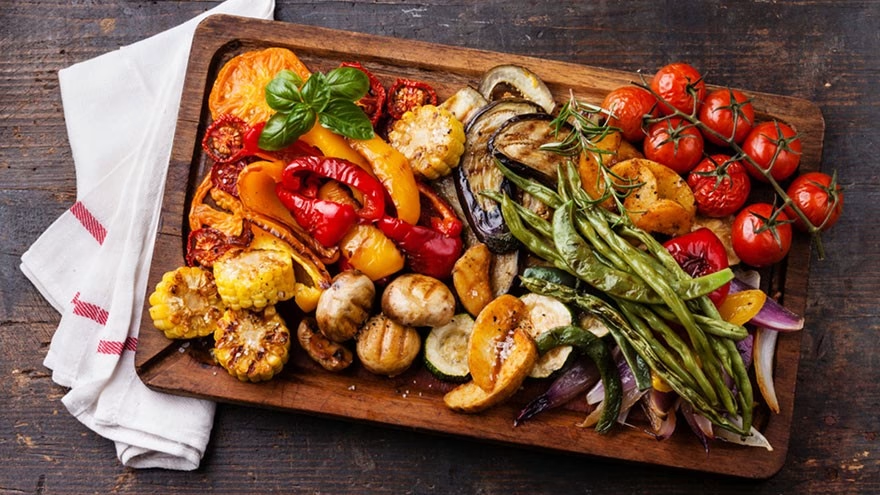
Most people treat grilling vegetables as an afterthought — a quick toss on the grate while the steaks rest. That assumption is exactly why so many grilled vegetables end up either charred black on the outside and raw in the middle, or pale, steamed, and limp. Learning how to grill vegetables properly requires the same attention to heat zones, timing, and prep that you give to any protein. The good news: once you understand why the process works, results become consistent and the vegetable section of your grill stops being the section everyone ignores.
What makes grilled vegetables different from other cooking methods?
The core event on a hot grill grate is the Maillard reaction — the same chemical process responsible for the crust on a seared steak. When the surface temperature of a vegetable reaches roughly 300°F (150°C), amino acids and reducing sugars in the cell walls begin reacting. They break down, rearrange into ring structures that reflect light, and produce hundreds of new flavor compounds the raw vegetable never had. That's the source of the characteristic sweetness and slight bitterness you taste in a well-charred pepper or portobello cap — not just caramelization, but a genuine molecular transformation.
Vegetables behave differently from meat in one critical way: their surface moisture is far higher. Excess moisture on the skin converts to steam the moment it hits the grate, and steam cools the surface below the Maillard threshold. This is why patting vegetables dry before oiling them matters, and why a damp, freshly washed zucchini thrown straight onto the grill steams before it browns. Moisture isn't the enemy — but surface moisture is.
Roasting handles vegetables at lower temperatures over longer periods, spreading heat through the oven's ambient air. Steaming preserves texture but adds nothing in terms of new flavor compounds. Sautéing can achieve Maillard browning, but in a pan the vegetable sits in its own released moisture. The grill's advantage is a combination of intense radiant heat from below, convective heat (especially with the lid closed), and the vaporization of dripping oil or marinade, which creates aromatic smoke that clings to the vegetable's surface.
Which vegetables grill best — and which don't?
The vegetables that grill best share two qualities: enough structural integrity to hold together under direct heat, and enough natural sugar to reward browning. Bell peppers, zucchini, eggplant, portobello mushrooms, corn, asparagus, red onions, fennel, and leeks all belong in this group. Each has a firm enough cell structure to survive 2-10 minutes of direct heat without disintegrating, and each develops genuine sweetness under the Maillard reaction.
Dense root vegetables — beets, potatoes, carrots — can be grilled with excellent results, but they need a head start. Their interiors won't cook through in the time it takes the exterior to char. Parboil them for 5-7 minutes first, or wrap them in foil and cook over indirect heat before finishing on the grate. Without that pre-cooking step, you'll end up with a raw center and a blackened skin.
Tomatoes and cherry tomatoes occupy the opposite end of the density spectrum. They have so much water content that they collapse under prolonged heat. The solution is speed: a very hot grill, 2-3 minutes maximum, and a grill basket so they don't drop through the grates. Artichokes and whole garlic bulbs also need pre-cooking — steam or roast them first, then finish on the grill for color and smoke.
Leafy greens like spinach or delicate herbs don't belong on an open grate at all. Cabbage is the exception among the leafy family — cut into thick wedges, it holds together and chars beautifully in 10-15 minutes. If you're thinking about cooking greens in other ways, the stove-top approach gives you far more control over the delicate ones.
How to prep vegetables for the grill
Uniform cutting is the single most underrated prep step. Pieces of different thicknesses cook at different rates — a half-inch slice of zucchini will be perfectly done in 4 minutes while a one-inch slice from the same squash is still raw in the center. Aim for cuts at least a half inch thick across the board; thinner pieces char through before the interior softens, and they're more likely to drop through grate gaps. Zucchini and eggplant work well as lengthwise planks. Bell peppers should be halved and seeded. Asparagus stays whole. Onions are best cut into thick rounds, with a skewer run horizontally through each round to keep the rings together on the grate.
Oil the vegetables, not the grill. On a hot grate, oil applied to the bars burns off almost instantly, leaving nothing to lubricate the food. When you coat the vegetable itself, the oil creates an even film that promotes heat transfer, prevents tearing when you flip, and carries fat-soluble flavors from your seasoning into the flesh. Use just enough to coat — excess oil drips onto burners and causes flare-ups. A bowl toss works better than brushing; it covers all surfaces, including edges.
Salt timing requires a little nuance. For dense, high-moisture vegetables like zucchini, salting 20-30 minutes before grilling draws surface moisture out of the cells and produces a crisper result on the grate. For delicate vegetables like asparagus or cherry tomatoes, salt immediately before grilling — extended salting turns them limp. The rule of thumb: the denser the vegetable, the earlier you can salt it.
If you want to preserve vegetables from the garden for later use, see the guide on how to freeze fresh vegetables — but for grilling, always start with fresh produce. Frozen vegetables, even thawed completely, carry too much residual moisture to brown cleanly.
Grill temperature, direct vs. indirect heat
The target temperature for most grilled vegetables is 400-450°F (medium-high heat). At that range, the grate is hot enough to trigger browning within 2-3 minutes of contact, but not so hot that the exterior chars before the interior softens. You can check this without a thermometer: hold your palm 6 inches above the grate. If you need to pull it away in 3-4 seconds, you're in the medium-high range.
Setting up two heat zones is the most useful structural decision you can make before adding any food. On a charcoal grill, bank the coals to one side. On a gas grill, leave one burner off. This gives you a hot zone for searing and charring, and a cooler zone where vegetables can finish cooking without burning. Delicate vegetables like asparagus and halved tomatoes go entirely over the hot zone for a brief, intense cook. Dense vegetables like thick onion rounds or parboiled potatoes start over direct heat for color, then move to the indirect zone to finish through.
Charcoal versus gas matters more for vegetables than many people expect. Charcoal burns hotter and produces genuine wood smoke from fat and juice drippings that vaporize on the coals — this smoke penetrates the vegetable surface and adds real depth. Gas grills produce less smoke and are less likely to impart that complexity, but their advantage is dial-in precision. On gas, you can hold 425°F consistently; on charcoal, you manage a range. For most home cooks, gas is more forgiving; for flavor, charcoal is harder to replicate.
Grilling times for common vegetables
These times assume a preheated grill at 400-450°F and pieces cut to at least a half inch thick. Natural sugars in vegetables move quickly once the Maillard reaction starts, so stay close to the grill during the final minute of cooking.
| Vegetable | Method | Time | Done When |
|---|---|---|---|
| Asparagus (whole spears) | Direct grate | 2-4 min | Bright green, slight char on tips |
| Bell peppers (halved) | Direct grate, skin-side down | 10-15 min | Skin blistered and blackened; peel after |
| Cherry tomatoes | Grill basket | 2-3 min | Skin split, juices just starting to run |
| Corn (in husk) | Direct grate, turning | 25-30 min | Outer husks charred, kernels steamed through |
| Eggplant (1/2-inch planks) | Direct grate | 4-6 min per side | Deep grill marks, center yields to pressure |
| Fennel (wedges) | Direct grate | 4-5 min per side | Golden char, edges caramelized |
| Leeks (halved lengthwise) | Direct grate | 5-6 min per side | Outer leaves charred, center soft |
| Portobello mushrooms (whole) | Direct grate, gill-side up first | 5-7 min per side | Moisture released, cap firm but yielding |
| Red onions (thick rounds) | Direct then indirect | 8-10 min total | Deep char marks, center translucent |
| Zucchini (lengthwise planks) | Direct grate | 4-6 min per side | Defined grill marks, flesh yields easily |
| Beets / Potatoes (parboiled) | Direct grate after parboil | 4-5 min per side | Exterior charred, interior already cooked |
| Artichokes (pre-steamed) | Direct grate, cut-side down | 5 min per side | Cut face charred, leaves easily pulled |
Portobello mushrooms deserve a specific note: place them gill-side up for the first 5-7 minutes so the natural liquid pools inside the cap rather than dripping straight onto the coals. Flip only once. Moving them repeatedly prevents the Maillard crust from forming and turns them rubbery. For a full breakdown of grilling times across more vegetables, the BBQ Report grilling guide provides a useful reference table.
Marinades and seasonings for grilled vegetables
The base formula for a vegetable marinade is two parts oil to one part acid, plus aromatics. The oil carries fat-soluble flavors into the vegetable surface and promotes browning; the acid brightens the final flavor and, in small amounts, begins softening the outer cell walls. Too much acid applied too early — especially on delicate vegetables — breaks down the texture before the grill gets a chance to work.
The classic version: olive oil, fresh lemon juice, one minced garlic clove, and chopped fresh herbs (thyme, rosemary, or flat-leaf parsley). This works on nearly everything. Vary the acid and the oil to change the flavor profile substantially. Swap lemon for balsamic vinegar and you get a deeper, sweeter marinade that intensifies on bell peppers and portobello mushrooms. Use walnut oil with red wine vinegar and the result has an earthier note that suits eggplant and beets. For an Asian-leaning version, sesame oil, rice vinegar, a small amount of soy sauce, grated ginger, and a teaspoon of honey creates a glaze that caramelizes quickly at high heat — watch it closely, as the sugar in the honey accelerates charring.
A miso-based marinade is worth knowing: white miso paste thinned with rice vinegar, a small amount of sesame oil, and grated garlic. The miso provides glutamates that deepen savory flavor and a naturally higher sugar content that promotes rapid browning. Apply it no more than 30 minutes before grilling.
One practical rule regardless of which marinade you choose: set aside a small amount before the marinade touches raw vegetables. The Miss Vickie vegetable grilling time chart is a handy reference if you want quick per-vegetable summaries while you cook. Use that reserved portion as a finishing drizzle or sauce after plating. The raw-vegetable-contact version should not go back onto cooked food. These same sauce principles appear in a good stir-fry sauce guide, where balancing oil, acid, and aromatics follows an almost identical logic.
Grilling tips for specific vegetables
Eggplant: Raw eggplant has a spongy interior filled with air pockets. When it hits a hot oiled grill, those pockets open and absorb oil at a dramatic rate — easily several tablespoons per half-inch slice. Soaking sliced eggplant in cold water for 30 minutes before grilling fills those air pockets with water, leaving less room for oil uptake. Pat the slices completely dry after soaking, then apply a light coat of oil just before grilling. The result is eggplant that browns cleanly rather than turning into a grease-soaked slab.
Corn: Don't remove the husks before grilling. Pull them back carefully without tearing, remove the silk strands, then fold the husks back up and soak the entire ear in cold water for 30 minutes. The soaking prevents the husks from catching fire and provides steam that cooks the kernels from inside while the grill works on the outside. After soaking, brush the kernels with butter before folding the husks back up. Grill 25-30 minutes, rotating every 5 minutes. The outer husks will char; the kernels inside will be steamed and smoky.
Bell peppers: Grill them cut-side down or skin-side down, depending on whether you want to peel them. For stuffed peppers, char them whole, then peel. For serving as a side, halve and seed them first, place skin-side down over direct heat for 10-15 minutes until the skin is fully blistered, then transfer immediately to a bowl covered with plastic wrap. The steam that builds up loosens the skin so it slips off cleanly after 10 minutes. Peeled grilled peppers have a silkier texture and sweeter flavor than unpeeled.
Garlic: Cut a whole head horizontally across the middle to expose the tops of the cloves. Brush the cut surface generously with olive oil. Place cut-side down over direct heat for 8-10 minutes until the skin browns and the cloves soften to a paste consistency. The garlic sweetens dramatically — the sharp raw allicin compounds break down under heat into gentler, sweeter sulfur compounds. Squeeze the roasted paste out and use it as a spread or stir it into the resting marinade.
Asparagus: The tips char faster than the stalks, so orient spears perpendicular to the grate bars to prevent any spear from falling through, and pull them after 2-4 minutes depending on thickness. Thin spears need 2 minutes; thick ones closer to 4. Soaking asparagus in cold water up to one hour before grilling hydrates the stalks and keeps them from drying out over direct heat.
Dense root vegetables (beets, potatoes): Parboil in salted water for 5-7 minutes until a knife meets slight resistance, then transfer to the grill. They need only 4-5 minutes per side to develop char marks and finish through. Without parboiling, they'll need 20-30 minutes over indirect heat before they're safe to eat, during which the exterior typically overcooks. The brief parboil investment saves time and produces a better result.
Frequently Asked Questions
Do you oil the grill or the vegetables?
Oil the vegetables, not the grill. Oil applied to a hot grate burns off in seconds, leaving no lubrication by the time the food touches it. Coating the vegetable creates a film that stays in contact with the flesh, promotes even browning, and prevents the vegetable from tearing when you flip it. Oiling the grate can also cause flare-ups as the excess drips onto burners or coals.
Why do my grilled vegetables come out soft and pale instead of charred?
Three possible causes. First, the grill isn't hot enough — vegetables need 400-450°F to trigger the Maillard reaction quickly. Second, the vegetable surface is too wet, either from inadequate drying after washing or from being salted too far in advance. Surface moisture converts to steam and drops the grate temperature below the browning threshold. Third, the grill is overcrowded — too many pieces trap steam between them, turning what should be a dry roasting environment into an accidental steamer.
How long should vegetables marinate before grilling?
For most vegetables, 15-30 minutes is enough. Acids in marinades (lemon juice, vinegar) begin breaking down cell walls after an hour, and extended marinating produces a mushy texture before the vegetables ever reach the grill. Portobello mushrooms are an exception — their dense, meaty caps can handle up to 2 hours. Delicate vegetables like asparagus and cherry tomatoes should marinate for no more than 15 minutes.
Can you grill vegetables on a gas grill vs. charcoal?
Both work well, with different trade-offs. Gas gives you dial-in temperature control and fast startup, which makes it easier to hold a consistent medium-high heat across different vegetable batches. Charcoal burns hotter and produces smoke from dripping fats and juices, adding a depth of flavor that gas cannot fully replicate. For mixed grilling sessions where you need both precision and forgiveness, gas is the more practical choice. If flavor alone is the priority, charcoal produces a more complex result on vegetables with enough surface area to catch the smoke — corn, portobello caps, and thick eggplant planks especially.
Do you need a grill basket for vegetables?
Not for everything, but for small pieces yes. Cherry tomatoes, sliced mushrooms, broccoli florets, and any diced vegetable will fall through standard grate spacing without a basket. A preheated basket (set it on the grill for 2 minutes before adding food) delivers direct flame contact and produces browning almost as effective as the grate itself. For large, flat pieces — bell pepper halves, zucchini planks, corn — the grate directly is faster and gives cleaner char marks.
What is the best way to know when grilled vegetables are done?
Press the vegetable firmly with tongs. It should yield noticeably but still have resistance — soft enough to compress slightly, firm enough to spring back. Mushy means overdone; no give at all means it needs more time. Visually, you want defined grill marks with a slight char at the edges, not just pale tan lines. For bell peppers being charred for peeling, the skin should be fully blistered and blackened in patches before you pull them.

Tory Stearns
Tory has been writing for over 10 years and has built a strong following of readers who enjoy his unique perspective and engaging writing style. When he's not busy crafting blog posts, Tory enjoys spending time with his friends and family, traveling, and trying out new hobbies.




Leave a reply
Replying to