
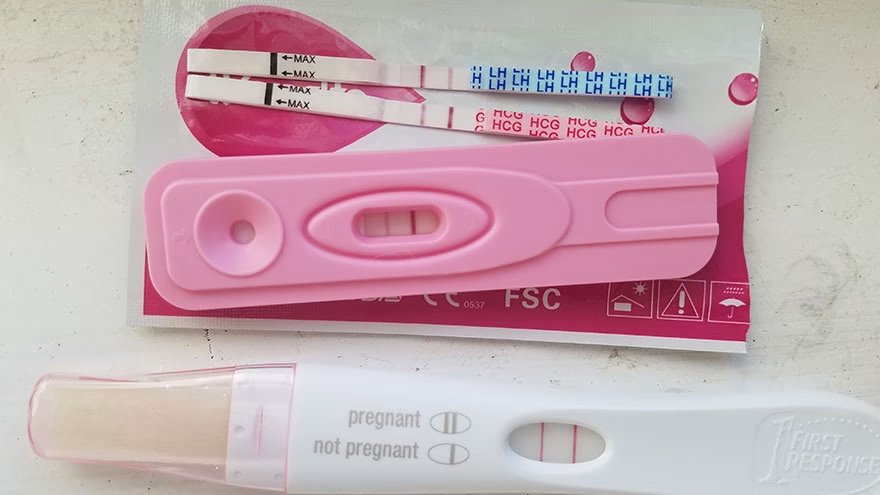
How to Measure HCG Levels depends on what question you are trying to answer. Home urine tests detect hCG, while blood tests can measure it more precisely and can be repeated when a clinician needs a trend.
The number can be useful, but it can also create anxiety when read without context. hCG varies widely, and a single value rarely tells the whole story.
What HCG Is
Human chorionic gonadotropin, or hCG, is a hormone made after implantation. It is the hormone most pregnancy tests are designed to detect.
MedlinePlus explains that pregnancy tests measure hCG and that hCG rises rapidly during the first trimester: MedlinePlus pregnancy test.
hCG can be measured in urine or blood. The right test depends on timing, symptoms, and why testing is being done.
Home Urine Tests
Home pregnancy tests are urine tests. They are designed to answer a yes-or-no question: is hCG detected above the test threshold?
Mayo Clinic says many home pregnancy tests claim accuracy as early as the first day of a missed period, but timing and instructions matter: Mayo Clinic home pregnancy tests.
Use the test within the reading window. A line that appears later may not mean the same thing as a valid result.
Blood HCG Tests

Blood tests can be qualitative or quantitative. A qualitative test says whether hCG is present. A quantitative test gives a number, often called beta hCG.
Cleveland Clinic describes hCG blood testing as a way to confirm pregnancy and monitor hCG levels in certain situations: Cleveland Clinic hCG testing.
Quantitative testing is especially useful when a clinician is following early pregnancy, possible ectopic pregnancy, miscarriage concerns, fertility treatment, or unclear ultrasound timing.
One Number Is Not The Whole Story
hCG ranges overlap widely. Two healthy pregnancies can have different numbers on the same day. A number that looks high or low online may still need normal clinical interpretation.
Clinicians often care more about the trend than the isolated value, especially in very early pregnancy.
Do not compare your result with a chart without knowing ovulation timing, gestational age, symptoms, and why the test was ordered.
Serial Testing
Serial hCG means repeating the blood test after a set interval, often about 48 hours in early evaluation. The pattern can help clinicians decide what to do next.
A rise, plateau, or drop may suggest different possibilities, but it still may need ultrasound or more follow-up.
Ask when to repeat the test and whether to use the same lab. Different labs can report slightly different results.
Early Pregnancy Timing
Testing too early can give a negative result even if pregnancy later becomes detectable. Implantation and hCG rise do not happen at the same time for everyone.
If you are still sorting out early signs, signs of pregnancy in the first week can help with timing language.
If the period does not come after a negative test, repeat according to the test instructions or ask a clinician.
Faint Lines And Evaporation Marks
A faint line inside the reading window can be a positive result, but unclear lines can happen. Reading the test late creates more confusion.
If this is the problem, evaporation lines on pregnancy tests is directly relevant.
When results remain unclear, a repeat urine test or blood hCG can settle the question.
HCG After Fertility Treatment
Fertility cycles sometimes use hCG trigger shots. That can affect test timing because a home test may detect the medication for a while.
Follow the clinic's testing date. Testing early can create false hope, false fear, or both.
If you used medication, do not interpret hCG without telling the clinician exactly what was taken and when.
HCG And Ultrasound
At a certain point, ultrasound becomes more useful than hCG alone. The exact timing depends on symptoms, equipment, dating, and clinical judgment.
A clinician may use hCG with ultrasound to evaluate pregnancy location, especially if there is pain, bleeding, or ectopic pregnancy concern.
Severe one-sided pain, shoulder pain, fainting, heavy bleeding, or dizziness needs urgent medical advice, not another home test.
What Falling HCG Can Mean
Falling hCG can happen after miscarriage, abortion, treatment of ectopic pregnancy, or after a pregnancy resolves. The timing and rate matter.
A drop can be emotionally hard even when expected. Ask what number or symptom would require another call.
If worry about loss is taking over, depression during pregnancy may help with support language while medical care follows the numbers.
Avoid Daily Testing Unless Told
Daily home testing can feed anxiety because line darkness changes with urine concentration, test brand, and lighting.
If your clinician wants serial blood work, follow that schedule. If they do not, ask what testing pattern makes sense.
More data is not always more clarity.
Questions To Ask About Results

Ask what the result means for your gestational age, whether it needs repeating, when ultrasound is expected, and what symptoms should trigger urgent care.
Ask whether the number changes any medication, activity, or follow-up plan. If it does not, ask what you are waiting for next.
A clear next step matters more than a perfect number.
Why Labs Use Different Ranges
Lab reference ranges can differ because methods and reporting units differ. Your result should be read with the lab's own reference range and your clinical situation.
Do not copy a number from a forum and treat it as your target. The same hCG value can mean different things depending on timing and symptoms.
If the portal result worries you, ask whether the lab needs repeating and when the clinician expects to see a change.
When HCG Is Ordered Outside Pregnancy
hCG testing may also be ordered before certain medications, imaging, surgery, or procedures to check pregnancy status.
In those cases, the question may simply be whether pregnancy is present, not how far along it is.
Tell the clinician if you recently gave birth, had a miscarriage, had an abortion, used fertility medicine, or have a condition being followed with hCG.
Do Not Use HCG To Date Pregnancy Alone
hCG can support an early pregnancy evaluation, but ultrasound and menstrual or ovulation timing often become more useful for dating.
A person with late ovulation may have a lower number than expected from last-period dating. That does not always mean the pregnancy is failing.
Ask what dating method your clinician is using before reacting to a chart.
Make The Wait Manageable
Waiting for repeat hCG can make every hour feel long. Decide when results will be checked, who will call, and what you will do if results post after hours.
Avoid filling the wait with constant searching. Write down the one question you need answered next.
If anxiety is taking over, ask for emotional support while the medical process continues.
HCG After Birth Or Pregnancy Loss
hCG does not always disappear immediately after a pregnancy ends. The time it takes can vary based on how far along the pregnancy was and the clinical situation.
If you recently gave birth, miscarried, or had an abortion, tell the clinician before interpreting a positive or falling result.
Follow-up testing may be used to make sure the level is moving as expected.
Portal Results Can Be Misleading Alone
Seeing a number before a clinician comments can be stressful. Portal results often arrive without the story that makes them useful.
Before reacting, check the collection date, units, lab range, and whether the test was meant to be repeated.
If the result is urgent, the clinic should have a plan for contacting you. If symptoms are urgent, do not wait for a portal message.
What To Write Down
Write the first day of your last period, ovulation date if known, test dates, bleeding, pain, fertility medications, and prior hCG values.
Bring that list to calls or appointments. It helps the clinician interpret timing faster.
If you have one-sided pain, dizziness, or heavy bleeding, call instead of perfecting the list.
Frequently Asked Questions
Can I measure hCG at home?
You can detect hCG with urine pregnancy tests, but you cannot get a precise blood level at home.
What is quantitative hCG?
It is a blood test that gives a number, often used when clinicians need a trend.
Do hCG levels double every 48 hours?
They often rise quickly early on, but patterns vary. Ask your clinician how to interpret your result.
Can a faint line mean pregnancy?
It can if read within the test window, but unclear results should be repeated or checked with blood testing.
When is hCG not enough?
Pain, bleeding, ectopic concern, or uncertain dating may require ultrasound and clinical evaluation.
This article is for general information only and isn't a substitute for medical advice. Talk to a clinician who knows your full history before making changes.

Cashie Evans
Covers parenting and practical household topics with clear steps, safety notes and links to current guidance.




Leave a reply
Replying to